




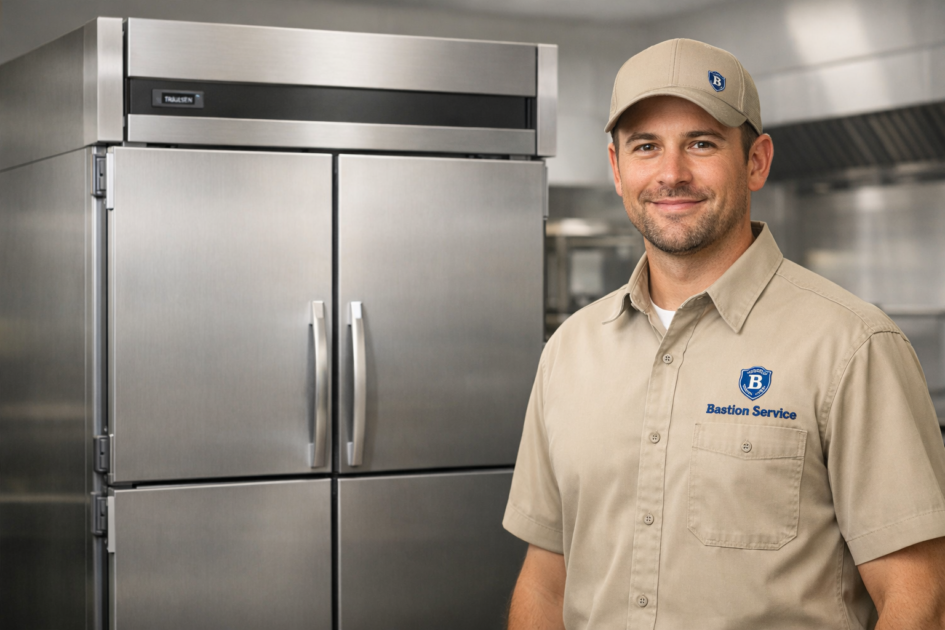
For businesses in Playa Vista, refrigerator trouble rarely stays minor for long. A Traulsen unit that starts running warm, leaking, frosting over, or sounding different can quickly affect food safety, prep timing, workflow, and inventory protection. The most useful next step is service that matches the symptom pattern, because the cause may be as simple as restricted airflow or as serious as a control or refrigeration-system failure. Bastion Service handles Traulsen refrigerator repair with a service-first approach focused on diagnosis, repair scheduling, downtime impact, and the most sensible path back to stable operation.
Related commercial service paths in Playa Vista include Traulsen Commercial Repair in Playa Vista, Commercial Refrigerator Repair in Playa Vista, and Traulsen Freezer Repair in Playa Vista.
Common Traulsen refrigerator symptoms and what they can indicate
Not holding temperature
When cabinet temperature drifts above the set range, the problem may involve dirty condenser coils, weak fan motors, sensor issues, door gasket leakage, control faults, or compressor-related problems. Some units still cool part of the time but recover too slowly after the doors are opened or after product is loaded. That usually points to reduced cooling performance rather than a complete shutdown, but it still needs attention before product temperatures become unreliable.
Warm cabinet with the unit still running
If the refrigerator appears to run continuously without bringing temperatures down, the issue may be linked to airflow restriction, evaporator icing, fan failure, low system efficiency, or a control problem that is not responding correctly to cabinet conditions. Continuous run time is a warning sign because it increases wear and often means the refrigerator is working harder while cooling less effectively.
Intermittent cooling or short cycling
A Traulsen refrigerator that cools normally for a while and then struggles later may have an intermittent electrical or control issue, a fan motor that cuts in and out, or a compressor start problem. Short cycling is especially important to check promptly because repeated starts can add stress to major components and turn a smaller repair into a larger one.
Frost buildup or blocked airflow
Frost inside the cabinet, around the evaporator area, or near product storage zones often points to door seal leakage, defrost issues, or poor air circulation. Once frost begins restricting airflow, cabinet temperatures can become uneven. One section may seem cold while another drifts warm, which creates a misleading sense that the refrigerator is still working normally.
Water leaks or excess condensation
Water on the floor or inside the cabinet can come from drain restrictions, ice melting after a defrost issue, poor door sealing, or heavy condensation caused by warm air entering the box. Leaks are more than a housekeeping problem. They can signal a deeper cooling issue and create slip risks in active work areas.
Unusual noise
Clicking, buzzing, rattling, fan rubbing, or louder-than-normal compressor noise can indicate loose hardware, failing motors, vibration, or component strain. Changes in sound matter most when they appear along with temperature problems. That combination usually means the refrigerator should be inspected before the fault progresses into a full outage.
Why temperature complaints need proper testing
Temperature problems in Traulsen refrigerators are often misread because several different faults can create the same symptom. A warm cabinet does not automatically mean the compressor has failed. It could be caused by poor airflow, icing, sensor inaccuracy, gasket leakage, defrost trouble, or electrical issues affecting how the system cycles.
Testing matters because the repair path changes depending on what is actually failing. Replacing parts based on guesswork can waste time, increase cost, and still leave the unit unstable. For businesses in Playa Vista, that means more disruption and more exposure to product loss if the true cause is not identified early.
Why is my Traulsen refrigerator not holding temperature?
This is one of the most common service concerns, and there is rarely a single explanation without inspection. In many cases, the refrigerator is losing capacity because heat is not being rejected properly, air is not moving across the coil as designed, or the cabinet is pulling in warm air through worn gaskets or poor door closure. In other cases, the problem is tied to sensors, controls, fan motors, or the sealed cooling system.
What matters most is how the symptom behaves:
- If temperature rises slowly over several days, airflow or coil cleanliness may be part of the problem.
- If temperature swings sharply, a sensor, control, or intermittent electrical issue may be involved.
- If the cabinet is warm and the unit runs almost nonstop, cooling capacity may be dropping under load.
- If one section stays colder than another, airflow distribution or icing may be affecting the cabinet.
Because several faults can produce the same outcome, stable temperature performance depends on confirming the actual cause before repair decisions are made.
When to schedule service right away
Some symptoms should not be pushed to the end of the week. Prompt service is the better choice when the refrigerator cannot maintain safe holding temperatures, the cabinet stays warm despite constant operation, the compressor struggles to start, or breakers and protective devices are tripping. Those conditions increase the risk of product loss and can lead to more extensive damage if the refrigerator keeps running in a stressed state.
You should also schedule service quickly if:
- temperature alarms keep returning,
- frost buildup is spreading,
- water is collecting under the unit,
- fans sound abnormal or stop intermittently,
- door gaskets are no longer sealing well,
- the unit takes too long to recover after normal use.
How continued operation can worsen the repair
A struggling refrigerator often stays partly functional before it fails completely, which makes it tempting to keep using it. The problem is that underperformance usually increases run time and system stress. Dirty coils can drive higher operating temperatures. Gasket leaks can make the unit run constantly. Defrost issues can create airflow restriction that gradually reduces cooling until the cabinet can no longer keep up.
Repeated thermostat or control changes usually do not solve the underlying issue. They may briefly mask the symptom while the actual fault continues to progress. If staff members are adjusting settings more often than usual just to keep temperatures in range, that is a strong sign the refrigerator needs service rather than more trial-and-error.
Repair versus replacement considerations
Many Traulsen refrigerator problems are repairable, especially when the cabinet is structurally sound and the issue is limited to controls, fan motors, sensors, drains, gaskets, or other isolated components. Repair is often the better choice when the unit has been reliable overall and the current failure does not point to broader system decline.
Replacement becomes a more realistic discussion when there are repeated cooling failures, major compressor or sealed-system concerns, extensive wear, or a history of downtime that disrupts operations too often. The best decision depends on the scope of repair, overall equipment condition, and how much risk the business can tolerate from another interruption.
What to expect from a service visit
A useful Traulsen refrigerator service call should do more than address the immediate complaint. It should identify the likely fault, connect that fault to the symptoms staff are seeing, and clarify whether the unit can remain in use while repair is being completed. That helps managers make better decisions about inventory, staffing, and scheduling.
Before service, it helps to note the cabinet temperature trend, whether the issue is constant or intermittent, any recent frost or water buildup, unusual noises, and whether the problem worsens during busy periods. Those details can speed diagnosis and help determine whether the refrigerator is dealing with airflow loss, control instability, defrost trouble, or declining cooling performance.
Service-focused next steps for Playa Vista businesses
If a Traulsen refrigerator in Playa Vista is running warm, cycling oddly, leaking, frosting up, or making new noise, the safest move is to schedule repair before a partial performance issue becomes a full interruption. Early service can reduce downtime, protect stored product, and prevent added strain on major components. A symptom-based inspection gives your team a workable repair plan, realistic timing, and a clearer decision on whether the unit should be repaired now or evaluated for replacement.