
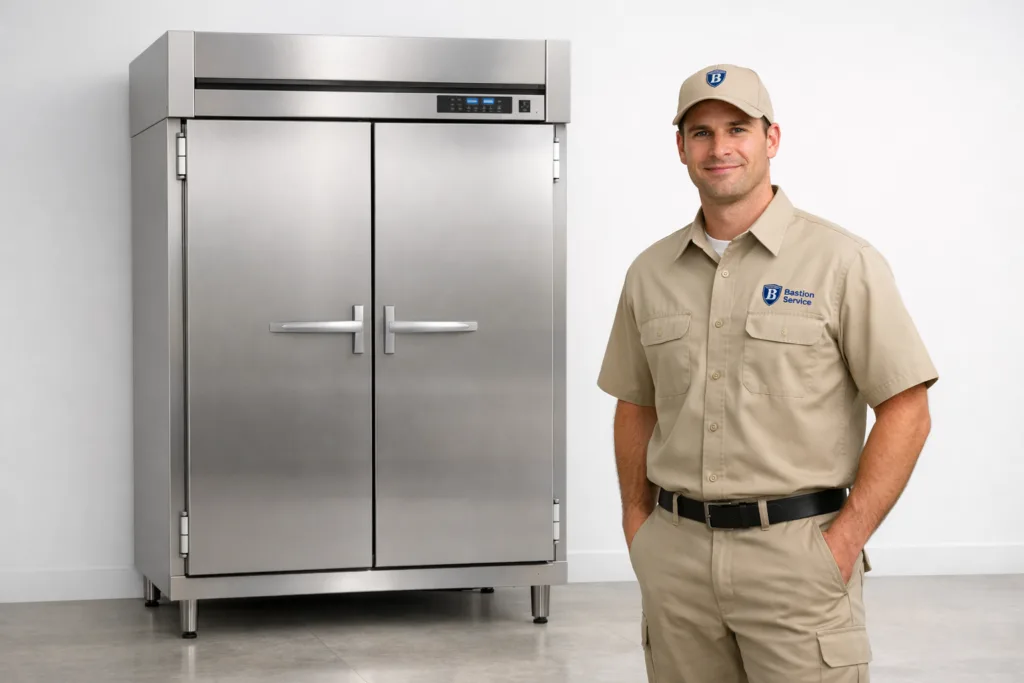




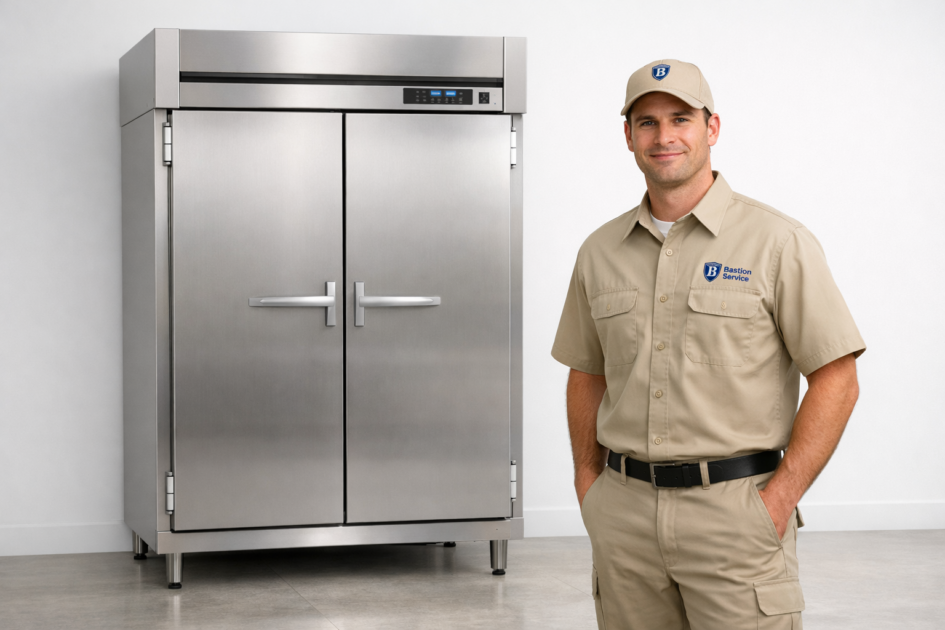
For businesses in Venice, Traulsen refrigerator and freezer problems are usually service decisions before they become full shutdowns. When cabinets start running warm, airflow drops off, frost spreads, or water appears around the unit, the next step is to schedule diagnosis based on the actual symptom pattern and the impact on daily operations. Bastion Service helps businesses in Venice assess equipment condition, identify the likely failure point, and determine whether the unit can remain in use while repair is arranged.
For specific equipment paths in Venice, review Traulsen Refrigerator Repair in Venice, Traulsen Freezer Repair in Venice, and Commercial Appliance Repair in Venice.
Traulsen refrigerator and freezer repair support for Venice businesses
Traulsen refrigeration equipment is often expected to hold steady temperatures through long operating hours, frequent door openings, and changing kitchen demands. Because of that, early warning signs do not always look dramatic at first. Staff may notice slower recovery after the door closes, uneven temperatures from shelf to shelf, new ice buildup, louder fan noise, or a cabinet that seems to run longer than usual.
Those symptoms can come from more than one source. A temperature complaint may involve airflow restrictions, fan problems, door gasket wear, controls, sensors, defrost faults, or refrigeration-system trouble. The value of a service visit is not just confirming that the unit is struggling, but narrowing down why it is happening and what repair path makes the most sense.
What Traulsen refrigeration equipment problems do you troubleshoot?
Service calls commonly involve operating issues that affect product holding, consistency, and recovery time. On Traulsen refrigerators and freezers, the most common symptom groups include:
- Cabinets running warm or failing to hold set temperature
- Freezers taking too long to recover after door openings
- Uneven cooling or weak airflow inside the cabinet
- Frost buildup on panels, around doors, or near the evaporator area
- Water leaks, pooling, or excess condensation
- Fans running loudly, intermittently, or not moving enough air
- Units that run constantly or short cycle
- Controls, sensors, or defrost-related performance problems
These symptoms matter because they often overlap. A cabinet that seems to have a thermostat issue may actually have an airflow or defrost problem. A leak may begin as a drain issue but also point to icing or temperature imbalance. Good repair planning starts with testing the system as a whole rather than replacing parts based only on the most visible complaint.
Temperature problems and warm cabinet conditions
Refrigerator sections not staying cold enough
When a refrigerator is running but internal temperatures drift upward, product safety and prep workflow can be affected quickly. In many cases, the cause is not a total loss of cooling but reduced performance. Common contributors include evaporator fan trouble, restricted condenser airflow, worn door gaskets, sensor inaccuracies, control problems, or a refrigeration issue that is preventing normal pull-down.
If staff are adjusting settings more often but results do not improve, the problem is usually beyond day-to-day operation and into repair territory. Repeated temperature drift is a sign that the equipment needs testing rather than continued guessing.
Freezer sections softening product or recovering slowly
Freezer complaints often become urgent faster than refrigerator complaints. If stored product begins softening, frost increases unusually fast, or the cabinet struggles to return to operating temperature after use, service should be scheduled promptly. Slow recovery can indicate airflow problems, a defrost issue, poor sealing at the door, or a more serious system problem placing added stress on major components.
Even if the freezer is still partially operating, delayed repair can increase product loss risk and make the final outage harder to manage.
Airflow issues and uneven cooling
One of the most common reasons a Traulsen unit feels inconsistent is poor air movement inside the cabinet. Staff may notice that one shelf stays colder than another, product near the door warms first, or the cabinet cools unevenly from top to bottom. These problems often point to evaporator fan issues, blocked internal air passages, frost interfering with circulation, or loading patterns that expose an underlying weakness in system performance.
Weak airflow tends to create secondary complaints. Once circulation drops, temperatures become harder to control, condensation may increase, and the system may run longer trying to compensate. That is why an airflow complaint should not be treated as minor if it keeps returning.
Frost buildup, icing, and defrost-related symptoms
Frost is one of the clearest signs that something in the cooling cycle is no longer working normally. In a freezer, ice accumulation can interfere with airflow, reduce usable storage space, and block components from operating as intended. In a refrigerator, ice in the wrong area may suggest a control, moisture, or drainage problem that needs attention.
Common causes include door seal leakage, defrost component failure, excessive moisture intrusion, airflow restriction, or sensors that are not reading conditions correctly. If ice is building around fan areas or interior panels, continued use can strain the system and make the actual fault harder to isolate until the unit is fully thawed and tested.
Leaks, condensation, and moisture problems
Water around refrigeration equipment is rarely just a housekeeping issue. Pooling inside the cabinet, leaking onto the floor, or heavy condensation near the doors can indicate clogged drains, gasket failure, icing that is melting unpredictably, or temperature imbalances inside the unit. For businesses in Venice, this can affect sanitation, create slip hazards, and signal a larger cooling problem developing behind the visible moisture.
Repair service helps determine whether the issue is limited to drainage and sealing or whether it connects to defrost and cooling performance. That distinction matters because recurring leaks often return until the underlying refrigeration symptom is addressed.
Constant running, short cycling, and unusual noise
A Traulsen refrigerator or freezer that seems to run all the time is telling you something, even if it is still cooling. Long run times can point to restricted airflow, dirty heat-exchange surfaces, weak door sealing, fan trouble, control issues, or system inefficiency. Short cycling, where the unit starts and stops too frequently, may indicate control or component problems that can worsen wear over time.
New noise is also important. Buzzing, rattling, clicking, or fan-related sounds often appear before a larger performance drop. When noise changes coincide with warm temperatures, frost growth, or slow recovery, it is usually best to schedule service before the symptom progresses into a no-cool condition.
When a service call makes sense before full failure
Many refrigeration problems are easier to diagnose while the unit is still operating, even if it is not operating well. If a cabinet is warming intermittently, building ice over several days, leaking during certain cycles, or showing obvious run-pattern changes, that is often the best time to arrange service. Waiting for total failure can remove useful symptom evidence and create a more disruptive scheduling situation.
Early repair attention is especially helpful when the unit supports active food storage, prep support, or frozen inventory that cannot tolerate uncertainty for long. A still-running unit can be more urgent than a fully down unit if the temperature trend is unstable and product risk is rising.
When continued use may cause more damage
There are times when using the equipment while waiting is not the best choice. If the refrigerator cannot stay in an acceptable holding range, if the freezer is no longer protecting stored product, if fans are obstructed by ice, or if leaking water is spreading outside the footprint of the unit, continued operation may increase repair scope. Components can be forced to work harder, icing can spread, and a manageable issue can become a larger breakdown.
That is why service is not only about fixing the equipment but also about deciding whether short-term use is reasonable, whether loads should be reduced, or whether the cabinet should be taken offline until repair is completed.
Repair versus replacement considerations
Not every Traulsen problem points to replacement. Many service calls lead to repair of fan motors, controls, sensors, gaskets, drains, or defrost-related parts. In other situations, repeated temperature instability, age-related wear, or deeper refrigeration-system concerns may change the decision.
For Venice businesses, the right choice usually depends on how reliably the unit can be returned to service, how often the problem has repeated, and how much downtime the operation can absorb. A proper diagnosis gives decision-makers better information than reacting under pressure after a complete outage.
Scheduling repair in Venice with operations in mind
Traulsen refrigeration repair should support the way the business actually runs. Whether the problem is a refrigerator losing consistency during active service or a freezer icing over and restricting airflow, the practical next step is to schedule an evaluation, confirm the cause, and plan repair around the urgency of the equipment’s role. If your Traulsen refrigeration equipment in Venice is showing warm temperatures, frost buildup, leaks, noise changes, or airflow problems, service scheduling now can help reduce downtime and avoid a more disruptive failure later.


