
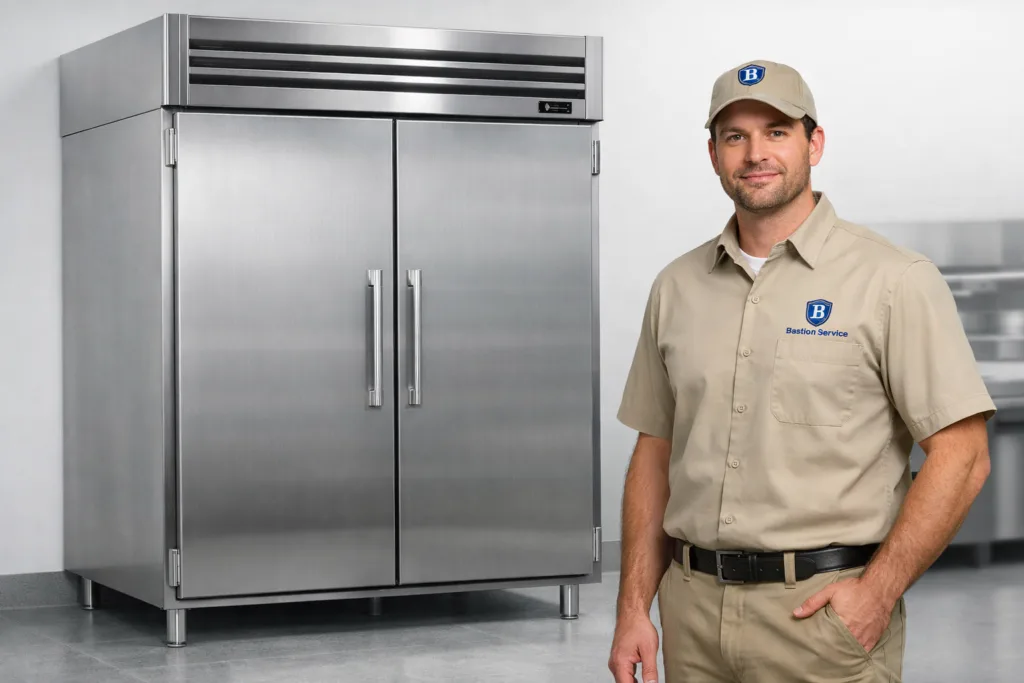




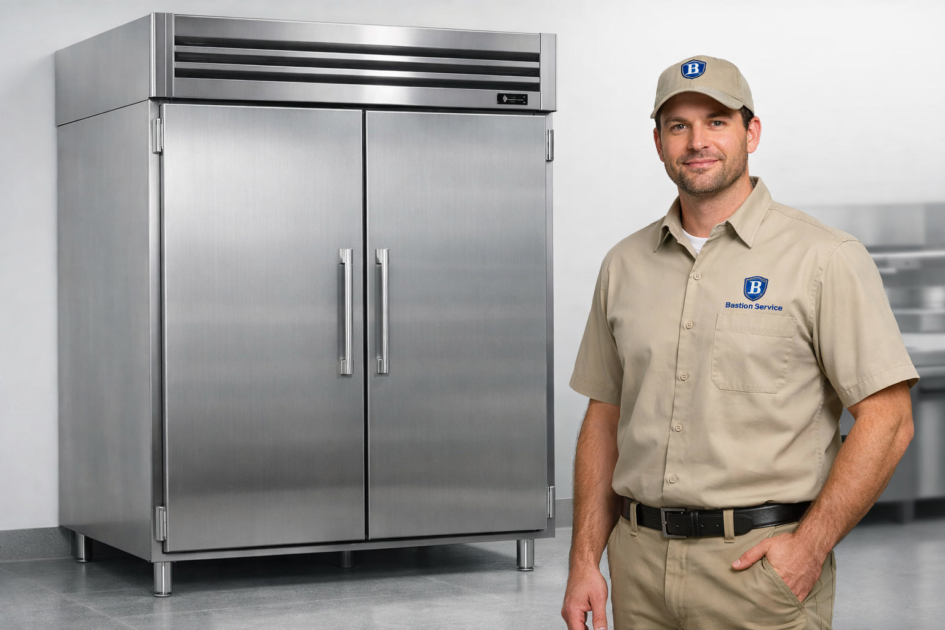
When Traulsen refrigeration equipment starts affecting daily operations, the most important next step is service that connects the symptom to a repair decision. A refrigerator that drifts warm, a freezer that struggles to recover, or a cabinet with repeated frost or leak issues can quickly create inventory risk, workflow delays, and avoidable downtime. For businesses in Sawtelle, scheduling diagnosis early helps determine whether the problem is isolated to airflow, controls, gaskets, defrost components, fans, drainage, or a larger cooling-system failure, and whether the unit should remain in use while repairs are planned.
For specific equipment paths in Sawtelle, review Traulsen Refrigerator Repair in Sawtelle, Traulsen Freezer Repair in Sawtelle, and Commercial Appliance Repair in Sawtelle.
Bastion Service works with businesses in Sawtelle that rely on Traulsen refrigerator and freezer equipment for steady holding temperatures and consistent day-to-day performance. The value of a service visit is not just identifying what is wrong, but understanding how urgent the issue is, what repair path makes sense, and how to reduce disruption while the equipment is restored.
What Traulsen refrigeration equipment problems do you troubleshoot?
Service calls often begin before a complete shutdown happens. In many cases, the unit is still running, but its performance has changed enough to create concern. Common issues include:
- Refrigerators running warm or failing to hold a steady temperature
- Freezers softening product or taking too long to pull back down
- Uneven cooling from shelf to shelf or side to side
- Frost buildup on interior panels, around doors, or near evaporator sections
- Water leaks, excess condensation, or recurring ice in the wrong areas
- Poor airflow, weak fan movement, or warm spots inside the cabinet
- Controls, sensors, or alarms behaving inconsistently
- Long run times, frequent cycling, or signs of compressor strain
These symptoms may look similar from the outside, but the repair can vary significantly. What appears to be a thermostat issue may actually be airflow restriction, a failed fan motor, door seal leakage, defrost trouble, or a sealed-system problem. That is why symptom-based diagnosis matters before parts are approved or operating decisions are made.
Refrigerator symptoms that usually need prompt service
Warm cabinet temperatures and product-risk conditions
If a Traulsen refrigerator is no longer holding a stable food-safe range, the issue should be addressed quickly. Some units show a gradual temperature drift during busy periods, while others run constantly and still cannot maintain the setpoint. This can be caused by condenser problems, sensor errors, fan failure, door gasket wear, refrigerant loss, control faults, or compressor-related wear.
Repeated setting changes by staff are often a sign that the underlying problem is not operational but mechanical or electrical. If the cabinet only seems acceptable after constant adjustment, that usually points to the need for repair rather than continued monitoring.
Uneven cooling and hot spots inside the cabinet
A refrigerator can appear functional while still creating inconsistent conditions inside. Product near one section may stay colder than product in another, or the cabinet may recover too slowly after normal door openings. These patterns often point to blocked vents, fan issues, evaporator icing, loading problems, or weak air circulation caused by failing components.
In a business setting, uneven cooling is more than an inconvenience. It can affect product quality, create uncertainty for staff, and hide a developing failure that becomes more disruptive later.
Water inside the refrigerator or around the base
Leaks and standing water often indicate drain restrictions, frozen drain lines, condensation problems, or door sealing issues. In some cases, moisture problems appear alongside temperature complaints, which can suggest a broader cooling or defrost issue. If water keeps returning after cleanup, it should be treated as a service issue rather than a housekeeping problem.
Freezer symptoms that often point to deeper performance problems
Soft product and slow recovery after door openings
When a Traulsen freezer no longer returns to temperature at a normal pace, product protection becomes the immediate concern. Slow recovery may be linked to dirty coils, weak airflow, evaporator icing, failing fan motors, refrigerant problems, or compressor stress. A freezer that seems acceptable early in the day but struggles during peak use is often showing a performance issue that needs inspection.
If product texture is changing, frost on stored items is increasing, or staff notice that the cabinet takes too long to stabilize, scheduling service is usually the safer choice.
Frost buildup and ice accumulation
Excess frost is one of the most common freezer complaints and one of the easiest to underestimate. Frost can develop because of torn gaskets, poor door closure, heavy warm-air intrusion, failed defrost heaters, control problems, sensor faults, or drainage issues. As frost builds, airflow drops and the freezer has to work harder to maintain temperature.
What starts as visible ice can turn into weak cooling, longer run times, and repeated interruption if the actual cause is not corrected. Manual defrost may provide temporary relief, but it does not fix a failed component or an air-leak condition that keeps returning.
Constant running or signs of overwork
A freezer that rarely cycles off may be compensating for heat gain, poor airflow, coil contamination, or a failing cooling system. Continued operation under those conditions puts additional stress on major components. If the unit is running heavily while still showing temperature variation or softening product, it is wise to have it evaluated before a complete failure occurs during operating hours.
How airflow, defrost, and door sealing issues overlap
Many Traulsen refrigerator and freezer problems are connected rather than isolated. A worn gasket can allow warm air into the cabinet, which increases frost formation. Frost buildup can then restrict airflow across the evaporator. Reduced airflow can create warm spots, longer run times, and poor recovery. At the same time, staff may assume the control is inaccurate when the root issue is actually a combination of air leakage and ice accumulation.
That overlap is why effective service looks at the full symptom pattern instead of treating each complaint separately. Temperature readings, fan operation, door condition, frost location, drainage behavior, and control response all help determine whether the repair is minor, moderate, or part of a larger system failure.
When monitoring is no longer the right approach
Some minor concerns can be observed briefly, but certain signs usually justify scheduling repair without delay. These include:
- Temperatures moving outside the intended holding range
- Repeated alarms or repeated resets
- Frost returning quickly after manual clearing
- Water leaking back after cleanup
- Fans not moving air normally
- Compressor noise changes or near-constant operation
- Cabinets that recover too slowly during regular use
- Any condition that creates product-loss risk
Temporary improvement does not always mean the issue is resolved. A unit that works again after being unplugged, reset, or manually defrosted often still has the original fault. In many cases, those short-term recoveries are the warning stage before a more disruptive outage.
Repair decisions for older or heavily used equipment
Not every service outcome is the same. Some Traulsen issues are relatively contained, such as gasket replacement, fan motor repair, drain correction, sensor replacement, or a specific defrost component failure. Others involve compressor or sealed-system work, especially when the equipment has been operating under strain for a long time or has a history of recurring breakdowns.
For businesses in Sawtelle, the right decision often comes down to reliability, timing, and operational impact rather than parts cost alone. If the cabinet structure is still sound and the problem is limited, repair may be the best path. If the equipment has repeated cooling failures, unstable performance, and a major system issue on top of existing wear, replacement planning may need to be part of the conversation.
What a service visit should help you decide
A useful refrigeration service visit should answer more than whether a part failed. It should help clarify how the unit is behaving under load, whether continued operation creates added risk, which repair is most likely to restore stable performance, and how urgent the work is based on the symptom pattern. That information helps managers protect inventory, adjust operations if needed, and avoid being forced into decisions during a full outage.
If your Traulsen refrigerator or freezer in Sawtelle is showing warm temperatures, weak airflow, frost buildup, leaks, or slow recovery, the practical next step is to schedule service and confirm the repair path before the problem affects operations more severely. Early evaluation can help reduce downtime, support better repair planning, and restore more consistent equipment performance.


