
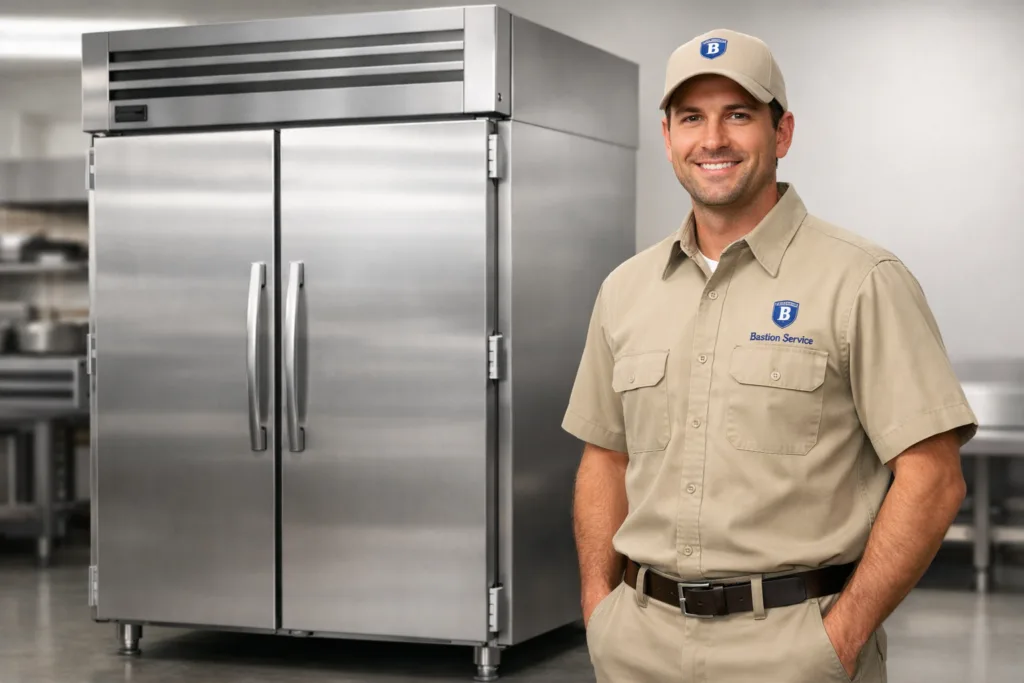




When a Traulsen refrigerator or freezer starts drifting out of range, building frost, or showing inconsistent performance, the next step is usually to get the equipment evaluated before a minor issue turns into product loss or a service interruption. For businesses in El Segundo, refrigeration equipment problems rarely stay isolated for long; a fan issue, door seal failure, control fault, or defrost problem can quickly affect holding temperature, recovery time, and staff workflow. Bastion Service helps businesses assess symptom severity, determine whether the unit should remain in use, and schedule repair based on actual operating risk.
For specific equipment paths in El Segundo, review Traulsen Refrigerator Repair in El Segundo, Traulsen Freezer Repair in El Segundo, and Commercial Appliance Repair in El Segundo.
What Traulsen refrigeration equipment problems do you troubleshoot?
Traulsen refrigeration equipment can show problems in different ways depending on whether the issue starts with airflow, temperature control, defrost, moisture, or component wear. The most common symptom groups include:
- Refrigerators or freezers running but not holding set temperature
- Warm cabinets or uneven cooling from top to bottom
- Slow freezer recovery after door openings
- Frost buildup on panels, product areas, or evaporator sections
- Water leaks, condensation, or recurring interior moisture
- Weak airflow or blocked circulation inside the cabinet
- Excessive run time, short cycling, or unusual stopping and starting
- Noise from fans, vibration, buzzing, or clicking during operation
Those symptoms do not all point to the same repair. A cabinet that feels warm may have an airflow restriction, a control issue, a failing fan motor, a door sealing problem, or a more serious cooling-system fault. That is why symptom-based diagnosis matters before decisions are made about unloading product, continuing operation, or scheduling immediate repair.
Temperature problems in Traulsen refrigerators and freezers
When the cabinet runs but does not stay cold enough
One of the most common service calls involves equipment that appears to be operating normally but cannot maintain the target temperature. In refrigerators, this may show up as product warming near the door, inconsistent readings during the day, or long run cycles that never seem to catch up. In freezers, the same pattern can look like soft product, extended pull-down times, or temperatures that recover too slowly after normal use.
Possible causes can include dirty heat-exchange surfaces, evaporator or condenser fan problems, sensor faults, control issues, door gasket leakage, or loss of cooling capacity. Because several different faults can create the same temperature complaint, businesses usually benefit from having the unit checked before staff assume the problem is only usage-related.
Why intermittent temperature drift is easy to underestimate
Some Traulsen units fail gradually rather than all at once. Temperatures may look acceptable in the morning, then rise during heavier kitchen activity or frequent door openings. That kind of inconsistency often leads operators to delay service because the equipment has not stopped completely. The problem is that intermittent cooling issues can put extra stress on key components and create a narrower margin for safe holding conditions.
If the display and actual cabinet conditions do not seem to match, or if one area is cooling differently from another, it is worth treating the issue as a repair matter instead of a minor nuisance.
Airflow restrictions, warm zones, and slow recovery
Airflow problems are a major reason refrigerators and freezers stop performing as expected. When circulation is weak, some shelves may stay colder than others, product near the back may freeze while front rows warm up, or the cabinet may take longer to recover after doors are opened. In freezers, weak airflow can also contribute to ice formation that makes the original problem worse.
Airflow-related symptoms may involve fan motor failure, ice accumulation around evaporator sections, blocked passages, loading patterns that restrict circulation, or control and defrost faults that allow ice to interfere with normal movement of cold air. In a busy operation, poor airflow affects more than temperature alone; it can slow service, complicate stocking decisions, and increase the chance that staff rotate product into a unit that is no longer performing evenly.
Frost buildup and ice accumulation
What frost usually indicates
Frost on a Traulsen refrigerator or freezer is often a sign that moisture is entering where it should not, or that the unit is not completing normal defrost and airflow functions properly. Frost around doors can point to gasket wear or alignment issues. Frost inside storage areas or near evaporator sections may suggest circulation problems, defrost component failure, or temperature conditions that are allowing moisture to freeze repeatedly.
Businesses sometimes clear visible frost and continue using the equipment, only to see the same buildup return within a short period. When that happens, the frost is usually a symptom of an underlying repair issue rather than something that can be solved by temporary cleaning alone.
When ice buildup starts affecting operation
Once ice begins interfering with airflow, door closure, or normal cycle timing, the equipment may start running longer and recovering more slowly. That can lead to warmer cabinet conditions, excess strain on components, and a harder shutdown if the issue continues. If frost is increasing quickly or is paired with temperature drift, it makes sense to schedule service before the unit loses reliability during normal use.
Water leaks, condensation, and interior moisture
Leaks and moisture problems often seem less urgent than a complete cooling failure, but they can create both equipment and workplace issues. Water on the floor introduces slip risk. Moisture inside the cabinet can affect packaging, product storage conditions, and sanitation. Condensation around doors or panels can also signal that the refrigerator or freezer is not sealing or cycling correctly.
Depending on the symptom pattern, the cause may involve a blocked drain, excessive frost melt, poor door sealing, insulation concerns, or broader cooling-performance problems. If moisture keeps returning after cleanup, appears with warmer temperatures, or is collecting near sensitive components, it is usually better to schedule repair than keep monitoring it without inspection.
Unusual sounds, cycling changes, and warning signs before a no-cool event
Not every developing refrigeration problem starts with warm product. Sometimes the first clue is a change in sound or run behavior. Buzzing, clicking, fan scraping, vibration, or repeated starting and stopping can indicate that a component is under strain or being obstructed. In some cases the sound comes from panels or mounting hardware, but in others it points to fan motor wear, electrical component trouble, ice interference, or compressor-related stress.
When unusual noise appears together with frost, slower recovery, or inconsistent cabinet temperatures, the combination is more significant than the sound alone. For business operators, that is often the point where scheduling diagnosis helps avoid a full loss of cooling during operating hours.
How repair decisions are usually made
For Traulsen refrigeration equipment in El Segundo, the practical question is not simply whether something is broken. The real decision is whether the current symptom pattern supports continued use, urgent repair, or a broader discussion about replacement timing. Straightforward issues such as gaskets, fan motors, controls, drains, or defrost-related components may be repairable without changing long-term equipment plans. Repeated temperature failures, major cooling-capacity loss, or multiple age-related issues may shift the conversation toward replacement planning.
The value of service is in confirming what has failed, identifying how the problem affects current operation, and helping the business decide what should happen next. That is especially important when the unit still runs but no longer performs reliably enough for daily kitchen or storage demands.
When to schedule service instead of continuing to monitor
It is usually worth moving from observation to repair scheduling when you notice one or more of the following:
- The cabinet is running longer than normal and still feels warm
- Freezer temperatures recover too slowly after routine door use
- Frost returns quickly after being cleared
- Water or condensation keeps appearing around the unit
- Airflow feels weak or product temperatures vary by location
- Alarms, unusual noise, or cycling changes are becoming more frequent
Early service often helps preserve options. A unit that is partially operational may still allow for scheduled repair and controlled inventory decisions, while a delayed call can turn the same issue into an urgent outage with less flexibility for the business.
Service support for Traulsen refrigeration equipment in El Segundo
For businesses relying on Traulsen refrigerators and freezers in daily operations, repair decisions usually come down to protecting uptime, product condition, and staff efficiency. If your equipment is showing temperature drift, frost buildup, airflow problems, leaks, or signs of reduced cooling performance, scheduling service is the most practical next step to confirm the fault, understand the downtime risk, and move toward repair with a clear plan.


