
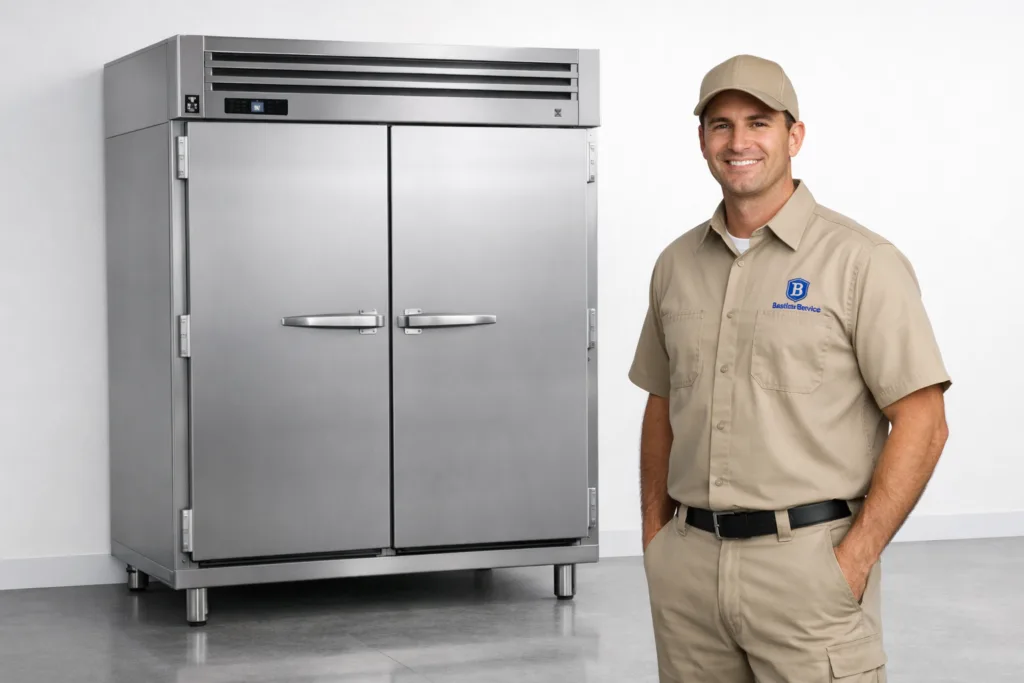




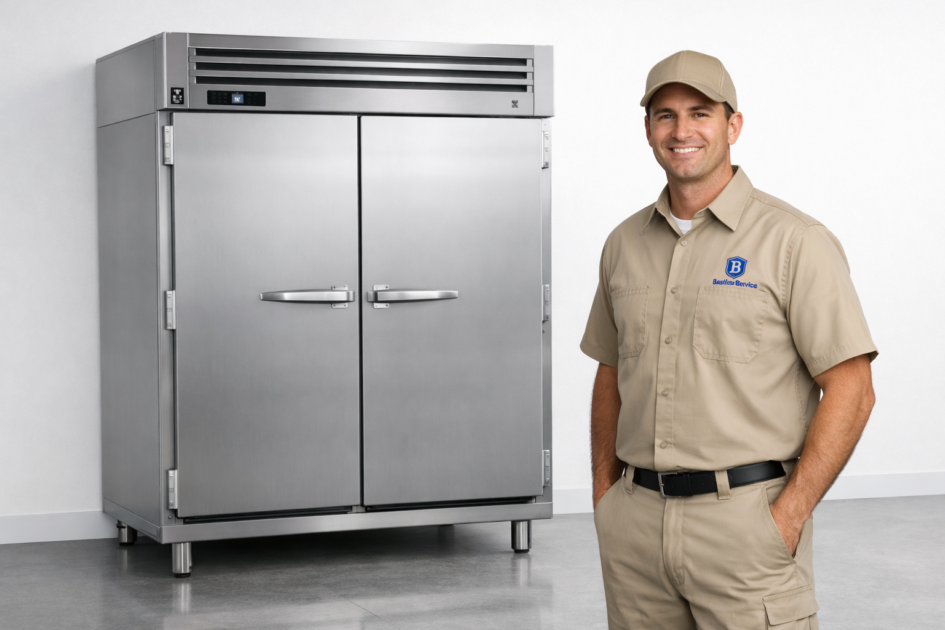
When Traulsen refrigeration equipment starts running outside normal conditions, the impact is usually immediate: product risk, slower kitchen flow, extra staff workarounds, and uncertainty about whether the unit will hold through the next shift. For businesses in Century City, the most useful response is service based on the actual symptom pattern so repair timing, parts planning, and downtime decisions are made with real equipment conditions in mind.
For specific equipment paths in Century City, review Traulsen Refrigerator Repair in Century City, Traulsen Freezer Repair in Century City, and Commercial Appliance Repair in Century City.
Bastion Service works with local businesses that rely on Traulsen refrigerator and freezer equipment during daily operations. Whether the issue looks like warming, frost, leaking, airflow loss, or repeated recovery problems, service is most effective when the fault is identified early and the repair path is tied to how the equipment is being used.
What Traulsen refrigeration equipment problems do you troubleshoot?
Traulsen refrigeration equipment can show a wide range of symptoms before a complete cooling failure happens. Some problems are obvious, such as a warm cabinet or heavy frost. Others develop more gradually, including long run times, uneven temperatures, noise changes, or water around the unit. Because the same symptom can come from different causes, troubleshooting needs to separate control issues, airflow restrictions, defrost faults, door sealing problems, fan failures, and larger refrigeration-system concerns.
- Refrigerators running warm or struggling to recover after door openings
- Freezers softening product or failing to maintain low temperature
- Frost buildup on interior panels, evaporator areas, or around doors
- Water leaks, excess condensation, or drain-related moisture problems
- Uneven cabinet temperatures from top to bottom or side to side
- Noisy operation, fan interference, clicking, buzzing, or constant running
- Airflow complaints that affect holding performance
- Intermittent alarms or temperature swings that return after reset
These symptoms matter because they affect more than the equipment itself. They can interrupt prep schedules, create food safety concerns, and make it difficult for staff to trust storage conditions during busy service periods.
Refrigerator and freezer temperature problems
Warm cabinets and slow recovery
If a refrigerator is no longer holding temperature or a freezer takes too long to pull back down after normal use, the cause may be something simple or something more involved. Dirty coils, restricted airflow, failing fan motors, sensor problems, control faults, door gasket leakage, defrost issues, and sealed-system trouble can all show up as weak cooling.
What matters from a service standpoint is not just that the cabinet is warm, but how it is warming. A unit that runs constantly and never satisfies may point to one set of problems, while a unit that cools for a time and then drifts upward may point to another. That difference affects repair decisions, urgency, and whether continued operation risks additional damage.
Temperature swings that appear off and on
Intermittent temperature loss is often one of the hardest issues for staff to judge because the equipment may seem normal during part of the day. In practice, repeated fluctuation can be tied to failing sensors, inconsistent fan operation, defrost timing errors, ice accumulation, or components that stop performing once they are under load.
When staff notice that product temperature or cabinet readings are not stable, it is usually a sign to schedule inspection before a full shutdown occurs. Waiting for the failure to become constant can increase disruption and make inventory planning harder.
Airflow loss, frost buildup, and ice formation
Traulsen refrigerator and freezer equipment depends on steady air movement to keep temperatures consistent throughout the cabinet. When airflow drops, businesses may notice warm spots, frozen spots, poor pull-down, or product quality changes that do not make sense at first glance.
Airflow problems commonly relate to fan issues, blocked passages, frost-covered evaporator sections, damaged gaskets, or another cooling fault that is forcing the system to work harder than normal. In many cases, the visible symptom is frost, but the underlying issue is broader than ice alone.
When frost is a warning sign
Heavy frost is rarely just a cosmetic issue. It can reduce air movement, interfere with proper door sealing, change internal temperatures, and make the unit less efficient. A freezer with repeated ice accumulation or a refrigerator that develops unexpected frost may be dealing with defrost failure, moisture intrusion, drain issues, or control problems.
If staff are clearing frost repeatedly just to keep the unit usable, that usually means the underlying condition still needs repair. Allowing the problem to continue can lead to more severe performance loss and additional wear on fans and related components.
Leaks, condensation, and moisture around the unit
Water on the floor or inside the cabinet should not be treated as a minor housekeeping issue. Moisture problems can point to blocked drains, poor defrost management, damaged door seals, air infiltration, or ice melting where it should not. In a busy business environment, that also creates a slip hazard and can complicate sanitation procedures.
Leaks become more urgent when they appear alongside warm temperatures, visible ice, or unusual run patterns. That combination often suggests that the equipment is no longer controlling both temperature and moisture correctly. A service visit can determine whether the problem is isolated to drainage or connected to a larger cooling or defrost issue.
Noise changes, long run times, and constant operation
Refrigeration equipment often provides early warning through sound and runtime behavior. Buzzing, rattling, clicking, fan scraping, or a cabinet that seems to run nearly nonstop may indicate that the unit is compensating for a fault rather than operating normally.
Some noise complaints come from fan blades contacting ice, worn motors, loose hardware, or stress within the refrigeration system. Constant running may point to heat not being removed efficiently, controls not regulating correctly, leaking door seals, or cooling capacity that is starting to drop. These are important service indicators because they often appear before a total loss of cooling.
How symptom patterns affect repair planning
Not every issue requires the same response timeline. A unit with mild but repeatable temperature drift may allow for scheduled service during a manageable window, while a freezer that is already softening product may need immediate attention. The practical next step depends on cabinet temperature, product sensitivity, how often the symptom is occurring, and whether performance is getting worse quickly.
Repair planning usually becomes more urgent when businesses notice one or more of the following:
- Cabinets no longer staying in expected temperature range
- Recovery times getting longer after normal door openings
- Repeated alarm conditions or staff resets
- Visible frost returning soon after it is cleared
- Water leaks paired with cooling complaints
- Noise changes followed by weaker performance
- One section of the cabinet holding differently than another
In some situations, equipment can remain in limited use until parts are available. In others, continued operation may increase stress on major components or put stored product at risk. That is why symptom-based evaluation matters before deciding to keep the unit online.
When repair may still make sense
A Traulsen refrigerator or freezer showing performance issues does not automatically need replacement. Many problems are repairable when addressed before prolonged operation causes secondary damage. Fans, controls, sensors, defrost-related components, airflow restrictions, drain problems, and sealing issues can all affect performance without meaning the cabinet itself is at the end of its useful life.
Replacement becomes a more serious consideration when the repair scope is extensive, reliability has already been declining over time, or a major system failure is combined with broader equipment wear. For most business owners, the real question is whether the repair will support stable operation rather than simply restarting the equipment for a short period.
Service decisions for Century City businesses
In Century City, refrigeration equipment problems are easiest to manage when service is scheduled before a partial fault turns into a full outage. Restaurants and other food-service businesses often feel these issues first through prep delays, inventory concerns, and staff time spent monitoring a unit that no longer behaves predictably. Early inspection helps clarify whether the problem is isolated, how urgent the repair is, and what operational adjustments may be needed in the meantime.
If your Traulsen refrigeration equipment is running warm, building frost, leaking, losing airflow, or showing unstable cabinet performance, the best next step is to arrange a diagnosis and repair evaluation based on the actual symptoms. That gives your business a clearer repair path, more realistic scheduling expectations, and a better chance of limiting downtime before the problem spreads.


