
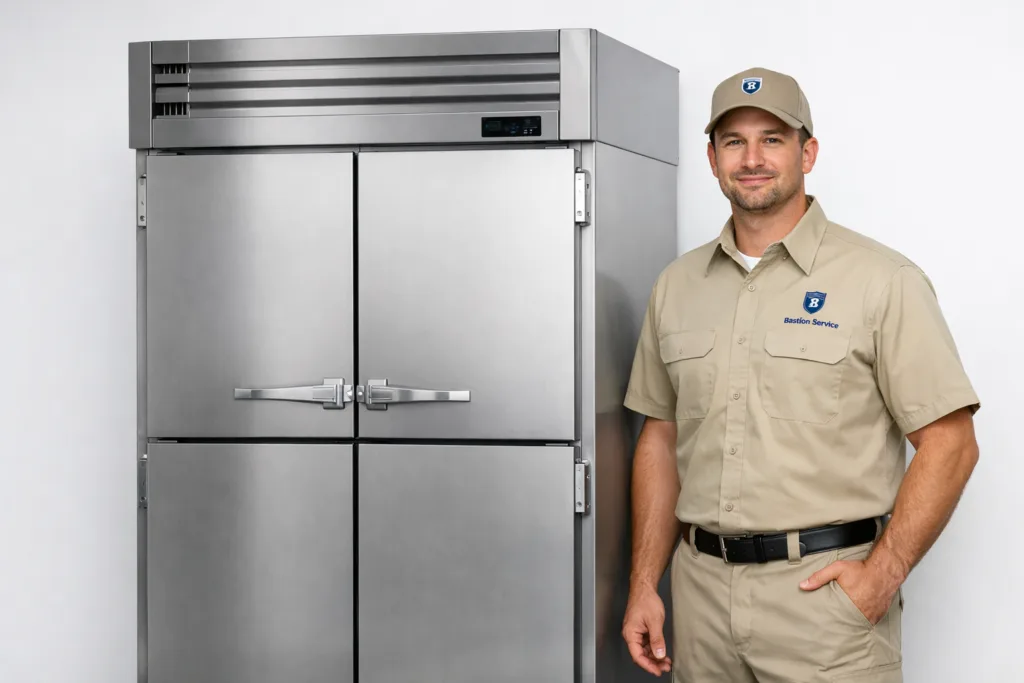





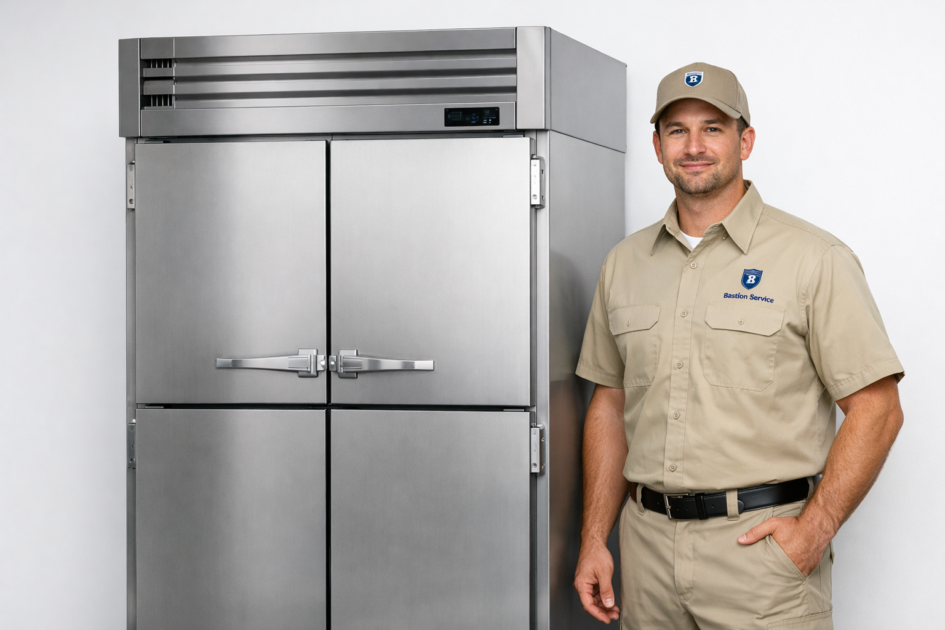
When Traulsen refrigeration equipment starts disrupting storage, prep flow, or daily service, the next step is usually not guesswork or repeated resets. The priority is to identify the actual fault, determine whether the unit can stay in use safely, and schedule repair based on how much downtime the problem is already causing. For Brentwood businesses that rely on refrigerator and freezer performance throughout the day, symptom-based diagnosis helps protect inventory and keeps repair decisions tied to operations rather than assumptions.
For specific equipment paths in Brentwood, review Traulsen Refrigerator Repair in Brentwood, Traulsen Freezer Repair in Brentwood, and Commercial Appliance Repair in Brentwood.
Bastion Service works with business operators in Brentwood who need timely evaluation of Traulsen refrigeration equipment that is running warm, building frost, leaking, cycling oddly, or struggling to recover after normal door openings. A service visit should clarify what is failing, how urgently the issue needs attention, and whether the equipment is a good candidate for repair versus a larger replacement discussion.
What Traulsen refrigeration equipment problems usually indicate
Refrigeration problems rarely appear in only one form. A warmer cabinet may also come with longer run times. Frost buildup may show up alongside weak airflow. Water on the floor may trace back to a defrost or drain problem rather than an isolated leak. Looking at the full symptom pattern is important because refrigerator and freezer issues often overlap.
In Traulsen equipment, common causes can include fan problems, door gasket wear, drain restrictions, defrost component failure, sensor or control issues, airflow obstructions, and deeper cooling-system performance loss. The visible symptom matters, but what matters more is whether the unit is still holding safe temperatures and how quickly the condition is getting worse.
Warm cabinets and temperature drift
If a refrigerator section feels warmer than normal or a freezer is no longer holding target temperature, the cause may range from a simple sealing problem to a more involved cooling or control fault. Some units run constantly but still struggle to pull down. Others cycle on and off while temperatures swing more than they should. Either pattern points to the need for inspection.
For businesses, temperature drift is often the symptom that creates the most immediate risk. Product quality, food safety, and service timing can all be affected before the equipment stops cooling completely. When the cabinet is still partially cold, that should not be mistaken for stable operation. It often means the fault is progressing.
Freezer recovery issues after door openings
Freezers that take too long to recover after normal use can create problems even when the unit seems functional at first glance. Longer pull-down times may suggest airflow restriction, evaporator icing, fan weakness, or declining refrigeration performance. In busy kitchens and storage areas, slow recovery can lead to soft product edges, uneven cabinet conditions, and complaints that seem to come and go during the day.
This is one of the reasons repair planning should be based on operating pattern, not just a single temperature check. A freezer that looks acceptable during a quiet period may struggle during active service.
Refrigerator and freezer symptom groups to watch
Airflow problems and uneven cooling
Uneven cabinet temperatures are a common complaint with refrigeration equipment used heavily throughout the day. One shelf may feel too warm while another area near a vent becomes too cold. Product may cool inconsistently, or a freezer may seem solid in one section and weaker in another. These patterns often point to circulation problems rather than a simple thermostat concern.
Airflow issues can come from blocked passages, evaporator icing, fan motor problems, damaged components, or controls that are no longer managing the cooling cycle correctly. Because weak circulation can mimic a larger cooling failure, diagnosis helps avoid replacing the wrong part while the underlying cause continues.
Frost buildup, ice formation, and door seal concerns
Frost inside a Traulsen freezer or around evaporator areas usually means moisture is entering where it should not, or defrost operation is not happening properly. In refrigerators, excess condensation and moisture can also suggest door sealing problems, temperature control issues, or drainage trouble. If frost keeps returning after manual clearing, the issue is not resolved.
Over time, ice buildup can choke airflow, force longer run times, and create secondary failures. A door that does not close tightly can accelerate the problem by allowing warm, humid air to enter all day long. What starts as a minor frost complaint can become a holding-temperature problem and then a no-cooling event if left alone.
Leaks, water under the unit, and interior moisture
Water around refrigeration equipment should be taken seriously because it can point to more than one failure path. A blocked drain, iced evaporator, condensation issue, or defrost-related problem can all lead to visible water. In a business setting, leaks also increase slip risk and can affect surrounding flooring, stored goods, and nearby equipment.
Interior moisture matters too. If shelves, walls, or product surfaces are staying wet, it may indicate warm air intrusion, unstable temperature control, or drainage issues that need repair. The source of the water is what determines whether the unit can keep operating while service is scheduled.
Constant running, short cycling, or unusual operating behavior
Some Traulsen units develop a pattern where they seem to run all the time but do not cool well. Others start and stop too frequently. Both situations can signal sensor trouble, airflow restriction, control problems, dirty heat-exchange conditions, fan faults, or declining cooling capacity. Unusual cycling should not be dismissed just because the cabinet is still somewhat cold.
When operating behavior changes, the business impact usually follows soon after. Energy use rises, component strain increases, and the chance of a complete interruption goes up. Early repair often prevents a broader failure that affects service hours or product storage planning.
When a business should schedule repair
Repair should generally be scheduled when refrigerator or freezer performance is no longer predictable. That includes cabinets running warm, recurring alarms, growing frost, slower recovery, water around the base, odd noises tied to fans or cycling, and any condition where staff no longer trust the holding temperature. Even if the unit is still operating, unreliable cooling is already an operational problem.
It is especially important to act quickly when:
- Stored product is at risk because temperatures are drifting during active hours
- The freezer is icing up enough to restrict airflow
- The unit runs constantly without reaching normal temperature
- Moisture or leaks are creating floor hazards
- Multiple symptoms appear at the same time
- The equipment serves critical daily storage with little backup capacity
In these situations, waiting can turn a manageable repair into a larger outage with product loss and scheduling disruption.
Repair decisions for Traulsen refrigerator and freezer equipment
Not every refrigeration problem points toward replacement. Many service calls involve repairable issues such as fan motors, gaskets, controls, sensors, drains, defrost components, or airflow-related faults. In other cases, the age of the equipment, repeat history, or extent of cooling-system trouble may make replacement planning part of the conversation.
The most useful repair decision is usually based on a few practical factors:
- Whether the unit can reliably return to normal operating temperature
- The condition of the cabinet, doors, and major components overall
- How often the equipment has needed recent service
- The cost and scope of the current repair
- The effect of downtime on the business if the issue returns
That evaluation helps owners and managers compare immediate repair value against future interruption risk instead of reacting only to the latest symptom.
What a service visit should help clarify
A useful refrigeration service visit should answer more than whether one part has failed. It should help the business understand whether the refrigerator or freezer can remain in operation temporarily, whether the condition is likely to worsen quickly, what repair path makes sense, and how to schedule the work with the least disruption to staff, storage, and daily throughput.
If your Traulsen refrigeration equipment in Brentwood is showing warm cabinet conditions, unstable temperatures, frost buildup, airflow trouble, water leaks, or freezer recovery problems, the most practical next step is to schedule service so the fault can be confirmed and the repair can be planned before downtime spreads into a larger operating problem.


