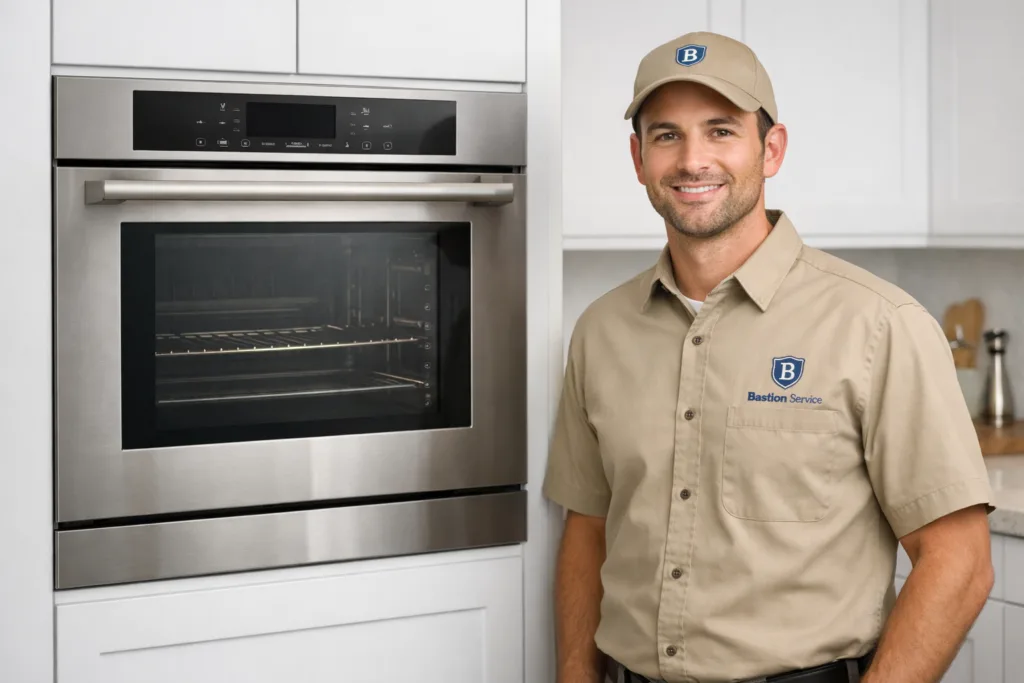
Thermador ovens are built for precise cooking, so even a small fault can show up quickly in daily use. A roast that finishes unevenly, cookies that brown too fast on one side, or a cavity that never reaches the selected temperature usually points to a component problem rather than a simple setting issue. In Century City homes, the key is matching the symptom to the likely failure before any repair decision is made.
Related Thermador and oven service paths in Century City include Thermador Appliance Repair in Century City, Oven Repair in Century City, and Thermador Refrigerator Repair in Century City.
How Thermador oven issues usually show up
Many oven problems begin subtly. Preheat may take longer than it used to, baked dishes may need extra time, or broil performance may seem weaker than normal. In other cases, the change is obvious: the oven will not start, the display flashes an error, or the door stays locked. Because several parts affect heat production and temperature control, the same complaint can have more than one cause.
On Thermador models, symptoms often involve the interaction between heating components, sensors, control boards, fans, and door systems. That is why a symptom-based approach is more useful than replacing parts based on guesswork alone.
Common Thermador oven symptoms and what they can mean
Oven not heating at all
If the control panel appears normal but the oven cavity stays cool, the fault may involve an igniter, bake element, relay, sensor circuit, or incoming power issue depending on the model. A unit that turns on without producing usable heat is usually dealing with a failed heating path somewhere in the system.
This symptom matters because some ovens will continue to look fully functional from the outside while never reaching cooking temperature. That can lead to undercooked food, wasted time, and confusion about whether the oven is actually running properly.
Slow preheat
Slow preheat often points to a weak igniter, partially failed element, sensor inaccuracy, or a control problem that is not delivering full heat when it should. If preheat has gradually become slower over time, that pattern can be especially helpful in narrowing down the cause.
Homeowners sometimes adapt by starting meals earlier, but persistent delay usually means the oven is no longer operating as intended. Left alone, a slow-preheat issue can develop into a no-heat complaint.
Uneven baking
Uneven baking is one of the most frustrating problems because the oven still seems usable, just unreliable. Food may brown too much on the bottom, stay pale on top, or cook differently from rack to rack. In a Thermador oven, that can point to poor heat circulation, a temperature sensor issue, convection trouble, or inconsistent cycling from the control system.
When this happens repeatedly with different recipes and cookware, the problem is usually with the appliance rather than the food being prepared.
Temperature swings or overheating
If the oven runs hotter than the set temperature, burns food early, or has wide swings during baking, the sensor and control system are often the first areas to evaluate. Some ovens also show this problem as repeated overcooking on one cycle and undercooking on the next.
Temperature instability makes it difficult to trust the appliance, especially for baking or roasting where consistency matters. Continued use can also place extra strain on relays and heating components.
Control panel or display problems
A blank display, unresponsive keypad, flashing codes, or a panel that accepts selections inconsistently can stop the oven from operating even if the heating hardware is still intact. Thermador control issues may be intermittent at first, which can make them harder to pinpoint without proper testing.
If the panel resets on its own, loses settings, or fails during preheat, it is usually a sign that the problem is not just cosmetic.
Door latch or lock issues
An oven door that will not close correctly, will not latch, or remains locked after a cycle can interrupt normal operation. Some models will not heat at all if the door system is not reading correctly. Others may stop mid-cycle or show a door-related error.
Because door alignment, latch mechanisms, and lock switches can all play a role, this is another symptom where the exact cause matters before parts are ordered.
Signs the problem is getting worse
Some warning signs suggest the fault is progressing and should not be ignored:
- Preheat times keep getting longer from week to week
- The oven reaches temperature only part of the time
- Food quality changes even when recipes have not changed
- The unit shuts off during use
- Error codes return after being cleared
- The display works, but heating performance does not match the setting
- The oven trips power or behaves unpredictably during cooking
When the same symptom repeats across multiple cooking cycles, it is usually more than a one-time interruption.
When to stop using the oven and schedule service
It is smart to stop using the oven if it overheats, smells unusually hot during normal baking, will not regulate temperature, keeps locking unexpectedly, or loses power during operation. The same applies if it only heats sporadically or requires repeated resets to start a cycle.
For households in Century City, service is often the better next step once the appliance becomes unreliable enough to affect normal cooking. Waiting can turn a smaller repair into a larger one if repeated use stresses already-failing parts.
Repair or replace?
Many Thermador oven problems are repairable, especially when the issue is limited to a sensor, igniter, element, fan motor, latch assembly, or a specific control-related component. Replacement usually becomes a stronger consideration when the oven has multiple major failures, recurring electronic problems, or repair costs that no longer make sense for the condition of the unit.
A practical repair plan should consider:
- The exact confirmed failure
- The age and overall condition of the oven
- Whether the problem is isolated or part of a larger pattern
- How the appliance has performed aside from the current issue
- Whether the repair restores reliable daily use
Premium ovens are often worth repairing when the fault is specific and the rest of the appliance remains in solid condition.
What homeowners in Century City usually want to know
Most people are not looking for a technical lecture. They want to know why the oven is failing, whether it is safe to keep using, and whether the repair is likely to solve the problem for normal household cooking. That is especially true when the symptom seems inconsistent, such as occasional no-heat cycles or uneven baking that comes and goes.
The most helpful service process starts with the symptom pattern, confirms the failed part or system, and explains the repair path in plain language. That makes it easier to decide whether to move forward with the fix or consider replacement instead.
Problems that should not be dismissed as “normal aging”
Some performance changes get written off as an older oven slowing down, but they often point to a correctable fault. These include a broiler that no longer browns properly, an oven that needs extra time for familiar recipes, a cavity that feels hotter than the display suggests, or controls that only respond after several presses.
Those issues may seem manageable at first, but they usually indicate declining performance in a specific system. Addressing them earlier can help avoid more disruptive breakdowns later.
Choosing service for a Thermador oven in Century City
For Thermador Oven Repair in Century City, the most useful starting point is a symptom-focused evaluation of how the oven heats, cycles, responds to commands, and behaves over repeated use. That approach helps separate a repairable component failure from a broader problem and gives homeowners a clearer basis for the next step.
Whether the complaint is no heat, uneven results, slow preheat, or control trouble, the goal is the same: restore predictable cooking performance and avoid unnecessary part replacement.