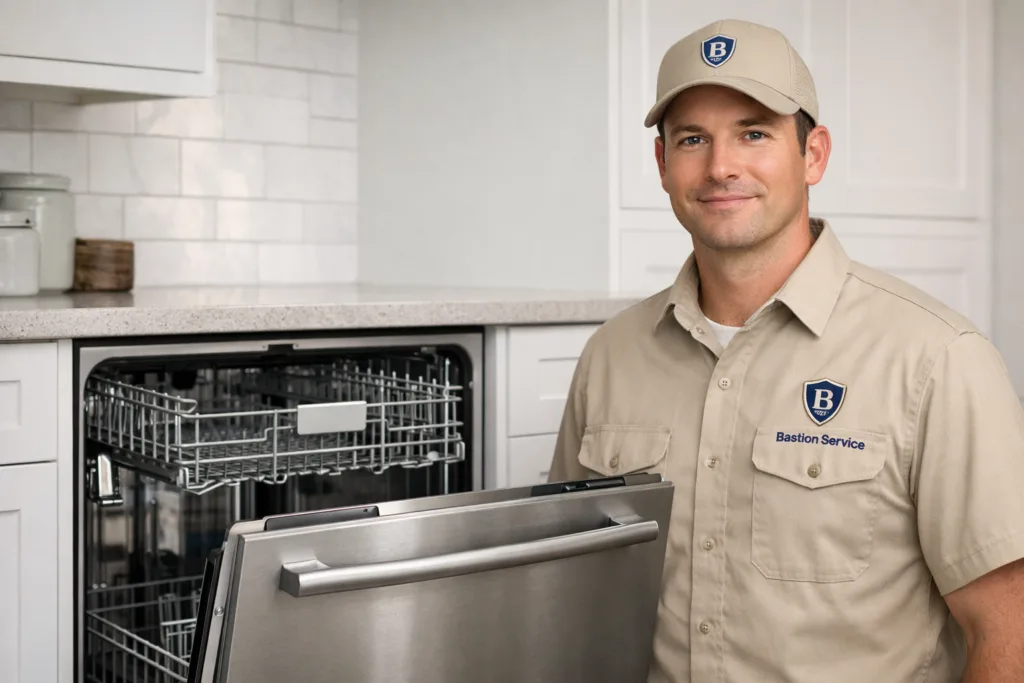
Dishwasher problems are easier to solve when the symptom is narrowed down early. With Thermador units, the same visible issue can come from very different failures, so it helps to look at what the machine is doing before assuming a part is bad. Poor cleaning, standing water, leaks, interrupted cycles, and low rinse temperature each point to different systems inside the dishwasher.
Related Thermador and dishwasher service paths in Century City include Thermador Appliance Repair in Century City, Dishwasher Repair in Century City, and Thermador Refrigerator Repair in Century City.
Common Thermador dishwasher symptoms and what they may mean
Many homeowners first notice a change in results rather than a total breakdown. The dishwasher may still turn on and complete part of a cycle, but performance slips in ways that suggest a developing mechanical, drainage, or control problem.
Dishes come out dirty, gritty, or cloudy
If plates and glasses are not coming clean, the problem may involve restricted spray arms, clogged filters, weak circulation, poor water distribution, or a dispenser issue. Cloudiness can also be tied to mineral buildup, but when the same residue keeps showing up despite normal loading and detergent use, the wash system itself should be checked.
This symptom often shows up gradually. A dishwasher may seem mostly functional for weeks while wash pressure gets weaker or debris begins recirculating through the tub.
Water is left in the bottom after the cycle
Standing water usually points to a drain restriction, drain pump issue, installation-related drainage problem, or intermittent control failure. If the machine sometimes drains and sometimes does not, that inconsistency is important. Intermittent drainage often means the problem is progressing rather than staying minor.
When water remains in the tub, odors tend to build quickly, and food debris can collect in the sump and filter area. Continued use may make the eventual repair more involved.
Leaks during washing or after the cycle ends
Leaks can come from more than one place. A worn door gasket is one possibility, but water can also escape because of internal spray issues, sump problems, loose connections, or oversudsing from the wrong soap. The location of the moisture matters. Water at the front of the dishwasher may suggest a different cause than water appearing underneath or off to one side.
Even a small leak should be taken seriously. Repeated use can allow moisture to spread below the appliance and affect nearby flooring or cabinetry.
The dishwasher starts, then stops or will not run properly
If the control panel responds but the cycle does not proceed normally, the issue may involve the door latch, control board, sensors, or a power-related interruption. Some Thermador dishwashers will appear to begin a cycle and then pause, cancel, or remain stuck at a certain stage when a component is not reporting correctly.
This kind of problem is easy to misread because it can look like a simple reset issue when the underlying cause is a failed latch, sensor, or electronic control fault.
Low rinse temperature or poor drying
When dishes are wet at the end of the cycle or sanitizing performance seems weak, the dishwasher may not be heating properly. A heating-related problem can affect drying, final rinse temperature, and overall cleaning results. Glassware may come out damp, and heavier items may still feel cool or unwashed near the end of the cycle.
Why symptom patterns matter on Thermador dishwashers
Thermador dishwashers are designed with brand-specific control logic and integrated wash components, so one symptom does not always equal one obvious repair. A unit that seems to have a drain problem may actually be struggling with circulation or sensing. A leak may begin with a seal, but it can also be caused by spray pressure moving water where it should not go. A dishwasher that looks dead may be reacting to a latch or safety condition instead of a total power loss.
That is why a proper diagnosis and a practical repair plan are so important before parts are replaced. It keeps the repair focused on the actual fault instead of guesswork.
When the problem is urgent
Some dishwasher issues can wait a short time for inspection, but others should prompt homeowners in Century City to stop using the appliance until it is checked.
- Water is leaking onto the floor
- The dishwasher will not drain at all
- The cycle shuts off unpredictably
- The machine trips power
- There is a burning smell or unusual electrical behavior
- The pump sounds much louder than normal
Running the dishwasher in those conditions can turn an appliance repair into a larger cleanup or electrical issue.
Repair or replacement: what usually makes sense
Many Thermador dishwasher problems are worth repairing when the failure is limited to a specific system such as the drain pump, circulation components, latch, fill valve, seal, or electronic control part. If the rest of the appliance is in good condition and the issue is isolated, repair is often the more sensible option.
Replacement becomes more likely when the dishwasher has several active problems at once, a history of repeat breakdowns, or signs of broader internal wear. A machine that leaks, drains poorly, and washes poorly at the same time is in a different category than one with a single confirmed fault.
Age matters, but it should not be the only factor. The better question is whether the current problem is contained and repairable, or part of a larger pattern of decline.
Helpful details to note before service
If service is needed, a few observations can make the visit more productive. Try to note what happens during a normal cycle rather than only the final result.
- Whether the issue happens every cycle or only sometimes
- Whether water is left in the tub
- Whether the detergent dispenser opens
- Whether the unit fills with water normally
- Whether the leak appears at the front, side, or underneath
- Whether there are clicking, humming, or grinding sounds
- Whether the dishes feel hot or cool at the end
These details can help separate a wash-system issue from a drain issue, a heating issue, or a control-related failure.
Basic checks homeowners can make
There are a few simple things worth checking before assuming the dishwasher needs a major repair. The filter should be free of heavy debris, spray arms should not be blocked, and only proper dishwasher detergent should be used. If the problem started right after a detergent change or after a filter blockage, that context is useful.
Still, repeated symptoms should not be treated as normal maintenance problems when the appliance keeps failing to clean, drain, heat, or finish cycles correctly. If the same issue returns after basic care, the next step is professional testing of the affected system.
Thermador dishwasher repair for Century City homes
In a busy household, a dishwasher that cannot clean reliably or leaks during use quickly becomes more than a minor inconvenience. Thermador dishwasher repair in Century City is most effective when it stays focused on the exact symptom pattern, the condition of the appliance, and whether the repair path is straightforward or more extensive.
Whether the problem involves poor wash results, drain trouble, low rinse temperature, pump behavior, or an interrupted cycle, the goal is the same: identify the cause, confirm whether repair is worthwhile, and restore normal kitchen use without unnecessary trial and error.