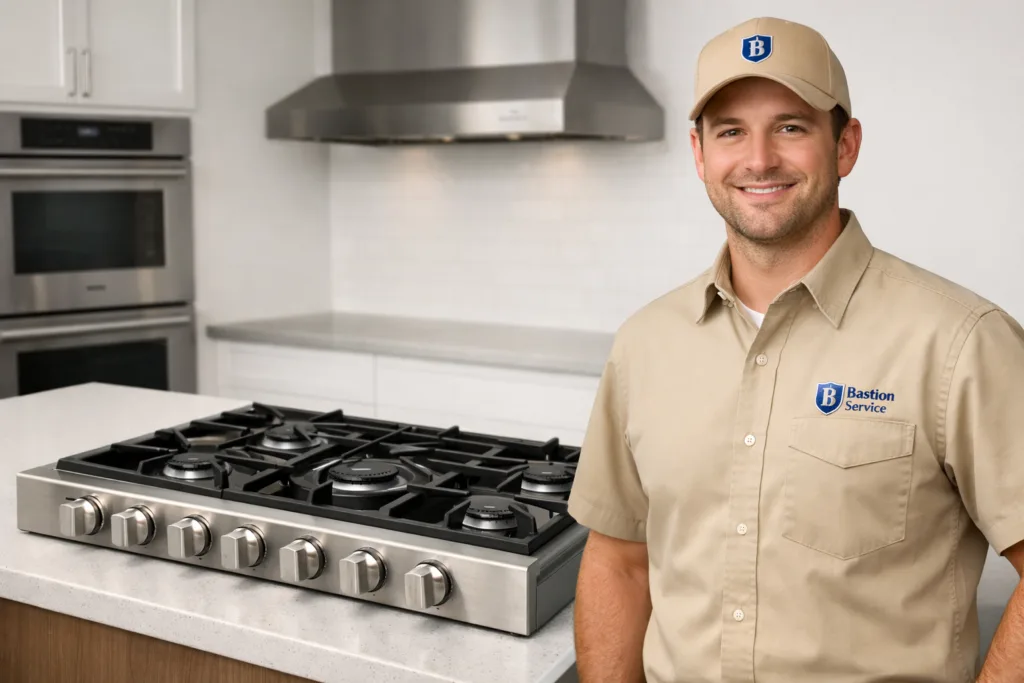
Cooktop problems often look simple at first, but the same symptom can come from very different failures. A burner that will not light may have an ignition issue, while a burner that lights but will not regulate properly may point to a switch, sensor, or control problem. For Century City homeowners, the most useful starting point is to match what the cooktop is doing with the system that is most likely failing.
Related Thermador and cooktop service paths in Century City include Thermador Appliance Repair in Century City, Cooktop Repair in Century City, and Thermador Refrigerator Repair in Century City.
Common Thermador cooktop symptoms and what they can mean
Burner will not ignite
On gas models, a burner that will not ignite can be caused by a misaligned cap, blocked burner ports, moisture after cleaning, a worn igniter, or a fault in the spark module. If only one burner is affected, the problem is often localized to that burner assembly. If several burners show the same behavior, the issue may involve a shared ignition component or power supply to the ignition system.
What homeowners usually notice first is repeated clicking without flame, a burner that lights only after several tries, or a burner that works one day and not the next. Those details matter because they help narrow down whether the problem is debris-related, electrical, or mechanical.
Burner clicks continuously
Constant clicking is one of the more frustrating cooktop complaints. In many cases, it follows a spill, cleaning moisture, or residue around the igniter area. It can also happen when a switch sticks or when the ignition system keeps trying to spark after the burner should already be lit.
If the clicking continues after the flame is established, the cooktop should be checked rather than ignored. Persistent sparking can shorten the life of ignition parts and may signal that the unit is not sensing normal operation correctly.
Burner heats unevenly or runs at the wrong level
Uneven heating shows up in everyday cooking long before complete failure. A pan may develop hot spots, water may boil slowly on one side, or low heat may suddenly act too hot. On gas units, clogged ports or burner assembly issues can distort the flame pattern. On electric cooking zones, a weakening element, faulty regulator, or control issue may cause poor temperature control.
When heat output no longer matches the setting, the problem is not just inconvenience. It affects cooking consistency and can make normal tasks like simmering, searing, or melting far less predictable.
Cooktop does not respond to controls
Some Thermador cooktop problems are tied less to the burner and more to the control system. Knobs that turn but do not change output, touch controls that respond intermittently, or burners that stay on one level may point to switch failure, interface problems, or internal electrical faults.
These issues tend to worsen with use. A control that works inconsistently today can become completely unresponsive later, so it is usually better to address it before the cooktop becomes unreliable during daily cooking.
Cracked glass or visible surface damage
If the cooktop has a cracked glass surface, chipped area near a cooking zone, or damage around the control section, it should not be treated as a cosmetic issue only. Surface damage can affect safe operation, heat distribution, and the stability of cookware. Depending on the model and extent of the damage, repair may involve more than replacing a visible top panel.
Signs the problem is getting worse
Many cooktops show warning signs before a full breakdown. In Century City homes, the most common patterns include:
- Burners that need multiple attempts to start
- Clicking that continues after ignition
- One burner working differently from the others
- Heat levels that do not match the setting selected
- A cooking zone that cuts in and out during use
- Controls that feel loose, erratic, or unresponsive
- Performance changes after a spill or deep cleaning
Intermittent problems are still real problems. Waiting often turns a limited repair into a broader one, especially when repeated ignition attempts, shorting from residue, or unstable controls place extra stress on other components.
When to stop using the cooktop
Some symptoms call for immediate caution rather than continued troubleshooting at home. Stop using the cooktop if you notice a persistent gas smell, visible sparking where it should not occur, a burner that will not shut off properly, tripped breakers during operation, or damage to the glass surface. These signs can indicate a safety issue, not just a convenience issue.
If the symptom is limited to poor ignition, weak heating, or inconsistent control response, the unit may still be partially functional, but that does not mean continued use is wise. Repeated use under fault conditions can make the final repair more extensive.
Repair or replace?
Whether a Thermador cooktop should be repaired usually depends on the exact failed part, the age of the appliance, its overall condition, and whether the problem is isolated or spread across multiple systems. A single failed igniter, switch, burner component, or heating element is often a straightforward repair. A cooktop with recurring control problems, major surface damage, or several failing parts at once may require a more careful cost-benefit decision.
For many homeowners in Century City, replacement is not just about price. Kitchen fit, countertop cutout, finish matching, and keeping the cooking layout unchanged can all make repair the better path when the issue is limited and serviceable.
What helps speed up diagnosis
Before service, it helps to note exactly what the cooktop is doing. Useful details include whether the problem affects one burner or all of them, whether it started after a spill, whether clicking is constant or occasional, and whether the symptom changes once the appliance warms up. Even small observations can make the repair path more accurate.
It also helps to avoid repeated test cycles if the unit is acting abnormally. For example, trying to relight the same burner over and over, or forcing controls that already feel wrong, can add wear without revealing much more.
Why symptom patterns matter on Thermador cooktops
Thermador cooktops are designed for precise cooking performance, so even a small component failure can show up as noticeable inconsistency. That is why symptom-based evaluation matters. A burner that seems weak may not have the same repair path as one that will not ignite at all, and a control issue can sometimes mimic a heating problem. Sorting those differences out early gives homeowners a clearer idea of what is wrong and whether a targeted repair makes sense.
What Century City homeowners should watch for next
If your cooktop still works but no longer works normally, that is usually the point to act. Repeated ignition trouble, unstable heat, clicking, cracked glass, or unreliable controls are all signs that the appliance needs attention before the problem spreads. The right next step is a practical repair plan based on the actual failure, the condition of the cooktop, and whether the fix is likely to restore normal daily use.