




Thermador appliances are designed for high performance, but when one starts acting up, the symptom you notice is not always the part that has failed. A refrigerator that seems warm may actually have an airflow or defrost problem. An oven that bakes unevenly may be dealing with a sensor, element, or control issue rather than a simple calibration concern. For households in Cheviot Hills, the most useful approach is to look at the pattern of behavior before deciding whether the appliance should be repaired, tested further, or taken out of use for safety.
For specific Thermador appliance paths in Cheviot Hills, review Thermador Refrigerator Repair in Cheviot Hills, Thermador Freezer Repair in Cheviot Hills, and Thermador Dishwasher Repair in Cheviot Hills.
How to read Thermador appliance symptoms more accurately
Many premium appliances show early warning signs before they stop completely. Small changes in sound, temperature, cycle length, drainage, or ignition often matter more than a single isolated glitch. If a problem is happening repeatedly, getting worse, or affecting food safety, cleaning results, or normal cooking, it usually deserves attention sooner rather than later.
A few details can make troubleshooting much more precise:
- Whether the issue is constant or intermittent
- Whether it began suddenly or developed gradually
- If error codes, blinking lights, or unusual sounds are present
- Whether performance drops only under heavy use
- If another symptom appeared at the same time, such as leaking, noise, or odor
Those clues often help separate a failing component from a maintenance issue, wiring fault, sensor problem, or control failure.
Common issues across refrigeration, dishwashing, and cooking appliances
Temperature problems
Temperature-related complaints are among the most common with Thermador refrigerators, freezers, ovens, wall ovens, and ranges. In cooling appliances, homeowners may notice soft frozen food, warm shelves, frost buildup, or a unit that runs constantly without reaching the right temperature. In cooking appliances, the signs are often slow preheat, uneven baking, burners that do not heat consistently, or food finishing too early or too late.
Because several different systems can create nearly identical symptoms, temperature problems should not be judged by guesswork alone. Sensors, fans, igniters, elements, thermostatic components, relays, and electronic controls can all be involved.
Water, drainage, and moisture concerns
Dishwashers and refrigerators frequently show trouble through leaking, standing water, excess condensation, or poor draining. A dishwasher with water left in the tub may have a restricted drain path, pump issue, or control problem. A refrigerator leak may be tied to defrost drainage, water supply components, or ice maker-related faults. Moisture problems matter because they can affect surrounding cabinets, flooring, and food storage conditions in addition to the appliance itself.
Noises that should not be ignored
Clicking, grinding, buzzing, rattling, humming louder than normal, or fans that change pitch can all point to developing trouble. Not every sound means a major repair is needed, but a new noise paired with weak cooling, failed ignition, drainage issues, or shutdowns usually indicates that a component is under strain. Intermittent noise is especially worth noting because it can be harder to trace once the appliance stops making it during inspection.
Intermittent operation
One of the harder symptom groups to evaluate is inconsistent operation. A refrigerator may cool normally for part of the day and then drift warm. A dishwasher may finish one load and fail the next. An oven may preheat correctly once and then miss temperature later. Intermittent issues are easy to postpone, but they often signal a control, sensor, switch, or wiring problem that can eventually become a complete failure.
What specific Thermador appliance symptoms may suggest
Refrigerators and freezers
Thermador refrigeration problems often begin with subtle changes rather than a complete stop. Common signs include:
- Fresh food compartments running too warm
- Frost collecting where it normally should not
- Unusual fan or compressor-related noise
- Water under drawers or near the door
- Ice maker inconsistency
- Doors that do not seem to seal firmly
These symptoms may be tied to airflow restrictions, defrost faults, evaporator fan issues, thermistor readings, door gasket wear, or control-related problems. If food is no longer holding safe temperature, the appliance should be treated as urgent even if it is still partially cooling.
Dishwashers
With Thermador dishwashers, the complaint is often more than just “not cleaning.” Dishes may come out cloudy, gritty, wet, or still dirty in specific areas of the rack. Cycles may run too long, stop midway, fail to drain, or leave a musty smell behind. Door leaks and standing water are especially important because they can point to problems that affect both performance and the surrounding kitchen area.
Repeated poor results can come from wash-arm blockage, circulation problems, drainage restrictions, fill issues, latching faults, or electronic control trouble. If the unit hums without washing properly or trips power during a cycle, it should not be ignored.
Cooktops and ranges
Thermador cooktops and ranges often show faults through ignition and heating behavior. Burners may click repeatedly, light slowly, fail to ignite, produce uneven flame, or heat weakly. Electric heating zones may cycle irregularly or stay hotter than expected. On a range, surface burner problems may appear separately from oven problems, or both may point to a larger control issue.
If a burner keeps clicking after ignition, does not respond normally to the control, or shows inconsistent flame quality, the cause may involve switches, spark ignition components, burner assembly issues, or moisture affecting ignition behavior. If there is a strong or persistent gas odor, stop using the appliance and handle it as a safety matter first.
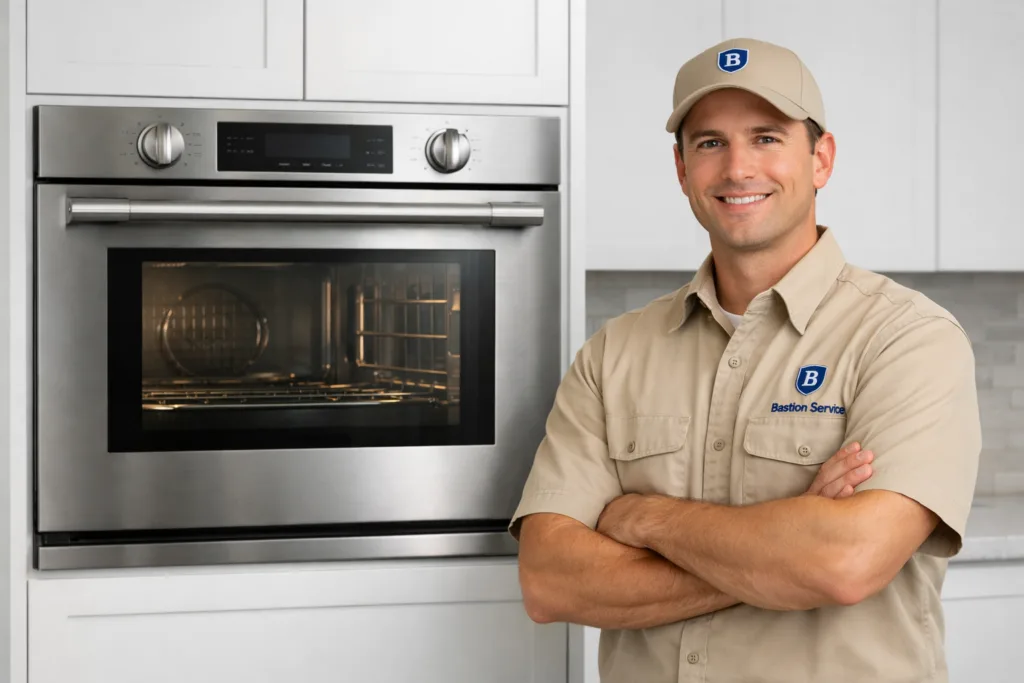
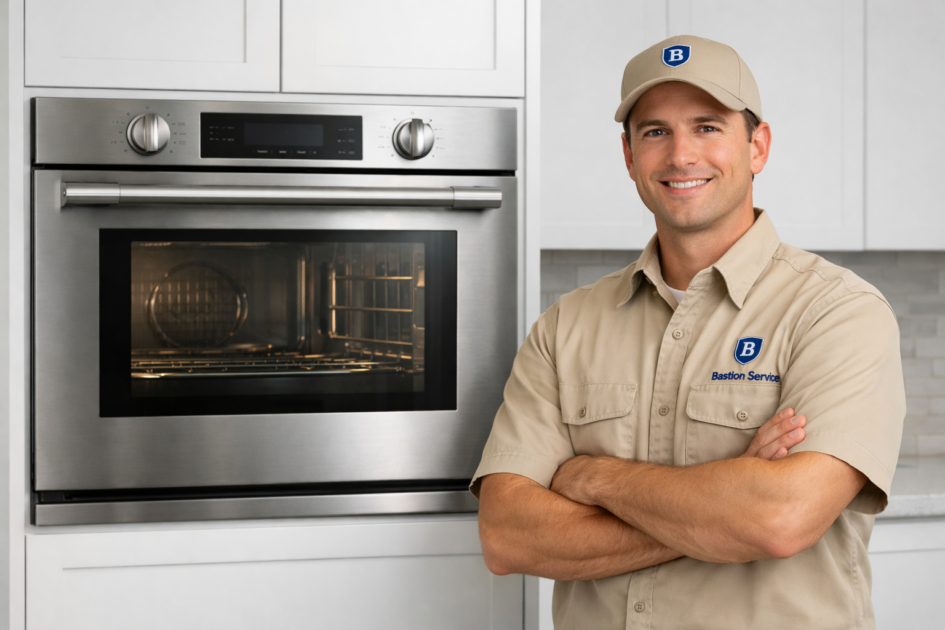
Ovens and wall ovens
Thermador ovens and wall ovens commonly develop complaints such as:
- Slow preheating
- No heat or partial heat
- Uneven baking between racks
- Temperature overshooting or dropping
- Error codes on the display
- Door or latch problems
These can stem from igniters, heating elements, temperature sensors, relays, control boards, or door-related components. If cooking times have become unpredictable or the appliance shuts off during use, continued operation may lead to further stress on the heating system.
Signs you should stop waiting and schedule service
Some appliance problems are inconvenient. Others carry a higher risk of food loss, water damage, electrical damage, or unsafe operation. Service becomes more urgent when you notice:
- Food compartments not staying cold
- Water leaking onto the floor
- Breakers tripping during operation
- Burning smells or overheating
- Repeated ignition failure
- Cycles stopping before completion
- Heavy frost returning soon after clearing
- Appliances running almost constantly
In many homes, the temptation is to keep using the appliance until it fails completely. That can work for a minor cosmetic issue, but not for a cooling problem, leak, electrical irregularity, or unstable heating pattern.
When continued use can make the problem worse
A refrigerator that runs nonstop to maintain temperature may put extra strain on fans and cooling components. A dishwasher leak can spread beyond the machine and affect flooring or cabinet materials. An oven that overheats or cycles erratically can make cooking unreliable and may place more stress on internal parts. Repeated misfires on a cooktop or range can also turn a manageable repair into a broader one if ignored.
In Cheviot Hills homes, where premium built-in appliances are often integrated into the kitchen layout, catching a problem early can also help prevent secondary damage to surrounding finishes and storage areas.
Repair or replacement: what usually matters most
For many Thermador appliances, repair remains a sensible option when the fault is limited to one system and the rest of the appliance is in solid condition. This is often true when the symptom points to a distinct failure such as ignition trouble, a drain issue, a fan problem, a heating component fault, or a sensor-related problem.
Replacement becomes a more serious consideration when multiple systems are declining at once, the appliance has a history of repeated failures, or the required work is extensive relative to the appliance’s age and condition. The better decision usually comes from the actual diagnosis, not from the symptom alone.
What homeowners can note before a service visit
Before scheduling Thermador appliance repair in Cheviot Hills, it helps to write down what the appliance is doing in real-world use. That information can make the visit more productive and reduce back-and-forth around an intermittent complaint.
- When the problem first appeared
- Whether it happens every cycle or only sometimes
- Any sounds, smells, or error codes
- Whether power loss, leaking, or temperature change came first
- If cleaning, resetting, or restarting changed anything
Even a short timeline can help separate a one-off interruption from a failure pattern.
A focused path forward for Thermador appliances
Whether the issue involves a refrigerator, freezer, dishwasher, cooktop, oven, wall oven, or range, the goal is the same: identify what the symptom pattern is actually saying and decide on the right next step. That may mean repairing a single failed component, addressing a developing performance problem before it spreads, or deciding that replacement makes more sense based on overall condition.
For homeowners in Cheviot Hills, symptom-based evaluation is the best way to avoid wasted time, unnecessary part swapping, and preventable damage when a Thermador appliance is no longer working the way it should.


