




How Thermador issues usually show up at home
Most Thermador appliance problems do not begin with a total shutdown. They usually start with a change you notice in daily use: longer preheat times, a refrigerator section that feels a little warm, a dishwasher that finishes with residue on glasses, or a burner that clicks several times before lighting. Those early symptoms matter because they often point to a specific system starting to fail.
For specific Thermador appliance paths in Beverly Hills, review Thermador Refrigerator Repair in Beverly Hills, Thermador Freezer Repair in Beverly Hills, and Thermador Dishwasher Repair in Beverly Hills.
One symptom can still have more than one cause. An oven with uneven heat may involve a sensor, element, relay, or airflow issue. A refrigerator running constantly may be dealing with a gasket leak, fan problem, frost buildup, or control fault. The most useful repair decision comes from matching the symptom pattern to the system involved instead of guessing from a single code, noise, or online suggestion.
Common symptom patterns by appliance type
Refrigerators and freezers with cooling or frost problems
Thermador refrigerators and freezers often give warning signs before a full loss of cooling. You may notice soft food in the freezer, milk not staying cold enough, frost collecting where it did not before, water under drawers, or a motor sound that seems louder or more constant than usual. In built-in units, one temperature problem can affect several compartments at the same time.
These symptoms can be related to airflow restrictions, evaporator fan issues, defrost failures, sensor errors, door seal wear, drain blockages, or sealed-system trouble. If temperatures are drifting upward, it is best not to rely on repeated setting changes alone. Once food safety becomes uncertain, service should move up in priority.
- Warm fresh-food section: often tied to airflow, fan, sensor, or frost issues
- Freezer not holding temperature: may point to defrost, circulation, or sealed-system problems
- Water inside or under the unit: can indicate a blocked drain, poor seal, or condensation problem
- Clicking, buzzing, or constant running: may suggest fan strain, compressor stress, or control-related faults
Dishwashers that stop cleaning, draining, or drying well
A Thermador dishwasher that leaves dishes cloudy or dirty is not always dealing with the same issue as one that leaves standing water in the tub. Poor wash results can come from spray arm blockage, pump circulation problems, low fill, detergent dispensing issues, or heating faults. Drain complaints may involve a drain path restriction, pump problem, or a control interruption during the cycle.
Drying complaints are also worth separating from washing complaints. If dishes come out wet but otherwise clean, the problem may be tied to heat production, rinse aid use, venting, or moisture sensing. If the machine also stops mid-cycle, hums without progressing, or leaks onto the floor, the repair path changes.
Leaks should not be ignored, especially when they appear more than once. Even small amounts of water can affect flooring, toe-kick areas, and nearby cabinetry over time.
Cooktops and ranges with ignition or burner performance trouble
On Thermador cooktops and ranges, many service calls begin with burners that click repeatedly, fail to ignite consistently, heat unevenly, or stop responding as expected. Gas models may show delayed ignition, weak flame, or continuous sparking. Electric cooking surfaces may heat too slowly, cycle unpredictably, or stop heating altogether.
These patterns can involve ignition parts, switches, spark modules, burner components, wiring, surface elements, or control failures. If ignition becomes unreliable, the appliance should not be forced repeatedly through the same failed start process. A problem that seems occasional at first often becomes much more consistent with continued use.
Ovens and wall ovens with temperature accuracy problems
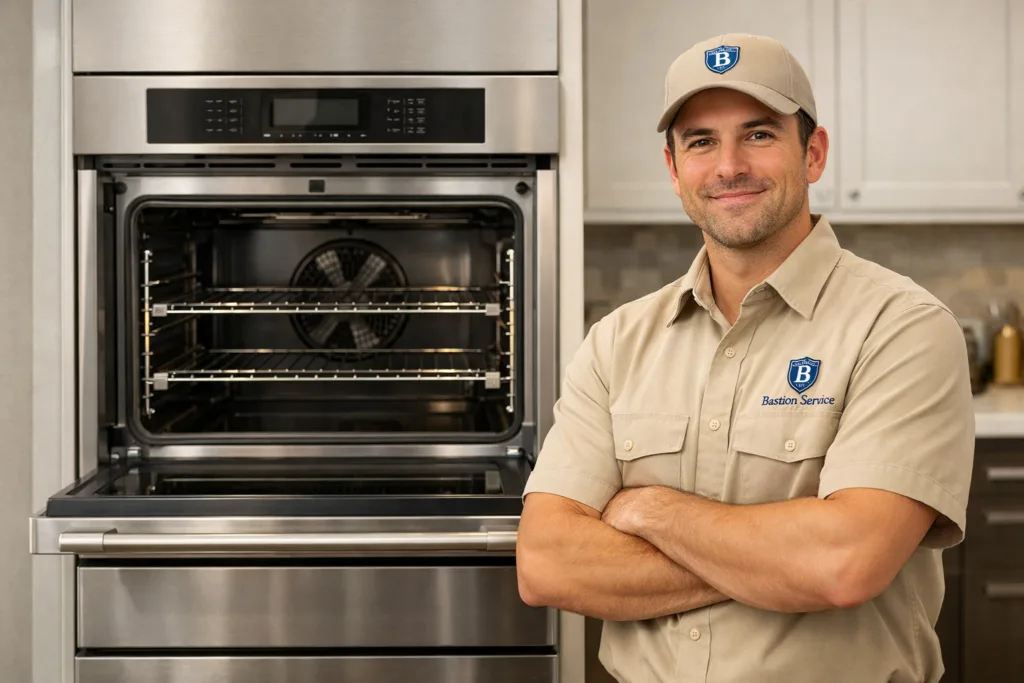
Thermador ovens and wall ovens often reveal trouble through baking results before they show a hard failure. Food may brown unevenly, roast times may stretch longer than normal, or preheating may take noticeably more time than it used to. Some ovens run too cool, while others overshoot temperature and create burning on the outside before the center is done.
Possible causes include bake or broil element issues, igniter wear, sensor problems, convection fan faults, relay failure, or electronic control trouble. If the oven shuts off during operation, overheats, shows erratic temperature swings, or trips power, it should be checked before regular cooking continues.
What certain symptoms can tell you
Looking at the symptom itself is often the fastest way to narrow down the likely repair category.
- No power at all: may involve incoming power, breakers, fuses, wiring, or the main control system
- Power is on but function is weak: commonly points to a worn working component such as a pump, fan, igniter, element, or valve
- Intermittent shutdowns: can suggest relays, sensors, controls, overheating protection, or load-sensitive wiring faults
- Unusual noises: often indicate a moving part under strain, obstruction, loosened hardware, or motor-related wear
- Leaks or moisture where it should not be: may come from drains, seals, hoses, pumps, or condensation problems
This is why symptom-based troubleshooting is more useful than replacing the part that fails most often on a similar model. The same outward complaint can come from very different internal causes.
Signs the appliance should be checked soon
Some problems are inconvenient but stable for a short period. Others can worsen quickly. A refrigerator losing temperature, a dishwasher leaking, or an oven overheating can lead to larger damage or unsafe use if the problem is ignored.
In Beverly Hills homes, it is smart to schedule service promptly when you notice any of the following:
- Refrigerated food spoils faster or freezer items soften
- Water remains in the dishwasher after the cycle ends
- Dishwasher leaks happen more than once
- Burners fail to light reliably or keep clicking
- Oven temperature is clearly inaccurate from one use to the next
- The appliance trips power, resets itself, or stops mid-cycle
- Grinding, buzzing, rattling, or fan noise continues across repeated use
If the issue comes and goes, but appears more often each week, that is usually a sign of a component deteriorating rather than a one-time glitch.
Repair or replace: how homeowners usually decide
Many Thermador appliance problems are worth repairing when the fault is isolated and the rest of the unit remains in good condition. That is often the case when the appliance has been performing well and the symptom appeared recently. A targeted repair can make sense if it addresses the actual failure without opening the door to a chain of unrelated issues.
Replacement becomes more realistic when there are multiple major failures, recurring problems in the same system, signs of broader wear, or a history of unreliable operation. The practical questions are usually simple:
- Is the problem limited to one system or affecting several functions?
- Has the appliance otherwise been reliable?
- Is there visible wear, leaking, or repeated electronic failure?
- Does the expected repair fit the age and overall condition of the unit?
For many households in Beverly Hills, the best choice becomes clearer once the failing system is identified and the scope of the repair is known.
Why brand-specific troubleshooting matters with Thermador
Thermador appliances are premium kitchen products, and that matters during diagnosis. Features such as built-in refrigeration layouts, advanced cooking controls, specialized burner systems, and model-specific wash or heat sequences mean the same symptom cannot always be treated the same way across brands.
On refrigeration, it helps to separate airflow and defrost issues from deeper cooling-system concerns. On dishwashers, wash quality, heating, draining, and sensing all need to be considered together. On ovens, wall ovens, cooktops, and ranges, ignition behavior, heat regulation, and electronic response should be evaluated as a system rather than as isolated parts.
That approach gives homeowners a clearer diagnosis and a more practical repair plan based on the actual symptom pattern.
What to pay attention to before scheduling service
Before an appointment, it helps to note what the appliance is doing now rather than what you think failed. A few details can make diagnosis faster and more accurate:
- When the problem started
- Whether it is constant or intermittent
- Any sounds, smells, or visible leaks
- Whether the issue appears during startup, mid-cycle, or shutdown
- If temperatures, cycle times, or ignition behavior have changed gradually or suddenly
Those observations are often more useful than a reset attempt or a guess about which part needs to be replaced.
Thermador repair decisions for Beverly Hills households
When a Thermador refrigerator, freezer, dishwasher, cooktop, oven, wall oven, or range stops performing normally, the next step should be based on the symptom you can actually observe. That helps determine whether the problem is minor, whether continued use may cause more damage, and whether repair is the sensible path for the appliance in your home.
For homeowners in Beverly Hills, the most helpful service approach is one that focuses on how the appliance is failing, what system is responsible, and what action makes sense before the problem spreads to food loss, water damage, or unreliable cooking performance.


