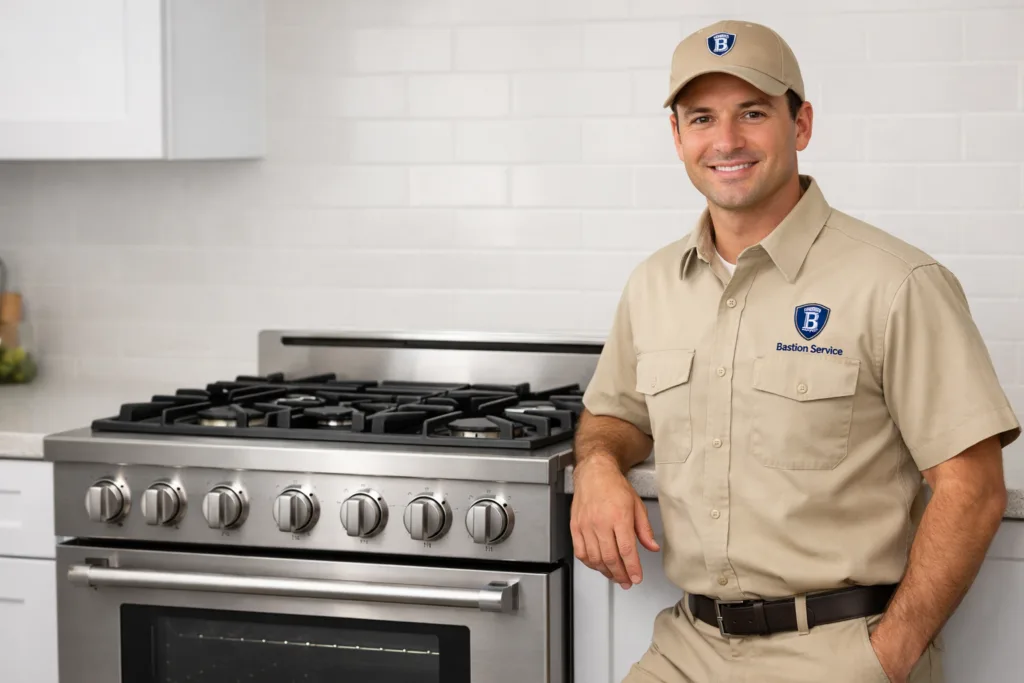
Range problems are easier to solve when the symptom is described accurately. A burner that clicks but does not light points to a different repair path than an oven that overheats, and both differ from a control panel that stops responding. With Summit ranges, paying attention to how the issue appears during normal cooking can help narrow the likely cause before parts are replaced.
Related Summit and range service paths in Century City include Summit Appliance Repair in Century City, Range Repair in Century City, and Summit Refrigerator Repair in Century City.
How Summit range problems usually show up in the kitchen
Most household range failures fall into a few recognizable patterns. Surface burners may struggle to ignite, produce uneven flame, or stop heating at the expected level. The oven may preheat slowly, run hotter or cooler than the set temperature, or cook inconsistently from rack to rack. In some homes, the first sign is less obvious, such as a display that flickers, controls that lag, or a unit that works intermittently and then stops.
These details matter because similar complaints can have different causes. Repeated clicking at a gas burner can come from moisture, buildup, burner cap misalignment, a worn ignition switch, or a spark-related component issue. Oven temperature problems may involve the sensor, heating circuit, control board, or a calibration problem that shows up over time. When the range loses power or behaves unpredictably, the problem may be electrical rather than purely heat-related.
Common Summit range issues homeowners in Century City notice
Burner clicks continuously but will not ignite
If the igniter keeps clicking and the burner does not light, the burner assembly may need closer inspection. Food residue, cleaning moisture, burner cap placement, and ignition component wear can all interfere with normal lighting. If ignition becomes inconsistent on more than one burner, the diagnosis may extend beyond a single burner head.
If there is a strong or lingering gas odor, stop using the range and address safety first. A burner that will not light is inconvenient; a suspected gas issue should never be ignored.
Burner lights but flame is weak or uneven
A burner that ignites but does not heat well can affect everything from boiling water to basic weeknight cooking. Low or irregular flame may be caused by blocked ports, alignment issues, or a problem affecting fuel delivery to that burner. When one burner behaves differently from the others, that often helps isolate the issue to a more specific area of the range.
Oven is not heating properly
An oven that stays cool, takes too long to preheat, or fails to reach baking temperature can turn simple meals into trial and error. On some Summit ranges, this appears as food that browns too slowly, recipes that suddenly need extra time, or a broil function that no longer performs as expected. That can point to a failed heating component, a temperature-sensing problem, or an electronic control issue.
Oven temperature is inconsistent
Some temperature fluctuation is normal as an oven cycles on and off. The concern is when swings become large enough to affect results repeatedly. Cookies may bake unevenly, casseroles may look done on top but stay cool in the center, and roasting times may become unreliable. In those cases, the service visit should determine whether the oven is sensing temperature correctly and whether the control is regulating heat as it should.
Display or controls stop responding
When buttons fail to register, the screen goes blank, or settings change unexpectedly, the problem may involve the control interface, internal wiring, or the main electronic board. This kind of issue is frustrating because it can affect multiple cooking functions at once. If the range cannot reliably accept settings or maintain a selected mode, further use may become impractical.
Symptoms that should not be dismissed
Some range problems are mostly performance issues. Others raise a stronger safety concern and should be handled quickly. It makes sense to stop using the unit and arrange service if you notice any of the following:
- Persistent clicking that does not stop after ignition attempts
- Burners that fail to shut off normally or respond unpredictably
- Visible sparking outside normal ignition
- Repeated tripping of power while the range is in use
- Overheating, burning smells, or signs of heat damage around controls
- A strong or continuing gas odor
Problems that seem intermittent can still become more serious. A range that works one day and fails the next is often showing early signs of a control, ignition, or wiring issue rather than a one-time fluke.
What homeowners can check before scheduling repair
There are a few simple observations that can help clarify what is happening. Confirm whether the problem affects one burner or several, whether the oven issue occurs in bake, broil, or both, and whether the display remains stable during use. If a gas burner is not lighting, checking for obvious burner cap misalignment after the unit has cooled may also help explain the symptom.
It is also useful to note whether the problem started suddenly or has been getting worse. A complete loss of heat often points to a different repair path than a long-term decline in temperature accuracy. Those details help connect the complaint to the likely failed system.
Repair or replacement: what usually makes sense?
Repair is often worthwhile when the problem can be traced to one main failed component and the rest of the Summit range is still in good working condition. If the appliance has been cooking reliably until this issue appeared, restoring normal function may be the most sensible option.
Replacement becomes more likely when the range has several unrelated problems at once, repeated control failures, or overall wear that makes future reliability uncertain. Age alone does not decide the outcome. The better question is whether the current issue is isolated and repairable, or part of a broader pattern of breakdowns.
What a service visit should help you understand
A worthwhile appointment should do more than confirm that the range is malfunctioning. It should identify which system is failing, explain why that failure matches the symptoms you have seen, and clarify whether repair is practical. For homeowners in Century City, that means looking closely at ignition behavior, burner performance, oven heating, temperature regulation, and control response before recommending the next step.
The goal is straightforward: restore reliable daily cooking without guessing. When the fault is identified correctly, it is much easier to decide whether the right move is a targeted repair or a plan to replace the appliance.