
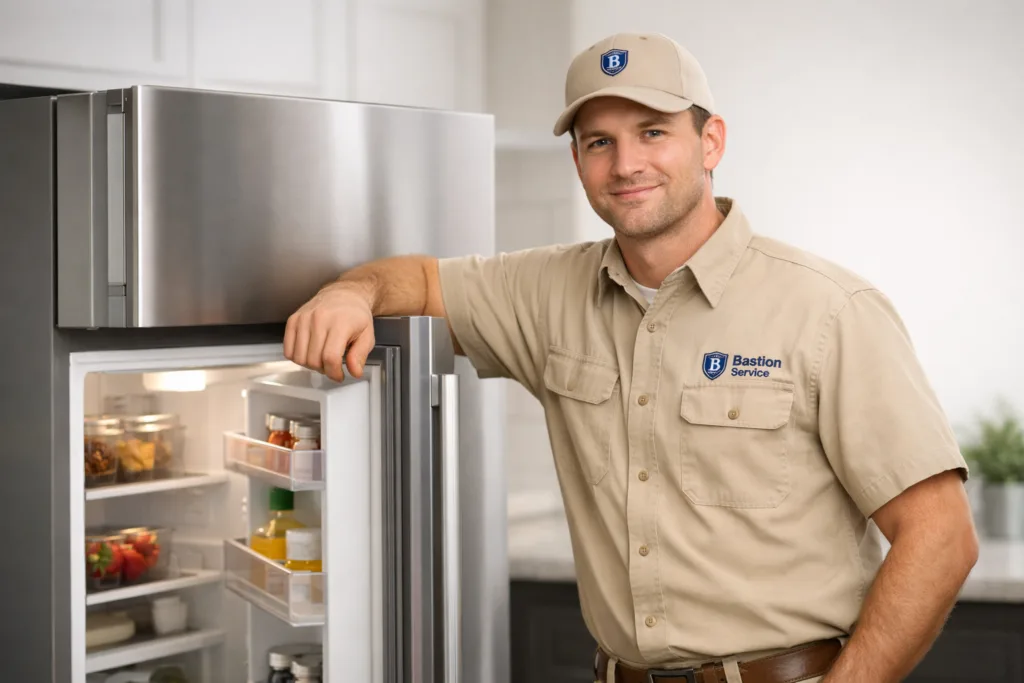




When a Summit appliance starts acting up at home, the symptom you notice first is not always the part that actually failed. A refrigerator that seems warm may have an airflow or defrost problem rather than a bad compressor. A dishwasher that leaves residue may be dealing with circulation or draining trouble, not just detergent. That is why the most useful starting point is understanding the symptom pattern before deciding whether the problem is minor, urgent, or no longer worth repairing.
How Summit appliance problems usually show up in daily use
Summit appliances are often installed in compact kitchens, built-in openings, and specialty residential spaces where ventilation, clearances, leveling, and surrounding conditions can affect performance. That makes symptom-based troubleshooting especially important. What looks like one simple issue may involve temperature control, drainage, electrical supply, airflow, or wear across more than one component.
In West Los Angeles homes, the most common calls tend to start with a practical complaint: food is not staying cold, dishes are not coming out clean, a burner will not ignite, the oven is heating unevenly, or water is showing up where it should not. Those are useful clues, but they still need to be matched to the actual failure.
Refrigerator and freezer issues that should not be ignored
Summit refrigerator and freezer problems often begin with unstable temperatures. You may notice soft ice cream, thawing food, water under drawers, frost buildup on the back wall, or a fresh-food section that feels warm even though the controls are set correctly. In many cases, these symptoms point to fan trouble, door gasket wear, blocked airflow, defrost failure, sensor problems, or sealed system weakness.
A refrigerator that runs constantly without reaching temperature is a warning sign. So is one that cycles too often, makes new fan noises, or shows moisture where it did not before. Small changes in cooling performance can become larger food-storage problems if the appliance keeps running in an unstable condition.
Common refrigerator and freezer symptom patterns
- Fresh-food section is warm but freezer still seems cold
- Heavy frost buildup inside the freezer
- Water collecting under crisper drawers or near the door
- Clicking, buzzing, or louder-than-normal fan noise
- Unit runs continuously and struggles to recover temperature
These symptoms do not all lead to the same repair. A frost-heavy freezer, for example, may involve a defrost system fault, while a warm refrigerator compartment can be caused by an evaporator fan issue or restricted airflow.
Ice maker and water supply complaints
If a Summit ice maker stops producing ice, makes hollow or undersized cubes, jams, leaks, or produces odd-tasting ice, the root cause may be different from what it first appears to be. Water supply issues, inlet valve failure, mold assembly wear, temperature instability, or freezer performance problems can all affect ice production.
One important distinction is whether the ice maker itself has failed or whether the freezer section is no longer maintaining the temperature needed for normal ice harvest. That difference changes the repair path completely. A leak around the ice maker area should also be taken seriously, especially where repeated drips can damage nearby surfaces over time.
Dishwasher problems that often point to more than one fault
A Summit dishwasher that leaves food residue, stands full of water, leaks during a cycle, or shuts off before finishing may have problems with wash circulation, draining, water inlet flow, spray arm movement, filtration, latch function, or electronic control response. Poor cleaning results are not always caused by loading habits or soap choice. If dishes repeatedly come out dirty or gritty, the machine may not be washing with the pressure or water delivery it should.
Drain issues are another common turning point. If the dishwasher is slow to empty or leaves water at the bottom after the cycle, continued use can make the problem worse and may eventually lead to overflow or leakage. Door leaks, especially those that happen consistently, also deserve prompt attention because they can spread beyond the dishwasher cavity.
Signs a dishwasher issue is becoming more serious
- Water remains in the tub after every cycle
- Dishes come out cloudy, dirty, or still greasy
- Unit stops mid-cycle or will not start reliably
- Leak appears from the door or underneath the appliance
- Unusual grinding, humming, or drain noise develops
Cooktop, range, oven, and wall oven heating symptoms
Cooking appliances usually make their problems obvious through poor heating performance. A Summit cooktop or range may have a burner that will not ignite, keeps clicking, heats weakly, or does not respond correctly to control settings. An oven or wall oven may bake unevenly, run too hot, stay too cool, fail to preheat, or show a door-lock or control error.
Electric models can have element, switch, wiring, sensor, or control faults that look similar at first. Gas models can show ignition or flame behavior that needs careful evaluation before regular use continues. If an oven is browning unevenly or taking much longer than normal to cook, that often points to temperature regulation problems rather than simple calibration drift.
A repeated clicking sound without ignition, inconsistent burner performance, or an oven that cannot hold a stable temperature usually means the appliance needs service rather than more trial-and-error use. And if there is a strong or persistent gas smell, stop using the appliance and address safety before anything else.
Wine cooler performance problems in residential kitchens
Summit wine coolers are expected to maintain a steady interior environment, so even moderate swings in temperature or moisture can signal a developing issue. If the unit is noisy, too warm, too cold, sweating, or showing excess condensation, the problem may involve airflow, thermostat response, fan performance, gasket wear, or cooling system decline.
Because these appliances are often installed in tighter cabinetry or dedicated beverage areas, blocked ventilation and door-seal problems can have a noticeable effect. A wine cooler that seems to recover slowly after the door is closed or shows repeated condensation should not be dismissed as normal aging without checking the underlying cause.
When waiting usually makes the repair harder
Some appliance issues stay isolated for a while. Others start causing secondary damage quickly. A refrigerator with poor airflow can begin spoiling food before the failure becomes obvious. A dishwasher with a slow drain can turn into a leak problem. An oven with unstable heat can place more stress on sensors, elements, or control components if it keeps being used the same way.
It usually makes sense to schedule service when a symptom is repeatable rather than occasional. If the same warning signs keep returning, the appliance is telling you the fault is no longer random.
- Cooling comes and goes
- Water leak returns after being cleaned up
- Breaker trips during normal use
- Noise is getting louder over time
- Heating results are consistently uneven
- Cycles stop completing the way they used to
When repair may not be the best answer
Not every Summit appliance should automatically be repaired. Sometimes the better decision depends on age, condition, extent of wear, and whether the appliance has one isolated fault or several systems beginning to fail at once. Rust, cabinet deterioration, repeat breakdown history, and expensive major-component failure can all shift the decision.
Fit can matter too. In some West Los Angeles homes, keeping an existing built-in or compact appliance operating is worthwhile because replacement size options are limited. In other situations, the repair cost does not make practical sense once condition and expected remaining life are considered.
A useful diagnosis should answer a few basic questions: what failed, whether related parts were affected, whether the unit is likely to return to normal daily use, and whether the investment is reasonable for the appliance in its current condition.
What homeowners should notice before scheduling service
If you are deciding whether to move forward with repair, it helps to note what the appliance is doing consistently rather than what happened once. The following details can make the problem easier to identify:
- When the symptom started and whether it is getting worse
- Any new sounds, smells, leaks, or visible frost
- Whether the issue affects every cycle or only some cycles
- Any recent power interruption, moving, cleaning, or installation change
- Whether performance changes after the appliance has been running for a while
That kind of detail helps separate isolated interruptions from recurring failures and makes it easier to judge whether repair is likely to be straightforward or more involved.
Choosing the right next step for a Summit appliance
The best service decision is usually the one based on actual operating symptoms, not guesswork or part swapping. Whether the problem involves refrigeration, dishwashing, cooking, or specialty cooling, the goal is to find out if the appliance can be returned to stable everyday use without chasing the wrong repair.
For households in West Los Angeles, that means looking past the obvious complaint and evaluating the appliance as it performs in the home. When a Summit unit starts showing repeat temperature problems, water issues, heating inconsistency, or cycle failures, a diagnosis-based approach gives you the clearest way to decide what comes next.


