
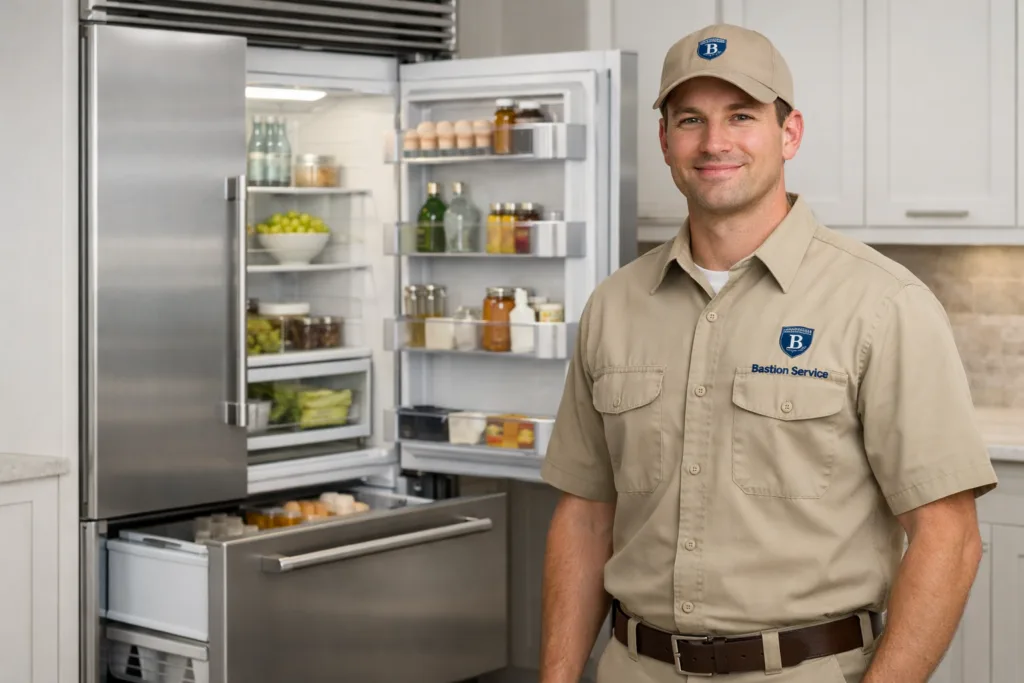




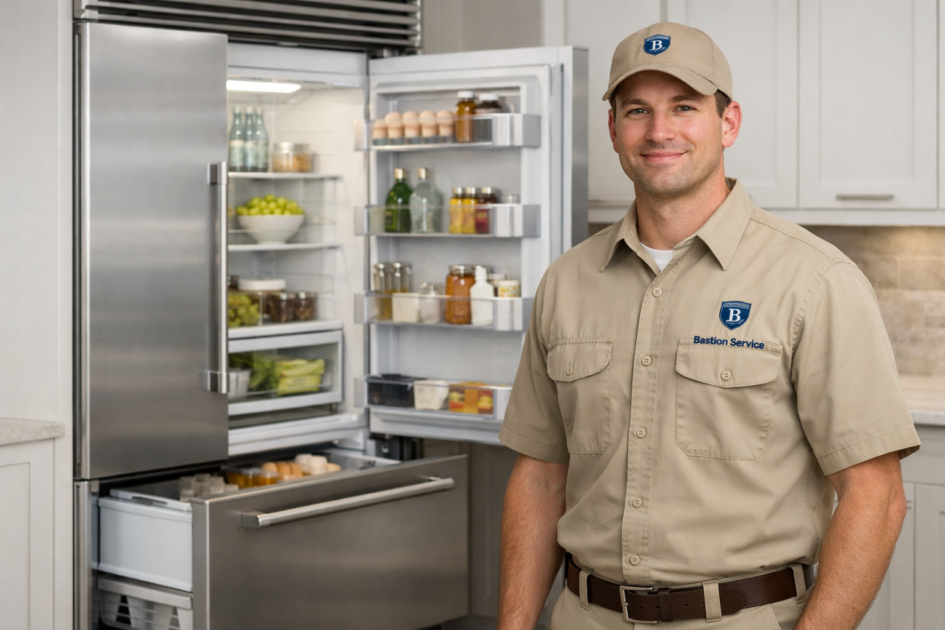
Small performance changes in a Sub-Zero appliance are often the first sign that something is drifting out of spec. A refrigerator that feels slightly warm, a freezer that starts collecting frost, or a wine cooler that no longer holds a steady setting can all point to different underlying faults. The most useful starting point is the symptom pattern itself: what changed, how often it happens, and whether temperature, moisture, or noise changed at the same time.
Why symptom patterns matter with Sub-Zero appliances
Premium refrigeration systems rely on coordinated airflow, sensors, controls, fans, sealed cooling components, and door sealing. That means one visible problem can have several possible causes. Warm food storage does not always mean the same failed part, and frost buildup does not always come from the same condition in every unit.
For homeowners in Playa Vista, it helps to think in terms of categories:
- Temperature problems such as warming, partial cooling, or uneven cooling
- Moisture problems such as leaks, condensation, or ice formation
- Airflow problems such as blocked circulation or cold spots
- Noise changes such as new buzzing, clicking, rattling, or long run cycles
- Control issues such as inconsistent displays, alerts, or unresponsive settings
Grouping the issue this way usually gives a better repair direction than guessing from one isolated symptom.
Refrigerator problems homeowners notice first
Food spoils faster or sections feel unevenly cold
If one shelf is very cold while another section seems too warm, the appliance may have an airflow restriction, fan issue, sensor problem, or a door that is not sealing as tightly as it should. Homeowners sometimes notice this through everyday use before they notice the temperature itself: milk turns early, produce softens too quickly, or items in the back start freezing unexpectedly.
Uneven cooling is worth taking seriously because the refrigerator may still appear to be running normally while food storage conditions are becoming unreliable.
Water under drawers or near the appliance
Moisture inside the fresh food compartment or water on the floor can point to drainage problems, excess condensation, door seal issues, or cooling conditions that are creating too much internal moisture. Even a small recurring leak matters. Over time, that moisture can affect flooring, surrounding cabinetry, and internal components.
The refrigerator runs longer than usual
A Sub-Zero refrigerator that seems to run constantly may be compensating for lost cold air, restricted heat transfer, ice buildup, or a cooling component that is struggling to keep up. Longer run times are often one of the earliest clues that the system is working harder than normal, even before total cooling failure appears.
New sounds paired with weaker cooling
Fan noise, buzzing, clicking, or a change in the way the unit cycles can mean different things depending on whether temperatures are also changing. A new sound with no performance change may be less urgent than a new sound that appears alongside warming or moisture. When both show up together, service becomes more important because the appliance may be under added strain.
Freezer symptoms that usually need prompt attention
Frost buildup on walls, shelves, or around drawers
Frost that keeps returning often points to a door seal problem, humidity getting into the compartment, a defrost issue, or poor internal circulation. A light layer can quickly become a bigger operating problem when it starts limiting airflow or interfering with how drawers and doors close.
Repeated frost buildup also makes temperature control less stable, which can affect food quality even before complete thawing happens.
Soft frozen food or signs of partial thawing
If frozen food softens, develops larger ice crystals, or thaws and refreezes, the freezer may not be maintaining a stable temperature. Possible causes include fan trouble, sensor errors, defrost faults, blocked airflow, or deeper cooling-system performance issues.
This symptom is one of the clearest signs to act quickly because food safety and food quality can both be affected in a short time.
Ice accumulation around the door opening
Ice around the perimeter of the freezer or near drawer tracks can indicate that warm, humid air is entering the compartment. Sometimes that comes from a gasket issue or a door that is not closing fully. Sometimes it reflects an internal circulation or defrost problem that is allowing moisture to collect where it should not.
Wine cooler issues that are easy to overlook
Temperature swings instead of steady cooling
Wine storage depends on consistency more than speed. If a Sub-Zero wine cooler is drifting above or below its setting, cycling unpredictably, or feeling warmer than the display suggests, the issue may involve controls, sensors, fan operation, or sealing. Because these changes can be gradual, they are often noticed only after bottles no longer feel consistently stored.
Condensation or humidity inside the cabinet
Excess interior moisture can point to seal problems, cooling inconsistencies, or airflow conditions that are no longer balanced properly. Even if the cooler still operates, unstable humidity and temperature are signs that the unit is no longer maintaining the environment it was designed to provide.
Display behavior that does not match actual performance
If the display appears normal but the cabinet feels too warm, or the controls behave erratically, the problem may be electronic rather than purely mechanical. Control irregularities are especially important when they appear with cycling changes, unusual sounds, or inconsistent cooling.
What common symptom groups can suggest
While every model has its own design, these symptom groups are often useful when narrowing the repair path:
- Warm refrigerator or freezer: airflow restrictions, fan failure, sensor or control issues, door sealing problems, or sealed-system trouble
- Heavy frost or ice: gasket leaks, defrost faults, circulation problems, or excess humidity entering the compartment
- Leaks and condensation: blocked drains, poor sealing, moisture imbalance, or unstable cooling conditions
- Clicking, buzzing, or long run cycles: control faults, relay issues, fan problems, or major cooling components under strain
- Unusual display or setting behavior: control board issues, sensor faults, or intermittent electrical problems
These patterns are helpful, but they are not a substitute for diagnosis. Two units with the same outward symptom can require very different repairs.
When continued use can make the problem worse
Some homeowners wait because the appliance is still partly cooling. That can be risky when the issue is already causing strain inside the system. Continued use is more likely to worsen the situation when:
- The appliance runs for long periods without reaching the set temperature
- Water continues collecting inside or leaking outside the unit
- Frost returns quickly after being cleared
- Food or beverages are already showing signs of temperature instability
- New sounds appear together with warming, short cycling, or control issues
At that stage, delaying repair can increase wear and sometimes turn a smaller component problem into a larger one.
Simple observations to make before scheduling repair
Homeowners do not need to diagnose the machine themselves, but a few observations can make the service process much more efficient. Before scheduling, it helps to note:
- Whether the problem is constant or intermittent
- Whether both compartments are affected or only one section
- Whether the issue began after a power interruption, cleaning, or moving stored items
- Whether doors are closing normally and gaskets look intact
- Whether the unit is making a new sound or running longer than it used to
Those details can help separate a sealing or airflow issue from a control, defrost, or cooling-system problem.
Repair versus replacement considerations
Many Sub-Zero appliances are good repair candidates when the cabinet is in good condition and the fault is limited to a defined system or component. Replacement becomes more relevant when there are repeated major failures, significant age-related decline across multiple systems, or a repair outlook that no longer makes sense for the condition of the unit.
The important point is that the decision should be based on the actual mechanical condition of the appliance, not just the symptom alone. A warm refrigerator can sometimes trace back to a manageable repair, while the same complaint on another unit may indicate a more serious cooling problem.
What Playa Vista homeowners should do when symptoms first appear
If a refrigerator or freezer is warming, limit door openings and avoid overloading the compartments. If water is collecting, protect nearby flooring and watch whether it returns after cleaning. If a wine cooler is drifting off temperature, avoid assuming the display tells the full story without checking the cabinet’s actual condition.
For households in Playa Vista, the most useful approach is to act when the pattern becomes clear rather than waiting for a complete failure. Early attention can help reduce food loss, prevent moisture damage, and preserve better repair options.
A practical next step
Sub-Zero appliance problems usually reveal themselves through performance changes before they stop working entirely. Warm sections, returning frost, recurring water, unstable wine storage, and new noise patterns are all signs that the appliance needs closer evaluation. Looking at the full symptom picture is the best way to decide what kind of repair path makes sense and whether continued use is likely to make the problem more expensive.


