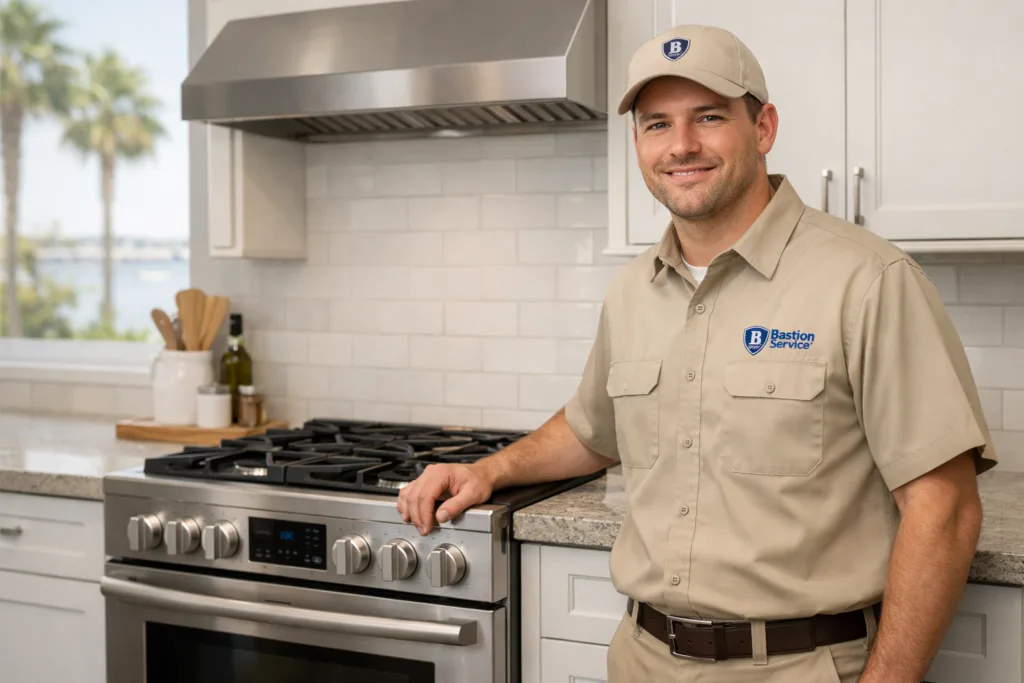
Surface burner problems usually show up in everyday cooking long before the appliance fully fails. You might notice a burner that heats slowly, runs hotter than the setting suggests, clicks without lighting, or stops working intermittently. Those symptoms can come from very different causes, including a worn element, damaged receptacle, faulty switch, clogged burner ports, moisture around the igniter, or a wiring issue beneath the surface.
Common stove problems homeowners notice first
One of the most common complaints is uneven heat. On electric stoves, a burner may cycle incorrectly, stay too cool for simmering, or overheat even when the knob is turned down. On gas stoves, weak flame, delayed ignition, or a burner that will not stay lit often points to burner cap alignment, debris in the ports, or an ignition component that is no longer working consistently.
If the problem is limited to a standalone cooking surface rather than a full stove, the repair path may be different. In that case, Cooktop Repair in Marina del Rey may be the better match for diagnosing burner, igniter, and surface-control issues.
Another early warning sign is control mismatch. A knob position should correspond to predictable heat output. When low runs too hot, medium barely heats, or one burner behaves differently every time you cook, the issue may involve the switch, internal wiring, or related control components rather than the burner itself.
Why diagnosis matters before replacing parts
Stove symptoms overlap more than most homeowners expect. A burner that appears dead may still be receiving power but have a bad connection. Constant clicking on a gas model may be caused by a failed spark component, but it can also come from spilled liquid or moisture interfering with ignition. Replacing parts without confirming the cause can lead to repeat failures and unnecessary expense.
Good diagnosis also helps determine whether the problem is isolated or part of a larger pattern. If multiple burners are heating unpredictably, if several controls feel loose or inconsistent, or if there are signs of heat damage around the control panel, the repair decision should account for the condition of the appliance as a whole.
Signs you should stop using the stove
Some issues are inconvenient but manageable for a short time. Others should be treated as urgent. It is best to stop using the stove if you notice visible sparking, a gas odor, breaker trips during operation, melting around knobs or switches, or a burner that stays on after being turned down. These are not normal wear symptoms and should not be ignored.
Gas-related ignition trouble deserves special attention. Repeated clicking after flame appears, delayed lighting, or a burner that goes out unexpectedly can make normal cooking unreliable and may indicate a condition that should be checked before the appliance is used again.
Symptoms that often need prompt service
- Burners that only work intermittently
- Weak or uneven flame on one or more gas burners
- Electric elements that heat partially or not at all
- Controls that feel unusually hot, loose, or unresponsive
- Burners that run too hot regardless of the setting
- Clicking that continues after ignition
When the problem may involve more than the stovetop
In many homes, what starts as a “stove problem” actually involves the full cooking appliance. If the top burners are acting up and the oven is also preheating slowly, failing to hold temperature, or shutting off unexpectedly, Oven Repair in Marina del Rey may be more relevant for the lower heating system and temperature-control side of the issue.
If your appliance combines burners and an oven in one freestanding unit, the correct service category may be based on the entire configuration rather than just the surface symptom. For combination units with both cooktop and oven concerns, Range Repair in Marina del Rey can be the more precise fit.
Built-in kitchen layouts can create similar confusion. When the cooking equipment is installed in the wall and temperature, preheat, or cavity-heating problems are part of the complaint, Wall Oven Repair in Marina del Rey may better match that setup.
Repair or replacement: what usually matters most
Most stove repairs come down to four practical questions: how old the appliance is, whether the failure is limited to one component, whether parts are still available, and whether the rest of the unit is in solid condition. A single failed igniter, burner switch, element, or surface receptacle is often a reasonable repair. Replacement becomes more likely when there are multiple failing controls, repeated electrical problems, or broader heat damage.
It is also worth considering how the stove is used in your household. A family that cooks daily needs reliable burner response, stable temperature control, and safe operation. Even if the appliance still powers on, inconsistent heat can make routine meals frustrating and can lead to scorched cookware or undercooked food.
What to expect from stove repair service in Marina del Rey
A useful service visit should identify the exact failure behind the symptom instead of guessing from the surface behavior alone. That includes checking whether the issue is related to power delivery, ignition, burner hardware, control components, or signs of wear that affect multiple functions. Once the cause is confirmed, it becomes easier to decide whether repair is the sensible next step.
For homeowners in Marina del Rey, the goal is simple: restore predictable cooking performance and address problems before they spread to additional components. Whether the issue is weak heat, ignition trouble, repeated clicking, or a burner that no longer responds correctly, the most important first step is finding the actual cause and matching the repair to the appliance’s condition.