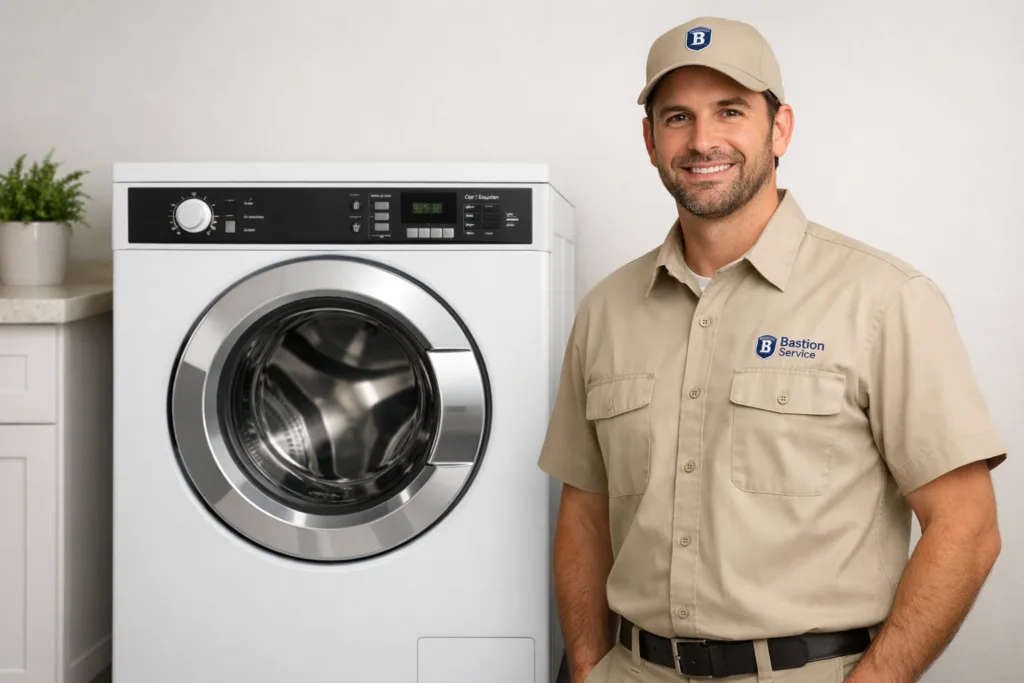
Washer problems rarely stay minor for long. A machine that starts leaving clothes too wet, pauses mid-cycle, or leaks onto the floor can quickly disrupt the entire laundry routine and sometimes cause additional wear if it keeps running in that condition. With Speed Queen washers, the most useful next step is to match the symptom to the system involved instead of assuming every drain, spin, or fill issue has the same cause.
What common Speed Queen washer symptoms usually point to
Water left in the tub after the cycle
If water remains in the tub, the problem often starts in the drain path. A clog, pump issue, kinked hose, or control failure can prevent the washer from clearing water at the end of the cycle. In other cases, the machine may stop before it reaches a proper drain or spin stage, which can make the problem look like a drainage failure when the root issue is elsewhere.
This symptom should not be ignored. Standing water can lead to odors, incomplete loads, and extra strain if the washer keeps attempting to finish the cycle.
Clothes come out wet even though the tub looks empty
When the tub drains but laundry is still unusually wet, the issue is often related to spin performance rather than drainage alone. A worn suspension system, balance problem, drive issue, or spin-speed fault can prevent the washer from extracting water properly. Overloading and uneven loads can also contribute, but if the problem happens repeatedly with normal use, the machine likely needs inspection.
The washer will not start
A no-start complaint can come from something simple, such as a power supply issue, but it can also involve the lid switch, latch assembly, control board, timer, or wiring. If the panel lights respond but the cycle will not begin, that pattern can help narrow the cause. If the washer is completely unresponsive, the diagnosis often starts with incoming power and main control functions.
Leaking during fill, wash, or drain
Leaks are easiest to solve when the timing is clear. Water that appears early in the cycle may point toward inlet hoses, valves, or overfilling. Water that shows up during agitation or spin may suggest internal hose problems, tub-related wear, pump issues, or drain system faults. Because water can travel under the cabinet before becoming visible, the wet spot on the floor is not always the true source.
Banging, scraping, grinding, or excessive vibration
A Speed Queen washer should not sound harsh or unstable during normal operation. Repeated banging can come from imbalance, worn suspension parts, or tub support problems. Grinding or scraping may indicate drive-system wear or contact between moving parts that should not be touching. If the washer begins moving across the floor or becomes much louder than before, it is smart to stop using it until the cause is checked.
Slow fill, no fill, or overfilling
Fill problems can be caused by inlet valve trouble, pressure-sensing faults, restricted hoses, or control issues. A washer that takes too long to fill may stall or extend the cycle unexpectedly. A machine that overfills is more urgent because it raises the chance of leaking and can signal a failure in the system that is supposed to regulate water level.
Why similar symptoms can have very different causes
Washers are a good example of why guessing based on one symptom often leads to the wrong repair. A unit that will not spin may actually be prevented from spinning because it still senses water inside. A machine that seems to have a major control problem may turn out to have a failed lid-lock assembly. A leak that appears to come from the front may actually begin at the rear hose connection or pump area.
That is why diagnosis matters before parts are replaced. The goal is to find the failed component, check for related wear, and determine whether the repair path is straightforward or more involved.
When to stop using the washer and schedule service
It is usually best to stop running the machine if you notice any of the following:
- Water leaking onto the floor
- Burning smells or signs of overheating
- Grinding, scraping, or heavy banging in spin
- Repeated failure to drain
- The washer tripping power
- The tub failing to spin out loads
- The machine shaking hard enough to shift position
Continuing to use a washer in these conditions can turn a limited problem into a broader one. It can also increase the chance of flooring damage, moisture issues, or wear to surrounding parts.
Problems that are sometimes mistaken for washer failure
Not every poor laundry result means the machine has a major defect. Some complaints are made worse by conditions around the washer or by how loads are being run.
- Oversudsing can mimic a leak or poor rinse performance.
- An unbalanced load can create violent vibration even when major parts are still intact.
- A restricted household drain connection can resemble an internal drain problem.
- Water supply issues can look like a failed fill valve.
- Repeated heavy loads can exaggerate suspension and spin complaints.
These details matter because they help separate a usage issue from a part failure and keep the repair decision grounded in what the washer is actually doing.
Repair or replacement for an older Speed Queen washer
Many homeowners in Hermosa Beach want to know whether a repair still makes sense once a washer begins having recurring trouble. The answer depends on the machine’s overall condition, not just the single part that failed. If the problem is isolated and the rest of the washer is structurally sound, repair is often worthwhile. If the unit has multiple developing issues, significant wear, or signs of deeper mechanical deterioration, replacement may be the better long-term choice.
A sensible service visit should help clarify:
- Which system has failed
- Whether other worn parts are contributing
- Whether the washer can be used safely before repair
- How extensive the repair is likely to be
- Whether the machine remains a good candidate for service
What homeowners in Hermosa Beach should pay attention to before an appointment
A few observations can make the problem easier to narrow down. Try to note when the symptom happens, whether the tub is full of water, whether the washer reaches high spin, and whether the leak appears during fill or later in the cycle. If there is noise, pay attention to whether it sounds like banging, grinding, humming, or scraping.
Useful details include:
- Whether the problem happens on every load or only sometimes
- Whether the washer stops at the same point in the cycle
- Whether the load size affects the symptom
- Whether there are any burning smells or error indications
- Whether nearby flooring has been getting wet
That information often helps connect the complaint to drainage, controls, suspension, fill, or drive components more quickly.
A focused approach to Speed Queen washer repair in Hermosa Beach
For residential laundry equipment, the most helpful repair process is one that stays focused on the actual failure instead of replacing parts by trial and error. When a Speed Queen washer in Hermosa Beach is not draining, leaking, refusing to start, or producing poor wash and spin results, symptom-based evaluation gives homeowners a clearer idea of what failed, what the repair may involve, and whether moving forward is the right investment.
That kind of practical repair guidance is what helps turn an interrupted laundry routine into a repair decision that makes sense for the machine and the household.