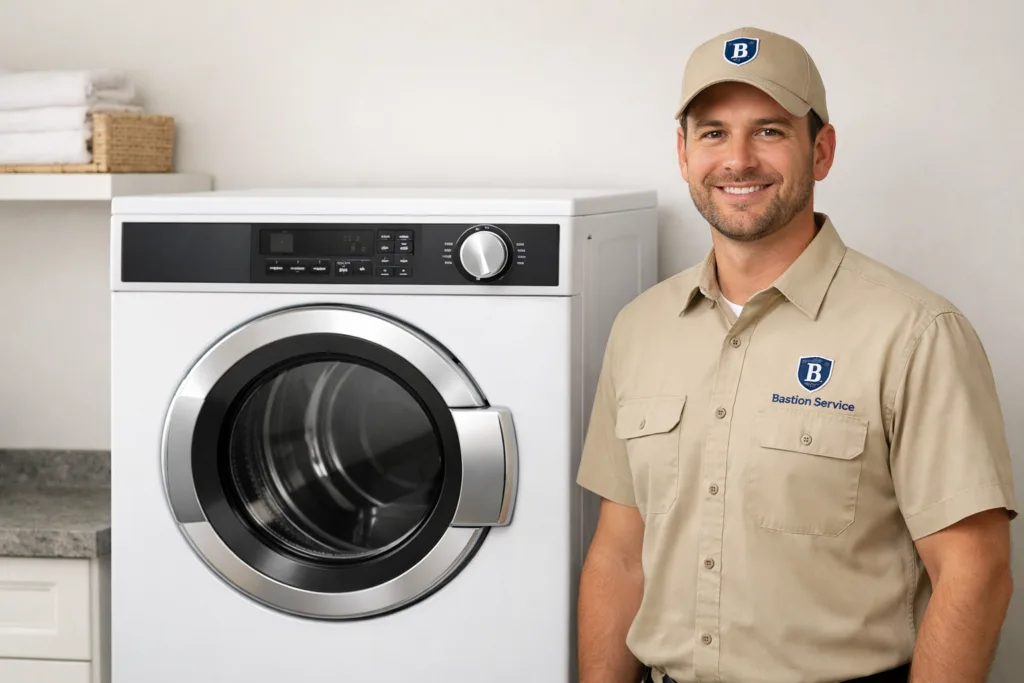
Dryer problems tend to show up in a few recognizable ways: clothes stay damp, cycles stretch longer than they used to, the drum turns but there is no heat, or the machine starts making noise that was not there before. With a Speed Queen dryer, the symptom matters because several different parts can create the same complaint.
For homeowners in Venice, the best repair decisions usually come from matching the pattern of the failure to the most likely cause instead of replacing parts by guesswork. That is especially important when heat, airflow, and moving components can all affect the same load result.
How to read the symptom before deciding on repair
A dryer that is not working normally does not always have a major failure. Sometimes the issue is internal, such as a failed heating component, worn drum support part, bad switch, or motor problem. In other cases, the dryer itself is only part of the problem and poor airflow or lint buildup is changing how it runs.
That is why symptom-based inspection matters. A no-start complaint is approached differently from a long-dry-time complaint, and a scraping noise calls for a different check than a dryer that shuts off after ten minutes. Looking at the exact behavior first helps narrow down whether the problem is electrical, mechanical, heat-related, or vent-related.
Common Speed Queen dryer problems and what they often mean
Dryer runs but does not heat
If the drum turns and the timer advances but the load stays cold, the dryer may have lost its heat source. On electric units, possible causes include a failed heating element, thermostat issue, thermal fuse, thermal cutoff, wiring failure, or a power supply problem. On gas models, the issue may involve the igniter, flame sensor, gas valve coils, or another safety-related component.
This symptom can also be confused with airflow trouble. If the dryer is producing some heat but the vent path is restricted, the machine may still leave clothes damp and seem like it has a heating problem. Separating true no-heat from poor heat delivery is an important part of diagnosis.
Long dry times or repeated cycles
When laundry takes two or three cycles to finish, homeowners often assume the heater is weak. That can be true, but it is not the only explanation. Restricted venting, lint accumulation inside the cabinet, moisture sensor issues, a partially failing element, or heavy loads packed too tightly can all extend drying time.
If the problem developed gradually, airflow restriction is often worth considering. If it appeared suddenly, the dryer may have lost part of its heating performance or developed a control or sensor problem. Long run times should not be ignored because they increase wear and can raise energy use.
Dryer will not start
A Speed Queen dryer that does nothing when the start button is pressed may have a simple interruption somewhere in the start circuit. Common possibilities include a door switch, start switch, thermal fuse, belt switch, control fault, or incoming power problem.
Sometimes the control panel appears normal but the motor never engages. In other cases, the dryer seems completely dead. Those differences can help point service in the right direction and reduce unnecessary part replacement.
Dryer starts, then stops mid-cycle
If the dryer runs for a while and then shuts down, overheating is one possible cause. A restricted vent, clogged lint path, weak motor, or failing safety component can cause the machine to stop before the cycle should end. Some units restart after cooling off, which often suggests a heat-related shutdown condition.
That symptom is more than an annoyance. Repeated overheating can shorten the life of thermostats, fuses, motor components, and surrounding parts.
Squealing, scraping, thumping, or rumbling
Unusual noise usually points to wear in the moving parts. Drum rollers, idler pulleys, belts, glides, blower wheels, and support components are all common sources. A light squeal may be the early sign of a part wearing out, while a scraping sound can mean a support has shifted enough to let the drum rub where it should not.
Mechanical noise often gets worse with continued use. Catching it early can help prevent damage to the drum, motor, or cabinet.
Burning smell or excessive heat around the dryer
A burning odor is a stop-and-check symptom. Lint buildup, restricted airflow, a dragging belt, motor trouble, or friction from worn supports can all create heat and smell. If the dryer cabinet feels unusually hot or the laundry area heats up far more than normal, it is smart to stop using the machine until the cause is identified.
Airflow problems can imitate part failure
One of the most overlooked dryer issues is airflow restriction. A dryer depends on moving hot, moist air out of the machine. If that path is blocked, heat can build up inside the cabinet while the clothes still fail to dry properly. That can make homeowners think the dryer is underheating when the real problem is that moisture is not being exhausted.
Signs that point toward airflow trouble include:
- Clothes feel warm but still damp at the end of the cycle
- Dry times have slowly increased over time
- The cabinet or laundry room gets hotter than usual
- The dryer shuts off before finishing
- There is a strong linty or overheated smell
Because airflow issues can also stress heating components and safety devices, they should be addressed before they lead to repeat failures.
When a noise problem should be handled quickly
Not every dryer noise means immediate major repair, but some sounds are warnings that a wear part is close to failure. A belt that slips, a pulley that binds, or rollers that flatten out can put extra strain on the motor and drum. What starts as an intermittent squeak can become a shutdown or a more expensive repair if the dryer keeps running in that condition.
If the sound is new, getting louder, or paired with vibration, reduced tumbling, or a burning smell, it is a good time to stop and have the unit checked.
Signs the problem is getting worse, not better
Dryers often give notice before they fail completely. Homeowners should pay attention if the machine:
- Heats on one load but not the next
- Needs more time than usual to finish normal laundry
- Starts only after multiple attempts
- Stops in the middle of a cycle and later restarts
- Makes periodic scraping or squealing sounds
- Produces a hot or burning odor during use
Intermittent symptoms are worth addressing early. They are often easier to trace before a part fails completely or damages nearby components.
When repair is often worthwhile
Many Speed Queen dryer problems are repairable, especially when the failure is limited to a heating part, thermostat, fuse, switch, belt, roller, idler, or sensor. These are the kinds of issues that can often restore normal drying performance without requiring replacement of the appliance.
Repair tends to make more sense when the dryer is otherwise in good condition, the drum and cabinet are sound, and the problem is isolated rather than spread across multiple systems.
When replacement may deserve consideration
Replacement becomes a more serious consideration when the dryer has multiple failures at once, major wiring damage, severe drive-system wear, or repeated unresolved problems that suggest broader deterioration. The age and overall condition of the unit matter, but the most important question is whether the machine is likely to return to reliable household use after the recommended work.
For many homes in Venice, that decision comes down to three practical points: what failed, what else shows meaningful wear, and whether the total repair path fits the condition of the appliance.
What homeowners should be ready to describe when scheduling service
A few details can make diagnosis more efficient. It helps to note whether the dryer tumbles, whether any heat is present, whether the problem is constant or intermittent, how long the issue has been happening, and whether there are any noises or smells. If the dryer shuts off mid-cycle, knowing roughly how long it runs before stopping is also useful.
Those observations do not replace testing, but they do help narrow the likely causes and make the visit more productive.
What a good service visit should help you determine
A helpful appointment should make it clear whether the dryer is heating correctly, moving air properly, showing wear in its drive parts, or shutting down because of an underlying safety or control issue. From there, the next step is easier to judge: repair now, stop using the dryer until a specific issue is corrected, or consider replacing the unit if the condition no longer supports a sensible repair path.