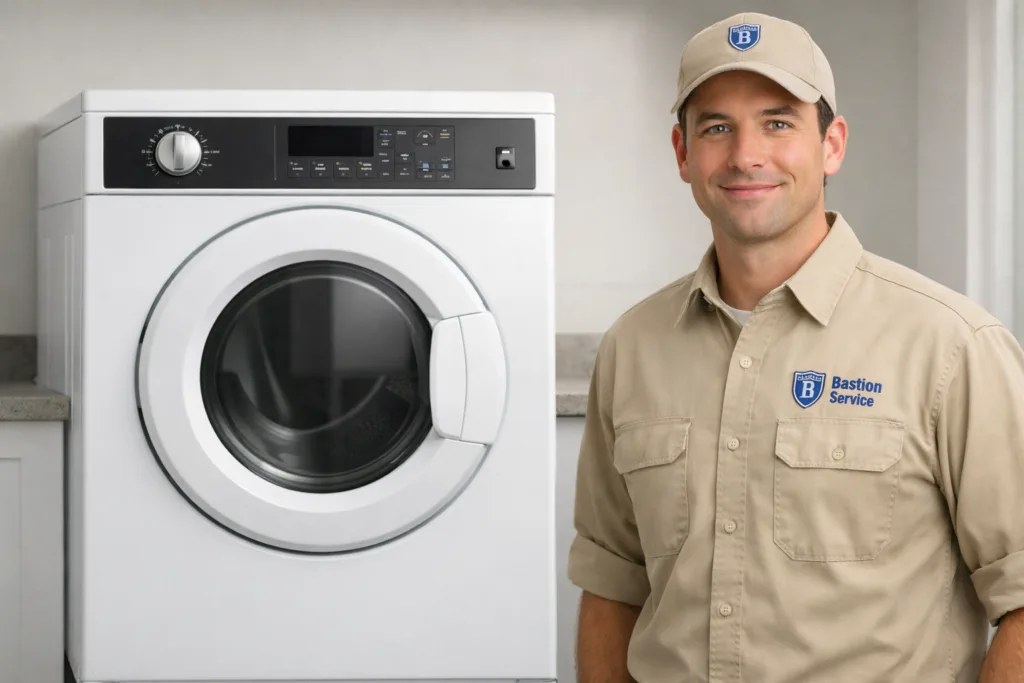
Dryer problems rarely improve on their own. If a Speed Queen unit is leaving clothes damp, shutting off partway through a load, or making a new scraping or squealing sound, the main goal is to identify whether the issue is related to heat, airflow, drum support, controls, or power. That matters because the same symptom can come from very different failures, and the repair only makes sense once the actual cause is narrowed down.
Common Speed Queen dryer symptoms and what they often mean
Most household dryer complaints fall into a few recognizable patterns. Paying attention to what the machine does at the start of the cycle, during tumbling, and near the end of the load can help separate a simple fault from a larger wear issue.
No heat or very little heat
If the drum turns but the load stays cold or barely warm, likely causes include a failed heating component, a blown thermal fuse, a thermostat problem, an ignition-related fault on gas models, or an electrical supply issue. In some cases, the dryer is technically producing heat, but not enough to dry a normal load within a normal cycle length.
This symptom should not be judged by touch alone after a short run. A proper check looks at whether the unit is heating consistently, whether the heat is cycling correctly, and whether airflow is carrying that heat through the drum as intended.
Long dry times
When towels, jeans, or mixed loads need two or three cycles, the cause is often poor airflow rather than a completely failed heater. Restricted venting, lint buildup, blower issues, or moisture sensor problems can all make a dryer seem weaker than it really is. A Speed Queen dryer in Pico-Robertson may still tumble and feel hot while drying poorly if air is not moving out of the machine efficiently.
Long cycle complaints also deserve attention because repeated overdrying can increase wear on fabrics while putting unnecessary strain on the appliance.
Will not start
A no-start complaint can involve the door switch, start switch, thermal protection, control board, motor, or incoming power. Sometimes the panel appears normal but the dryer does nothing when the cycle is selected. In other cases, the unit hums briefly, clicks, or starts only intermittently.
That difference matters. A dryer that is completely dead points in a different direction than one that tries to start and fails, so the symptom pattern helps guide the repair path.
Stops during the cycle
If the dryer runs for a few minutes and then shuts off, overheating, motor trouble, airflow restriction, or a failing safety device may be involved. This is one of the more important issues to address promptly because repeated shutdowns can indicate that the machine is protecting itself from a larger problem.
Noise, vibration, or rubbing sounds
Thumping, squealing, grinding, scraping, or rattling often point to worn rollers, idler pulley wear, belt issues, blower wheel problems, or drum support trouble. Some noises begin as minor annoyance and become more serious as parts wear unevenly. A dryer that sounds different from usual should not be dismissed if the sound repeats from load to load.
Burning smell
A burning odor deserves immediate caution. Friction from worn moving parts, lint accumulation, overheating, or electrical failure can all create this symptom. The dryer should not continue running until the source is identified.
Why airflow problems are easy to mistake for heating problems
One of the most common misreads is assuming the heater has failed when the real issue is restricted airflow. A dryer can generate normal heat but still leave clothes wet if that heat cannot move properly through the drum and out of the vent. When airflow drops, internal temperatures may rise in the wrong places, cycle times stretch, and safety components may begin shutting the machine down.
Signs that point toward airflow trouble include:
- Loads that come out hot but still damp
- Drying that improves with very small loads only
- The outside of the dryer feeling unusually warm
- Cycles that seem longer than they used to be
- Shutoffs that happen more often on bulky items like towels or bedding
Because airflow and heat performance are closely tied together, both need to be evaluated before deciding what part actually failed.
What a symptom-based diagnosis should check
On a Speed Queen dryer, useful diagnosis usually means checking the systems most closely tied to the complaint rather than guessing from one symptom alone. For a heating complaint, that can include the heating circuit, thermostats, fuses, ignition components on gas units, and vent-related airflow. For a noise complaint, attention often turns to rollers, belt path components, blower operation, and drum support areas.
A good inspection also considers how the machine behaves under a real load. Some faults only appear after the dryer warms up, while others are most noticeable at startup or during cool-down. Intermittent problems can be especially misleading if the appliance appears normal for a short test but fails during everyday use.
When repair is usually the practical choice
Many Speed Queen dryers remain worth repairing when the problem is isolated to a specific component and the cabinet, drum, and core structure are still in good shape. That is especially true when the symptom is limited to one system, such as heat production, drum support, or starting.
Repair is often a reasonable path when:
- The dryer has otherwise been reliable
- The problem can be traced to a targeted part failure
- There is no sign of widespread internal wear
- The drum and main body of the machine remain in solid condition
When replacement may deserve consideration
Replacement becomes more likely when the dryer has multiple active issues at once, a long history of repeat breakdowns, or broader signs of wear affecting several systems. A machine with heat problems, noise, and intermittent shutdowns at the same time may not be the same repair candidate as one with a single failed component.
Homeowners in Pico-Robertson often make the best decision once they know:
- What failed
- Whether the problem is isolated or part of a bigger wear pattern
- How much labor and parts are involved
- Whether the appliance is likely to remain stable after the repair
Signs you should stop using the dryer now
Some symptoms call for more than routine scheduling. It is best to stop using the machine until it is checked if you notice:
- A burning smell that returns during operation
- Harsh grinding or metal-on-metal noise
- Repeated mid-cycle shutdowns
- Sparking, breaker trips, or signs of electrical trouble
- A drum that struggles to turn or does not turn at all
Continuing to run a dryer in these conditions can increase damage to belts, supports, motors, heating components, or controls.
What Pico-Robertson homeowners can watch before service
Before scheduling repair, it helps to note a few details about the failure. Does the dryer tumble normally? Does it produce any heat at all? Is the problem present on every cycle or only sometimes? Does the sound happen immediately, or only after the machine has been running for several minutes?
Useful observations include:
- Whether the load is warm, hot, or completely cold at the end
- Whether the timer or display behaves normally
- Whether the dryer stops on automatic cycles, timed cycles, or both
- Whether heavier loads make the issue worse
- Whether the noise comes from the front, rear, or lower portion of the cabinet
Those details can make diagnosis faster and help determine whether the issue is likely mechanical, electrical, airflow-related, or control-related.
Focused repair for a household laundry appliance
For residential service, the most effective approach is to stay focused on the exact way the dryer is failing in daily use. Wet clothes after a normal cycle, a unit that will not start before work, or a drum that suddenly begins squealing all point to different systems and different repair decisions.
For many households in Pico-Robertson, the priority is straightforward: find the fault, understand whether the repair is practical, and get the laundry routine back to normal without unnecessary parts replacement.