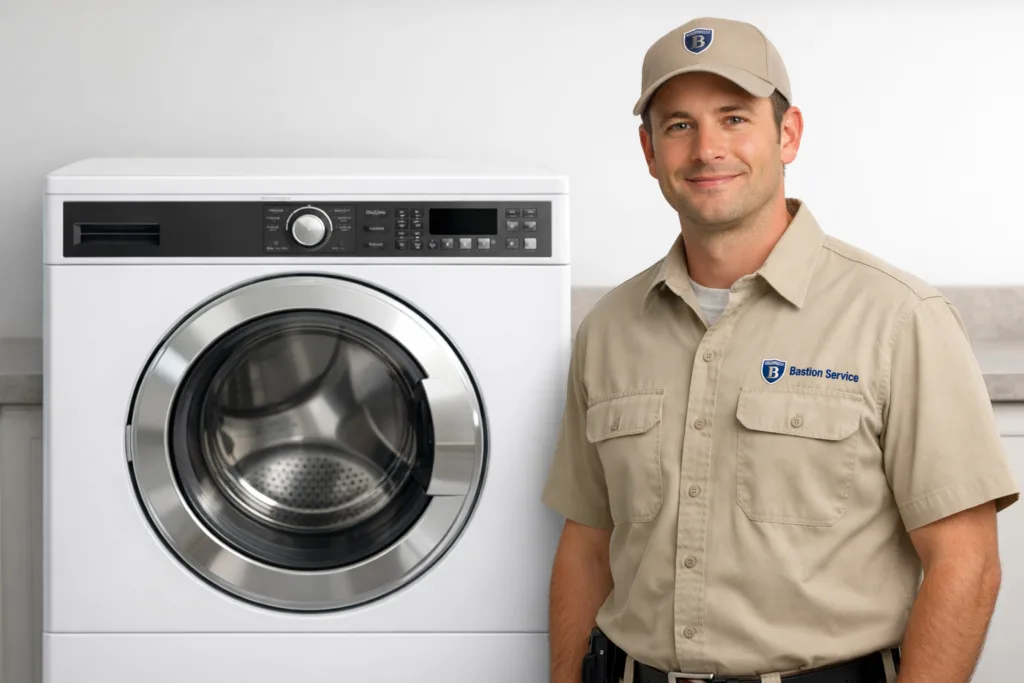
Laundry routines fall apart quickly when a dryer stops finishing loads the way it should. With Speed Queen units, the symptom often points in the right direction, but not always to a single part. A machine that is not drying well may have a heating fault, a vent restriction, a sensing issue, or a combination of smaller problems that show up as one frustrating result.
For homeowners in Palms, the most useful approach is to look at the exact pattern: whether the drum turns, whether heat is present, whether the cycle ends too soon, and whether the dryer has started making new sounds. Those details help separate a straightforward repair from a broader wear issue.
Common Speed Queen dryer symptoms and what they often mean
Dryer runs but there is no heat
If the drum spins normally but clothing stays cool or damp, the problem is usually in the heating circuit or the safety system that shuts heat off when something is wrong. On electric models, that can involve the heating element, thermal fuse, thermostat, or incoming power. On gas models, likely causes include an igniter problem, flame sensor issue, or gas valve component failure.
Airflow should also be considered. A vent restriction can cause heat-related parts to trip or operate irregularly, which makes the dryer seem like it has lost heat even when the original problem started outside the cabinet.
Drying takes too long
Long dry times are one of the most common complaints and often one of the most misunderstood. Many people assume the dryer has become weak, but the real issue is frequently poor airflow. If hot, moist air cannot leave the machine efficiently, clothes stay damp and the dryer runs longer than normal.
- Lint buildup in the exhaust path
- A crushed or kinked vent connection
- A partially blocked exterior vent outlet
- Moisture sensor or cycling issues
- Reduced heat output from a failing component
When dry times keep increasing, it is best not to ignore it. Extra-long cycles can put added strain on thermostats, heating parts, and support components.
Dryer will not start
A no-start complaint can stem from something simple or something deeper in the machine. Common causes include a failed door switch, blown thermal fuse, broken belt with belt switch activation, faulty start switch, control problem, or power supply issue. If the dryer stopped in the middle of a prior load and then refused to restart, that detail can help narrow the cause.
It is also important to notice what the controls do. No lights, partial response, clicking without movement, or complete silence each suggest different paths for diagnosis.
Drum turns inconsistently or does not tumble
If the unit powers on but the drum does not rotate correctly, the issue may involve the belt, idler pulley, motor, drum rollers, or an obstruction affecting movement. In some cases, the dryer may hum but fail to start tumbling, which can point to a seized support part or a motor struggling under load.
This kind of symptom should be addressed fairly soon, since forcing operation can wear other components and increase repair scope.
Noise, vibration, or scraping sounds
New noise is usually a sign that a moving part is wearing out. Speed Queen dryers can develop squealing, rumbling, thumping, or scraping depending on which support part has deteriorated.
- Squealing often suggests an idler pulley or glides
- Rumbling can indicate worn drum rollers
- Scraping may point to a drum support issue
- Thumping can happen when rollers wear unevenly or the drum is not riding smoothly
A dryer that becomes noticeably louder over time is usually giving early warning before a more complete mechanical failure.
Burning smell or overheating
A burning odor should always be taken seriously. Lint accumulation, dragging support parts, overheating in the heater area, and electrical failures can all create smell-related warnings. If the cabinet feels much hotter than usual, clothing comes out excessively hot, or the odor repeats from load to load, stop using the machine until it has been checked.
Why the same symptom can have different causes
Dryer problems often overlap. For example, “not drying” can mean no heat, weak heat, poor airflow, early shutoff, or an overloading pattern that masks the real issue. “Not starting” can mean a safety device has opened, but it can also mean the motor circuit is failing or the control is not sending power where it should.
That is why symptom-based repair is more helpful than part guessing. Replacing the most obvious component without confirming the reason for failure can leave the original problem unresolved.
Signs the problem is getting worse
Some dryer issues stay mild for a short time, but many gradually spread stress to other parts. Watch for these changes:
- Loads needing multiple cycles when they used to finish in one
- The dryer shutting off before clothes are dry
- Heat becoming inconsistent from one load to the next
- The drum starting with a struggle or stopping mid-cycle
- Noises becoming louder, harsher, or more frequent
- A breaker tripping during operation
When several of these show up together, the issue is often larger than normal wear and should be evaluated before continued use causes secondary damage.
When to stop using the dryer
It is smart to stop running the dryer if you notice a burning smell, visible sparking, overheating, repeated breaker trips, or harsh metal-on-metal noise. These symptoms can point to safety concerns as well as repairable mechanical problems. Continuing to run the machine in that condition may damage wiring, the motor, the drum supports, or heat-related parts.
Even without an obvious safety issue, a dryer that is taking much longer to finish loads should not be pushed through repeated back-to-back cycles. That usually increases cabinet heat and wear.
Repair versus replacement
Many Speed Queen dryer issues are still worth repairing, especially when the cabinet, drum, and main structure are in good shape and the problem is limited to a heating component, support part, switch, fuse, or airflow-related fault. These machines are often built to remain serviceable when the failure is isolated.
Replacement becomes more likely when there are multiple major issues at once, recurring failures over a short period, or extensive wear that affects both function and safety. The real question is not just age. It is whether the current problem is contained or whether the machine shows signs of broader decline.
Helpful details to have ready before service
If the dryer needs attention, a few observations can make diagnosis faster and more accurate:
- Does the drum turn normally?
- Is there heat, weak heat, or no heat at all?
- Did the issue begin suddenly or gradually?
- Does it happen on every load or only sometimes?
- Are there any unusual sounds or smells?
- Does the cycle stop early or run longer than expected?
Those symptom details often reveal whether the problem is tied to airflow, heat generation, sensing, controls, or drum support parts.
What homeowners in Palms should expect from a focused dryer repair visit
A useful service call should do more than respond to the headline complaint. If a Speed Queen dryer in Palms is not heating, the visit should account for airflow, safety devices, heat production, and control behavior instead of assuming one failed part. If the machine is noisy, the moving components should be checked closely so the actual wear point is identified.
The goal is to determine what failed, whether anything else was affected, and whether repair makes sense based on the machine’s condition. That gives homeowners a clear path forward without guessing through multiple parts changes.
Keeping laundry disruptions smaller
Dryer problems are easier to manage when they are caught early. A faint squeal, a slightly longer cycle, or a dryer that feels hotter than usual may seem minor at first, but those are often the warning signs that matter most. Addressing the issue before it turns into a complete no-start or no-heat breakdown usually gives you better repair options and less disruption to the household routine.
If your Speed Queen dryer has started acting differently, symptom-based evaluation is the best next step toward a safe and sensible repair decision.