
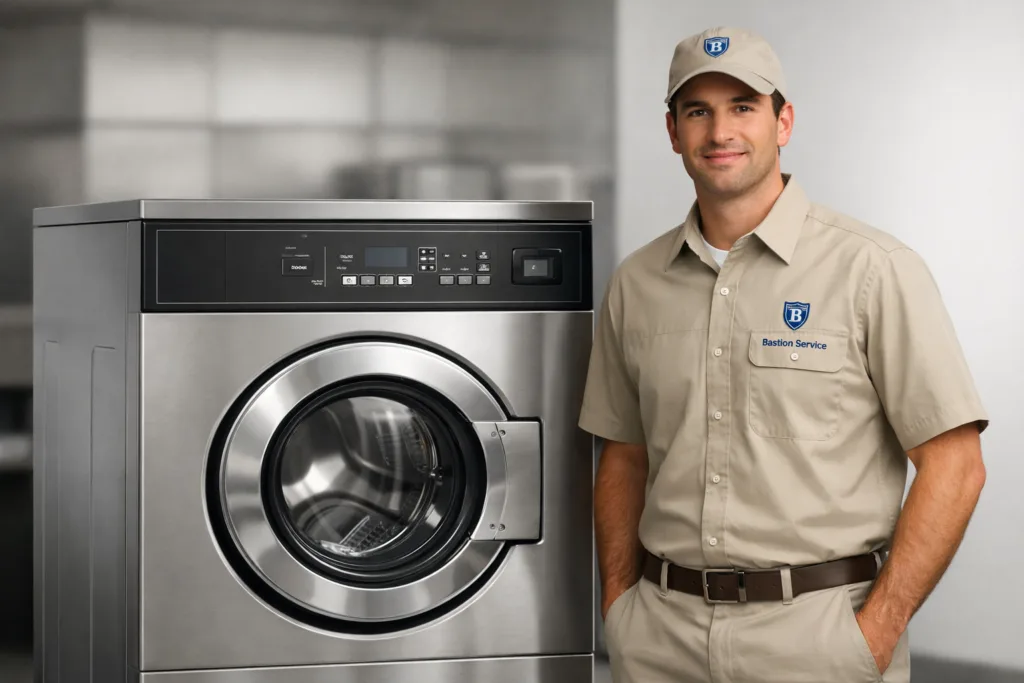




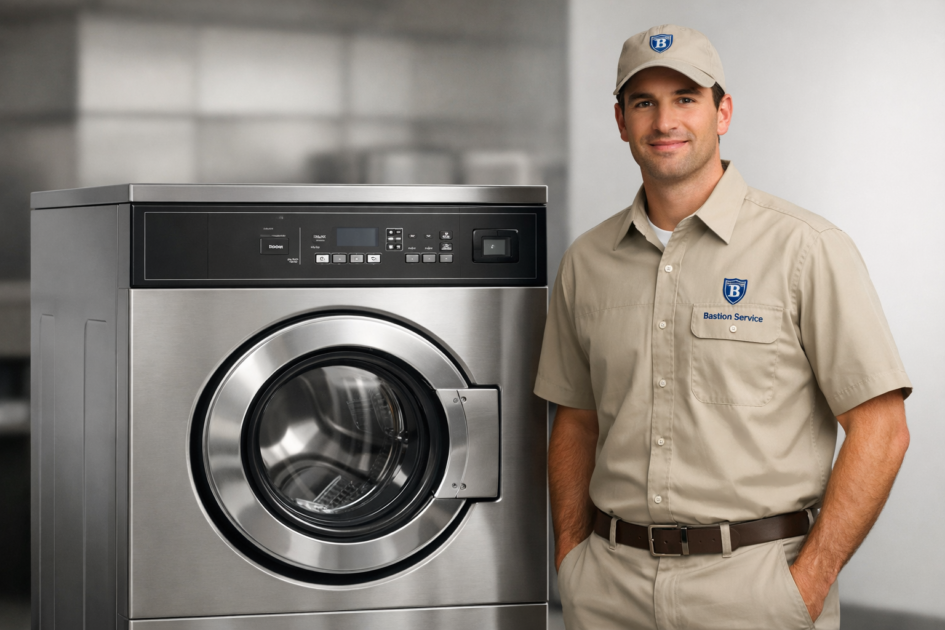
When a Speed Queen washer fails during daily operations, the priority is restoring predictable performance without wasting time on guesswork. For laundromats, hotels, care facilities, and other businesses in Torrance, washer problems can quickly affect turnaround times, staffing, and load capacity. Bastion Service handles Speed Queen washer repair by tracing the symptom to the failed system, checking for related wear, and helping you schedule the next step based on the machine’s actual condition.
Related commercial service paths in Torrance include Speed Queen Commercial Repair in Torrance, Commercial Washer Repair in Torrance, and Speed Queen Dryer Repair in Torrance.
Early service is often the difference between a contained repair and a larger interruption. A machine that still runs but leaves loads wet, stops mid-cycle, leaks onto the floor, or needs repeated restarts is usually signaling a problem that will not correct itself. The most useful starting point is the symptom pattern: what the washer does, when it happens, and whether the issue is consistent or intermittent.
Common Speed Queen washer problems that affect business operations
Washer will not start or stops before the cycle finishes
A no-start condition can involve power supply issues, door lock problems, control failure, wiring faults, or an interface problem that prevents the machine from recognizing the selected cycle. If the washer begins normally but stops partway through, the cause may be tied to a specific stage such as fill, drain, spin, or heating. Intermittent shutdowns are especially important to check because they can be linked to vibration, moisture, heat buildup, or failing electrical components.
Not draining, not spinning, or leaving loads too wet
If water remains in the basket at the end of the cycle, the issue may involve the drain pump, drain path restrictions, sensor input, drive components, or the control system. Weak extraction can also point to spin-related problems, imbalance detection issues, belt wear, or motor trouble. In busy laundry environments, poor spin performance does not just affect the washer; it also increases drying time and slows the entire workflow.
Leaks, overfilling, or inconsistent water fill
Leaks should be addressed quickly because the source is not always obvious. Water on the floor may come from hoses, inlet valves, the pump system, door seal areas, internal tub components, or drainage faults. A washer that fills too slowly, does not fill enough, or keeps filling past the normal level may have valve, sensing, pressure, or control-related problems. These symptoms can create both safety concerns and unnecessary interruptions around nearby equipment.
Vibration, banging, squealing, or grinding
Unusual noise usually means more than normal wear. Harsh vibration can be caused by suspension issues, mounting problems, structural wear, bearing failure, or drive system damage. Squealing may point toward belts or related moving parts, while grinding or banging can suggest more serious mechanical stress. Continued operation under these conditions can turn a repairable problem into wider damage across the washer assembly.
Error codes and repeated fault behavior
Error codes help narrow the system involved, but they do not automatically identify the failed part. A recurring code may be triggered by a sensor issue, drainage problem, control fault, wiring defect, or another component that is causing the same fault condition to repeat. Good service work confirms the root cause before parts are approved, which helps avoid repeat visits and unnecessary replacements.
Why symptom patterns matter before parts are replaced
Two Speed Queen washers can show the same outward symptom and still need different repairs. A drain complaint could be caused by a blocked path, a weak pump, a control issue, or a related mechanical condition that is preventing the cycle from advancing correctly. A machine that stops mid-cycle may have a lock problem, power interruption, board issue, or overheating component. That is why symptom timing matters: whether the problem appears with heavy loads, at the same cycle stage, after multiple consecutive runs, or only once the washer is fully warmed up.
For businesses in Torrance, this helps with both repair accuracy and scheduling. Knowing whether the problem is isolated or already affecting multiple systems makes it easier to decide how urgently the machine needs to come out of service and what level of repair is justified.
Signs you should schedule service sooner rather than later
- The washer needs repeated restarts to finish a load.
- Water remains in the drum after the cycle ends.
- Loads come out much wetter than normal.
- The machine leaks during fill, wash, drain, or spin.
- Staff notice a burning smell, buzzing, or breaker trips.
- The washer shakes harder than usual or makes new mechanical noise.
- Cycle times are becoming unpredictable.
- The same fault code keeps returning after resets.
Another strong indicator is when staff begin adapting around the machine instead of using it normally. Reducing load size, skipping certain cycles, manually draining water, or avoiding back-to-back runs usually means the washer has an active fault that is getting worse with use.
Why continued use can increase downtime
Trying to push through a washer problem often creates secondary damage. A drainage issue can overwork the pump and leave water where it should not be. A spin problem can increase strain on belts, supports, and motor-related components. Leaks can affect flooring and expose internal parts to moisture. Repeated stopping and restarting can create additional control problems, especially if the original failure involves locks, sensors, or unstable electrical operation.
From a business perspective, the real question is not simply whether the washer still turns on. It is whether continuing to run it risks a longer outage, more expensive repair needs, or disruption to the rest of the laundry process. If performance has changed in a noticeable way, it is usually smarter to schedule diagnosis before the washer fails completely.
Repair or replacement depends on machine condition
Many Speed Queen washer issues are repairable when caught before wear spreads into multiple systems. Problems involving pumps, valves, controls, door lock assemblies, drain components, or certain drive-related parts may be good repair candidates if the rest of the machine remains in solid condition. In those cases, service can restore stable operation without forcing a larger equipment decision.
Replacement becomes more likely when the washer has severe structural wear, repeated major failures, extensive corrosion, or stacked problems across several systems. The right choice depends on service history, overall condition, downtime impact, and whether the repair is likely to provide lasting value rather than a short-term fix.
What to have ready before a service appointment
To speed up diagnosis, it helps to note a few details before the visit:
- Whether the washer fails at start, during wash, at drain, or during spin
- Any error code or flashing pattern shown on the display
- Whether the issue happens on every load or only under certain conditions
- If the machine leaks from the front, rear, underneath, or only during part of the cycle
- Any recent noise changes, vibration, odors, or breaker trips
- Whether nearby staff have already changed loading or cycle habits to keep it running
These details help narrow whether the problem is mechanical, electrical, water-handling, or control-related and can make the repair path more efficient once the machine is inspected.
Focused service for Speed Queen washers in Torrance
A useful service visit should do more than identify a single bad part. It should confirm why the failure occurred, determine whether related components were affected, and clarify what is needed to return the washer to reliable daily use. If your Speed Queen washer in Torrance is not draining, not starting, leaking, vibrating, stopping mid-cycle, or leaving poor wash results, scheduling service promptly is the best way to limit downtime and move forward with a repair decision based on the machine’s actual condition.


