
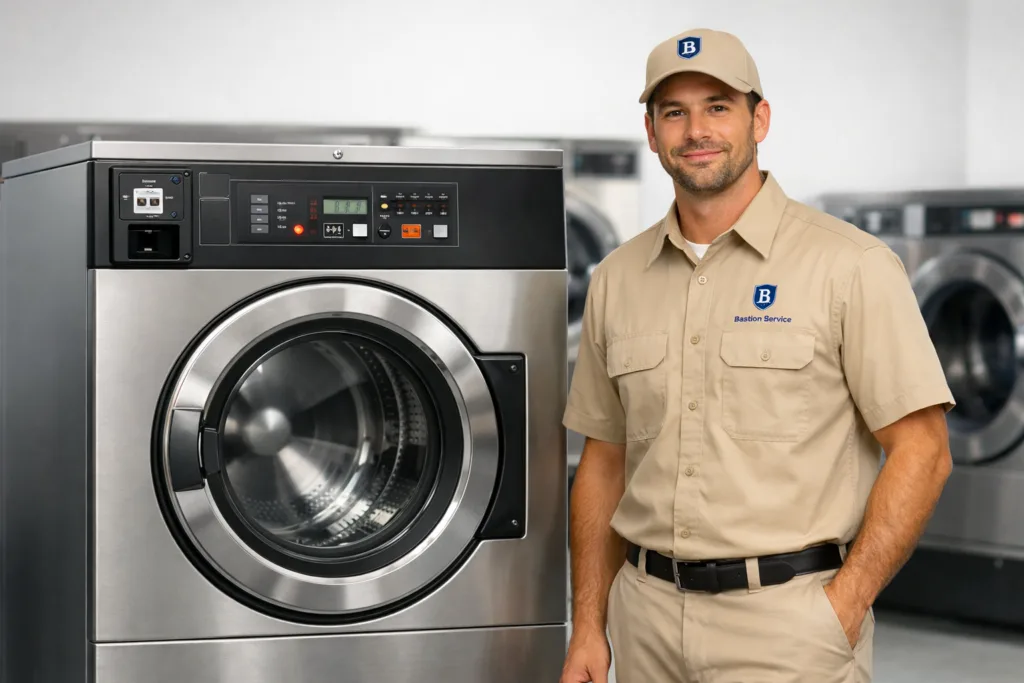




Washer problems can disrupt turnover, staffing, and daily laundry flow faster than many teams expect. For businesses in Beverly Hills, service is most effective when the symptom is verified first and the repair decision is based on how the machine is actually failing in use. Bastion Service handles Speed Queen washer issues with an inspection process focused on downtime impact, likely failure points, and the next step needed to restore reliable operation.
Related commercial service paths in Beverly Hills include Speed Queen Commercial Repair in Beverly Hills, Commercial Washer Repair in Beverly Hills, and Speed Queen Dryer Repair in Beverly Hills.
Service-focused repair for Speed Queen washer problems
A washer that stops mid-cycle, leaves standing water, leaks onto the floor, or sends loads to the dryer too wet is doing more than creating inconvenience. It can slow room readiness, increase rewash volume, force staff workarounds, and put additional demand on the rest of the laundry setup. In Beverly Hills, businesses often need repair scheduling that matches operational urgency, especially when one failing washer starts affecting the entire workflow.
The most useful approach is to connect the complaint to the system involved: power and controls, fill and temperature, drainage, drive components, suspension, or seals and hoses. That helps determine whether the issue is isolated, whether related wear is present, and whether the machine is a good repair candidate.
Common Speed Queen washer symptoms and what they may mean
Not starting or not completing the cycle
If the washer does not respond when started, shuts off unexpectedly, or stalls before the cycle finishes, the problem may involve the door or lid lock, control board behavior, wiring, power supply issues, or a failing interface. Intermittent starting problems should not be ignored in a business setting because they often lead to unpredictable downtime and repeated cycle loss.
When the same machine needs repeated restarts or staff have to test multiple cycle selections to get it going, service is usually the right next step.
Slow fill, no fill, or incorrect wash conditions
A Speed Queen washer that fills too slowly, does not fill at all, or does not appear to reach expected wash conditions may have restricted inlet screens, valve trouble, supply issues, or control-related faults. In daily operations, this can lead to poor wash results, delayed loads, and inconsistent cycle timing.
If users are compensating by rerunning loads or changing settings repeatedly, the issue is already affecting productivity and should be diagnosed rather than managed around.
Not draining or leaving water in the tub
Drain complaints often point to a worn pump, blocked drain path, hose restriction, or sensor problem. A washer that ends with water still inside may also fail to move properly into spin, which makes the original complaint look like more than one issue.
Standing water should be addressed promptly because repeated attempts to force incomplete loads through the machine can add stress to the pump and drive system.
Not spinning or leaving loads too wet
If loads come out heavy and saturated, the washer may be struggling with extraction. Common causes include drive-related wear, motor issues, balance sensing problems, suspension concerns, or control faults. In a business environment, poor extraction creates a direct bottleneck by increasing dryer time and slowing the entire laundry cycle.
This is especially important when the machine appears to wash normally but fails only during the final phase. That pattern often helps narrow the inspection toward spin-specific components rather than a general wash complaint.
Excessive vibration, banging, or movement
Strong vibration, off-balance shutdowns, or banging during spin can indicate suspension wear, leveling problems, mounting issues, tub support trouble, or drive-system concerns. While load distribution can contribute, repeat vibration on similar loads usually suggests the machine needs inspection.
Ignoring this symptom can lead to worsening mechanical wear, floor safety concerns, and disruption to nearby equipment.
Leaks, drips, or overflow around the washer
Water on the floor may come from hoses, connection points, pump parts, door seals, drain components, or overfill conditions. Some leaks appear only during fill, while others show up during drain or high-speed extraction. The timing of the leak matters because it helps identify which part of the washer should be inspected first.
Even minor leakage deserves attention in a business setting because it can create slip risk, interrupt staff routines, and damage surrounding finishes if left unresolved.
Grinding, squealing, or unusual mechanical noise
A washer that suddenly becomes louder often gives early warning before a larger failure. Bearings, pulleys, pumps, motor-related parts, and suspension hardware can all create distinct sounds as wear progresses. If the noise is new, worsening, or tied to a specific stage of the cycle, that detail is useful when scheduling repair.
Running the machine until it fails completely may increase the scope of the repair, especially when a small mechanical issue starts affecting adjacent parts.
Why symptom-based diagnosis matters
Many washer complaints overlap. A unit that “won’t finish” may actually be failing to drain. A “no spin” issue may begin with imbalance detection or a control problem. A “leak” may be a hose issue in one case and an overfill condition in another. That is why a proper evaluation should confirm what the washer is doing, when it happens, and whether the symptom is consistent or intermittent.
For Beverly Hills businesses, this matters because unnecessary parts replacement wastes time and does not solve the operational problem. A symptom-based diagnosis helps determine whether the repair is straightforward, whether multiple faults are developing, and whether continued use risks more downtime.
When to stop using the washer and schedule repair
Service should be scheduled promptly when the washer is tripping power, stopping mid-cycle, failing repeatedly to drain, leaking onto the floor, producing a burning smell, or making harsh mechanical noise. These are warning signs that usually do not correct themselves and often worsen with continued use.
It also makes sense to call for service when the machine still runs but requires constant staff intervention. If people are redistributing loads, restarting cycles, avoiding one washer, extending dry times because extraction is weak, or planning around one machine’s inconsistent behavior, the washer is already costing time and throughput.
Repair or replace: how businesses usually evaluate the decision
Repair is often the sensible path when the washer is otherwise in solid condition and the failure is limited to a specific system. Replacement becomes more likely when the machine has repeated breakdowns, multiple worn assemblies, or downtime costs that outweigh the value of another repair.
A useful service assessment should consider the current symptom, overall machine condition, recent repair history, and whether restoring this washer is likely to improve reliability in a meaningful way. For many businesses in Beverly Hills, the decision is about maintaining stable operations, not just comparing one part cost to another.
How to prepare for a service visit
Before scheduling repair, it helps to note what the washer is doing and at what point in the cycle the problem appears. Useful details include whether the tub fills, whether it drains fully, whether the machine locks properly, whether the issue happens on every load, and whether any noise or leaking appears only during spin.
- Whether the washer will start at all or only intermittently
- Whether the failure happens during fill, wash, drain, or spin
- Whether loads are consistently too wet at the end
- Whether there is visible leaking, vibration, or unusual noise
- Whether staff have noticed repeat stoppages or incomplete cycles
These details can help narrow the likely cause and support faster repair planning once the machine is inspected.
Scheduling the next step
When a Speed Queen washer starts affecting turnaround, rewash volume, or safe operation, the right move is to schedule service before a smaller fault turns into a broader outage. A targeted inspection can identify whether the issue involves controls, drainage, extraction, leaks, or mechanical wear, and whether repair is the best next step for the unit. For businesses in Beverly Hills, timely washer service is ultimately about restoring dependable performance and reducing disruption to daily operations.


