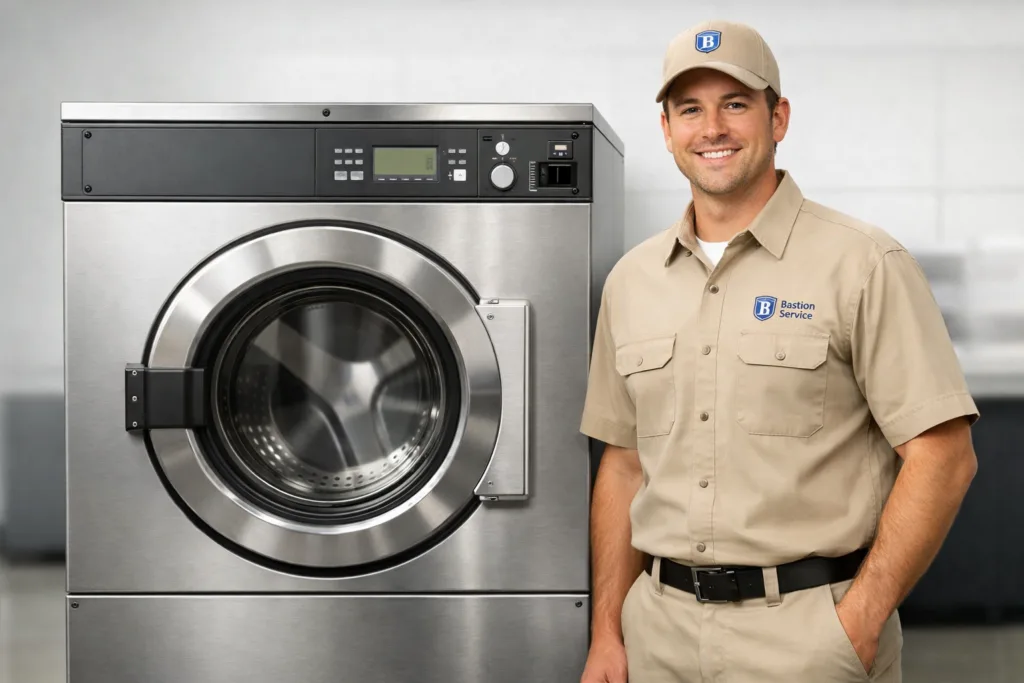




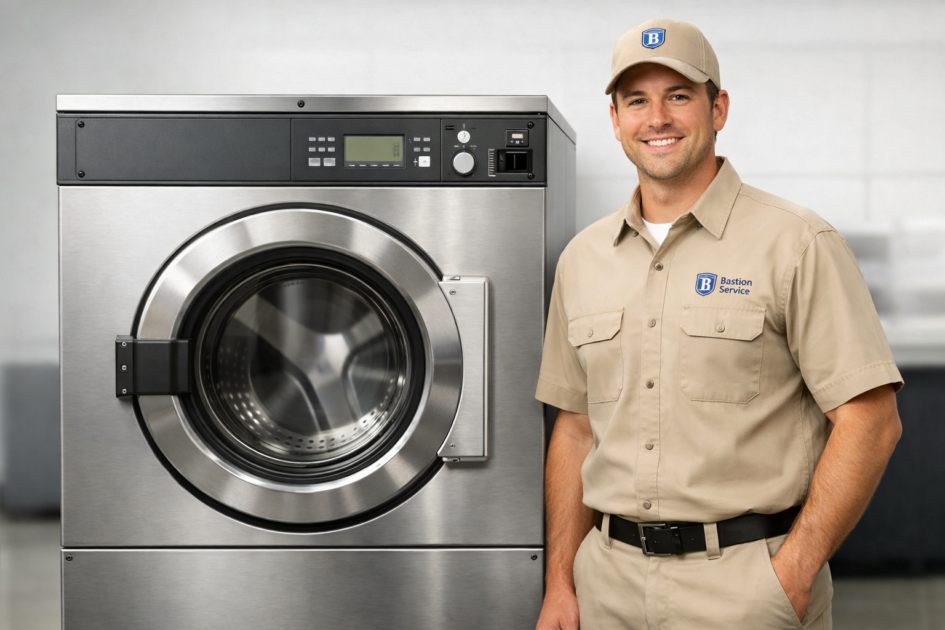
Washer and dryer problems can disrupt laundry rooms, guest services, tenant turnover, and daily staff routines quickly, especially when a machine is still partly working but no longer performing consistently. For businesses in West Hollywood, the most useful next step is service that identifies the actual failure, explains the downtime risk, and helps management decide whether to repair now, limit use temporarily, or plan around a longer outage. Bastion Service provides Speed Queen laundry equipment repair for symptom-based problems that affect operations, throughput, and equipment reliability.
For specific equipment paths in West Hollywood, review Speed Queen Washer Repair in West Hollywood, Speed Queen Dryer Repair in West Hollywood, and Commercial Appliance Repair in West Hollywood.
Speed Queen laundry equipment issues that usually need service
Speed Queen equipment is built for frequent use, but heavy demand eventually shows up as performance changes, intermittent faults, unusual noise, drainage trouble, heating problems, or cycles that no longer finish correctly. In business settings, those issues often create a chain reaction: delayed loads, machines taken out of rotation, added labor, customer complaints, and pressure on the remaining equipment.
Service is typically worth scheduling when symptoms are repeating, getting worse, or affecting how predictable the equipment is from one load to the next. A machine does not have to be fully down to need repair. If a washer or dryer is still running but results are inconsistent, that often points to a problem that can spread into a more expensive outage if ignored.
Common Speed Queen washer symptoms
Washer problems usually appear first in the way the machine fills, drains, spins, or completes a programmed cycle. Some faults are obvious right away, while others show up as reduced washing quality or loads that come out wetter than expected.
Washer will not fill, fills slowly, or stops early
If the washer is not bringing in enough water, taking too long to fill, or stopping before wash action begins, possible causes can include water inlet issues, valve problems, sensing faults, control issues, or restrictions affecting normal flow. In a busy laundry environment, this kind of problem causes immediate delays because staff may need to restart cycles or remove unfinished loads.
Washer will not drain or leaves standing water
Drain problems are one of the most disruptive washer issues because they can leave the machine unusable until the water is cleared. A Speed Queen washer that will not drain properly may have a pump problem, blockage, control fault, or another failure preventing the cycle from advancing. Standing water is also a sign the machine should not simply be forced through repeated restarts without inspection.
Washer will not spin or leaves loads too wet
When the machine washes but does not spin correctly, loads come out heavy, drying time increases, and production slows across the room. This can be tied to drive components, balance issues, door or lid sensing, motor-related faults, or control failures. Even when the machine still reaches spin sometimes, inconsistent extraction is a strong sign that service is needed.
Leaks, banging, or strong vibration
Water leaks, shaking, pounding sounds, or movement during operation should be taken seriously. These symptoms can point to wear in suspension-related parts, pump or hose problems, mounting issues, or internal mechanical stress. Beyond equipment damage, leaking water creates cleanup and safety concerns in shared laundry spaces and staff work areas.
Washer stops mid-cycle or shows repeated cycle failure
If a machine regularly pauses, shuts down, fails to advance, or only completes certain loads, the issue may involve control components, sensors, electrical problems, or intermittent failures that are harder to spot without testing. Repeated interrupted cycles are more than an inconvenience; they make scheduling and workflow unpredictable, which is a major problem for businesses in West Hollywood that rely on steady equipment availability.
Common Speed Queen dryer symptoms
Dryer trouble often affects operations just as much as a washer failure because a dryer bottleneck can slow the entire laundry process. Heating, airflow, drum movement, timing, and control issues all change how quickly loads can be turned around.
No heat or low heat
If the dryer runs but does not generate enough heat, clothes and linens remain damp, cycle times stretch out, and staff may need to rerun loads. Possible causes include heating component failure, thermostat issues, sensor problems, airflow restrictions, or control faults. Because several different failures can produce similar results, symptom-based diagnosis matters.
Long dry times and poor drying performance
A dryer that eventually dries but takes much longer than normal often creates hidden downtime. Loads back up, labor costs increase, and machine availability drops even though the unit appears to be functioning. Long dry times may be related to reduced airflow, heat problems, sensor issues, or wear affecting normal drum and cycle performance.
Dryer overheats or shuts off unexpectedly
Overheating, repeated shutdowns, or inconsistent performance from one load to another can indicate thermostat trouble, restricted airflow, control problems, or other heat-management failures. These symptoms should be assessed promptly because continued use can increase stress on other parts and lead to a wider breakdown.
Drum will not turn or the machine makes loud noise
If the dryer hums but the drum does not move, or if it makes squealing, scraping, thumping, or grinding sounds, the problem may involve belts, rollers, motor-related components, or internal wear. A noisy dryer that is kept in service too long can move from a focused repair into a larger mechanical job.
Cycle will not start or will not complete
A Speed Queen dryer that fails to start, stops mid-cycle, or does not respond normally to controls may have electrical, control, door-switch, or sensor-related issues. Intermittent start problems are especially disruptive because they can appear random to on-site staff while still reflecting a repairable underlying fault.
When to take equipment out of service
Some symptoms justify stopping use until the machine is inspected. That includes burning odors, repeated breaker trips, severe vibration, standing water that does not clear, overheating, loud metal-on-metal noise, or obvious electrical inconsistency. Continued operation under those conditions can increase repair scope, create safety concerns, and make the next outage more disruptive than it needs to be.
If the equipment is still running but staff are unsure whether it should remain in rotation, a service visit helps answer that question based on the current condition of the machine rather than guesswork.
What a repair visit helps clarify
A repair appointment is not only about swapping a part. It helps determine what symptom is primary, whether other components have been affected, how urgent the issue really is, and whether the machine can continue in limited use while parts or scheduling are arranged. That is especially important when a washer or dryer is partly operational and managers need a realistic plan for minimizing disruption.
For business-use laundry equipment, diagnosis is also useful when the same complaint keeps returning. Repeated leaks, repeat no-heat calls, recurring drainage issues, and intermittent cycle failure may point to a larger wear pattern instead of a one-time fault. Knowing that difference helps with budgeting and equipment planning.
Repair or replacement for older Speed Queen machines
Many Speed Queen problems are repairable, but the right decision depends on more than whether the unit can technically be fixed. A single failed component on an otherwise stable machine often makes repair the practical choice. If the equipment has a history of repeat service, multiple symptoms, increasing downtime, or wear across several systems, replacement planning may be more cost-effective over time.
The most useful factors to review include:
- How often the machine has been failing
- Whether the current issue is isolated or part of a broader pattern
- How much downtime the business can absorb
- The condition of the rest of the equipment
- Whether load quality, throughput, or staff efficiency has already been affected
That evaluation is especially important when one unreliable machine is creating delays across multiple washers or dryers.
Scheduling Speed Queen laundry equipment repair in West Hollywood
Many service calls happen after a complete breakdown, but earlier scheduling is often the better move when performance begins slipping. If washers are draining slowly, spinning inconsistently, or leaking, or if dryers are losing heat, taking too long, or shutting off mid-cycle, those are signs to arrange service before a manageable repair becomes a larger interruption.
For businesses in West Hollywood, the goal is to restore dependable operation with as little disruption as possible. If your Speed Queen washer or dryer is slowing production, leaving loads unfinished, or showing clear signs of mechanical, drainage, heating, or control trouble, scheduling service is the practical next step to confirm the fault, review repair options, and protect uptime.