
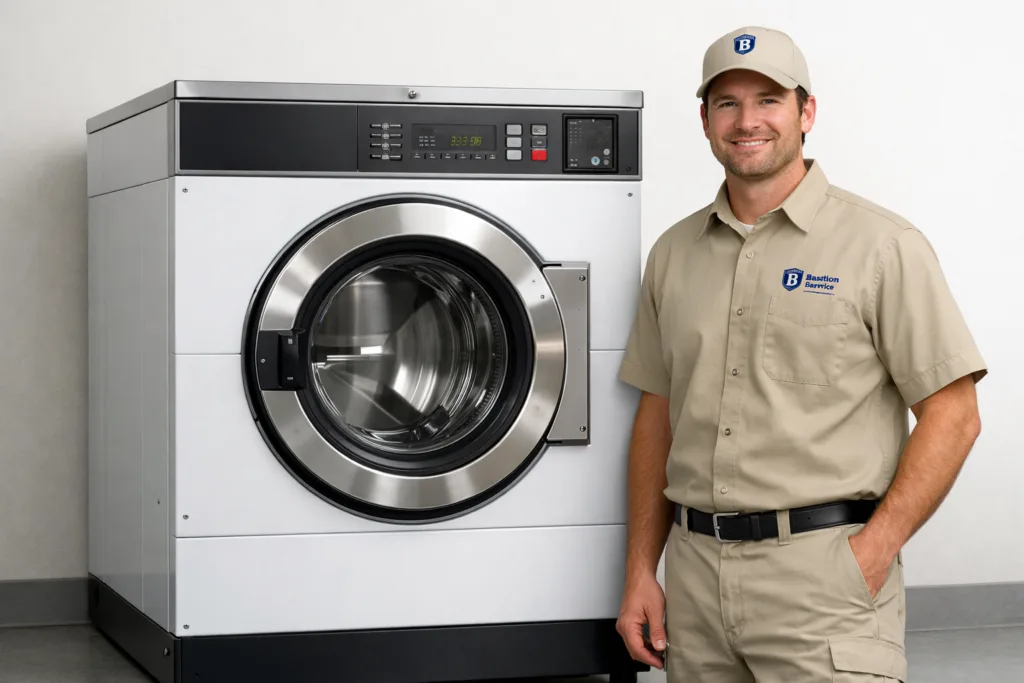




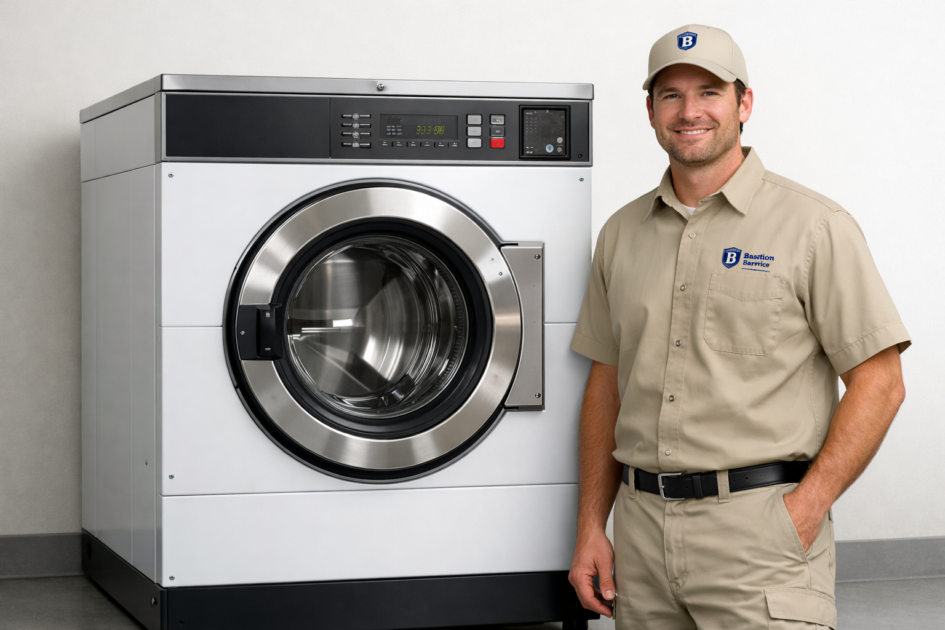
When a Speed Queen washer or dryer starts disrupting laundry flow, the priority is to identify the fault before more loads are pushed through a machine that may be causing added wear, safety concerns, or preventable downtime. For businesses in Mid-City, service planning is often less about a single bad cycle and more about protecting throughput, staff time, tenant convenience, and day-to-day operations. Bastion Service helps operators assess symptom patterns, determine whether a unit should stay offline, and schedule repair around real operating needs.
For specific equipment paths in Mid-City, review Speed Queen Washer Repair in Mid-City, Speed Queen Dryer Repair in Mid-City, and Commercial Appliance Repair in Mid-City.
Speed Queen laundry equipment problems that often need repair
Business-use laundry equipment rarely goes from normal operation to total failure without warning. More often, there are signs such as standing water, poor extraction, repeated stops, unusual noise, slow drying, no heat, vibration, leaks, or controls that stop responding as expected. These symptoms matter because even a partly functioning machine can create a bottleneck that affects every load behind it.
On washer systems, common issues include draining problems, incomplete spin, door or lid lock faults, leaks, cycle interruptions, and inconsistent wash performance. On dryer systems, typical service calls involve no heat, weak heat, long dry times, overheating, drum movement problems, burning odors, and intermittent shutdowns. In a busy laundry room, these problems are not just inconveniences; they affect output, labor, and equipment reliability.
Washer symptom groups and what they may mean
Water left in the drum or loads coming out too wet
If a washer is not draining fully or is failing to reach proper spin speed, the issue may involve the drain pump, drain path, drive-related parts, motor function, balance sensing, or control behavior. In practical terms, this means slower turnover, wetter loads entering the dryer, and added stress on the next stage of the laundry process. When this symptom repeats, it is usually a sign that repair should be scheduled before the problem spreads to additional parts or causes water to remain around the machine.
Leaking during fill, wash, or drain
Leaks can start at hoses, valves, pump connections, seals, or drain components, but the visible water on the floor does not always reveal the full source. A small leak can quickly become a slip hazard or lead staff to avoid using an otherwise needed machine. In shared laundry rooms, hotels, and other business settings, leak complaints should be evaluated promptly so the unit can either be safely returned to service or kept offline until repaired.
Shaking, banging, scraping, or repeated off-balance behavior
Excessive movement often points to support wear, leveling issues, suspension problems, bearing wear, or drive-related faults. Some operators first notice this as a machine that “walks,” pauses repeatedly, or sounds much louder than normal. These symptoms are worth addressing early because continued use can increase internal damage and turn a manageable repair into a larger one.
Cycle failures, lock problems, or controls not advancing properly
When a Speed Queen washer will not start, stops mid-cycle, fails to unlock correctly, or does not move through its programmed stages, the cause may be electrical, sensor-related, mechanical, or control-based. For businesses, this kind of fault can be especially disruptive because it creates uncertainty for staff: the unit may appear available but cannot be relied on. A service visit helps determine whether the issue is isolated to a specific component or reflects a broader reliability concern.
Dryer symptom groups and service considerations
No heat, weak heat, or longer-than-normal dry times
A dryer that tumbles but does not dry effectively may be dealing with heating component failure, airflow restriction, sensor problems, thermostat issues, control faults, or vent-related conditions. This is one of the most costly symptom patterns in day-to-day operation because the machine still appears to be running while output drops and labor pressure rises. If dry times are stretching across multiple loads, it usually makes sense to schedule service before the unit reaches a complete no-heat condition.
Overheating, safety shutoffs, or burning smells
Dryers should be evaluated quickly when they overheat, shut down unexpectedly, or produce an odor that suggests friction, lint buildup, or electrical trouble. These symptoms can come from restricted airflow, worn moving parts, failing electrical components, or heat-management issues. In a business environment, this is not a wait-and-see problem. The machine may need to remain out of service until the cause is confirmed and corrected.
Drum not turning, slow rotation, or loud mechanical noise
If the dryer motor runs but the drum does not turn, or if the machine begins squealing, thumping, grinding, or scraping, likely causes include belt wear, roller problems, idler issues, bearing wear, or motor-related failure. These symptoms are often repairable when addressed early. Continued operation, however, can increase damage and make the final repair scope more expensive than necessary.
How these problems affect business operations
Laundry equipment problems are rarely isolated to one machine. A washer that leaves loads soaked increases dryer demand. A dryer with poor heat backs up the entire room. A leaking unit can force staff to reroute workflow or shut down surrounding equipment. In Mid-City, businesses that rely on consistent laundry turnover often feel the impact first in scheduling, labor adjustments, customer experience, and reduced usable capacity.
That is why symptom-based repair decisions matter. The question is not only what failed, but also whether the machine can continue limited operation, whether continued use risks collateral damage, and how quickly the issue will start affecting the rest of the equipment lineup.
When to schedule service instead of waiting
It is usually time to book repair when the same symptom appears across multiple loads, when performance becomes inconsistent, or when staff are changing routines to work around one unreliable washer or dryer. Warning signs include repeated cycle stops, visible leaks, long dry times, no heat, poor spin, unusual noise, strong vibration, and controls that no longer respond normally.
Waiting for total failure often removes scheduling flexibility and increases downtime at the worst moment. Addressing a repeating symptom early gives operators a better chance to manage the outage, reduce disruption, and avoid unnecessary strain on other units still carrying the workload.
Repair or replace: making the practical call
Not every Speed Queen issue points to replacement, and not every older unit should automatically be repaired. The right decision depends on the failed components, the condition of the machine as a whole, prior breakdown history, expected parts scope, and how important that specific unit is to daily laundry volume.
For some businesses in Mid-City, repair is the sensible option because the fault is limited and the rest of the machine remains in solid working condition. In other cases, repeated major issues, declining reliability, or broad wear across the unit may make replacement the better long-term move. A service visit is useful because it supports that decision with actual equipment condition rather than guesswork.
What a service visit should help you determine
A repair appointment should do more than confirm that a machine is acting up. It should help clarify the source of the problem, whether the washer or dryer should remain out of service, what parts or labor are likely involved, and how the issue affects short-term operations. That is especially important for laundromats, hotels, shared laundry rooms, and other Mid-City businesses where one machine problem can quickly impact the entire schedule.
- Whether the symptom points to a drain, drive, heat, airflow, control, or leak-related issue
- Whether continued use could worsen damage or create safety concerns
- How the current fault is affecting throughput and surrounding equipment
- Whether repair is likely to restore dependable operation or whether replacement should be considered
If your Speed Queen laundry equipment is showing repeat washer or dryer problems in Mid-City, the most useful next step is to schedule service for the affected unit, confirm whether it should stay offline, and move forward with a repair plan that minimizes downtime and supports normal business operations.


