
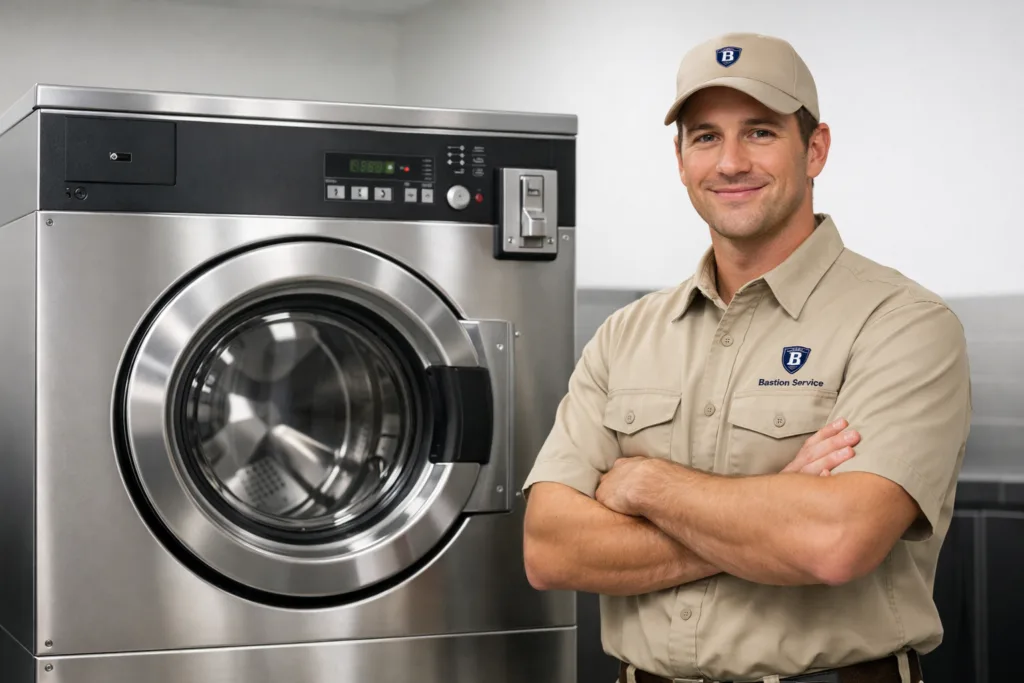




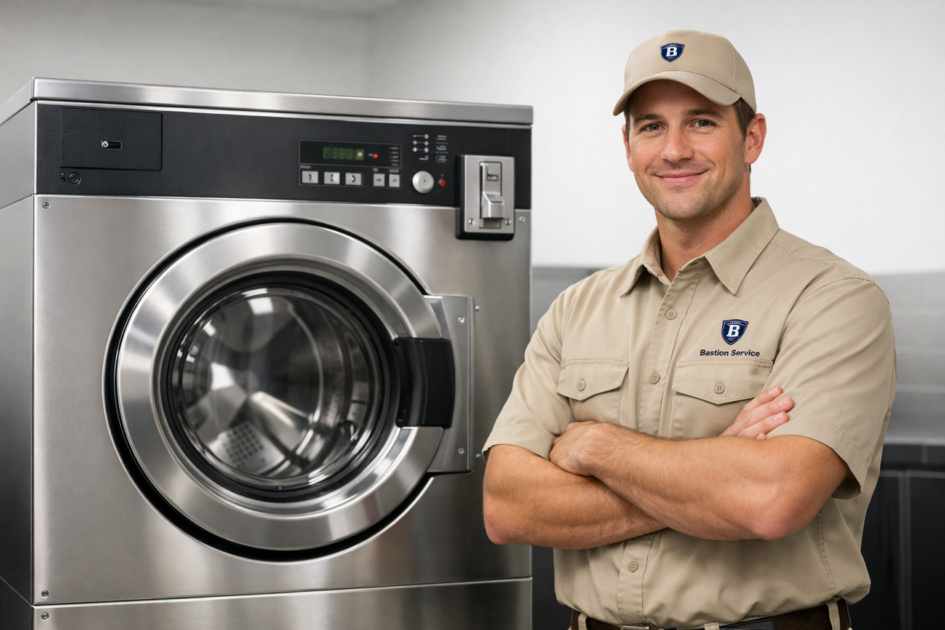
Washer and dryer problems can quickly affect turnover, staffing, and daily output when laundry equipment is part of a business operation. In Hawthorne, service is most useful when it helps separate a single part failure from a pattern that could lead to more downtime across the equipment lineup. Bastion Service works with local businesses to inspect Speed Queen laundry equipment, identify the symptom source, and schedule repairs based on urgency, safety, and operational impact.
For specific equipment paths in Hawthorne, review Speed Queen Washer Repair in Hawthorne, Speed Queen Dryer Repair in Hawthorne, and Commercial Appliance Repair in Hawthorne.
Washer symptoms that usually need service
Speed Queen washer issues often begin with a change in performance rather than a complete shutdown. Loads may come out too wet, cycles may pause unexpectedly, water may remain in the basket, or the machine may take longer than normal to finish. In shared laundry rooms, hotels, care settings, and other business environments, these symptoms tend to create immediate backlog because one machine problem puts added pressure on the rest of the equipment.
Common service-related washer symptoms include:
- Standing water after the cycle ends
- Slow or incomplete fill
- Weak spin performance
- Leaking during fill, wash, or drain
- Excessive vibration or movement
- Mid-cycle stopping or failure to start
- Error conditions or repeated cycle resets
Drainage and water removal problems
If a washer is not draining correctly, the cause may involve the pump, hose restrictions, drain setup, or a control issue affecting how the cycle advances. A machine that leaves water in the basket should not be treated as a minor inconvenience in a business setting. Wet loads slow down handoff to dryers, increase labor time, and can cause operators to rerun cycles that do not fix the actual fault.
Leaks around a washer also deserve quick attention. Water on the floor can come from supply connections, door or tub sealing problems, overfill conditions, drain issues, or internal component wear. The visible leak location is not always the true source, which is why inspection matters before the machine is put back into full use.
Spin, balance, and vibration issues
A Speed Queen washer that bangs, walks, or vibrates heavily may be dealing with an out-of-balance condition, worn suspension-related parts, leveling problems, or drive wear. If the machine reaches spin but cannot maintain stable operation, loads often come out wetter than expected and drying times increase across the room.
Repeated vibration is more than a nuisance. It can shorten component life, stress surrounding parts, and lead operators to underload, overload, or avoid the machine entirely. When vibration is tied to deeper mechanical wear, waiting usually turns a manageable repair into a broader service event.
Dryer problems that affect turnaround
Dryer performance issues tend to show up in ways that immediately affect schedule reliability. A unit may run with no heat, take too long to dry, overheat, shut off before the load is finished, or make noise that suggests internal wear. In businesses that depend on predictable load completion, those symptoms can disrupt room turnover, customer use, and staffing flow within a single shift.
Typical dryer symptoms that warrant service include:
- No heat or inconsistent heat
- Long dry times
- Overheating or burning smells
- Drum not turning properly
- Unexpected shutdowns
- Loud scraping, thumping, or squealing
- Moisture remaining after normal cycle time
No heat and long dry times
When a dryer runs but does not dry, the issue may be tied to airflow restriction, heating component failure, sensor problems, electrical faults, or operating conditions that prevent the machine from reaching and maintaining proper temperature. Long dry times are especially disruptive because they can be mistaken for heavy loads or operator error when the real issue is equipment-related.
A dryer with weak heat does not just slow one load. It creates a chain reaction: washers keep producing wet loads, carts fill up, and staff spend extra time sorting around a machine that is technically running but not doing the work expected of it.
Overheating, shutdowns, and unusual noise
If a dryer overheats, trips out, or develops a hot or burnt smell, it should be evaluated promptly. These symptoms may point to airflow problems, safety control response, internal lint accumulation, motor strain, or failing heating-related parts. Continued use in that condition can increase damage and create avoidable safety concerns.
Noise is also an important symptom. Squealing, scraping, grinding, or thumping can indicate wear in rollers, belts, bearings, supports, or drive components. A noisy dryer may still complete cycles for a while, but it is often signaling that one failed part is beginning to affect others.
What Speed Queen laundry equipment problems do you troubleshoot?
Businesses usually ask about symptom groups rather than part names, and that is the right way to approach service. Speed Queen laundry equipment troubleshooting often includes washer leaks, no-drain conditions, incomplete spin, fill problems, vibration, cycle failures, no-start complaints, dryer no-heat conditions, long dry times, overheating, shutdowns, drum movement issues, and abnormal noise.
It can also include cases where the machine appears to work but does not perform consistently from load to load. Intermittent problems are common in busy laundry environments and often require testing under real operating conditions to determine whether the issue is control-related, mechanical, electrical, or tied to airflow or water movement.
When waiting usually makes the problem worse
Some equipment faults remain stable for a short time, but many do not. A washer that occasionally fails to drain can become a no-drain call. A dryer with slightly longer dry times can become a no-heat or overheat issue. Repeated resets, operator workarounds, and load shifting between machines are signs that service should be scheduled before the problem spreads into broader downtime.
It is usually time to arrange repair when:
- The same fault repeats over multiple cycles
- Staff have to monitor or restart the machine to finish a load
- Water, heat, or noise symptoms are getting worse
- One unit is slowing the rest of the laundry workflow
- There is uncertainty about whether continued operation is safe
Repair decisions for aging or heavily used equipment
Not every machine with a problem needs to be replaced, and not every repair is the best long-term move. The right next step depends on the specific failure, the condition of the rest of the machine, how often service issues have been occurring, and how important that unit is to daily capacity. For businesses managing multiple washers and dryers, this evaluation helps prioritize repairs instead of treating every symptom with the same level of urgency.
In many cases, a targeted repair restores normal operation without major disruption. In others, the inspection may show broader wear that affects reliability even after the immediate symptom is corrected. Knowing the difference helps managers make better scheduling and budget decisions.
What to expect from a service visit
A service appointment should do more than identify a bad part. It should clarify why the symptom is happening, whether related wear is present, whether the equipment can stay in use temporarily, and what repair timing makes sense for the operation. That is especially important when laundry equipment supports guest turnover, resident services, uniform processing, or other daily business needs with little room for delay.
If your Speed Queen washer or dryer in Hawthorne is leaking, failing to drain, vibrating, stopping mid-cycle, producing no heat, or taking too long to dry, the next step is to schedule service and review the repair path before lost output, operator workarounds, and added equipment strain create a larger interruption.


