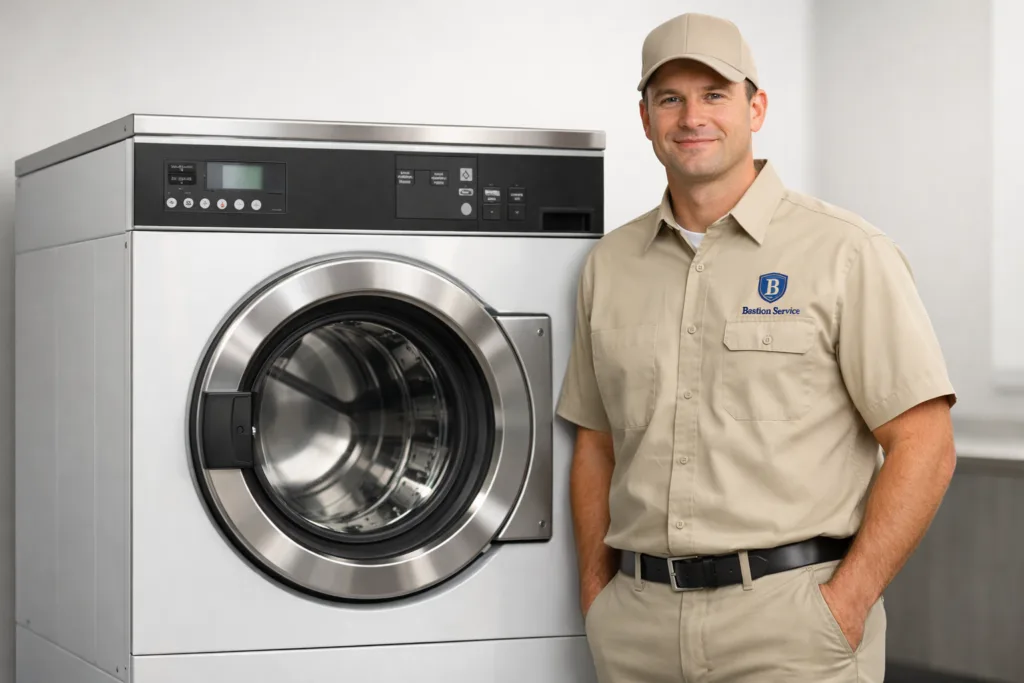




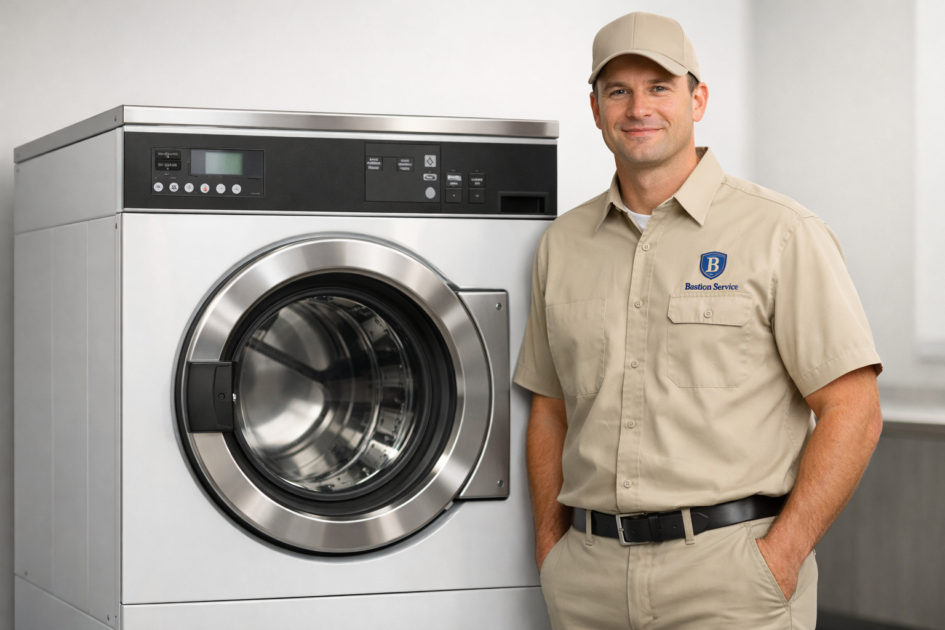
Unplanned washer or dryer downtime can disrupt tenant service, guest turnover, and daily throughput, so it helps to bring in repair service as soon as symptoms start affecting output. On-site troubleshooting is used to identify the actual fault, confirm whether related components have been affected, and set repair scheduling around the urgency of the breakdown and the impact on operations.
For specific equipment paths in Cheviot Hills, review Speed Queen Washer Repair in Cheviot Hills, Speed Queen Dryer Repair in Cheviot Hills, and Commercial Appliance Repair in Cheviot Hills.
Bastion Service works with businesses in Cheviot Hills that rely on Speed Queen laundry equipment and need service decisions based on how the machines are behaving in real use. That includes washer and dryer problems that reduce capacity, create repeat interruptions, or raise concerns about safety, water damage, or unreliable cycle performance.
Speed Queen laundry equipment problems that often lead to service calls
Business-use laundry equipment rarely goes from normal operation to total failure without warning. More often, the machines begin showing patterns such as incomplete cycles, slow drainage, poor spin performance, no heat, long dry times, unusual noise, excess vibration, or intermittent shutdowns. Those symptoms can come from very different causes, which is why symptom-based inspection matters before parts are ordered or units are returned to full use.
- Washer not filling, draining, spinning, or completing cycles
- Water leaking during wash, drain, or idle periods
- Dryer producing no heat, weak heat, or excessive heat
- Long dry times that slow room turnover or customer use
- Loud operation, scraping, thumping, or repeated vibration
- Control issues, start failures, or random mid-cycle stops
Washer symptoms and what they may point to
When a Speed Queen washer starts leaving water in the drum, refusing to spin, or stopping before the cycle ends, the fault may involve the drain system, drive components, sensing functions, or control-related issues. A washer that fills slowly or inconsistently may have a valve or supply-side problem, while one that shakes heavily can indicate balance, suspension, mounting, or load-distribution concerns.
Leaks should be taken seriously even if the machine still runs. Water can come from hoses, pumps, door or tub seals, internal connections, or drain-related components. In shared laundry rooms and high-use properties, continued operation with a known leak can affect floors, surrounding equipment, and nearby walls before the underlying repair is addressed.
Common washer issue patterns
A washer that hums but does not move through the cycle presents a different repair path than one that washes normally but fails at drain or spin. A unit that intermittently locks out or resets may point to a control or electrical issue rather than a mechanical one. If the machine repeatedly goes off balance, the concern may be broader than a single worn part, especially when vibration has been present for some time.
For laundromats, multi-family properties, and hospitality settings, these details matter because one underperforming washer can quickly reduce available capacity and create backup across the rest of the room.
Dryer symptoms and what they may point to
Dryers often show trouble through slower drying performance first. Loads that suddenly take longer to finish can suggest airflow restrictions, heating faults, sensor problems, or wear in moving components that affects drum function and cycle completion. A dryer that runs with no heat, cycles heat erratically, or overheats should be evaluated promptly because poor heat control can lead to poor results and additional component stress.
Loud dryers also deserve attention before a full shutdown occurs. Squealing, grinding, scraping, or rumbling can indicate wear in rollers, belts, bearings, supports, or related assemblies. If the drum struggles to turn, stops under load, or the unit shuts down before the cycle is complete, a service visit helps determine whether the problem is isolated or part of a wider wear pattern.
Dryer problems that should not be ignored
- No heat or insufficient heat
- Excessive heat or repeated high-limit shutdowns
- Drying cycles that suddenly become much longer
- Burning smells, unusual noises, or drum movement issues
- Units that start inconsistently or stop mid-cycle
For businesses, the practical question is not just whether the dryer still turns on, but whether it is still supporting normal workflow without creating a larger repair or safety problem.
Why symptom-based diagnosis matters for repair planning
The same visible complaint can have multiple causes. A washer that will not spin may be dealing with a drain issue, a sensing problem, a drive fault, or control failure. A dryer with long run times may have an airflow issue, heat-production problem, or a sensor problem affecting cycle timing. Replacing parts without confirming the source of the symptom can lead to repeat downtime and added expense.
Diagnosis also helps determine whether the machine should stay in limited use, be taken offline immediately, or be scheduled for repair during a lower-impact window. That matters for operators balancing occupancy demands, staff workflow, and customer expectations.
When continued use can make the problem worse
Some faults become more expensive when the equipment is kept in service. A leaking washer can spread water damage beyond the machine itself. Repeated heavy vibration can accelerate wear on connected components and mounting points. Dryers with restricted airflow or unstable heating can produce poor results while placing added strain on internal parts. Machines that trip breakers, stall in cycle, or behave inconsistently should also be inspected promptly because the fault may involve more than one system.
Early service is often the better operational decision when the equipment is still running but clearly degrading. Catching a pump, belt, roller, heating, or control issue before total failure can make scheduling easier and reduce disruption to the rest of the laundry room.
Repair or replacement: how businesses usually decide
Not every machine with a problem needs to be replaced, and not every machine is the best candidate for repair. If the issue is limited to a defined wear component and the rest of the unit is in solid condition, repair is often the straightforward choice. If inspection shows multiple failing systems, extensive wear, or a history of recurring breakdowns, replacement planning may make more sense.
The goal of a service evaluation is to give operators enough information to make a practical decision: restore the unit now, stage repairs, or move toward replacement if the equipment is no longer supporting daily operations efficiently.
What helps speed up the service visit
Before scheduling, it helps to note exactly what the machine is doing and when the problem occurs. Useful details include whether the issue happens every cycle or intermittently, whether there are unusual sounds or odors, whether leaks occur during fill or drain, and whether any displays, breaker trips, or shutdown patterns have been observed. Model information and recent service history can also help narrow the likely causes faster.
For businesses in Cheviot Hills, the most useful next step is to schedule repair evaluation when a Speed Queen washer or dryer begins affecting uptime, safety, or daily service flow. Timely diagnosis, informed repair recommendations, and scheduling around operating needs can help limit downtime and get laundry equipment back into dependable use.