
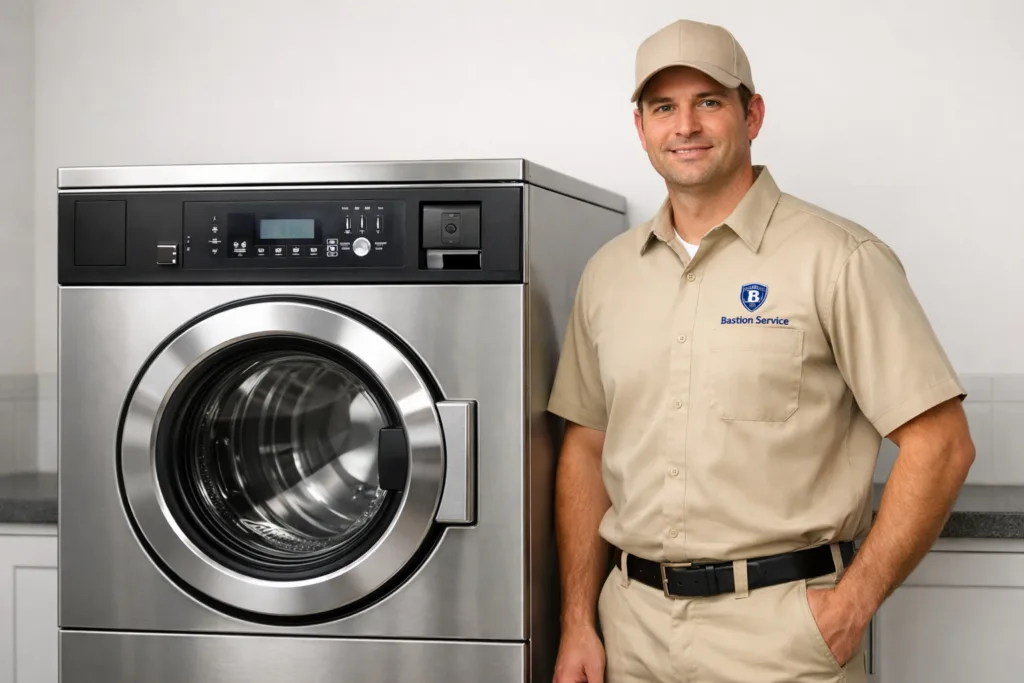




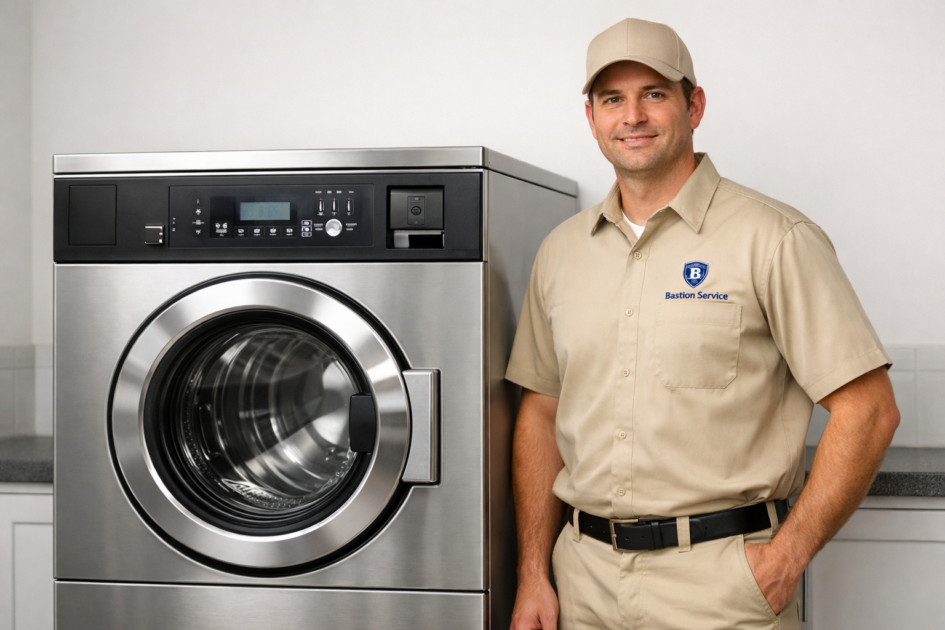
Washer and dryer failures rarely stay isolated for long. One machine running slowly or dropping out of service can push work onto the rest of the laundry room, extend turnaround times, and force staff to manage loads manually. For businesses in Brentwood, the most useful repair visit starts with symptom-based testing so the fault can be tied to the right component, operating condition, or wear pattern before more downtime builds.
For specific equipment paths in Brentwood, review Speed Queen Washer Repair in Brentwood, Speed Queen Dryer Repair in Brentwood, and Commercial Appliance Repair in Brentwood.
Bastion Service provides Speed Queen laundry equipment repair for business operators who need repair scheduling that matches real operating pressure. Whether the issue involves a washer not draining, a dryer losing heat, repeated cycle stoppages, or abnormal noise, the goal is to identify what is failing, what can still be used safely, and what should be addressed now to keep daily operations moving.
Washer symptoms that usually point to repair needs
Speed Queen washers used in laundromats, shared laundry rooms, hotels, and other business settings tend to show performance changes before a complete breakdown. Loads may come out wetter than usual, cycles may stop before completion, fill times may become inconsistent, or the machine may start shaking harder during spin. These symptoms often look similar from the outside, but the cause can vary widely.
Common washer-related repair concerns include:
- Failure to fill or slow filling
- No drain or partial drain conditions
- Weak spin performance
- Cycle interruptions or control errors
- Water leaks around or under the machine
- Grinding, banging, or excessive vibration
- Door or lid lock problems
Drainage and wet-load problems
When a washer finishes with standing water or leaves textiles overly wet, the issue usually affects the rest of the process immediately. Dryers take longer, carts back up, and staff may rerun loads just to keep output acceptable. In many cases, the problem traces back to the drain system, pump function, drive components, or a control-related failure that prevents the unit from reaching full spin.
This type of symptom should not be written off as a minor inconvenience. A machine that repeatedly struggles to drain or spin can place added strain on related parts and create a pattern of repeat interruptions across the room.
Leaks, vibration, and abnormal washer noise
Visible water at the base of the machine, hard movement during extraction, or sharp mechanical noise usually means the washer needs attention before it stays in regular use. Leaks can come from hoses, seals, pumps, or internal wear points. Strong vibration may reflect suspension issues, leveling concerns, worn components, or imbalance conditions that have progressed beyond routine adjustment.
Noise matters too. Knocking, rumbling, or grinding may indicate bearing wear, loose internal parts, or drive-related damage. In a busy laundry setting, those symptoms are not only a machine issue; they can create slip hazards, affect nearby equipment, and turn a repairable condition into a larger failure.
Dryer problems that reduce output and consistency
Dryers are often judged by one basic result: whether they finish loads on time and at expected dryness levels. When a Speed Queen dryer begins taking too long, heating unevenly, shutting off mid-cycle, or failing to start, overall throughput drops fast. What looks like a simple heat complaint can actually involve airflow, electrical components, ignition parts, controls, support rollers, belts, or motor strain.
Common dryer-related service issues include:
- No heat or weak heat
- Long dry times
- Drum not turning properly
- Intermittent shutdowns
- No-start conditions
- Burning smells or overheating concerns
- Squealing, scraping, or thumping sounds
Long dry times and no-heat complaints
If loads now require extra cycles, the dryer is already affecting labor and machine availability. Long dry times often point to restricted airflow, heat-system component failure, sensor issues, thermostat problems, or control faults that prevent normal heating behavior. A no-heat complaint may be more obvious, but weak heat can be just as disruptive because it quietly lowers capacity throughout the day.
Early service is important here because operators often compensate by running repeat cycles. That may keep work moving temporarily, but it also adds wear, raises utility use, and masks a fault that is getting worse.
Dryer noise, shutdowns, and start failures
Dryers that squeal, scrape, or thump during operation should be inspected before support parts fail more completely. Worn rollers, idlers, belts, and related drive components can produce noise long before the machine stops running. If the dryer is also shutting down during use, overheating, or refusing to start, the repair path may involve electrical testing, motor evaluation, or control diagnosis in addition to mechanical inspection.
For a business, this matters because an intermittent machine is difficult to schedule around. It may seem usable one hour and unavailable the next, which makes staffing and load planning harder than a full no-run failure that can be clearly removed from rotation.
Signs the equipment should be checked sooner rather than later
Many businesses wait until a washer or dryer stops completely, but the earlier warning signs are often where the best repair decision gets made. Performance changes usually tell you that the machine is still operating, but not correctly. That is often the window where service can limit added damage and help avoid emergency disruption.
Common signs that warrant scheduling repair include:
- Repeated resets or restart attempts
- Cycles that take noticeably longer than normal
- Inconsistent water removal or drying results
- Unusual odor, heat, or moisture buildup
- Frequent operator workarounds
- One unit repeatedly being taken in and out of service
If staff are compensating for one machine by redistributing loads to the rest of the equipment, the problem is already larger than a single service call. It becomes a production issue, a scheduling issue, and in some cases a safety issue.
How repair decisions are usually evaluated
Not every machine with a fault needs to be replaced, and not every repair is the best long-term choice. The right direction depends on the actual failure, the condition of major systems, prior service history, and how critical that unit is to your operation. A targeted repair often makes sense when the failure is isolated and the rest of the equipment remains in solid condition.
Replacement becomes a more serious consideration when there is repeated downtime, structural wear, multiple failing systems, or repair cost that no longer supports reliable use. That comparison is most helpful when based on the machine’s condition and symptom pattern rather than on guesswork or repeated short-term fixes.
Speed Queen washer and dryer service in Brentwood
For businesses in Brentwood, laundry equipment repair is most useful when it supports real operating decisions: whether a machine can stay in service temporarily, whether the issue is likely to spread, what symptoms suggest urgent repair, and how to schedule work without creating additional disruption. Washer leaks, drainage failures, vibration, long dry times, no-heat complaints, and cycle stoppages all deserve attention when they start affecting flow.
If your Speed Queen laundry equipment is no longer keeping up, the next step is to arrange service based on the symptoms you are seeing and the impact on daily operations. Timely diagnosis and repair scheduling can help limit downtime, protect surrounding equipment, and restore more predictable washer and dryer performance.


