





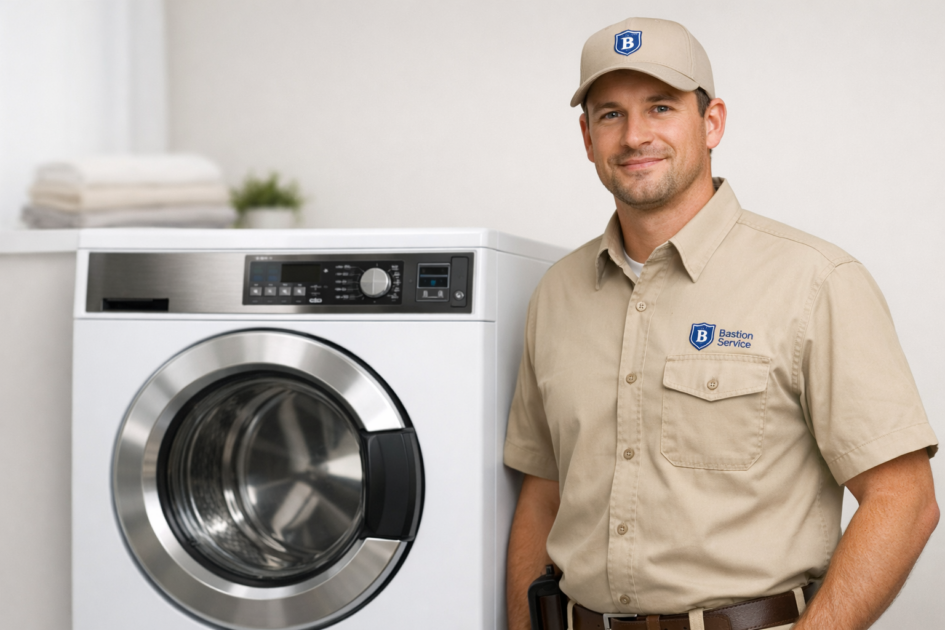
Washers and dryers tend to give warning signs before they fail completely. A Speed Queen washer that starts leaving clothes wetter than usual, or a dryer that suddenly needs two cycles, is often showing the early stage of a specific mechanical, electrical, or airflow problem. Catching the pattern early can help limit extra wear on the machine and make the next step easier to judge.
For specific Speed Queen appliance paths in Manhattan Beach, review Speed Queen Washer Repair in Manhattan Beach, Speed Queen Dryer Repair in Manhattan Beach, and Appliance Repair in Manhattan Beach.
How to evaluate Speed Queen washer and dryer symptoms
The most useful way to think about appliance problems is by symptom, not by guessed part. Two machines can share the same complaint while having very different causes. For example, a washer that will not spin may be dealing with a balance issue, a lid or lock problem, or wear in the drive system. A dryer that is not heating may have a failed heating component, but it may also be struggling with restricted airflow or a tripped safety device.
For homeowners in Manhattan Beach, the best repair decisions usually come from looking at the full pattern: when the problem started, whether it happens every cycle, whether noise or odor is involved, and whether performance has been declining gradually or failed all at once.
Common Speed Queen washer problems
Washer will not drain
If water remains in the tub at the end of the cycle, the issue may involve a blocked drain path, a weak or failed pump, a hose problem, or a control sequence that never completes the drain command. In some cases, the washer may appear to pause before spin because it is still unable to clear water properly.
Signs that point to a drain-related problem include:
- Standing water after the cycle ends
- Humming without full draining
- Repeated stopping before spin
- Musty odor from water staying in the tub
If the problem repeats, continued use can strain the pump and increase the chance of leakage or overflow.
Washer is not spinning clothes dry
A weak spin result is not always a motor failure. It can come from off-balance loads, suspension wear, lid switch or lock faults, or trouble in the drive assembly. Some machines will still run most of the cycle but never reach proper high-speed extraction, leaving towels and jeans unusually heavy and wet.
Watch for related symptoms such as:
- Banging or walking during spin
- Cycle stopping before the final spin
- More vibration than normal
- Clothes coming out consistently wetter than before
When vibration becomes harsh or the machine starts knocking, it is smart to stop using it until the cause is identified.
Washer is leaking
Leaks can show up as a small puddle after a cycle or as active dripping during fill, wash, or drain. The source might be a hose connection, pump area, door or tub seal, overfilling condition, or internal component wear. Where the water appears matters. Water at the front, underneath, or near the wall behind the machine can each point in a different direction.
A leak that seems minor can still damage flooring and nearby materials, so repeated moisture around the washer is worth addressing quickly.
Washer is noisy or stops mid-cycle
Grinding, scraping, or sharp knocking usually means more than routine operation noise. Bearings, pulleys, drive parts, or loose hardware may be wearing out. If the washer pauses unexpectedly, fails to start, or gets stuck on one portion of the cycle, the cause may involve switches, controls, wiring, or a component that is overheating under load.
These symptoms rarely improve on their own. More often, they progress from intermittent behavior to a complete no-run condition.
Common Speed Queen dryer problems
Dryer runs but does not heat
When the drum turns but clothes stay damp, the problem may involve the heating system, thermostat function, thermal cutoffs, power supply issues, or internal electrical faults. In many homes, airflow restriction also plays a major role. A dryer may technically produce heat but still dry poorly if air cannot move through the system as intended.
Common clues include:
- Clothes still damp after a normal cycle
- Heat that seems weaker than usual
- Cycles that suddenly take much longer
- Dryer cabinet becoming unusually hot
Dryer takes too long to dry
Long dry times are often treated as an inconvenience, but they are also an important performance warning. The issue may be reduced airflow, sensor trouble, partial heating failure, or a drum movement problem that prevents even drying. When dry times increase gradually, homeowners sometimes adjust by running extra cycles instead of noticing that the machine is no longer operating normally.
If one load now takes much longer than it used to, that change is meaningful. Dryers are designed around steady airflow and controlled heat, and when either of those is disrupted, parts can wear faster.
Dryer will not start or shuts off early
A no-start complaint can come from something simple like a door switch issue, but it can also involve the timer, motor, control board, start circuit, or thermal protection components. If the dryer starts and then shuts down after a few minutes, overheating or motor strain may be part of the problem.
Intermittent behavior is especially important because it often means the machine is close to a full failure. A dryer that works only sometimes is rarely solving itself.
Dryer makes squealing, thumping, or scraping sounds
Unusual dryer noise often points to worn support parts such as rollers, glides, belts, or idler pulleys. A repetitive thump may mean something is out of round or not moving smoothly. A squeal often suggests friction from parts that no longer rotate the way they should. If the drum stops turning altogether, the belt or motor may be involved.
Burning smells deserve extra caution. Friction, overheating electrical parts, or lint accumulation can all create odor and should be checked before the dryer is used again.
Signs the problem is getting worse
Appliances often shift from mild inconvenience to broader failure in stages. A washer may start with occasional balance problems and later develop violent spin movement. A dryer may begin with longer dry times and eventually stop heating altogether. Paying attention to those stages can help homeowners avoid more extensive damage.
Common signs of escalation include:
- Symptoms appearing more often each week
- Louder or harsher mechanical noise
- Heat, moisture, or odor that was not present before
- Cycles taking longer to finish
- Random stopping, restarting, or incomplete cycles
When repair usually makes sense
Repair is often the sensible choice when the appliance is otherwise in solid condition and the problem can be traced to a defined failure rather than widespread wear. That is especially true when the symptom is isolated: one leak source, one heating issue, one drain failure, or one noise pattern tied to a specific assembly.
A symptom-based evaluation is also helpful when the machine still runs but no longer performs correctly. Appliances do not need to be completely dead to need service. Reduced spin speed, poor drying, repeated shutdowns, and worsening noise all point to faults that can continue stressing other parts if ignored.
When replacement becomes part of the conversation
Replacement starts to make more sense when several systems are wearing out at once, the current failure is severe, or the appliance has a history of recurring problems. The decision is usually less about one bad day and more about the overall condition of the machine.
Questions that help frame that decision include:
- Is the problem limited to one component or affecting multiple functions?
- Has the appliance had repeat repairs for related symptoms?
- Are there signs of significant mechanical wear beyond the current complaint?
- Has performance been declining for a long time?
For many households in Manhattan Beach, the right answer comes from understanding whether the current issue is a single repairable fault or part of a larger end-of-life pattern.
What a good diagnosis should clarify
With a washer, the main goal is to identify whether the issue involves draining, spinning, balance control, leaking, switching, or the drive system. With a dryer, diagnosis should separate heat problems from airflow problems, drum movement issues, sensing faults, and electrical protection shutdowns. That level of detail helps avoid replacing parts based on guesswork.
When a Speed Queen washer or dryer starts acting differently, the most helpful next step is understanding the actual cause of the change. That makes it easier to decide whether the fix is minor, whether further use could cause added damage, and whether repair or replacement is the better long-term choice for the household.


