
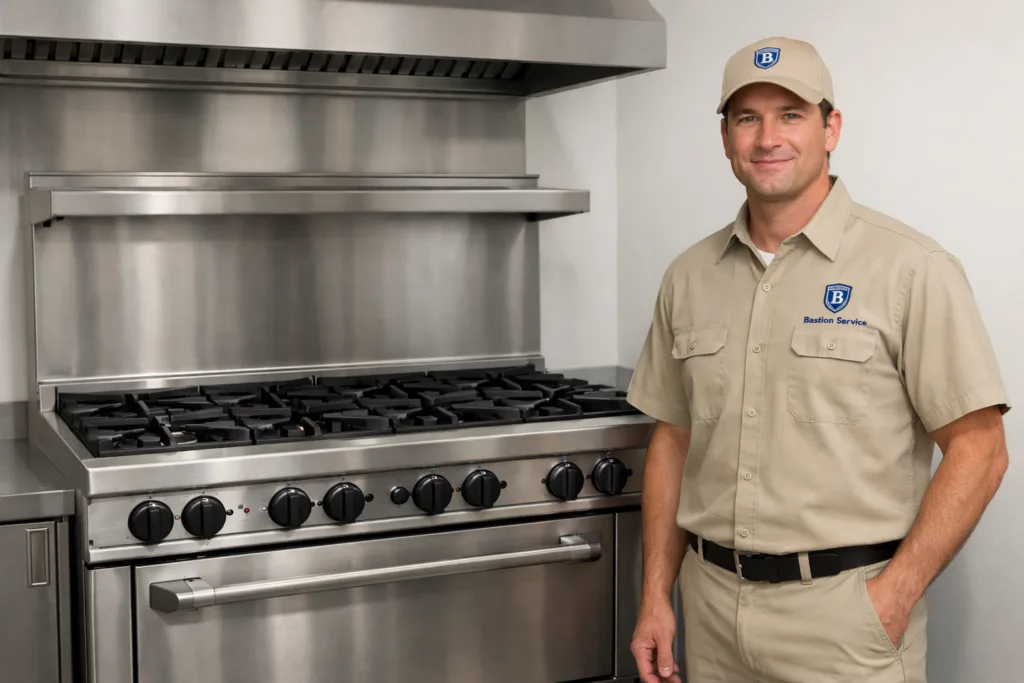




When a Southbend oven or range starts missing temperature, dropping burners, or shutting down during a shift, the right next step is service that identifies the actual fault and maps out repair timing around production needs. For businesses in Rancho Park, that means looking beyond the obvious symptom and confirming whether the problem is tied to ignition components, burner performance, controls, gas flow, wiring, or heat recovery before more downtime builds.
For specific equipment paths in Rancho Park, review Southbend Oven Repair in Rancho Park, Southbend Range Repair in Rancho Park, and Commercial Appliance Repair in Rancho Park.
Bastion Service works with Rancho Park businesses that rely on Southbend cooking equipment for steady output. A service call is not only about replacing a part. It is about confirming what is failing, checking whether continued use creates added risk, and helping the operator decide whether the unit can stay in limited use, needs prompt repair, or should be taken offline until the issue is corrected.
Common Southbend Cooking Equipment Problems That Need Repair
Southbend equipment often gives warning signs before a full outage. Ovens may preheat slowly, run too hot, run too cool, or cook unevenly. Ranges may show weak burner flame, delayed ignition, burners that will not stay lit, or controls that stop responding consistently. Even if the unit still powers on, these issues can reduce output and create production delays that affect the entire kitchen.
In business settings, small performance losses matter. A few extra minutes of preheat time, uneven burner response, or drifting temperature can lead to slower ticket times, inconsistent results, and added pressure on staff trying to work around equipment that no longer behaves predictably.
Temperature Drift, Overheating, and Inconsistent Heat
If an oven cannot hold the set temperature, swings too far above or below target, or cooks unevenly from one cycle to the next, the issue may involve the thermostat, sensor, control board, igniter, burner assembly, or gas-related components within the unit. A range with poor heat output can show similar symptoms even when the root cause is different.
These problems are worth addressing early because temperature instability affects both product quality and kitchen timing. When operators begin compensating manually by rotating pans, extending cook times, or changing burner use patterns, the equipment problem is already affecting workflow.
Ignition Trouble and Burner Failure
Delayed lighting, repeated clicking, intermittent startup, burners that light unevenly, or flames that will not stay stable are all signs that repair should be scheduled. The source may be an igniter, flame-sensing issue, burner wear, switch failure, wiring defect, or control problem. What looks like a simple startup annoyance can quickly turn into a no-start condition during a busy service window.
Burner instability also makes it harder to maintain consistent cooking conditions. On a range, that can interfere with line speed. In an oven, ignition issues may lead to incomplete heating, unreliable cycling, or shutdowns that interrupt production.
Slow Preheat and Weak Heat Recovery
Some Southbend units still operate but take too long to reach temperature or struggle to recover between loads. That symptom often points to reduced burner performance, calibration drift, control faults, or other heating-related failures. In practice, slow recovery lowers usable capacity even when the equipment appears functional at first glance.
For kitchens in Rancho Park, weak recovery usually shows up as longer cook times, reduced throughput, and backups during peak periods. If the unit falls behind during normal demand, service should be scheduled before the problem turns into a full breakdown.
Signs the Equipment Should Not Stay in Regular Use
Some symptoms suggest that continued operation may worsen the repair or create safety concerns. These include repeated ignition failure, burners that do not hold properly, overheating, sudden shutdowns, unexplained temperature spikes, controls that trip repeatedly, or visible signs that the unit is no longer operating as intended.
- Oven temperature rising far beyond the set point
- Range burners failing intermittently during active use
- Frequent relighting or hard starts
- Noticeably slower recovery between batches
- Controls that respond inconsistently or not at all
- Performance changes that are getting worse from shift to shift
When these symptoms are present, it is helpful to determine whether the problem is isolated to one component or whether related parts are being affected. That distinction influences whether short-term use is realistic or whether immediate downtime is the better decision.
How Symptom-Based Diagnosis Helps Repair Decisions
Two Southbend units can show the same outward problem for completely different reasons. An oven that runs cold might have a sensor issue, an igniter issue, a burner problem, or a control failure. A range burner that will not stay lit could involve ignition, gas delivery inside the appliance, flame sensing, or switch-related faults. That is why repair decisions should be based on testing and inspection rather than assumptions drawn from a single symptom.
Diagnosis also helps businesses avoid partial fixes that leave the real cause unresolved. If the visible failure is only one part of a broader heating or control issue, replacing one component without confirming the system condition can lead to repeat service calls and more disruption later.
Repair Planning for Rancho Park Businesses
For operators managing daily output, the most useful repair visit clarifies more than just what part failed. It helps answer whether the unit can stay in use until repair is completed, whether additional wear has developed around the original issue, how urgent the work is, and whether repair timing can be coordinated to reduce operational disruption.
That matters when equipment problems start affecting labor planning, menu execution, or service consistency. An accurate assessment helps businesses in Rancho Park decide whether to move ahead with repair now, schedule work around slower periods, or consider replacement if the unit has recurring issues across multiple systems.
When Repair Makes Sense and When Replacement Enters the Conversation
Many Southbend oven and range problems are repairable, especially when the issue is identified before repeated operation causes added wear. Replacement becomes a more serious consideration when the unit has frequent shutdowns, multiple active faults, ongoing temperature control problems, or repeated downtime that disrupts operations more than a planned equipment transition would.
The decision usually comes down to overall condition, repeat failure history, and how much production risk the current equipment creates. A properly diagnosed symptom pattern gives decision-makers better information than guessing based on age alone.
What to Expect From a Service Visit
A repair appointment typically focuses on confirming the failed system, reviewing connected symptoms, evaluating whether the equipment is safe to continue using, and outlining the likely repair path. For a Southbend oven, that may involve temperature and heating checks. For a range, it may center on burner performance, ignition response, and control function. In both cases, the goal is to turn a disruptive equipment problem into an informed next step.
If your Southbend cooking equipment is causing production delays, unstable heat, burner trouble, or unexpected shutdowns in Rancho Park, scheduling service early can help limit disruption and prevent a manageable problem from becoming a larger outage. The most effective next move is to have the fault confirmed, understand the repair scope, and plan corrective work around the needs of your operation.


