
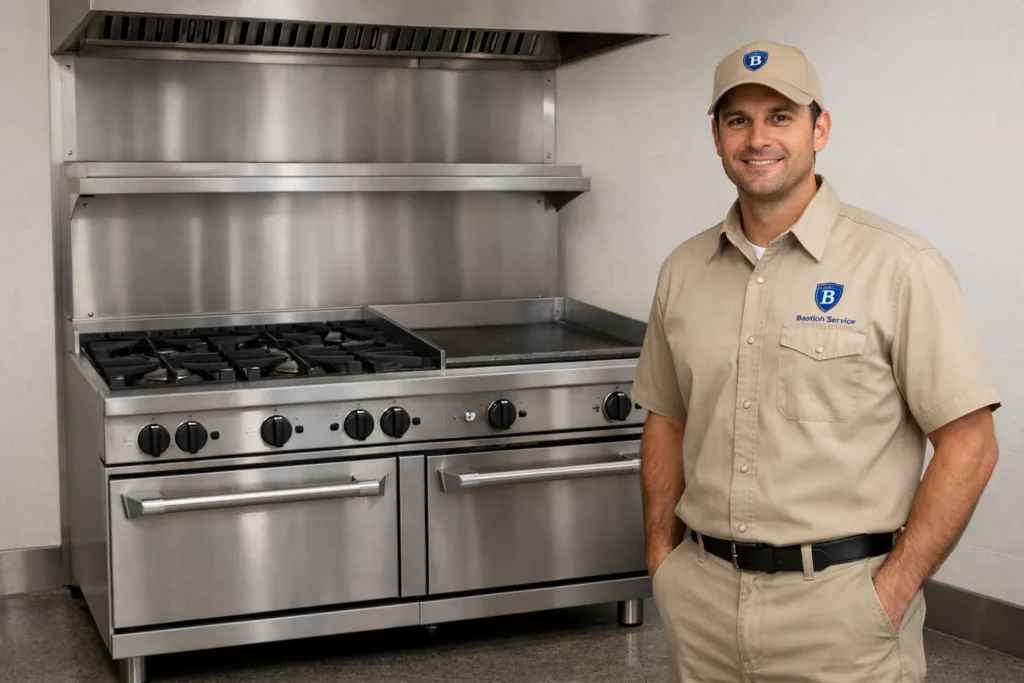




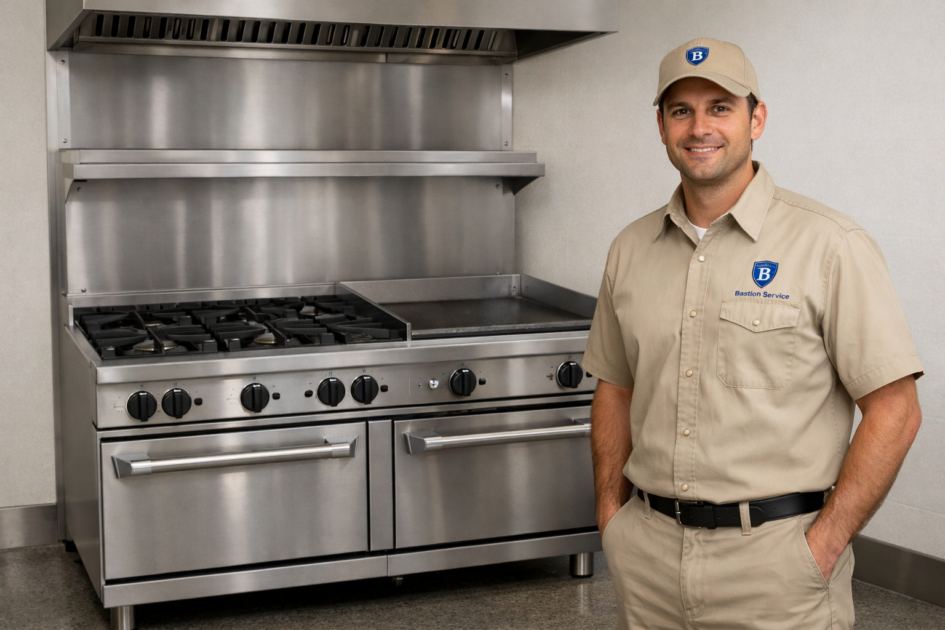
Southbend ovens and ranges are often central to daily kitchen output, so even one unstable burner, a drifting oven temperature, or an intermittent shutdown can quickly affect ticket times, food consistency, and staffing flow. When those symptoms start appearing, service should focus on identifying the actual failed system, confirming whether the unit should stay in operation, and scheduling repair around the realities of production. Bastion Service provides Southbend equipment repair support in Mid-Wilshire with attention to symptom patterns, downtime risk, and the next steps that make sense for the kitchen.
For specific equipment paths in Mid-Wilshire, review Southbend Oven Repair in Mid-Wilshire, Southbend Range Repair in Mid-Wilshire, and Commercial Appliance Repair in Mid-Wilshire.
Common Southbend cooking equipment problems
Southbend cooking equipment is built for steady use, but repeated heat exposure, ignition wear, burner contamination, control faults, and gas or electrical issues can change how the unit performs over time. In Mid-Wilshire, the most common service concerns involve ovens and ranges that no longer heat evenly, take too long to recover, fail to ignite reliably, or stop maintaining normal performance during busy periods.
These problems do not always point to a single obvious part. A temperature complaint may actually start with an ignition issue. A weak burner may be tied to control trouble rather than the burner itself. An oven that appears functional may still be underperforming enough to slow production and create avoidable waste.
Uneven heating and temperature drift
If an oven is running too hot, too cool, or producing inconsistent results from one section of the cavity to another, the problem may involve the thermostat, sensor, igniter, burner operation, control components, or airflow-related conditions. On ranges, poor heat output or unstable flame can create similar inconsistency across the line.
Typical signs include:
- Longer cook times than usual
- Food finishing unevenly from batch to batch
- Pans needing to be rotated more often than normal
- One burner performing differently from the others
- Staff adjusting settings repeatedly to get usable results
Once operators begin compensating for the equipment instead of relying on it, the issue is usually no longer minor. Temperature drift tends to affect both quality control and throughput, which makes a repair visit more useful than continuing to work around the fault.
Ignition problems and delayed startup
Southbend equipment that hesitates to light, lights inconsistently, or requires repeated attempts to start should be checked promptly. Ignition-related symptoms can stem from worn igniters, alignment issues, contamination, flame-sensing problems, control faults, or gas-delivery issues depending on the unit configuration.
In day-to-day kitchen use, ignition trouble often shows up as:
- Burners clicking without lighting properly
- Delayed flame establishment
- Intermittent startup success
- Flame dropout after ignition
- Resetting the unit to restore operation
These issues do more than slow prep. They make operation unpredictable, disrupt line timing, and can lead staff to spend too much attention managing one piece of equipment instead of production as a whole.
Slow heat recovery during peak demand
Recovery problems are especially disruptive because they may not appear during a quiet period. An oven might preheat normally but struggle to return to set temperature between loads. A range may seem usable at first, then lose effective output when multiple burners are needed at once.
Slow recovery can be related to weak heating performance, calibration drift, failing controls, burner inefficiency, or other system faults that are not obvious from surface inspection alone. If service periods are getting backed up because equipment cannot keep pace, the repair decision should be based on production impact, not just whether the unit still technically turns on.
Symptoms that usually mean service should not wait
Some issues can be monitored briefly while service is arranged, but others are stronger warning signs that the unit may be moving toward a larger failure. If any of the following are happening, it is wise to reassess continued use before the next busy shift:
- Repeated ignition failure
- Unexpected shutdowns during operation
- Noticeable temperature inaccuracy
- Burners with weak, unstable, or uneven flame
- Heat output that drops off under load
- Controls that do not respond normally
- Staff bypassing normal procedures just to keep the unit running
For businesses in Mid-Wilshire, the real question is not simply whether the oven or range still powers on. It is whether the equipment can support safe, consistent, predictable output without creating additional wear, lost product, or avoidable service interruption.
How oven and range symptoms affect kitchen operations
Cooking equipment faults often spread their impact beyond the unit itself. A single underheating oven can slow prep timing for multiple menu items. One unreliable range section can force staff to crowd the remaining burners, which changes workflow and can create new delays. When shutdowns become intermittent, managers may also have trouble deciding whether to keep the equipment in rotation or pull it from service.
Common operational effects include:
- Slower ticket completion
- Inconsistent food quality
- Extra labor spent monitoring one unit
- Production bottlenecks during rush periods
- Scheduling challenges when equipment availability is uncertain
This is why symptom-based repair is important. The visible complaint on the line often reflects a deeper issue that should be tested directly before a repair decision is made.
What a repair visit should help determine
A productive service appointment should do more than confirm that something is wrong. It should help operators understand whether the problem is isolated or part of a broader wear pattern, whether the unit can remain in limited use, and what repair path is likely to restore stable operation.
For Southbend ovens and ranges, that typically means evaluating the heating system, ignition performance, burner behavior, control response, temperature accuracy, and any shutdown history reported by staff. If the issue has been recurring, details such as when the fault appears, whether it worsens under load, and what temporary workarounds have been used can help shorten the diagnostic process.
Repair planning for recurring Southbend issues
When a unit has already had prior service, recurring symptoms should be taken seriously rather than treated as isolated inconvenience. Repeated no-heat complaints, intermittent burner failures, and returning temperature problems can point to unresolved root causes, related component wear, or a unit that is becoming less stable under normal demand.
In those cases, repair planning should separate immediate needs from longer-term decisions. Some kitchens need the unit restored as quickly as possible to maintain output. Others may need to weigh short-term repair against mounting downtime risk. A thorough assessment helps clarify whether the problem is a targeted fix or part of a wider decline in reliability.
When repair versus replacement becomes part of the discussion
Many Southbend cooking equipment problems are still good repair candidates, especially when the issue is confined to serviceable ignition, burner, or control components. Replacement becomes more relevant when failures are happening more often, multiple systems are deteriorating together, or the cost of repeated downtime starts outweighing another repair cycle.
That decision is easier when it is based on actual equipment condition rather than frustration during a busy shift. A service assessment can help operators in Mid-Wilshire understand whether they are dealing with one actionable fault, a pattern of cumulative wear, or a unit that no longer fits the production demands placed on it.
Scheduling Southbend repair in Mid-Wilshire
When ovens or ranges begin showing unstable heat, ignition trouble, poor recovery, or sudden shutdowns, scheduling service early is often the best way to avoid larger disruption. For businesses in Mid-Wilshire, a repair visit should support immediate troubleshooting, realistic scheduling, and a practical plan for keeping kitchen operations moving with as little interruption as possible. If Southbend equipment is affecting output, consistency, or confidence on the line, the next step is to have the symptoms evaluated and repair options laid out clearly.


