
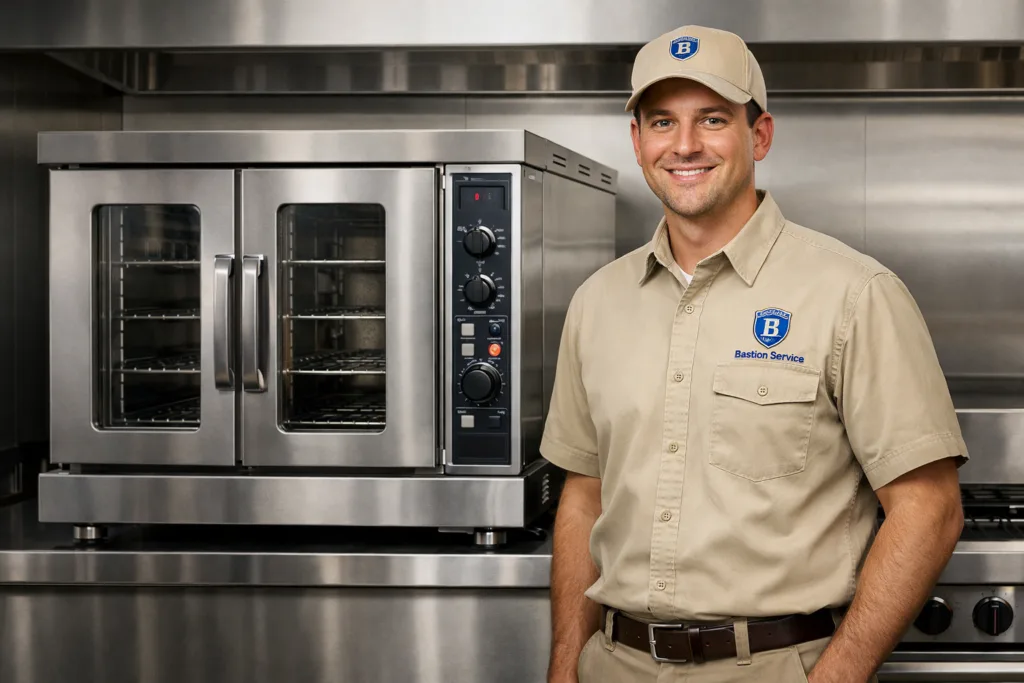




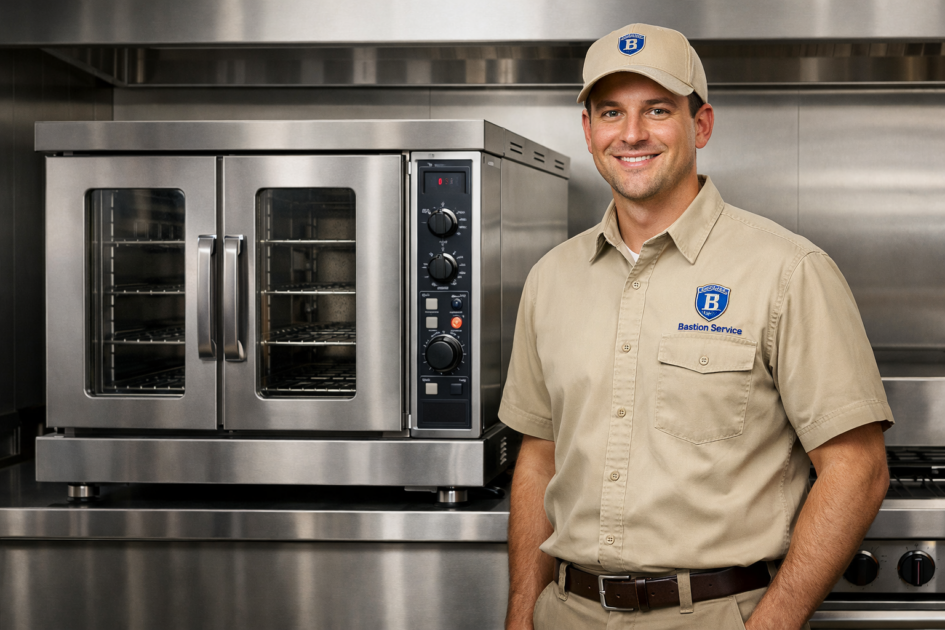
When a Southbend oven or range starts missing temperature, failing to ignite, or cutting out during service, the right response is to get the unit evaluated before a minor performance issue turns into lost output or a full kitchen disruption. Bastion Service provides Southbend cooking equipment repair support in Hermosa Beach for businesses that need symptom-based diagnosis, repair scheduling, and a realistic plan for keeping operations moving while the equipment issue is addressed.
For specific equipment paths in Hermosa Beach, review Southbend Oven Repair in Hermosa Beach, Southbend Range Repair in Hermosa Beach, and Commercial Appliance Repair in Hermosa Beach.
Southbend Cooking Equipment Problems That Commonly Need Repair
Southbend cooking equipment is built for demanding kitchen use, but daily heat exposure, grease, repeated cycling, and normal component wear eventually affect reliability. In business kitchens, the most common complaints involve ovens and ranges that no longer heat evenly, take too long to recover, show ignition trouble, develop burner performance issues, or shut down without warning.
These problems should be looked at in terms of operating impact, not just whether the equipment still powers on. A unit can appear usable while still causing delayed tickets, uneven cooking results, wasted product, or staff workarounds that slow down service. Repair becomes especially important when the same symptom keeps returning or begins affecting more than one cooking function.
Oven Heating and Temperature Control Issues
Oven not reaching or holding the set temperature
If an oven runs cool, overshoots, or drifts throughout the cooking cycle, the cause may involve the thermostat, sensor, burner system, ignition sequence, control components, or airflow inside the unit. In a high-volume kitchen, even a modest temperature error can create inconsistent results from one batch to the next.
Operators often notice longer cook times, uneven browning, or food that finishes differently depending on rack position or time of day. When those patterns start appearing, repair is usually more cost-effective than continuing to compensate manually during busy shifts.
Slow preheat and weak recovery between loads
Slow preheat or poor heat recovery usually points to a system that is no longer producing or maintaining heat the way it should. This can show up after the doors have been opened repeatedly, during lunch and dinner rushes, or when the oven seems unable to keep pace with normal production volume.
Possible causes include weak burner performance, ignition inefficiency, gas-flow issues, or controls that are no longer regulating heat correctly. For kitchens trying to maintain consistent output, weak recovery is more than an inconvenience; it directly affects timing, throughput, and labor coordination.
Range Burner and Ignition Problems
Burners that do not light consistently
Intermittent ignition is one of the most disruptive range problems because it creates uncertainty at the line. One burner may light immediately while another needs repeated attempts, lights late, or fails partway through operation. Common causes include worn ignition parts, blocked burner ports, switch issues, gas-delivery faults, or control-related problems.
What matters from a repair standpoint is whether the issue is isolated to one section of the range or signals a broader system problem. If staff are avoiding certain burners or relighting them repeatedly, it is time to schedule service rather than treating the symptom as routine wear.
Weak flame, uneven flame, or inconsistent heating across the top
Low flame height, unstable flame, or burners heating unevenly can slow pan recovery and create inconsistent cooking from station to station. In practical terms, this means one area of the range may be working harder than another, leading to uneven performance during prep and service.
These symptoms can be connected to burner buildup, regulator issues, valve wear, restricted gas flow, or aging components in the burner assembly. When flame quality changes noticeably, the safest and most efficient next step is inspection and repair planning rather than continued adjustment by staff.
Shutdowns, Control Faults, and Intermittent Operation
Equipment shutting off during use
If a Southbend oven or range shuts off in the middle of operation, the problem may involve a safety device, overheating condition, failing valve, electrical interruption, or ignition-related fault. Intermittent shutdowns are especially difficult for food-service businesses because they create uncertainty about whether the equipment will finish the next cycle or fail again at peak volume.
Once shutdowns begin, waiting rarely improves the situation. Repeated interruptions can increase downtime, complicate production planning, and place more stress on components that are already failing.
Controls not responding the way they should
Control problems can appear as settings that do not hold, delayed response, inaccurate regulation, or operation that feels unpredictable from one shift to the next. In some cases, the issue is limited to one control area. In others, it reflects a wider problem involving wiring, switches, boards, or safety circuits.
Because control faults often overlap with heating and ignition complaints, diagnosis helps determine whether the repair is isolated or part of a larger pattern of wear. That distinction matters when deciding whether to move forward with repair now or begin budgeting for replacement later.
Symptoms That Should Move Service Higher on the Schedule
Some issues can be planned around briefly. Others should be treated as urgent because they affect kitchen flow or increase the chance of a complete breakdown. It is usually time to schedule service when you notice:
- Temperature inconsistency affecting food quality
- Slow preheat or reduced recovery during busy periods
- Burners that click, light late, or fail intermittently
- Uneven flame or weak top-of-range performance
- Equipment that shuts down during cooking
- Controls that stop responding normally or fail to hold settings
- Staff changing procedures just to keep production moving
These are the signs that a repair decision is no longer just about convenience. They usually indicate a problem that is already affecting output, consistency, or safe operation.
When Continued Use Can Make the Problem Worse
Not every fault requires immediate shutdown, but some should not be pushed through a full service schedule. Repeated failed ignition, unstable burner operation, overheating, and recurring shutdowns can all increase wear on adjacent parts and expand the eventual repair scope.
If there is a strong or persistent gas smell, stop using the equipment and follow emergency safety procedures before arranging repair. If there is no gas odor but ignition is delayed, burners are acting unpredictably, or the unit is cycling in and out of operation, that still calls for prompt service before normal use continues.
Repair or Replacement: How Businesses Usually Decide
Repair is often the right move when the problem is limited to a specific heating, ignition, burner, or control issue and the equipment still suits the kitchen’s production needs. Replacement becomes a more serious consideration when breakdowns are frequent, several major systems show wear at the same time, or recent repairs have not restored dependable operation.
The best decision usually comes after inspection, not guesswork. Knowing what failed, whether additional wear is present, and how likely the unit is to return to stable performance helps owners and managers make better decisions about timing, budget, and kitchen scheduling.
Southbend Oven and Range Service for Hermosa Beach Businesses
For restaurants and other food-service operations in Hermosa Beach, oven and range issues can quickly lead to slower ticket times, inconsistent product, and avoidable labor strain. Scheduling a service visit helps identify the source of the problem, set repair expectations, and determine whether the equipment should stay in limited use or come offline until repairs are completed. If your Southbend cooking equipment is affecting daily operations, the practical next step is to arrange diagnosis and move forward with the repair path that best protects uptime.


