
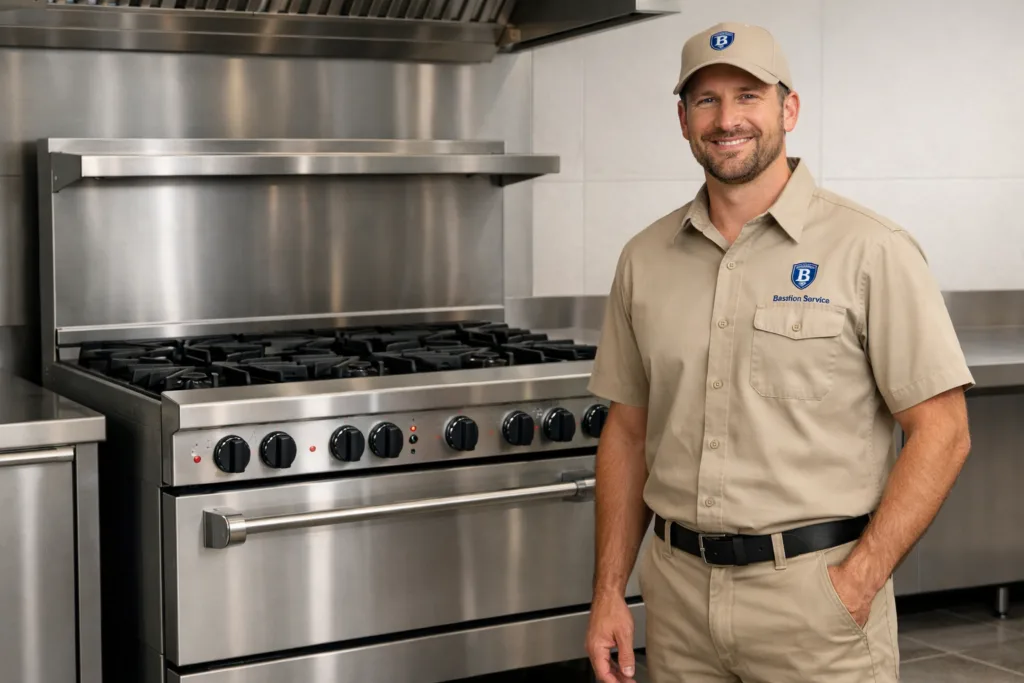




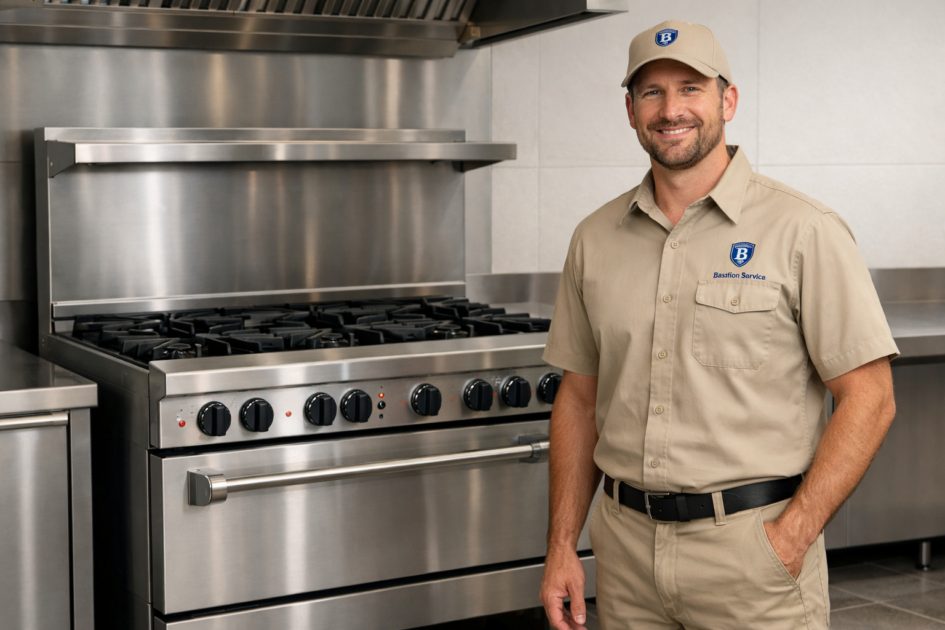
When a Southbend oven or range starts missing temperature, failing to ignite, or slowing kitchen output, the right next step is to schedule service based on the symptom pattern rather than waiting for a full breakdown. For restaurants and other food-service operations in Century City, repair decisions often come down to whether the problem involves burners, ignition, controls, gas flow, electrical components, or heat retention. Bastion Service helps businesses assess those issues, plan repair timing, and reduce avoidable downtime.
For specific equipment paths in Century City, review Southbend Oven Repair in Century City, Southbend Range Repair in Century City, and Commercial Appliance Repair in Century City.
Southbend cooking equipment is designed for daily production, but heavy use, heat exposure, grease accumulation, and normal component wear can lead to problems that disrupt prep, line speed, and food consistency. On ovens and ranges, the most common complaints include poor heating, unreliable ignition, slow recovery, uneven flames, control faults, and units that shut down during operation. Those symptoms are easier to manage when they are addressed early, before staff begin building workarounds into service.
Southbend oven and range problems that affect daily operations
Cooking equipment problems usually show up first as inconsistency. A range may still turn on but heat unevenly. An oven may cycle, but not at the temperature operators expect. A burner may light sometimes, then fail during a rush. These issues matter because they affect ticket times, batch quality, and kitchen flow long before a unit stops working completely.
Even when a problem seems minor, repeated temperature drift or ignition trouble can point to a part that is wearing out or a system that is no longer operating within normal range. Early diagnosis helps identify whether the issue is limited to a serviceable component or whether multiple systems are contributing to unreliable performance.
Heating and temperature-control issues
Oven not reaching or holding temperature
If a Southbend oven runs too cool, overheats, or fails to stay near the set point, possible causes can include thermostat problems, sensor faults, ignition issues, gas regulation problems, heating component wear, door-seal loss, or control calibration errors. In a business kitchen, temperature problems quickly lead to longer cook times, inconsistent results, and production delays.
Operators should pay attention when staff need to compensate manually, rotate product more often than usual, or extend cook cycles to get acceptable results. Those signs often indicate that the equipment is no longer heating predictably and should be inspected before the problem affects larger volumes of output.
Slow heat recovery between loads
Slow recovery is common on heavily used cooking equipment and is especially disruptive during peak periods. A Southbend oven or range that takes too long to come back to temperature may have burner weakness, restricted gas delivery, control failure, electrical problems, or broader internal wear. Recovery issues can create a ripple effect through the kitchen by delaying staging, slowing ticket completion, and reducing usable capacity.
Repair evaluation is useful here because slow recovery does not always mean the same thing as total heating failure. In some cases, the problem is isolated and repairable. In others, performance loss reflects multiple worn components that need to be considered together when planning next steps.
Ignition and burner performance problems
Burners that do not light reliably
On Southbend ranges, unreliable ignition can be linked to clogged burner ports, electrode issues, switch failures, gas flow irregularities, or control-related faults. If a burner lights intermittently, delays startup, or needs repeated attempts, it should not be treated as normal wear. In production kitchens, inconsistent lighting affects safety, timing, and confidence in the equipment during service.
If there is a persistent or strong gas smell, stop using the unit and follow gas-safety procedures before arranging equipment repair. When the issue is repeated clicking, delayed lighting, or burners that fail without obvious gas odor, service should still be scheduled promptly so the fault can be identified before it turns into a no-heat condition.
Weak flame, uneven flame, or burner dropout
Flame quality tells operators a lot about the condition of cooking equipment. Weak or uneven flames can lead to poor pan performance, inconsistent sauté or boil times, and uneven cooking across stations. Burner dropout during operation can be tied to contamination, regulator problems, burner wear, ignition-system faults, or safety-related shutdown behavior.
These symptoms are worth addressing when one section of a range consistently underperforms, when staff have to relight burners, or when flame appearance changes noticeably. A burner issue that seems manageable during slower hours can become a major production problem during lunch or dinner service.
Control faults and unexplained shutdowns
Unit shuts down during use
A Southbend oven or range that powers down or stops heating during operation may be dealing with overheating protection issues, unstable controls, intermittent power supply problems, ignition interruption, or safety-circuit faults. Shutdowns are especially disruptive because they can interrupt active cooking and force immediate changes to kitchen workflow.
Because several different failures can produce the same shutdown symptom, troubleshooting matters more than guesswork. The goal is to determine whether the issue is tied to one replaceable part or whether it points to broader reliability concerns that affect repair value and scheduling.
Controls not responding as expected
When knobs, switches, thermostats, or electronic controls stop responding correctly, operators may notice temperature settings that do not match actual performance, intermittent cycling, or controls that feel inconsistent from one shift to the next. These issues often waste labor because staff spend time adjusting around the fault instead of working with stable equipment.
Service at this stage can prevent a partial-function problem from becoming a complete failure. It also helps separate a true control issue from other conditions that can mimic control failure, such as ignition trouble or heating-system instability.
What Southbend cooking equipment problems do you troubleshoot?
For Southbend cooking equipment used in daily kitchen operations, the most common service calls involve:
- Ovens that do not heat properly or hold temperature
- Ranges with burners that fail to light or stay lit
- Slow recovery that delays production between loads
- Uneven heating that affects food consistency
- Flame performance problems, including weak or unstable burners
- Thermostat, sensor, or control-response issues
- Unexpected shutdowns during operation
- Recurring faults that return after staff resets or temporary workarounds
That kind of symptom-based approach is usually the most useful for business operators. Instead of focusing only on one part, repair service starts with how the equipment is failing in real use and how that failure is affecting production.
When it makes sense to schedule repair
Repair should usually be scheduled when there is a repeatable problem affecting heat, ignition, burner stability, control response, or recovery time. Many kitchens delay service until the equipment goes completely down, but earlier action often helps preserve scheduling flexibility and reduces the chance of losing a key piece of line equipment at the worst possible time.
It is also wise to stop normal use and request service when the unit shows repeated shutdowns, clear temperature inaccuracy, unstable flames, or ongoing ignition failure. If staff are regularly compensating for the issue just to keep output moving, the equipment is already affecting operations more than it may appear on paper.
Repair versus replacement considerations
Many Southbend ovens and ranges remain good repair candidates when the problem is limited to burners, valves, thermostatic components, switches, sensors, ignition parts, or other isolated serviceable systems. Replacement becomes a more serious consideration when the equipment has recurring major failures, multiple worn systems at the same time, or a reliability history that no longer supports daily kitchen use.
The value of diagnosis is that it separates a fixable fault from a broader pattern of decline. That helps business operators make better decisions about authorizing repair now, planning additional service later, or preparing for equipment turnover without unnecessary guesswork.
Service support for Century City kitchens
For businesses in Century City, Southbend cooking equipment repair is ultimately about restoring stable production and avoiding wider disruption. If an oven or range is causing temperature issues, ignition trouble, burner problems, or shutdowns, the most practical next step is to arrange inspection, confirm the cause, and schedule repair around kitchen demands before the problem turns into extended downtime.


