






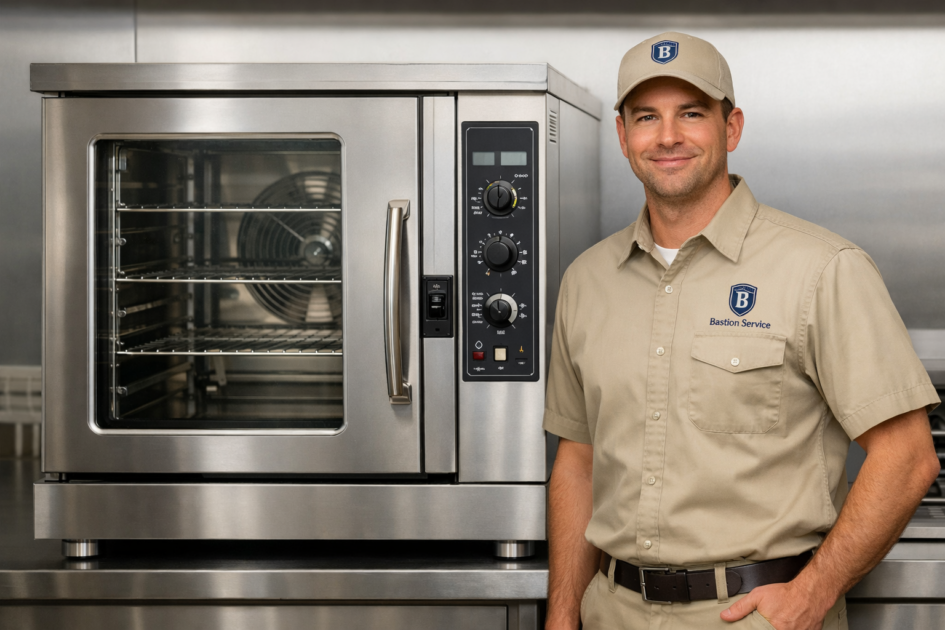
When a Southbend oven or range starts missing temperature, failing to ignite, or dropping out during service in Brentwood, the issue quickly becomes bigger than a single faulty component. Kitchen output, ticket times, food consistency, and staff workflow can all be affected. Bastion Service provides repair support for Southbend cooking equipment used in daily operations, with service centered on diagnosing the actual failure, advising whether the unit should stay in use, and helping businesses schedule repair around downtime pressure.
For specific equipment paths in Brentwood, review Southbend Oven Repair in Brentwood, Southbend Range Repair in Brentwood, and Commercial Appliance Repair in Brentwood.
For restaurants and other food-service businesses in Brentwood, symptom-based service is often the fastest path to a workable solution. A unit that will not hold heat may have a very different repair path than one that lights inconsistently or recovers too slowly between batches. Getting the problem identified correctly helps with repair planning, parts decisions, and short-term operating choices.
Southbend Oven and Range Problems That Commonly Need Service
Southbend cooking equipment is built for demanding kitchen use, but constant heat cycles, long production windows, grease exposure, and component wear can eventually lead to performance issues. On ovens and ranges, service calls often start with one or more of the following symptoms:
- Oven temperature that runs too high, too low, or drifts during use
- Uneven cooking or inconsistent results from batch to batch
- Burners that fail to ignite or do not stay lit
- Delayed ignition or repeated clicking at startup
- Slow heat recovery during busy periods
- Controls that stop responding normally
- Unexpected shutdowns in the middle of production
- Weak flame, unstable burner output, or inconsistent heat response
These symptoms may point to ignition components, burner assemblies, gas-flow issues, sensors, thermostatic controls, electrical faults, or accumulated wear across more than one system. Because similar symptoms can come from different causes, repair decisions are best made after inspection rather than guesswork.
Heating Issues and Temperature Control Problems
When the oven will not reach or hold the set temperature
If a Southbend oven takes too long to preheat, never reaches the expected temperature, or loses heat during operation, production can slow down quickly. In practical terms, this can show up as longer cook times, inconsistent browning, undercooked product, or staff adjusting recipes just to compensate for the equipment. Causes may involve temperature sensing problems, thermostat or control failure, burner performance issues, ignition faults, or heat-loss conditions that reduce overall efficiency.
When temperatures swing or cooking results become inconsistent
Temperature drift is often one of the more disruptive problems because it affects food quality before it causes a complete shutdown. One batch may come out acceptable while the next misses the mark. That pattern can indicate calibration issues, intermittent control faults, sensor problems, or burner-side irregularities that affect heat distribution. In a busy kitchen, those inconsistencies can create waste and force unnecessary rework during service.
Ignition Failures and Burner Performance Issues
Burners that do not light reliably
When a Southbend range or oven burner needs repeated attempts to ignite, the problem should be checked before the equipment returns to full use. Ignition trouble may involve igniters, flame sensing, switches, gas valves, clogged burner components, or electrical issues in the ignition circuit. Delayed startup does not just slow prep; it can also make equipment behavior less predictable for the staff using it.
Burners that light but will not stay lit
A burner that starts and then drops out can interrupt production and make normal station flow difficult. This symptom may point to flame-sensing problems, unstable gas delivery, burner contamination, failing controls, or other safety-related shutdown conditions. If the burner cannot maintain a steady flame, it is usually a sign that the unit needs service rather than continued use with workarounds.
Slow Recovery and Output Loss During Peak Hours
Some equipment appears functional during light use but falls behind once volume increases. A Southbend oven that reheats too slowly between loads, or a range that no longer responds with normal heat strength, can create a production bottleneck even if the unit has not fully failed. Slow recovery often suggests burner inefficiency, control drift, regulator problems, heat loss, or wear affecting normal performance.
This is one of the most important issues to address early because it tends to get worse under pressure. What feels manageable during prep may become a serious service problem during lunch, dinner, or event volume when the kitchen is relying on consistent turnaround.
Intermittent Shutdowns and Control Faults
If the equipment shuts down unexpectedly, drops temperature without input, or behaves differently from one shift to the next, the repair process should focus on confirming the pattern before the fault becomes harder to track. Intermittent issues can involve loose or failing electrical connections, safety controls, operating components, or larger control-system problems. They are especially disruptive because they reduce confidence in the equipment even when it appears to restart normally.
For business operators, intermittent faults often matter as much as complete failures. A range or oven that works unpredictably can still disrupt service, staffing, and menu timing. Scheduling repair once the pattern becomes noticeable is usually more manageable than waiting for a full outage.
Signs It Is Time to Take the Unit Offline
Not every symptom requires immediate removal from service, but some do. Service should be prioritized when the equipment:
- Will not maintain safe and consistent heat
- Fails ignition repeatedly
- Shuts down during active use
- Shows rapidly worsening performance across multiple shifts
- Creates repeated delays that affect production timing
If there is a persistent or strong gas smell, stop using the equipment and follow appropriate gas-safety steps before arranging repair. If there is ignition trouble without a gas smell, the unit should still be inspected before being returned to normal production.
How Repair Decisions Are Usually Made
For Southbend cooking equipment in Brentwood, the repair decision typically comes down to fault severity, age and overall condition of the unit, repeat breakdown history, parts outlook, and the operational cost of continued downtime. A single failed component on an otherwise solid oven or range often makes repair the practical choice. On the other hand, if control faults, burner problems, and shutdown issues are stacking up over time, replacement may deserve closer consideration.
What matters most is knowing whether the problem is isolated or part of a broader wear pattern. That distinction helps owners and kitchen managers decide whether to authorize repair immediately, plan around a larger service event, or begin evaluating replacement timing based on actual equipment reliability rather than frustration alone.
What a Service Visit Should Clarify
A productive service visit should answer more than what symptom showed up first. It should identify the failing system, determine whether the equipment can remain in limited use or needs to be shut down, outline the repair path, and help the business prepare for parts, access, and scheduling. For Southbend ovens and ranges that support multiple menu items or stations, that information is often as important as the repair itself.
If your Southbend cooking equipment is losing heat, failing to ignite properly, recovering too slowly, or causing production delays in Brentwood, the next step is to schedule service before the problem turns into a broader kitchen outage. Early diagnosis and timely repair can help protect output, reduce avoidable disruption, and restore more predictable operation.


