
MC0322Manufacturer product
Independent Scotsman repair

Scotsman Repair in Los Angeles
Diagnosis and repair for supported Scotsman appliances and equipment in Los Angeles. Same-day service is available.
- Same-day service available
- 90-day repair warranty
- Estimate before repair
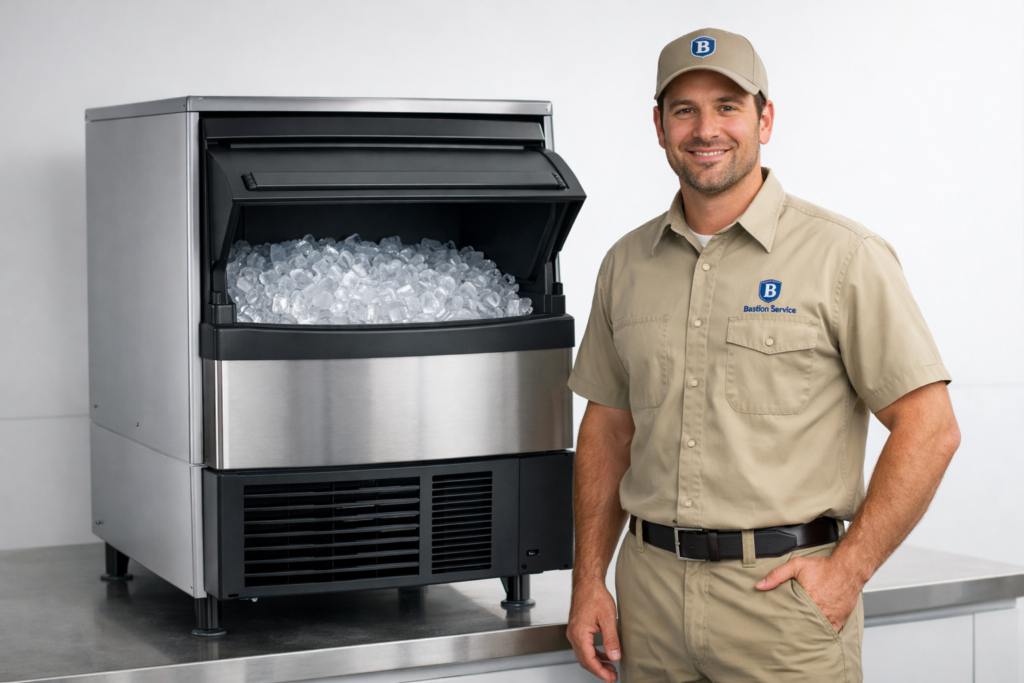
$85 / $120 service callHome appliance / business equipment
Applied to repairIf you approve the estimate
Open 7 days8 AM-6 PM
Serving Los AngelesOn-site diagnosis and repair
Supported equipment
Scotsman equipment we repair
Choose the equipment type for problem details and service information. Bastion Service is an independent repair company and is not affiliated with Scotsman.
Diagnosis first
What a service technician checks
Good diagnosis starts with the exact symptom, model, operating conditions, and service history. The technician tests the systems connected to the failure instead of replacing parts by guesswork.
- Power, supply, and controls to confirm the machine can start and complete its normal sequence.
- Airflow, water, heat, and movement as applicable to the exact equipment type.
- Error history and model data before matching parts, manuals, or service information.
Model reference
Scotsman models and manuals
Use the model search to confirm that your equipment is listed. The model and serial label is still the final reference for service information.
Model reference
268 model references
Scotsman ice machine model references
Bastion Service repairs Scotsman ice machines. These model and manual references help identify your equipment; symptoms alone do not confirm a diagnosis.
Manual candidates require the complete model, serial/build and installed controller to be checked. A specification sheet is not an operating manual. These references do not authorize installation or DIY repair.
Repair service only. New equipment installation is not offered.
Ice Machine repairCube / Modular12
MC0330Manufacturer product
MC0522Manufacturer product
MC0530Manufacturer product
MC0630Manufacturer product
MC0722Manufacturer product
MC0830Manufacturer product
MC1030Manufacturer product
MC1448Manufacturer product
MC1848Manufacturer product
MC2148Manufacturer product
MC2648Manufacturer product
Cube / Remote Low Side1
Cube / Undercounter8
Flake / Modular6
Flake / Undercounter4
Nugget / Ice Water4
Nugget / Modular5
Nugget / Undercounter4
Legacy flake ice machines28
AFE325AS-1BManufacturer manual
AFE400A-1Manufacturer manual
AFE400W-1Manufacturer manual
AFE424A-1Manufacturer manual
AFE424W-1Manufacturer manual
FME504AS-1Manufacturer manual
FME504WS-1Manufacturer manual
FME804AS-1Manufacturer manual
FME804WS-1Manufacturer manual
FME804AS-32Manufacturer manual
FME804WS-32Manufacturer manual
FME804RS-1AManufacturer manual
FME1504AS-32BManufacturer manual
FME1504WS-32BManufacturer manual
FME1504RS-32AManufacturer manual
FME2404AS-32Manufacturer manual
FME2404WS-32Manufacturer manual
FME2404AS-3Manufacturer manual
FME2404WS-3Manufacturer manual
FME2404RS-32AManufacturer manual
FME2404RS-3AManufacturer manual
FME1204AS-3BManufacturer manual
FME1204WS-3AManufacturer manual
FME1204WS-3BManufacturer manual
FME1204AS-32BManufacturer manual
FME1204WS-32AManufacturer manual
FME1204RS-32AManufacturer manual
FME1204RS-3AManufacturer manual
50 Hz manufacturer references37
AFE325AS-6BManufacturer manual
AFE400A-6Manufacturer manual
AFE424A-6Manufacturer manual
CME506AS-6HManufacturer manual
CME506WS-6HManufacturer manual
CME656AS-6HManufacturer manual
CME656WS-6HManufacturer manual
CME806AS-6HManufacturer manual
CME806WS-6HManufacturer manual
CME506RS-6EManufacturer manual
CME656RS-6EManufacturer manual
CME806RS-6EManufacturer manual
CME1056AS-6FManufacturer manual
CME1056WS-6FManufacturer manual
CME1056RS-6DManufacturer manual
CME1356AS-6Manufacturer manual
CME1356WS-6Manufacturer manual
CME1656AS-6Manufacturer manual
CME1656WS-6Manufacturer manual
CME1356RS-6HManufacturer manual
CME1656RS-6HManufacturer manual
CME306AS-6Manufacturer manual
CME306WS-6Manufacturer manual
CME456AS-6Manufacturer manual
CME456WS-6Manufacturer manual
HID312A-6AManufacturer manual
HID525A-6AManufacturer manual
FME804AS-6Manufacturer manual
FME804WS-6Manufacturer manual
NME654AS-6Manufacturer manual
NME654WS-6Manufacturer manual
SCE170A-6CManufacturer manual
SCE170W-6CManufacturer manual
SCE275A-6GManufacturer manual
SCE275W-6GManufacturer manual
UF424A-6AManufacturer manual
UN324A-6AManufacturer manual
Legacy CME cubers47
CME256AS-1HManufacturer manual
CME256WS-1HManufacturer manual
CME256AS-32HManufacturer manual
CME506AS-1HManufacturer manual
CME506WS-1HManufacturer manual
CME506AS-32HManufacturer manual
CME656AS-32HManufacturer manual
CME656WS-32HManufacturer manual
CME656AS-3HManufacturer manual
CME656WS-3HManufacturer manual
CME806AS-32HManufacturer manual
CME806WS-32HManufacturer manual
CME506RS-1EManufacturer manual
CME656RS-32EManufacturer manual
CME656RS-3EManufacturer manual
CME806RS-32EManufacturer manual
CME1056AS-32FManufacturer manual
CME1056WS-32FManufacturer manual
CME1056AS-3FManufacturer manual
CME1056WS-3FManufacturer manual
CME1056RS-32DManufacturer manual
CME1056RS-3DManufacturer manual
CME1356AS-32Manufacturer manual
CME1356WS-32Manufacturer manual
CME1356AS-3Manufacturer manual
CME1356WS-3Manufacturer manual
CME1656AS-32Manufacturer manual
CME1656WS-32Manufacturer manual
CME1656AS-3Manufacturer manual
CME1656WS-3Manufacturer manual
CME1356RS-32HManufacturer manual
CME1356RS-3HManufacturer manual
CME1656RS-32HManufacturer manual
CME1656RS-3HManufacturer manual
CME1856WS-32Manufacturer manual
CME1856WS-3Manufacturer manual
CME2006RS-32CManufacturer manual
CME2006RS-3CManufacturer manual
CME306AS-1Manufacturer manual
CME306AS-32Manufacturer manual
CME306WS-1Manufacturer manual
CME306WS-32Manufacturer manual
CME456AS-1Manufacturer manual
CME456AS-32Manufacturer manual
CME456WS-1Manufacturer manual
CME456WS-32Manufacturer manual
CME456RS-1CManufacturer manual
Undercounter cuber references30
CU1526SA-1Manufacturer manual
CU1526SW-1Manufacturer manual
CU2026SA-1Manufacturer manual
CU2026SW-1Manufacturer manual
CU2026SA-32Manufacturer manual
CU2026SW-32Manufacturer manual
CU3030SA-1Manufacturer manual
CU3030SW-1Manufacturer manual
CU3030SA-32Manufacturer manual
CU3030SW-32Manufacturer manual
CU50PA-1Manufacturer manual
CU50GA-1Manufacturer manual
CU0415MA-1AManufacturer manual
CU0715MA-1AManufacturer manual
CU0920MA-1AManufacturer manual
SCE170A-1AManufacturer manual
SCE170A-1CManufacturer manual
SCE170W-1AManufacturer manual
SCE170W-1CManufacturer manual
SCE275A-1GManufacturer manual
SCE275A-32GManufacturer manual
SCE275W-1GManufacturer manual
UC2024SA-1AManufacturer manual
UC2024MA-1AManufacturer manual
UC2024SW-1AManufacturer manual
UC2024MW- 1AManufacturer manual
UC2724SA-1AManufacturer manual
UC2724MA-1AManufacturer manual
UC2724SW-1AManufacturer manual
UC2724MW-1AManufacturer manual
Low side RL systems15
FME2404RLManufacturer manual
NME1854RLManufacturer manual
FM2402RL-CManufacturer manual
NM1852RL-CManufacturer manual
FME3004RLManufacturer manual
NME2504RLManufacturer manual
FME1204RL-32Manufacturer manual
NME954RL-32Manufacturer manual
NME954RL-1Manufacturer manual
NME654RL-1Manufacturer manual
FME804RL-1Manufacturer manual
FM1202RL-32CManufacturer manual
NM952RL-32CManufacturer manual
FME1504RL-32Manufacturer manual
NME1254RL-32Manufacturer manual
Eclipse ice making heads5
Meridian dispensers: full model references10
HID312A-1AManufacturer manual
HID525A-1AManufacturer manual
HID525W-1AManufacturer manual
HID540A-1AManufacturer manual
HID540W-1AManufacturer manual
HID312AW-1AManufacturer manual
HID525AW-1AManufacturer manual
HID540AW-1AManufacturer manual
HID207AX-1AManufacturer manual
HID207ABX-1AManufacturer manual
Legacy nugget ice machines22
NME454AS-1Manufacturer manual
NME454WS-1Manufacturer manual
NME654AS-1Manufacturer manual
NME654WS-1Manufacturer manual
NME654RS-1AManufacturer manual
NME1254AS-32BManufacturer manual
NME1254WS-32BManufacturer manual
NME1254RS-32AManufacturer manual
NME1854AS-32Manufacturer manual
NME1854WS-32Manufacturer manual
NME1854AS-3Manufacturer manual
NME1854WS-3Manufacturer manual
NME1854RS-32AManufacturer manual
NME1854RS-3AManufacturer manual
NME954AS-3BManufacturer manual
NME954WS-3AManufacturer manual
NME954WS-3BManufacturer manual
NME954AS-32BManufacturer manual
NME954WS-32AManufacturer manual
NME954WS-32BManufacturer manual
NME954RS-32AManufacturer manual
NME954RS-3AManufacturer manual
Undercounter flake and nugget references4
Prodigy ELITE: manufacturer base labels26
MC0322AManufacturer model reference
MC0322WManufacturer model reference
MC0522AManufacturer model reference
MC0522WManufacturer model reference
MC0722AManufacturer model reference
MC0330AManufacturer model reference
MC0330WManufacturer model reference
MC0530AManufacturer model reference
MC0530WManufacturer model reference
MC0530RManufacturer model reference
MC0630AManufacturer model reference
MC0630WManufacturer model reference
MC0630RManufacturer model reference
MC0830AManufacturer model reference
MC0830WManufacturer model reference
MC0830RManufacturer model reference
MC1030AManufacturer model reference
MC1030WManufacturer model reference
MC1030RManufacturer model reference
MC1448AManufacturer model reference
MC1448WManufacturer model reference
MC1448RManufacturer model reference
MC1848AManufacturer model reference
MC1848WManufacturer model reference
MC1848RManufacturer model reference
MC2148RManufacturer model reference
Symptoms and maintenance
Ice Machine symptoms and care by family
Match the complete model, serial/build and installed controller before using a document.
Bastion Service repairs existing equipment. We do not install new equipment.
No matching reference. This does not determine service availability.
CU0415, CU0715 and CU0920 compact cubers3 topics
Back to models and manualsThe machine runs but does not make ice
Report whether the machine appears inactive or runs without producing ice, using only what you can observe without opening covers. Water supply, operating mode, bin sensing and circulation are separate possible causes. A technician can distinguish a running compressor with no circulating water from an inactive machine; you do not need to identify internal components by sound.
Scale removal and sanitation are different tasks
This edition describes scale removal about twice a year and regular condenser cleaning. Removing mineral deposits does not replace sanitizing. Keep a dated record distinguishing descaling, sanitation and condenser care instead of recording only "cleaned." Follow the exact-unit instructions; this is not a schedule for every Scotsman machine.
Keep internal testing out of routine cleaning
Pump, transformer and controller checks belong to qualified service personnel. Follow the specified cleaning-product label; do not improvise chemical mixtures or open electrical areas to troubleshoot while cleaning.
CU3030 undercounter cubers3 topics
Back to models and manualsFreezing takes too long
Note whether ice production stops repeatedly and record any indication visible without removing panels. A long freeze can involve water loss, airflow, sensing, water distribution, inlet flow or incomplete ice release. A shutdown indication identifies a cycle problem, not a confirmed failed component. Internal checks to separate these causes belong to a technician.
Water-system care is not the whole cleaning plan
This edition calls for water-system cleaning and sanitation at least twice a year, with bin sanitation whenever the machine is cleaned and sanitized. The bin also has separate sanitation requirements. Ask what areas the maintenance visit covered. Air-filter and condenser care in this guidance applies to air-cooled versions, not every configuration.
Match the complete CU designation
The manual covers several CU models, but its shared cover does not make their configurations identical. Provide the complete model and suffix when requesting help so the applicable instructions can be checked.
HID312, HID525 and HID540 ice dispensers3 topics
Back to models and manualsMaking ice and dispensing it are separate problems
Tell the technician whether ice is available but will not dispense, or whether the unit has stopped making it. Report only what you can observe during normal use, including any externally visible indication; do not remove panels to find one. Bin sensing, auger movement, reservoir water and dispensing timeout are separate diagnostic paths, not interchangeable failed-part diagnoses.
The cleaning reminder is not a sanitation check
Care includes drains, the drip tray, condenser and filter, dispensing parts, level sensing and the water system. Keep the date and areas cleaned or sanitized in the maintenance record. A time-to-clean reminder does not verify that work was completed or establish a safe interval for every installation; use the applicable maintenance procedure.
Keep this HID family separate from HID207
These instructions contain pages revised at different times. Their diagnostic coverage should not be transferred to the separate HID207 design. A complete model identification matters more than a similar cabinet or display.
HID207 ice dispensers3 topics
Back to models and manualsWhat to note when ice production stops
Record any indication visible without opening the cabinet, and note whether ice or water will dispense. In this HID207 manual, slow or stalled auger movement and a reservoir-water problem are separate diagnostic paths. Neither observation confirms a failed motor or sensor. Leave internal checks to a technician; do not use another HID model's code list.
What belongs in HID207 maintenance?
Remove visible trash from the drip tray when you notice it. Care also covers chutes and drains, the condenser and filter, dispensing parts, ice-level sensing and the water system. A clean tray does not mean the internal system has been cleaned. Follow the HID207 procedure for your configuration; do not disconnect hoses or remove panels based on a general checklist.
When to arrange service
Arrange service for persistent ice-production or dispensing problems. Have the complete model and any safely visible indication ready. This reference manual covers an R290 design; electrical testing and refrigeration-circuit work require qualified service personnel. The installed controller and unit configuration must be checked before applying technical instructions.
FME2404 flake ice machines3 topics
Back to models and manualsCare for both ice-making systems
This design has two separate ice-making systems in one cabinet. The January 2000 edition calls for cleaning and maintenance at least twice a year, covering both systems. Ask the maintenance provider to confirm that both were included. Keep this recommendation tied to this equipment and edition, not every flaker.
Bearing inspection is not a customer disassembly task
The manual specifies top evaporator bearing inspection at least twice a year. That inspection involves internal access. Arrange it with qualified maintenance personnel instead of removing covers or dismantling the ice-making assembly yourself.
Use the controls fitted to this machine
Have the complete model, applicable manual and previous maintenance record available when arranging service. This older manual covers more than one model; its control system should not be interpreted with a modern Prodigy error-code list. Report the operating problem rather than borrowing a code definition from a newer machine.
Prodigy ELITE MC cubers3 topics
Back to models and manualsSlow freezing on an air-cooled unit
The air-cooled diagnostic section considers water loss, filters, condenser condition, intake temperature, sensing and water distribution. Tell the technician the cooling configuration if you know it; do not disassemble the unit to identify it. Water-cooled and remote systems need their own diagnostic paths. These possibilities are not a diagnosis of your machine.
A reminder is not completed maintenance
The cleaning reminder has configurable intervals and does not itself stop ice production. An automatic cleaning cycle does not prove that every surface has been inspected or sanitized. Keep the date and work completed in the maintenance record, separately from the reminder display; ask whether inspection and sanitation were included.
The full MC model number matters
The manual names specific MC variants rather than every model between its lowest and highest numbers. Match the complete model and configuration before using a procedure or interpreting a display; similar prefixes do not establish the same controls.
UC2024 and UC2724 cubers3 topics
Back to models and manualsWater not filling and water not circulating differ
Report loss of ice production and any known interruption to the water supply without opening the machine. No ice can involve supply, circulation, bin sensing, heat rejection or refrigeration. A technician distinguishes a sump that does not fill from a full sump without circulation. Do not open pump or electrical areas to identify which condition applies.
Scheduled cleaning does not replace ongoing sanitation
This edition recommends cleaning about twice a year for UC2024 and UC2724. Sanitation still needs attention between cleanings; that interval is not a schedule for other undercounter machines. Record when cleaning and sanitation were performed and ask the maintenance provider which areas were covered, rather than assuming one task includes the other.
Do not open the electrical area to read a light
The documented cycle and bin lights are inside the electrical-component area. They are not a customer-facing numbered error display. Leave access to service personnel rather than removing a panel to report a supposed code.
UF424 flake and UN324 nugget machines3 topics
Back to models and manualsAn empty bin has several possible explanations
Report an empty bin or reduced output as observed during normal use. Operating state, level sensing, auger drive or refrigeration can affect production; airflow and inlet conditions can reduce output. The controller is behind the front panel: leave access to a technician. A false bin-full indication is a sensing concern, not proof of a failed drive motor.
Flake and nugget equipment share a manual, not every detail
Care covers the ice-making system, photo-eye level controls and storage bin, plus the air-cooled condenser and filter. Keep UF424 flake and UN324 nugget equipment identified separately in maintenance records. Ask what was cleaned and sanitized and when; do not assume a shared manual makes every procedure or configuration identical.
Use the actual diagnostic table
The troubleshooting text points to different pages from the diagnostic table in this PDF. Match the actual table and controller before interpreting an indication. A repeated shutdown calls for diagnosis, not repeated attempts to reset and keep operating.
CU50 cubers3 topics
Back to models and manualsWater indications and long freezing need different checks
Report any water indication visible without opening the cabinet and whether ice production has slowed or stopped. This edition associates a flashing water light with a fill timeout. Long freezing has other possible causes: water loss, spray jets, sensing, heat-transfer surfaces or refrigeration. Let a technician separate them; the light alone does not identify a replacement part.
The reminder and cleaning guidance are not identical
The guide calls for cleaning at least annually, preferably twice a year; some conditions require more frequent attention. Its six-month reminder is a separate feature, not the entire maintenance plan. Have the last cleaning date and work record ready when discussing care. Match the plan to the exact equipment and operating conditions.
Keep the CU50 edition and configuration together
This guide contains pages with different revision dates. A machine used in a business does not automatically share every feature with another CU50 configuration. Have the full unit information checked before applying an instruction.
Scotsman AFE3255 topics
Back to models and manualsFamily-specific symptoms and care | Revised: 1994-08
Identify Your Machine
The manual lists AFE325AS-1B and AFE325AS-6B with different electrical requirements. Provide the complete nameplate information; do not move equipment to reach it.
No Ice
Possible causes include interrupted water or power, bin controls, or the auger drive. Motor noise without ice can also involve compressor starting or refrigeration. Testing distinguishes these causes.
Noise Or Leaking
Scale, drive wear, tubing, seals, or drainage may be involved. Do not remove panels, bypass switches, or lubricate internal parts yourself.
Airflow
Keep the rear and left-side air paths unobstructed without repositioning the machine.
Maintenance
The manual calls for maintenance at least twice yearly, with more frequent attention where minerals accumulate. It specifies twice-yearly top-bearing inspection and annual inspection of the auger and both bearings. These internal checks require a technician.
Scotsman AFE4003 topics
Back to models and manualsFamily-specific symptoms and care | Revised: 1995-06
Why the model and build information matter
AFE400 equipment has separate model-series and assembly differences. The manual distinguishes assemblies before and after May 2007. Provide existing model, serial and service records so the technician can identify yours. Do not remove panels or pull the machine out for photographs.
No ice, humming or unusual noise
Water supply, the bin thermostat, drive controls or compressor starting components may be involved. Water-cooled units also have condenser-water considerations. Noise can come from mineral deposits, bearings, gears or other moving components. Testing is needed; noise alone does not identify a failed compressor. The auger may continue clearing ice after the compressor stops. Report persistent changes without attempting resets or internal adjustments.
Plan maintenance
Include weekly cabinet cleaning and monthly bin sanitation. Schedule water-system and air-condenser cleaning at least twice yearly; high-mineral water calls for four water-system cleanings yearly. Arrange annual bearing and water-seal inspection. Internal inspection and water-cooled condenser work belong with qualified service personnel.
Scotsman AFE4244 topics
Back to models and manualsFamily-specific symptoms and care | Revised: 2012-03
Identify your equipment
Provide the complete model from existing records. Do not remove grilles or move the machine for a photograph. Electrical and cooling configurations differ.
It stopped making ice
Possible causes include water supply, the bin thermostat, pressure protection or auger-drive controls. A running motor without cooling can involve the compressor starting circuit, contactor or motor-speed control. Testing distinguishes these causes; the symptom alone does not identify a failed compressor.
Noise or continued motor operation
The auger can continue clearing ice after the compressor stops. Persistent noise may involve mineral deposits, bearings, gears, the fan or compressor. Do not attempt internal adjustments or repeated resets.
Maintenance schedule
Arrange monthly bin sanitation. Clean the water system and air-cooled condenser at least twice yearly; the manual specifies four water-system cleanings yearly for high-mineral conditions. Water-cooled condenser restriction requires professional evaluation. Keep front airflow unobstructed and leave internal cleaning to qualified service personnel.
Scotsman AutoIQ Legacy Cubers4 topics
Back to models and manualsFamily-specific symptoms and care | Revised: 2007-06
Identify Your CME Ice Machine
CME256, CME506, CME656 and CME806 include different cooling, electrical and production-series configurations. Keep the full nameplate number, including its suffix. A similar-looking machine may need different instructions. Bastion Service repairs existing equipment; we do not install new machines.
What the Lights Mean
Freeze, Harvest and Clean describe operating stages, not failed parts. A repeating Water or Refrigeration light needs its own interpretation. Record the lamp name, flash count and whether the machine is running, if visible without removing panels. Water: two repeating flashes: Water-fill problem to investigate. Refrigeration: steady: Refrigeration or long-freeze problem to investigate. Refrigeration: one repeating flash: Harvest problem; controller17-1 or later also indicates ice was sensed. Refrigeration: two repeating flashes: Controller17-1 or later: harvest error, no ice sensed. Refrigeration: three repeating flashes: High discharge temperature. Both diagnostic lights on while running: Temperature-sensor readings need checking.
Less Ice or Unusual Cubes
On air-cooled models, condenser buildup or recirculated hot air can reduce output. Water quantity, cube-size control and refrigeration faults are other possibilities. Uneven freezing across two plates needs series-specific diagnosis; CME256 has one evaporator. A harvest fault can also involve dirty ice-detection sensors, not just a refrigeration failure. These clues guide testing, not automatic parts replacement.
Plan Cleaning and Sanitation
This manual sets a twice-yearly minimum for water-system cleaning and sanitation. It is not a guarantee that every site can wait six months. Bin hygiene, mineral deposits, sensors and air-cooled condenser buildup need separate attention. Have internal work handled by a qualified technician. Do not bypass the bin control.
Scotsman CME506R / CME656R / CME806R5 topics
Back to models and manualsFamily-specific symptoms and care | Revised: 2000-01
Ice Drops, but the Machine Reports Harvest Trouble
The ice-release process and the system that detects falling ice are different. Mineral buildup can interfere with the optical bin sensors. Tell the technician whether you actually hear ice fall before the machine stops, or whether a batch never reaches the bin. This helps distinguish a release problem from a detection problem without assuming that the controller needs replacement. Do not reach into the ice outlet or bypass the sensors. Controller revision also matters when interpreting the refrigeration lamp.
Cube Size Changed
Cubes have become too large: A sticking float or a size setting, where adjustment is provided. Cubes have become too small: Water shortage, reservoir leakage or an applicable size setting. Note whether the change was sudden, followed cleaning, or developed alongside a visible leak. Those details are more useful than changing a setting by trial and error. Adjustment is not available in the same way on every configuration.
Lower Output Does Not Always Mean a Failed Compressor
Remote-condenser fouling, recirculating hot air, water loss and refrigeration conditions are possible causes. Where the condenser has a separate power supply, the machine being powered does not establish that the condenser is operating. Also report any recent change to water-treatment or purge settings. A more intensive purge can lengthen harvest and reduce capacity; the highest setting is not automatically the right one. Have a technician evaluate the setting against water conditions instead of altering it to chase production.
Record the Lights Without Resetting the Evidence
Water: two repeating flashes: Water fill/inlet flow. Refrigeration: steady: Refrigeration or prolonged freezing. Refrigeration: repeated blinking: Harvest trouble; on17-1 and later controls, the documented distinction includes ice being sensed. Refrigeration: two repeating flashes: On17-1 and later controls: harvest trouble with no ice sensed. Refrigeration: three repeating flashes: High discharge temperature. Both error lamps lit while running: Temperature readings outside the expected range. These are diagnostic directions, not replacement-part instructions. A technician must identify the control revision; the two-flash harvest interpretation must not be assumed for every older board. Not all lights mean a fault. Freeze blinking can mean a pending freeze cycle. Bin Full turning on and off while ice falls can be normal detection. Off glowing can follow a manual stop or completion of cleaning. Record the lamp name, pattern and whether the machine was running, using only a safely accessible view.
Maintenance Covers More Than the Water Reservoir
The manual calls for water-system cleaning and sanitation at least twice yearly. Bin sanitation accompanies that work and also follows local health requirements. Optical sensor deposits and remote-condenser condition deserve separate attention. This is not a monthly local air-filter schedule, and the guide does not prescribe a universal fixed interval for the remote condenser. Keep the cleaning date and work description with the service records. Leave roof access, chemical cleaning and internal disassembly to appropriately equipped service personnel. Persistent shutdowns still need diagnosis after cleaning.
Scotsman CME1056 / CME1056R6 topics
Back to models and manualsFamily-specific symptoms and care | Revised: 2000-05
Family-specific symptoms and care | Revised: 2000-05
CME1056: Cube Size, Bin Sensing and Routine Care: The Cubes Are Different From Before
Oversized cubes can involve a sticking size-control float or inlet-water leakage. Undersized cubes may reflect water loss through the purge valve or reservoir. Describe the change rather than adjusting controls: the technician needs to distinguish water entering unexpectedly from water leaving too soon.
CME1056: Cube Size, Bin Sensing and Routine Care: The Machine Stops With Little Ice in the Bin
A bin-full indication does not establish a bad control board. Deposits on the ice sensors or an optional bin thermostat may be involved. Report the actual ice level and any safely visible lamps; do not defeat the bin control.
CME1056: Cube Size, Bin Sensing and Routine Care: Maintenance Depends on the Cooling Configuration
For applicable air-cooled units, the manual specifies monthly filter replacement. Water-system cleaning and sanitation have a twice-yearly minimum. These are separate tasks, and the air-filter schedule does not apply to water-cooled units. Arrange qualified service for work behind panels.
CME1056R: Include the Remote Condenser in the Service History: Output Falls or Ice Stops Releasing
Reduced output can involve condenser dirt, fan trouble, recirculated warm air, refrigerant loss or unwanted water flow. Harvest trouble may involve deposits or ice sensing: ice failing to release differs from released ice not being detected. Neither symptom identifies one failed part.
CME1056R: Include the Remote Condenser in the Service History: Plan Care and Access Together
The remote manual also specifies water-system cleaning and sanitation at least twice yearly. Sensors and the separate condenser need attention too. Tell the service team where the condenser is located; do not climb onto a roof to inspect it. No monthly condenser interval is established by this packet.
AutoIQ Lamp Reference
Record only lamps visible without removing a cover. Confirm the installed controller before using this table; these are not Prodigy numeric error codes. Water flashes twice repeatedly, Water filling: Both reviewed manuals. Refrigeration stays lit, Refrigeration or prolonged freeze: Both. Refrigeration flashes once, Harvest; some ice detected: Both. Refrigeration flashes twice, Harvest; no ice detected: Both. Refrigeration flashes three times, High discharge temperature: Both. Both diagnostic lamps lit while running, Temperature readings: Remote manual only. Bastion Service repairs existing equipment. New-equipment installation is not offered. Owner-confirmed policy; not inferred from the manuals' installation chapters.
Scotsman CME1356 / CME1656 and Remote Versions7 topics
Back to models and manualsFamily-specific symptoms and care | Revised: 2000-05
Family-specific symptoms and care | Revised: 2000-05
Local Air- and Water-Cooled Models: A Similar Cabinet Does Not Mean the Same Machine
CME1356 uses five evaporators; CME1656 uses six. The manual also separates cooling type, electrical version and production series. Supply the complete nameplate information rather than choosing a manual from appearance alone.
Local Air- and Water-Cooled Models: Describe What Changed Before Production Stopped
Water-fill, circulation or level-sensing trouble can interrupt operation. A change in cube size is useful context: inlet leakage or a sticking float differs from water escaping through the purge valve or reservoir. Note whether the change was gradual and whether a water interruption preceded it.
Local Air- and Water-Cooled Models: Separate Sanitation From Heat-Rejection Care
The manual sets a twice-yearly minimum for water-system cleaning and sanitation. Ice sensors, and the filter and condenser on air-cooled equipment, need separate attention. This reference does not establish a monthly filter interval. Have qualified personnel handle internal cleaning and set a site-appropriate schedule.
CME1356R / CME1656R Remote Models: Ice Forms but Does Not Release Normally
A harvest interruption can involve scale, ice detection, unusually cold operating conditions or refrigeration controls. Tell the technician whether ice falls at all. That distinction helps separate a release problem from a sensing problem without assuming that a control board needs replacement.
CME1356R / CME1656R Remote Models: Reduced Output and Repeated Cycling
Condenser buildup, fan trouble, excessive heat and refrigeration faults can reduce capacity or contribute to compressor cycling. Record when output changes and whether the indoor cabinet or remote-condenser location becomes unusually hot. Do not climb onto a roof or open equipment to investigate.
CME1356R / CME1656R Remote Models: Service Planning
Water-system cleaning and sanitation have a twice-yearly minimum. Include sensor and remote-condenser care in the service plan, with safe access arranged in advance. The minimum does not establish that every site can wait six months.
Diagnostic Lamp Reference
Record the lamp name, flash count and whether the machine is running only when visible without removing a cover. Confirm the actual controller before interpretation. Water flashes twice: Water filling. Refrigeration remains lit: Refrigeration or extended freeze. Refrigeration flashes once: Harvest, with some ice detected. Refrigeration flashes twice: Harvest, without ice detected. Refrigeration flashes three times: High discharge temperature. Both diagnostic lamps lit while running: Temperature readings.
Scotsman CME1856W5 topics
Back to models and manualsFamily-specific symptoms and care | Revised: 2001-11
Two Water Supplies, Different Jobs
Water for ice making is separate from condenser cooling water. Low output or harvest trouble may require checking cooling-water flow or regulation, not just the drinking-water supply. Tell the technician about recent water interruptions.
Higher Water Use Needs Diagnosis
Mineral buildup inside the condenser may increase water consumption. Cleaning is condition-based: unnecessary chemical treatment can shorten condenser life. Have a technician establish the cause before scheduling descaling.
Sanitation Is a Separate Task
The ice-making water system needs cleaning and sanitation at least twice yearly. That interval is not a condenser-descaling schedule. Include ice-sensor condition and bin sanitation in the maintenance discussion.
Cube Size or Sound Changes
Large cubes may involve the float or inlet leakage; small cubes can involve water loss or sensing problems. On the three-phase CME1856WS-3, loud operation without cooling can also warrant a compressor-rotation check by a technician. Do not alter wiring or internal settings.
Indicator Context Matters
Startup identification and stored-error recall are different from a live fault. On the documented blue-housing controller, Freeze/Clean lights identify the program; red lights also flash during that display. An empty error history is not proof of normal operation. Water flashes twice: Filling. Refrigeration steady: Refrigeration/extended freeze. Refrigeration flashes once: Harvest, some ice sensed. Refrigeration flashes twice: Harvest, no ice sensed. Refrigeration flashes three times: Discharge temperature. Both diagnostic lamps lit while running: Temperature readings. Bastion Service repairs existing equipment. New-equipment installation is not offered. Owner-confirmed policy. No chemical recipes, bypasses or repeated reset steps.
Scotsman CME2006R6 topics
Back to models and manualsFamily-specific symptoms and care | Revised: 1998-07
Loud Operation Without Cooling
On the three-phase CME2006RS-3C, incorrect compressor rotation is one possible explanation for unusual noise without cooling. Report both symptoms together. Electrical investigation belongs to a qualified technician; do not alter wiring.
Ice Forms but Production Stops
Harvest trouble may involve ice release or detection. Scale, sensing/control issues, cold operating conditions or refrigeration faults can require investigation. Describe whether ice falls at all rather than assuming a particular part failed.
Cube Size Changes
A sticking float or inlet leakage may enlarge cubes. Small cubes can involve water loss or sensing problems. Record when the change began; do not adjust internal controls to compensate.
Output Drops or the Compressor Cycles
Condenser condition, fan trouble, heat or refrigeration faults can contribute. Tell the service team where the remote condenser is located. Do not access a roof or open equipment to inspect it.
Care Schedule
The manual specifies water-system cleaning and sanitation at least twice yearly, with separate attention to ice sensors and the remote condenser. Have qualified personnel establish the appropriate site schedule.
Record Visible Indicator Patterns
Only record indicators visible without removing covers. A pattern identifies a diagnostic direction, not a failed part; actual controller applicability matters. Water flashes twice: Filling. Refrigeration steady: Refrigeration/extended freeze. Refrigeration flashes once: Harvest, some ice detected. Refrigeration flashes twice: Harvest, no ice detected. Refrigeration flashes three times: Discharge temperature. Both diagnostic lamps lit while running: Temperature readings. Bastion Service repairs existing equipment. New-equipment installation is not offered. Owner policy; not inferred from installation material in the source.
Scotsman CME306 / CME456 / CME456R8 topics
Back to models and manualsFamily-specific symptoms and care | Revised: 2000-01
Family-specific symptoms and care | Revised: 2000-12
CME306 and CME456: Identify the Cooling Type First
The complete model number and production series matter. Air-cooled and water-cooled versions have different care needs. Include a nameplate photo when requesting repair so the technician can select the appropriate documentation.
CME306 and CME456: Identify the Cooling Type First: Cubes Have Changed Size
Large cubes may involve a sticking size-control float or water leaking through the inlet valve. Small cubes can result from insufficient water or leakage through the purge valve. Changing a setting will not fix every cause; diagnosis should check whether water is entering and staying in the system as intended.
CME306 and CME456: Identify the Cooling Type First: The Bin Says Full, but There Is Little Ice
Ice-sensor contamination or an optional bin thermostat can interrupt production. That observation alone does not establish a failed control board. Describe the ice level and any visible indicator pattern when arranging service.
CME306 and CME456: Identify the Cooling Type First: Keep the Care Tasks Separate
The applicable air-cooled manual specifies monthly air-filter care. Water-system cleaning and sanitation have a twice-yearly minimum, with additional attention when conditions require it. These are different tasks. Have work requiring panel removal or water-line access handled by qualified personnel.
CME456R: The Condenser Is a Separate Part of the System: Ice Production Drops in Hot Conditions
For the remote version, the technician needs to consider the separate condenser, not just the indoor ice-making cabinet. Buildup, fan trouble or excessive heat at the condenser can affect output. Tell the service team where it is located and whether access requires building management. Do not climb onto a roof to inspect it.
CME456R: The Condenser Is a Separate Part of the System: Ice Does Not Release Normally
Mineral deposits, sensing problems, cold operating conditions or refrigeration controls may interfere with harvest. The technician must distinguish ice that does not release from ice that releases but is not detected correctly.
CME456R: The Condenser Is a Separate Part of the System: Maintain Both Water and Heat-Rejection Systems
The remote manual calls for water-system cleaning and sanitation at least twice yearly. Sensors and the remote condenser need separate attention. A monthly filter schedule from a self-contained model should not be applied automatically to this equipment. Internal servicing is not a customer troubleshooting step.
AutoIQ Diagnostic Lamps for These Manuals
If a lamp is visible without removing a cover, note its name, flash count and whether the machine is running. Use the following only after confirming the applicable controller. These are lamp patterns, not a diagnosis of a failed part. Water flashes twice repeatedly: Water-fill problem. Refrigeration stays on: Refrigeration or extended-freeze problem. Refrigeration flashes once repeatedly: Harvest problem; some ice sensed. Refrigeration flashes twice repeatedly: Harvest problem; no ice sensed. Refrigeration flashes three times repeatedly: High discharge temperature. Both diagnostic lamps on while running: Temperature-sensor readings need investigation. Bastion Service repairs existing equipment. New-equipment installation is not offered. Owner policy, not a claim inferred from the manuals' installation chapters.
CU1526 / CU20262 topics
Back to models and manualsModel identification and configuration | Revised: 2008-05
Match The Complete Number
The manual lists these model references without their final revision letter: CU1526: CU1526SA-1, CU1526SW-1. CU2026: CU2026SA-1, CU2026SW-1, CU2026SA-32, CU2026SW-32. Include the final letter when sending your model number. CU2026SA-1A is the manual's example of a complete number, not a replacement for every CU2026 label.
Why Revision Matters
CU2026 instructions distinguish A-D and E refrigeration versions. Do not select parts or service instructions by CU2026 alone. Share existing serial-number records and a safely accessible nameplate photo; do not move equipment or remove panels to obtain it. Bastion Service provides repair. New-equipment installation is not offered.
CU50 Drain2 topics
Back to models and manualsModel identification and configuration
Which CU50 Drain Configuration Do You Have?
The referenced Scotsman manual lists CU50PA-1 with a drain pump and CU50GA-1 with a gravity drain. It also describes a pump conversion for the gravity-drain version, so the original model number does not always identify the drain arrangement now in use. Share the complete model and serial number, including any final letters on the label, and mention any previous drain work you know of. Do not move the machine or remove panels to look for a pump or an inaccessible label.
Ice Melting Quickly or Water Collecting in the Bin
Tell us whether the machine still makes ice, whether water is collecting in the bin, and when the change started. A restricted gravity drain is one possibility; on a pump-equipped unit, the switch that starts the drain pump is another item a technician may need to check. Water in the bin does not confirm that the pump itself has failed. Do not bypass a switch, open electrical components or attempt to convert the drain system. CU50 service information distinguishes A and B revisions. The technician needs the complete equipment identification before selecting the applicable test procedure; a family name alone is not enough. Bastion Service provides repair service. Installation of new equipment is not offered.
Compact Scotsman Ice Machine Identification2 topics
Back to models and manualsModel identification and configuration
Match the Complete Model Number
The linked Scotsman manual lists CU0415MA-1A, CU0715MA-1A and CU0920MA-1A. Compare the entire number, including the ending, with your equipment label. If it differs, provide the complete model and serial number so the applicable documentation can be checked. Do not move the machine or remove panels to reach a label.
Describe the Lights, Not Just Their Number
On the panel described in this manual, Freeze Mode and Timer On indicate operating stages. The rows beside the ice-thickness and harvest adjustments show settings, not a list of failed parts. Tell us the label beside the light, whether it is steady or blinking, and what the machine is doing. Leave controller adjustments and service tests to a qualified technician. Bastion Service provides repair only. Installation of new equipment is not offered.
Scotsman Double-System RL5 topics
Back to models and manualsFamily-specific symptoms and care | Revised: 2000-11
One section stopped, or both?
These machines have two ice-making sections supplied by an external refrigeration system. Tell us whether one section or both stopped, if already known. Do not open panels to find out.
Running without making ice
Possible causes include a section's refrigerant valve or controls, water sensing, the auger drive, or the external refrigeration supply. A running motor does not confirm adequate cooling.
Less ice than before
Mineral buildup or refrigeration problems may reduce output. Note when the change started and whether it followed water treatment or other service work.
Service light or repeated stopping
The manual describes internal indicators, not numeric error codes. Blinking Service can indicate excessive auger current. Avoid repeated resets; diagnosis must identify the affected section and cause.
Leaks and care
Report the leak location without reaching inside. Arrange water-system cleaning, sensor care and bearing checks at least twice yearly; mineral conditions may require shorter intervals. Leave internal work to a qualified technician.
Scotsman Eclipse 20005 topics
Back to models and manualsFamily-specific symptoms and care | Revised: 2003-09
Loud Remote Compressor, but No Cooling
For the three-phase CP2086-3A, the manual identifies reverse compressor rotation as one possible explanation for unusually loud operation without refrigeration. This is not a diagnosis for the single-phase CP2086-32A. Stop using a system with this abnormal condition and arrange professional assessment. Tell the technician when the noise began and whether electrical work preceded it. Do not open the remote unit, swap wires or keep restarting it.
Ice Is Made but Delivery Is Interrupted
Report whether cubes are unusually large, stay attached, fall but are not detected, or never reach the bin. Those observations lead to different checks: water-inlet leakage or a sticking float, harvest operation, sensing, or a blocked outlet. None alone proves which component needs replacement. Do not clear a chute by reaching inside or force a harvest. Give the technician the sequence you observed from a normal viewing position.
The Bin Is Low Even Though the Machine Runs
Production and storage need separate assessment. Remote-unit power/control, condenser conditions, water loss or false-full detection can interrupt output. Ice melting in storage or a busy dispenser can also leave little ice available. Describe the time of day, demand and any change in water temperature or service history. A technician can check the bin sensing arrangement, including a thermostat where fitted; do not disconnect sensors to override a stop.
Indicator Reference
Water: one repeating flash: Pump not starting. Water: two repeating flashes: Water fill. Water: steady: Rapid inlet-water leakage. Refrigeration: one repeating flash: Prolonged harvest. Refrigeration: two repeating flashes: No harvest. Refrigeration: three repeating flashes: High discharge temperature. Refrigeration: steady: Freeze time limit. Both diagnostic lamps steady: Thermistor connection or failure. Three Water flashes have no assigned fault in this manual. A blinking Freeze can indicate a pending cycle, including recovery after an outage. Bin Full blinking as ice drops is different from a steady full-bin indication. On the documented blue-housing CM3 controller, Bin Full + Freeze + Harvest green lamps identify the CME2086 startup program while red lamps flash. That is not the operating fault table. The installed controller and program must be confirmed by a technician; no programming procedure is provided here. Stored-error recall is another separate mode. It holds two errors; Bin Full can mark the older entry. No lights in recall means no stored entry, not proof that the machine has no problem. Observe only lights accessible without removing panels.
Keep Cleaning on the Service Schedule
Water-system cleaning and sanitation have a twice-yearly minimum in this manual. Bin sanitation also follows local health requirements and accompanies machine cleaning. Remote-condenser care depends on condition; this guide does not assign it the same interval automatically. Keep dated cleaning records and discuss site-specific needs at the service visit. Do not access rooftop equipment or use chemical recipes from a different model. Cleaning is not a substitute for diagnosing a persistent operating fault.
Scotsman Eclipse 1300 / 16005 topics
Back to models and manualsFamily-specific symptoms and care | Revised: 2003-09
Find Your Head and Remote Package
Provide existing label photos for all three sections when available. Do not climb onto a roof, open covers or move equipment to obtain them. The two heads differ internally; the same remote package does not make their controls or parts interchangeable. The tables identify documented configurations, not retrofit options.
What Changed Before Ice Production Stopped?
Freeze blinks after an outage: A recovery/pending-cycle state versus a persistent shutdown. Water flashes twice repeatedly: Water-fill trouble rather than an assumed compressor fault. Large cubes release slowly: Inlet leakage or a sticking float may need investigation. Ice falls but the machine stops: Ice detection versus failure to release ice. Bin Full stays on with little ice present: Sensor or thermostat investigation. Record the sequence: outage, light pattern, sounds of ice falling, then stopping. A short video from a safe viewing position can be more useful than naming a suspected part. Do not repeatedly reset the machine, reach into the chute or bypass a sensor to keep it running.
Low Bin Level Is Not the Whole Diagnosis
Hot incoming water, condenser conditions and water loss can affect production. Storage drainage and dispenser demand can also reduce available ice. Cloudy, misshapen ice merits a water-system and refrigeration assessment, not an automatic refrigerant refill. When requesting service, describe whether shortages occur throughout the day or only during heavy use. Include recent plumbing changes and the last cleaning date. Leave electrical, refrigerant and internal water-system testing to a technician.
Read Lamp Patterns in Context
Water: one flash: Pump not starting. Water: two flashes: Water fill. Water: steady: Rapid inlet-water leakage. Refrigeration: one flash: Long harvest. Refrigeration: two flashes: No harvest. Refrigeration: three flashes: High discharge temperature. Refrigeration: steady: Freeze time limit. Both diagnostic lamps steady: Thermistor connection or failure. Three Water flashes are unused here. These patterns guide diagnosis, not parts replacement. Read only lights visible without opening a cover. The blue-housing CM3 startup IDs are different from operating faults: CME1386: Bin Full + Freeze. CME1686: Bin Full + Freeze + Clean. Red lamps flash during that startup display. A technician must confirm the installed controller and correct program before operation; do not reprogram it. A blinking Bin Full during ice delivery can indicate ice detection. In stored error recall, Bin Full can mark the older of two errors instead. No lights in recall means no stored entry, not proof that the equipment is working normally.
Plan Cleaning Separately from Fault Diagnosis
This manual specifies water-system cleaning and sanitation at least twice yearly. Bin sanitation also follows local health requirements and accompanies machine cleaning. Remote-condenser care is a separate task without a fixed interval here. Keep service records showing the equipment identity, date and work performed. Discuss the next interval with the technician based on the actual site. Cleaning does not establish that an unrelated shutdown, sensor or valve fault is resolved. This page intentionally omits chemical mixtures and equipment-opening procedures.
Scotsman Eclipse 600 / 800 / 10008 topics
Back to models and manualsFamily-specific symptoms and care | Revised: 2002-04
Identify All Three Sections Before Requesting Service
An Eclipse system has an ice-making head, a separate compressor package and a condenser. A model number on the ice-making head alone may not identify the whole system. Existing service records or photographs of safely visible labels can help your technician identify the configuration. Do not climb onto a roof, remove a panel or move equipment to find a label. The historical manual identifies the equipment in this system. These are reference identities, not instructions for substituting one component for another.
The Head Has Lights, but No Ice Is Being Made
Because the ice-making head and remote package are separate, a light at the head does not establish that the remote compressor is operating. Possible causes include an interrupted power or control path, a water-fill problem, a protective shutdown or a refrigeration problem. A technician distinguishes these by checking which section is operating and where the cycle stops. For the service request, describe whether the unit stopped completely, still appears to run without making ice, or produces a batch and then stops. Record any indicator pattern already visible without opening the machine. Do not repeatedly reset the equipment or bypass a shutdown.
Ice Forms but Does Not Reach the Bin
Ice that stays on the evaporator and ice that drops but is not detected are different problems. Mineral deposits, harvest-valve operation, the sensing system or an obstructed ice path may require attention. The symptom alone does not identify a failed valve or sensor. Tell the technician whether you hear a batch fall, whether ice remains visible from a normal viewing position, and whether the machine stops after attempting to release ice. Do not reach into the chute or try to break ice free.
Less Ice: Production Problem or Storage Loss?
A low bin level does not always mean the machine has stopped producing. Higher demand, ice melting in storage, drainage trouble or a dispenser cold plate can change how much ice remains available. Production itself can also fall when the remote condenser is dirty, incoming air or water is too warm, water is being lost or bin sensing interrupts operation. Useful observations include when the shortage occurs, whether it follows a busy period, and whether the machine keeps cycling while the bin level falls. These details help separate reduced production from ice use or storage losses.
Cloudy or Misshapen Ice
Scale in the water system and refrigeration conditions are possible investigation paths when ice quality changes. A change in appearance is not proof that the machine needs more refrigerant or a replacement compressor. Mention any recent water-supply change or overdue cleaning when arranging diagnosis. If there is suspected contamination, stop dispensing the ice and follow your food-safety procedure. Appearance alone does not establish that ice is safe.
Indicator Reference: Record the Mode as Well as the Lights
These are lamp patterns from this historical manual, not universal Scotsman numeric error codes. A technician must identify the installed controller and whether it is displaying a current fault, a startup ID or stored history. Observe only indicators already safely visible; do not remove covers to read them. Water: one repeating flash: Pump does not start; confirmation and cause testing are needed. Water: two repeating flashes: Water is not filling as expected. Water: steady: Rapid water-inlet leakage indication; not a confirmed replacement decision. Refrigeration: one repeating flash: Harvest is taking too long. Refrigeration: two repeating flashes: No harvest. Refrigeration: three repeating flashes: High discharge temperature. Refrigeration: steady: Maximum freeze time reached. Both diagnostic lamps steady: Thermistor connection or sensor failure investigation. Three Water flashes are marked not used in this manual. They must not be assigned a fault meaning borrowed from another family or controller.
Indicator Reference: Record the Mode as Well as the Lights: Startup and Stored-History States Are Different
For the blue-housing CM3 controller described in this manual, startup program ID uses green lamps while the red diagnostic lamps flash: CME686: Bin Full, Harvest and Clean. CME810: Bin Full and Harvest. That startup display is not the operating fault table above. If a technician finds the wrong program ID, the manufacturer directs that the machine not be operated with that program. Controller identification and correction are service tasks, not customer programming steps. The described recall mode retains two previous errors. A Bin Full lamp during recall can identify the second-to-last stored error; it does not prove the bin is physically full. No lamps in recall means no error is stored in that position, not that the equipment is fault-free or has normal power.
Cleaning and Maintenance
The manual calls for water-system cleaning and sanitation at least twice a year. That is a minimum, not a guarantee that every installation can wait six months. Water quality, site conditions and food-safety requirements should inform the service schedule. Bin sanitation also needs to meet applicable local health requirements. The remote condenser has a separate care need: accumulated debris or grease and fan condition require attention. This manual does not assign the water-system sanitation interval to remote-condenser cleaning. Arrange access and cleaning through qualified service; do not climb to the remote equipment or remove guards. Keep cleaning and service dates available for the technician. This reference does not provide chemical recipes or instructions for dismantling the water system.
Prodigy ELITE2 topics
Back to models and manualsModel identification and configuration
The Complete Model Number Matters
An MC0322 family label is not the same as a complete model number. The manual's example, MC0322SA-1A, also identifies cube size, cooling method, electrical version and series revision. Share the full label, including every letter and number after the hyphen. Do not remove panels or move equipment to reach it.
Tell Us What Changed Around the Machine
For an air-cooled unit, note whether nearby equipment now produces more heat or stored items obstruct its ventilation. Limited airflow can reduce ice production, but that observation alone does not identify a failed component. Water-cooled and remote-cooled configurations need their own diagnostic path; they should not receive an air-cooled diagnosis simply because the family number is similar. When requesting service, include the complete model, serial number, visible display message and when production changed. Leave electrical and refrigerant testing to a qualified technician. Bastion Service provides repair service; installation of new equipment is not offered.
Scotsman Meridian Model Identification1 topic
Back to models and manualsModel identification and configuration
Match the Whole Number
This manual lists several versions of the HID312, HID525 and HID540. For example, HID525W-1A is a water-cooled countertop model, while HID525AW-1A is an air-cooled wall-mount model. That extra letter changes which equipment the instructions describe. Provide the complete model and serial number, including every letter after the family number. If the label is not safely visible, do not move the unit or remove a panel to find it. A family name alone is not enough to select parts or apply instructions from another Meridian dispenser. The manual also lists 230 V / 50 Hz versions. They are separate configurations, not interchangeable entries for the 115 V / 60 Hz equipment. When requesting repair, tell us whether ice production, ice dispensing or water dispensing has stopped. Include any already-visible display message; do not open the cabinet to read the controller. Bastion Service provides repair only. Installation of new equipment is not offered.
Which HID207 Do You Have?2 topics
Back to models and manualsModel identification and configuration
HID207AX-1A: No Response to a Container
A clear cup may not trigger the dispensing sensor. Try an opaque cup during normal use. If dispensing still does not start, describe whether ice, water or both are affected. This check does not establish that the sensor has failed.
HID207ABX-1A: Inconsistent Button Response
Wet fingers can affect button operation. Use dry hands for normal operation. Report any continued or erratic dispensing; do not assume the button needs replacement. A touch-free sensor check does not apply to this button model. Both versions in this manual use flammable R290 refrigerant. Do not open the refrigeration circuit or attempt electrical repairs. Leave internal testing to a qualified technician. Bastion Service provides repair only. Installation of new equipment is not offered.
Scotsman Nugget and Flake Machines5 topics
Back to models and manualsFamily-specific symptoms and care | Revised: 2007-01
Water Is Available, but the Machine Will Not Start
These machines use a conductivity probe to detect reservoir water. Supply trouble, mineral deposits, sensor connections and water-treatment changes can lead to different diagnostic paths. Tell the technician about any recent filter or reverse-osmosis change instead of assuming the inlet valve has failed. The manual specifies a minimum water conductivity of35 microsiemens/cm. A water treatment specialist or technician should verify suitability; do not add minerals or bypass the probe to make the machine run.
Humming, Grinding or Repeated Service-Light Stops
An auger that cannot turn can overload the drive. Mineral scale, bearing condition and gearmotor problems are possible investigation paths. A blinking Service lamp and a steady Service lamp after repeated attempts describe different stages of the protection sequence, not proof of one failed part. Stop using equipment that hums without normal movement or develops severe unusual noise. Do not repeatedly restart it, reach into the chute or remove the auger. Record when the noise started and whether it followed cleaning or another service.
Less Ice or Unexpected Water
Ice output gradually falls: Scale, refrigeration conditions, or air-cooled condenser/filter fouling. Water appears around the machine: Drains, tubing, reservoir, condensation or evaporator seal. Water-cooled equipment uses much more water: Cooling-water regulation or condenser condition; also check reservoir float leakage. Ice disappears quickly in the bin: Drainage and bin-door fit, as well as demand. Air-filter advice applies to air-cooled models, not water-cooled heat rejection. Report where the water first appears, without removing panels. Leakage near electrical parts is a stop-use condition. Pressure adjustment, refrigerant work and internal seal inspection belong to a technician.
AutoSentry Indicator Reference
PWR-OK green on: Control power/status indication. PWR-OK off: Power, protective cutout or control investigation. WTR-OK green on: Water detected at the probe. WTR-OK off: Water level or sensing needs investigation. Service red off: Normal indication; not a guarantee every component is healthy. Service red blinking: Excess auger-current protection and controlled retry. Service red steady after retries: Repeated overload shutdown requiring diagnosis. Freeze red on: Normally present during ice production. Bin Full red on: Ice-level sensing path blocked; check actual bin condition. LED1 white on: Compressor relay indication, not proof of compressor operation. LED3 white on: Auger relay indication, not proof the auger is turning. A red light is not always a fault: the Freeze lamp is red during normal production. These are named indicators, not numeric error codes. Only record lights visible without removing covers. The normal on/off switch is not an electrical service disconnect and does not make internal work safe.
Maintenance Includes the Bearing and Sensors
The manual calls for maintenance and cleaning at least twice yearly. It separately specifies twice-yearly attention to the ice-level sensors, water probe and breaker bearing. Mineral-heavy conditions may require more frequent service. Ask for a service record identifying which tasks were completed. A water-system cleaning entry alone does not document a bearing inspection. Air-cooled equipment also needs filter and condenser attention; schedule that for the site's actual conditions. Bearing access, auger removal and chemical cleaning are not customer DIY steps in this guide.
Scotsman NME654R / FME804R7 topics
Back to models and manualsFamily-specific symptoms and care | Revised: 2000-01
Remote nugget and flake models
These model references distinguish two kinds of ice and a separate outdoor condenser. Match the complete equipment label before choosing documentation. The manual separately lists condenser ERC101-1. Its label is not the model number of the ice machine. Include both labels when available; do not climb onto a roof or enter a restricted equipment area to obtain a photograph.
The auger runs, but no new ice arrives
A running auger does not prove that the refrigeration system is operating. On this remote arrangement, a liquid-line valve, pressure control and contactor take part in starting and stopping the compressor. A technician distinguishes an expected stopping sequence from a valve, control, starting-component or compressor problem before recommending a repair. Brief auger operation after refrigeration stops can be part of clearing ice from the evaporator. Continued operation without ice deserves investigation. Tell the technician whether the machine stopped after filling the bin, whether water was interrupted and whether ice production later resumed. Do not try to force a restart by repeatedly cycling power.
Humming, unusual noise or repeated shutdown
Mineral buildup, bearing condition and the auger drive are possible areas of investigation. These symptoms do not identify a failed part on their own. If the machine repeatedly stops or develops grinding or straining sounds, stop using it and arrange service. Repeated resets can obscure the sequence the technician needs to diagnose.
Water and bin sensing
A machine that stops making ice may be responding to its water-level or ice-level sensing system. An interrupted supply, restricted filter, reservoir problem or affected water probe needs to be distinguished from a refrigeration fault. Likewise, a full-bin indication can require checking both the actual ice level and the optical sensing path. Report a recent water outage, filter change or cleaning visit. Do not disconnect sensors, add material to the water to change conductivity, or bypass a control to keep the machine running.
Low output, melting ice and leaks
Slow production can involve a dirty remote condenser, mineral scale or a refrigeration problem. Melting ice in storage calls for a separate look at drainage and the bin door; it is not the same observation as low production. For leaks, note where water first appears and whether it occurs during production or while the unit is idle. Drain restrictions, tubing, the reservoir and the evaporator water seal are different possible sources. Water near electrical equipment, smoke or an electrical odor calls for stopping use and keeping clear of the hazard. Do not remove panels to trace a leak.
Maintenance for this remote family
The manual sets a minimum twice-yearly maintenance and cleaning schedule. It also calls for at least twice-yearly attention to the ice sensors, water probe and breaker bearing. Water mineral conditions can require more frequent attention; the schedule should reflect the condition found during service. Include the remote condenser in the maintenance plan. Its location and access requirements differ from a local air-cooled cabinet. The cited instructions do not establish a separate universal monthly condenser interval. Have accessible bin surfaces cared for under the applicable sanitation instructions, and leave panel removal, bearing work and chemical system cleaning to qualified service.
What the control-board lights mean
These are internal board indicators, not a front-panel list of numerical error codes. Do not open an electrical compartment to look for them. A technician can record their state and confirm which control is actually installed. PWR-OK, green on: The board indicates power and function; this does not confirm all equipment is working. PWR-OK off: Supply, protective controls and the board require diagnosis. WTR-OK, green on: The probe detects water. WTR-OK off: Water level, supply and sensing need to be distinguished. Service, red off: Normal indicator state, not a guarantee of machine health. Service, red blinking: Auger overcurrent has triggered a controlled shutdown/retry sequence. Service, red steady after retries: Repeated overcurrent has left the machine shut down for service. Freeze, red on: This can be normal during ice production. Bin Full, red on: The ice-level sensing path is blocked; verify the actual bin condition. LED1, white on: Relay indication; it does not prove the compressor is running. The remote sequence includes the liquid-line valve and pump-down control. LED3, white on: Auger relay indication, not proof of mechanical rotation. The operating switch is not an electrical service disconnect. Do not bypass protection, adjust pressure controls or handle refrigerant based on an indicator.
Scotsman FME1504/NME12545 topics
Back to models and manualsFamily-specific symptoms and care | Revised: 2000-01
Match the equipment
The complete model suffix identifies air- or water-cooled equipment. Send existing nameplate records; do not move the machine or remove panels for photographs.
No ice
Water supply, sensing, auger load or refrigeration protection may stop production. Fan problems affect air-cooled units; interrupted condenser water affects water-cooled units. Motor noise without ice can also involve compressor starting or its contactor. Diagnosis separates these possibilities.
Leaks, melting or increased water use
Leaks may involve drains, tubing, the reservoir or water seal. Bin drainage and door fit can contribute to melting. On water-cooled equipment, increased water use may involve condenser scaling or water regulation, not just a leak.
Indicators and noise
Internal board lights are not numeric error codes. A blinking Service light can indicate excessive auger current. Avoid repeated resets; arrange diagnosis for persistent noise or shutdowns.
Maintenance
Schedule cleaning, sanitation, sensor care and bearing inspection at least twice yearly. Mineral conditions may require shorter intervals. Include condenser and filter care on air-cooled units; leave internal work to a technician.
Scotsman FME1504R/NME1254R5 topics
Back to models and manualsFamily-specific symptoms and care | Revised: 2000-01
Identify the system
Send existing ice-machine and remote-condenser records. Mention a shared condenser if known. Do not climb onto a roof or remove panels to photograph labels.
Stopped production
Water supply, level sensing, auger load or remote-fan operation may be involved. The liquid-line valve and pump-down control also affect compressor operation. Testing is needed before choosing a repair.
Service indication
These machines have internal board lights, not numeric error codes. Blinking Service can indicate excessive auger current. A relay light does not prove the compressor is running. Avoid repeated resets.
Slow output, leaks or noise
Restricted condenser airflow, scale or refrigerant loss can reduce output. Leaks may involve drainage, tubing, the reservoir or water seal. Bin-door fit can contribute to melting; persistent noise needs inspection.
Maintenance
Schedule water-system care, sensor cleaning and bearing inspection at least twice yearly. Mineral conditions may require more frequent work. Include professional remote-condenser care with safe access arrangements.
Scotsman FME2404/NME18546 topics
Back to models and manualsFamily-specific symptoms and care | Revised: 2000-01
Identify your configuration
These cabinets contain two ice-making systems. Send the full model, series and serial number. Air- and water-cooled versions need different checks.
Stopped making ice
Report whether one section or both stopped, if already known. Water supply, sensing, drive load and compressor controls are possible causes. Do not remove panels to investigate.
Cooling problems
Air-cooled units may have fan or airflow problems; water-cooled units may lose condenser water flow. Neither symptom proves a failed compressor.
Falling output or rising water use
Scale and refrigeration faults can reduce production. Water-cooled equipment also needs its water-regulating system checked. Tell the technician when the change began; do not adjust valves or pressure controls.
Lights and stopping
Internal board lights are not numeric error codes. A blinking Service light can indicate excessive auger current. Avoid repeated resets.
Care for both systems
Arrange water-system cleaning, sensor care and bearing checks at least twice yearly. Mineral conditions may require more frequent work. Air filters and condensers also need attention; leave internal work to a qualified technician.
Scotsman FME2404R/NME1854R5 topics
Back to models and manualsFamily-specific symptoms and care | Revised: 2000-01
Identify the complete system
These cabinets have two refrigeration systems connected to separate circuits in a remote condenser. Send existing ice-machine and condenser-label records. Do not climb onto a roof or remove panels for photographs.
No ice or only partial production
Tell the technician whether one or both sections stopped, if already known. Water, sensing, auger load, remote-fan operation and refrigeration controls are possible causes. One symptom does not identify a failed part.
The motor runs, but ice does not appear
Diagnosis includes the liquid-line valve, pump-down control and compressor starting circuit. A relay light is not proof that the compressor runs.
Service indication
These are internal board lights, not numeric error codes. Blinking Service can indicate excessive auger current. Avoid repeated resets.
Low output, leaks and maintenance
Condenser restriction, scale or refrigeration faults can reduce output. Report leaks and unusual noise. Arrange water-system care, sensor cleaning and bearing inspection for both systems at least twice yearly. Mineral conditions may require more frequent work; arrange safe professional condenser access.
Scotsman NME954/FME12046 topics
Back to models and manualsFamily-specific symptoms and care | Revised: 2001-05
Identify your machine
Send the full model and serial number. Air-cooled and water-cooled versions need different checks; an R-model requires a separate reference.
No ice
Report whether the machine is silent or its auger still runs. Water supply, sensing, power and refrigeration protection can cause different shutdowns.
Lights are not diagnoses
The internal board has status lights, not a numeric error-code screen. A red Freeze light can be normal. Leave panel access to a technician.
Repeated stopping
A blinking Service light can accompany auger overcurrent. Avoid repeated resets; report noise and when production stopped. A light does not identify a failed part.
Leaks or unusual noise
Possible causes include drain, tubing, reservoir or seal problems; noise can involve mineral buildup or drive components. Diagnosis separates them.
Care
The manual specifies maintenance at least twice yearly; water conditions can require more. Include sensors and bearing inspection in professional care. Do not bypass protection or use internal service procedures as DIY instructions.
Scotsman NME954R/FME1204R6 topics
Back to models and manualsFamily-specific symptoms and care | Revised: 2000-01
Identify both units
Send the ice-machine model and any existing condenser-label photo. Do not climb onto a roof or remove panels to collect information.
No ice
Water supply, sensing, drive load or refrigeration controls may stop production. Note whether the machine is silent, humming or still running.
Slow production
Condenser condition, mineral deposits and refrigeration faults are possible causes. Tell the technician when output changed; low output alone does not prove a leak.
Status lights
These are internal board indicators, not numeric fault codes. Red Freeze can be normal. A relay light does not prove its motor is running.
Repeated shutdowns
A blinking Service light can indicate excessive auger current. Avoid repeated resets. Remote-system diagnosis includes the liquid-line valve and pump-down controls.
Maintenance
The manual calls for water-system care, sensor cleaning and bearing checks at least twice yearly. Mineral conditions may require more. Arrange safe professional access to the remote condenser; do not adjust controls or bypass protection.
Scotsman SCE1705 topics
Back to models and manualsFamily-specific symptoms and care | Revised: 1998-10
Identify The Version
Provide the complete model and existing serial-number records. Air- and water-cooled versions differ; do not remove panels to find identification.
No Ice Or Early Stopping
Possible causes include interrupted water flow, circulation problems, or curtain sensing. Ice holding the curtain open can stop production before the bin appears full. Diagnosis distinguishes these conditions.
Misshapen Ice Or Delayed Release
Uneven water distribution, size-control problems, or refrigeration faults may be involved. Do not adjust internal controls or force ice off the freezing surface.
Indicator Lights
The manual describes internal timed-freeze and curtain-status lights, not customer error codes. Leave control-box inspection to a technician.
Care Schedule
Clean door and frame edges weekly; arrange monthly bin sanitation. Water-system and air-condenser cleaning is needed at least twice yearly, with quarterly water-system cleaning under high-mineral conditions. Keep front grilles unobstructed on air-cooled machines.
Scotsman SCE2753 topics
Back to models and manualsFamily-specific symptoms and care | Revised: 2003-01
Record The Signal
If visible without removing covers, note the lamp and repeating flashes. These signals guide diagnosis, not automatic parts replacement. Water, One flash: Pump-start problem. Water, Two flashes: Inadequate filling. Water, Steady: Possible inlet-valve leakage. Refrigeration, One flash: Prolonged ice release. Refrigeration, Two flashes: No ice release detected. Refrigeration, Three flashes: High discharge temperature. Refrigeration, Steady: Low discharge temperature or prolonged freezing. Both error lamps, Steady: Temperature-sensor circuit.
Other Symptoms
Low output may involve airflow or refrigeration. Incorrect cube size can involve water-level control or leakage. Testing separates these possibilities.
Care
Clean door edges weekly; arrange monthly bin sanitation. Schedule water-system and air-condenser cleaning at least twice yearly, with quarterly water-system cleaning for high-mineral conditions. Keep front grilles clear.
Scotsman Single-System RL6 topics
Back to models and manualsFamily-specific symptoms and care | Revised: 2000-01
Identify the system
An RL ice maker depends on an external refrigeration system. Send the complete model and serial number, including the suffix. Do not move equipment for a photo.
No ice
Possible causes include water supply, level sensing, the auger drive or refrigerant flow from the external system. Describe whether the unit is silent or humming; noise alone does not identify a failed part.
Repeated shutdowns
Scale, drive wear or a leaking liquid-line valve may contribute. Avoid repeated resets; a technician needs to distinguish these conditions.
Status lights
The manual describes internal board lights, not numeric error codes. Blinking Service can indicate excessive auger current. Do not remove panels to inspect lights.
Leaks or melting ice
Drain, tubing, seal or bin-door problems are possible. Report where water appears without reaching into the machine.
Maintenance
Schedule water-system cleaning, sensor care and bearing inspection at least twice yearly; mineral buildup may require more frequent attention. Leave refrigeration adjustments and internal work to a qualified technician.
Identify Your Scotsman UC2024 or UC27242 topics
Back to models and manualsModel identification and configuration
Keep the Model Suffix
The manual covers small- and medium-cube versions with air- or water-cooled condensers. UC2024SA-1A, for example, is the small-cube air-cooled version; UC2024MA-1A is the medium-cube air-cooled version. Include the full model and serial number when requesting repair. Do not move the machine or remove panels to reach a label.
When Cube Size or Cycle Behavior Changes
Tell the technician whether the ice changed size, stopped releasing or stopped forming, and whether the change followed previous service. This manual includes different control-board firmware versions with different operating parameters. A setting copied from another machine may not apply to yours. The technician should verify the installed controller before selecting its service instructions. Do not open the electrical compartment to read indicators, identify firmware or change settings. A change in ice production alone does not identify a failed part. Bastion Service provides repair only. Installation of new equipment is not offered.
UF424 Flake Ice or UN324 Nugget Ice?1 topic
Back to models and manualsModel identification and configuration
Did the Water Treatment Change?
Mention any recent change to the water-treatment system if ice production stopped afterward. This manual explains that very low-conductivity reverse osmosis water may not be detected by the water-level sensor. That possibility does not confirm a failed sensor or establish the cause of your machine's problem. Do not bypass treatment equipment or add anything to the water; leave water-quality and internal electrical testing to a qualified technician. Bastion Service provides repair only. Installation of new equipment is not offered.
Maintenance
Prevent avoidable breakdowns
Maintenance intervals come from the instructions for the exact model and its operating conditions. Heavy use, heat, dust, grease, hard water, and poor ventilation can shorten the interval.
Keep airflow clear
Clean accessible filters and keep vents, coils, and surrounding space free of dust, grease, boxes, and fabric.
Watch for early changes
Longer cycles, unstable temperature, new sounds, leaks, and repeated error messages are reasons to schedule service before a shutdown.
Use the exact instructions
Cleaning products, procedures, filters, and intervals vary by model. Follow the manufacturer instructions for the exact equipment.
Customer reviews
Real Google feedback

P KGoogle review
★★★★★
Wonderful service. Knowledgeable and professional technician and quick turnaround. Thank you!

Nu WadeGoogle review
★★★★★
I appreciate you guys trying to take care of us, and I'm gonna keep you guys' number. I will definitely be sending everyone that I know that's interested in getting any repairs done on any of their appliances.

Peezy FlowersGoogle review
★★★★★
On time , very fast and affordable .. before you get rid of you appliance give him a chance to save it and save some money lets be real ppl times is a bit rough we can all save some cheddar - very professional ! 10⭐️ rating
Questions
Service details
Clear answers before you schedule.
Can you come today?
Same-day service is available based on the schedule. Call (323) 433-6360 for the quickest confirmation.
How much is the service call?
The diagnostic service call is $85 for home appliances and $120 for business equipment. If you approve the repair, this fee is applied toward the total cost.
Do you repair Scotsman equipment in Los Angeles?
Yes. Bastion Service schedules on-site diagnosis and repair in Los Angeles for supported equipment and brands.
Should I have the model number ready?
It helps, especially when a part or manual must be matched. A clear photo of the model and serial label is enough.
Will I get a price before the repair?
Yes. The technician diagnoses the problem and provides an estimate before approved repair work begins.
Is the repair covered by a warranty?
Completed repairs include a 90-day repair warranty.
Ready to schedule?
Tell us what the equipment is doing.
Call for the quickest confirmation or book a service visit online.