
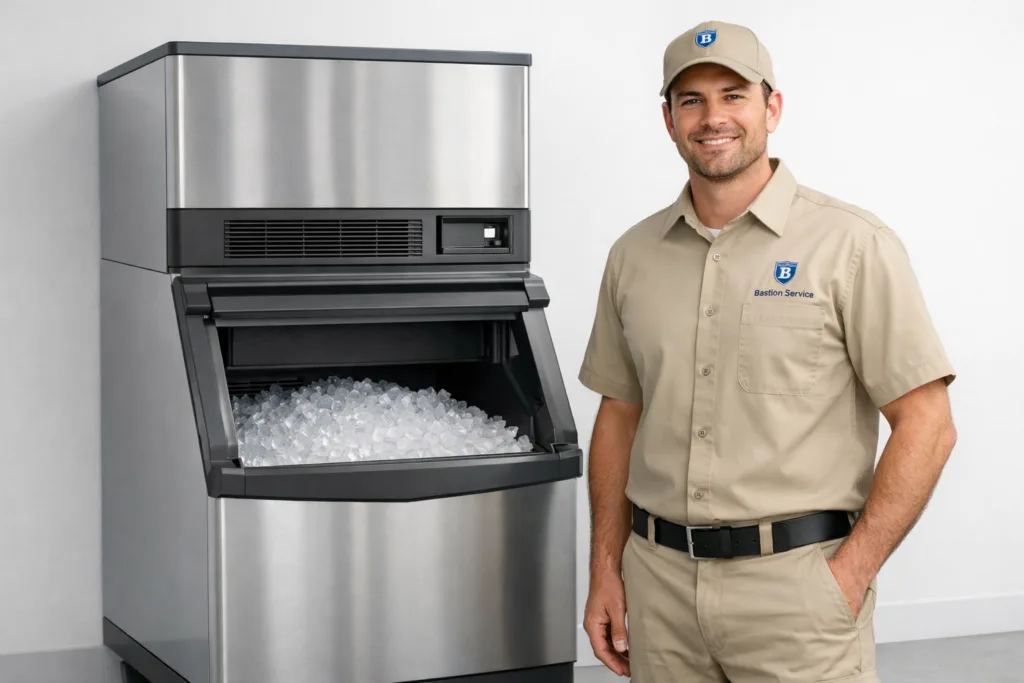




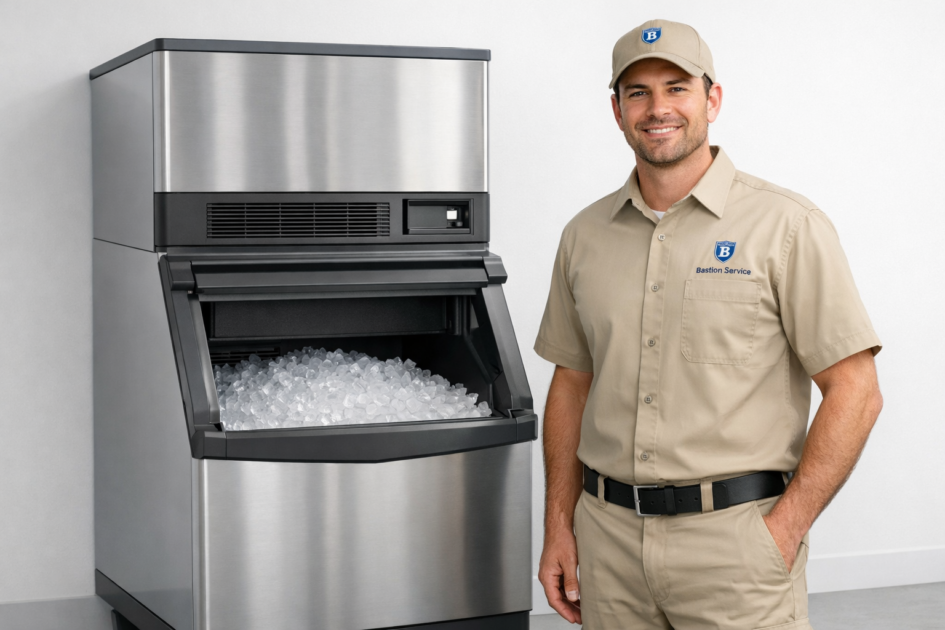
When a Scotsman ice machine starts falling behind, leaking, or stopping mid-cycle, the repair decision usually needs to happen quickly. Even a machine that still makes some ice can create service problems if production is inconsistent, cubes are poor quality, or the unit is showing signs of a water or harvest issue. Bastion Service helps businesses in Venice identify the actual fault, understand how serious it is, and schedule repair based on current downtime risk rather than guesswork.
For specific equipment paths in Venice, review Scotsman Ice Machine Repair in Venice and Commercial Appliance Repair in Venice.
For restaurants, hotels, bars, cafés, markets, and other businesses in Venice, ice machine problems can affect more than one shift at a time. A unit that slows down in the morning may be short on output by afternoon, and a machine that is repeatedly reset may be on the way to a longer outage. The most useful next step is a service call focused on the symptom pattern, operating condition, and whether continued use is likely to worsen the problem.
Scotsman Ice Machine Symptoms That Usually Mean Service Is Needed
Many equipment failures begin as partial-performance issues instead of a complete stop. That is why it helps to pay attention to changes in ice volume, cycle timing, water behavior, and cube quality before the machine becomes unreliable during peak use.
Low ice production or no ice at all
If the machine is making less ice than usual, taking too long to complete cycles, or not making ice at all, several different faults may be in play. Common causes include restricted water flow, inlet valve problems, scale buildup, sensor issues, refrigeration-related trouble, or control faults affecting freeze and harvest timing.
This is one of the most important symptoms to diagnose correctly because “not enough ice” does not point to just one repair. Some units are affected by water delivery problems, while others are struggling with internal buildup or a failing component. If production has dropped enough to affect daily operations, it is usually best to schedule service before the machine moves from reduced output to full shutdown.
Harvest problems and failed release cycles
When ice forms but does not release cleanly, drops unevenly, bridges together, or repeatedly fails during harvest, the machine may be dealing with scale, temperature-related issues, control problems, or worn parts affecting the release cycle. A harvest complaint often starts as an occasional interruption and becomes more frequent over time.
Repeated failed harvest cycles can put added stress on the machine and lead to shutdowns, inconsistent production, and ice bin shortages. If staff are noticing jams, delayed release, or incomplete drops, service should be scheduled before the machine becomes too unstable to rely on.
Leaks, overflow, and water around the unit
Water on the floor, visible dripping, overflow into the bin area, or signs that the machine is not draining properly should be taken seriously. These symptoms may be tied to drain restrictions, fill issues, internal ice buildup, cracked lines, loose connections, or operating conditions that are causing water to move where it should not.
In a business setting, leaks can create cleanup demands, slip concerns, and potential damage around the machine. If the source is not obvious, continuing to run the unit can make the problem harder to contain. A repair visit can determine whether the issue is isolated to drainage or whether the leak is part of a broader operating fault.
Scale buildup and declining ice quality
Cloudy ice, off-looking cubes, inconsistent shape, residue, or reduced clarity can signal scale accumulation, water-related issues, or internal performance problems that are affecting how the machine freezes and releases ice. On Scotsman equipment, scale can contribute to multiple complaints at once, including low production, harvest trouble, and irregular cycles.
Ice quality issues should not be dismissed as cosmetic. When output quality changes, it often means the machine is no longer operating as expected. If ice appearance or consistency has noticeably changed, service can help determine whether the main problem is buildup, water flow, or a component that is no longer functioning correctly.
Unexpected shutdowns and restart issues
A machine that stops during operation, powers back on unpredictably, or needs frequent resetting is usually indicating an underlying fault rather than a one-time interruption. Possible causes include sensor errors, overheating, water supply issues, control failures, or a component that is beginning to fail under load.
Repeated resets may get the machine running temporarily, but they rarely solve the source of the problem. If shutdowns are recurring, the risk is not just inconvenience; it is the possibility of a longer failure at a time when the business needs consistent ice production most.
Why Similar Symptoms Can Lead to Different Repairs
Ice machine problems often overlap. Two units may both have low output, but one may need correction for water flow while the other may have a harvest-related issue or internal scaling that is affecting cycle performance. The same is true for leaks, shutdowns, and poor ice quality.
That is why repair planning should be based on what the machine is actually doing in operation, not just the headline symptom. A useful service diagnosis looks at whether the fault is isolated or recurring, whether other system conditions are contributing to the complaint, and whether continued operation is creating additional risk. This helps businesses make better decisions about repair timing, short-term workarounds, and the likelihood of restoring stable performance.
When It Makes Sense to Stop Using the Machine
Some problems justify taking the unit out of service until it can be inspected. Active leaking, repeated shutdowns, failed harvest cycles, unusual sounds, severe scale, and obvious changes in water behavior can all be signs that continued use may lead to larger repairs or a more disruptive outage.
If the machine is still producing some ice, the question is not only whether it runs, but whether it is running safely and predictably enough for business use. A service visit can help determine whether temporary operation is reasonable or whether the machine should be shut down to avoid compounding the problem.
How Repair Decisions Affect Uptime
For many Venice businesses, the real issue is not just the faulty part but the effect on service flow. Low production can force staff to adjust routines. Unreliable harvest cycles can create uncertainty around inventory. Water problems can interrupt surrounding work areas. When symptoms are evaluated early, repair scheduling is usually easier and the downtime impact is easier to manage.
It also helps to address recurring “minor” problems before they combine into one larger failure. A machine that has reduced output, occasional leaking, and inconsistent ice quality is often signaling a condition that will not improve on its own. Timely service can keep a manageable problem from turning into a more disruptive shutdown.
Repair Versus Replacement for Scotsman Ice Machines
Not every issue points to replacement, and not every underperforming machine should be repaired without discussion. The right direction depends on the condition of the unit, the severity of the fault, how often the machine has needed service, and how much instability the business can absorb.
If the machine has a targeted problem and the rest of the equipment is in solid condition, repair may be the practical choice. If there is a pattern of repeat breakdowns, inconsistent production after prior work, or ongoing reliability concerns, replacement planning may deserve consideration. A proper evaluation helps separate a fixable issue from a unit that is no longer supporting operations well.
Scheduling Scotsman Ice Machine Service in Venice
Ice machine service is often most effective when it is scheduled as soon as the pattern becomes clear, not after the unit stops completely. Low production, water flow problems, leaks, shutdowns, failed harvest, and poor ice quality are all signs that the machine needs closer attention before daily operations are affected further.
If your Scotsman unit is slowing down, leaking, producing inconsistent ice, or shutting off unexpectedly, the next step is to schedule repair based on the current symptom and urgency. For businesses in Venice, a prompt inspection helps identify the fault, reduce avoidable downtime, and clarify whether the machine can be restored to reliable operation or whether a larger equipment decision needs to be made.





