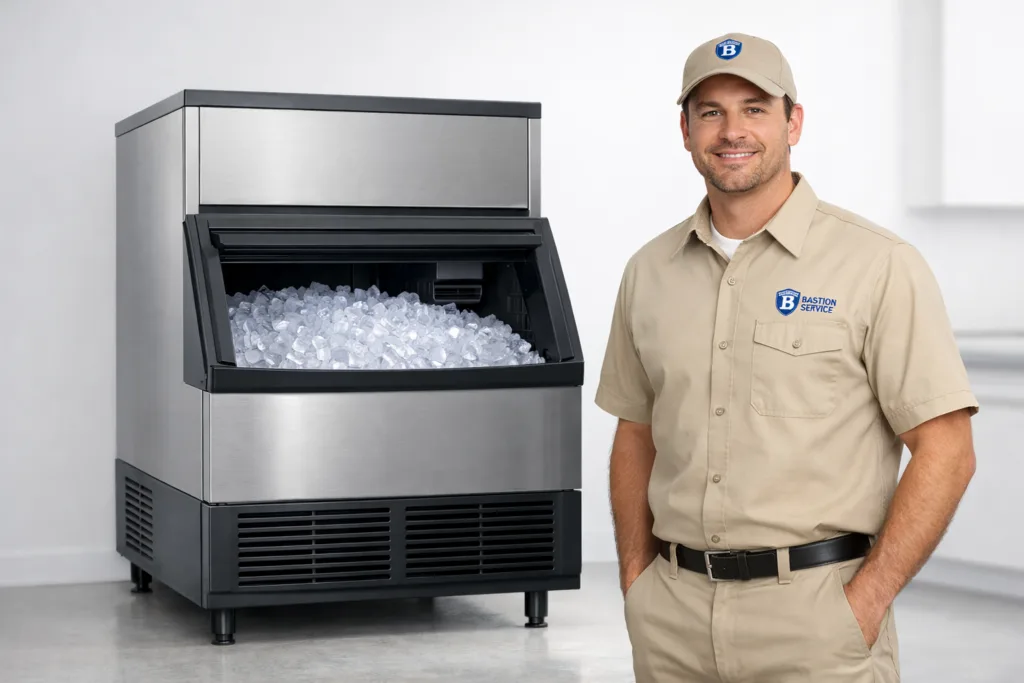




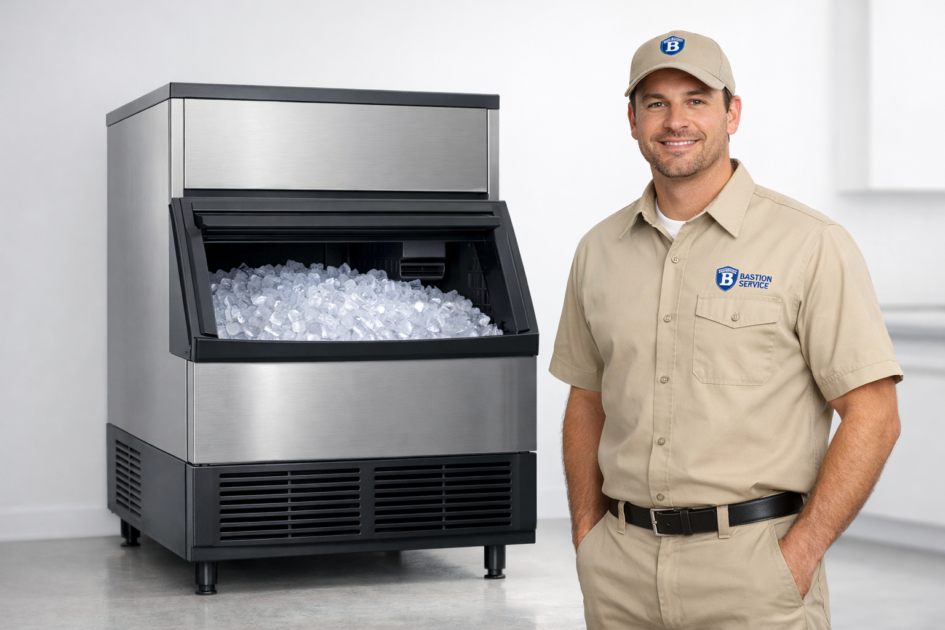
When a Scotsman ice machine starts slowing down, leaking, or shutting itself off, the issue usually affects more than ice volume alone. It can interrupt drink service, food prep, guest experience, and daily staff routines. For businesses in Torrance, the most effective next step is to have the symptom pattern evaluated so the repair decision is based on what the machine is actually doing, how urgent the failure is, and whether continued operation risks a larger outage.
For specific equipment paths in Torrance, review Scotsman Ice Machine Repair in Torrance and Commercial Appliance Repair in Torrance.
Bastion Service provides Scotsman ice machine repair support for businesses that need timely diagnosis, repair scheduling, and a realistic path back to stable production. Whether the equipment is making less ice, producing poor-quality cubes, failing during harvest, or leaving water around the unit, service should focus on the underlying cause rather than temporary workarounds.
Scotsman ice machine issues that usually need repair attention
Ice machine problems often begin with subtle changes before a full stoppage. A unit may still run, but slower cycles, inconsistent cube formation, or periodic shutdowns are often signs that a component, control, or water-related condition is moving in the wrong direction. Early service can help reduce lost time and prevent secondary damage.
Low ice production or no ice at all
If the bin is not filling as expected, recovery times are getting longer, or the machine has stopped making ice, several fault paths may be possible. Restricted water supply, scaling, sensor problems, refrigeration issues, or freeze-cycle faults can all show up as low output. Because these symptoms overlap, the repair decision should come from testing and inspection rather than guessing at one failed part.
Businesses often notice this problem first during higher-demand periods, when the machine cannot keep up with normal use. If staff are rationing ice, rotating in bagged ice, or restarting the machine to get through the day, it is usually time to schedule service before the unit becomes completely unavailable.
Harvest cycle problems
A Scotsman machine that forms ice but does not release it correctly can develop repeated interruptions, partial slabs, clumping, or abnormal cycle timing. Harvest problems may be tied to scale buildup, uneven water distribution, control issues, or temperature-related faults. What matters from a repair standpoint is confirming why the machine is not moving cleanly from freeze to release.
When harvest issues continue, the machine may cycle inefficiently, stop unexpectedly, or produce inconsistent ice sizes. That can make daily operation unpredictable even if the unit has not fully failed.
Water leaks and drainage concerns
Water on the floor near an ice machine should be treated as an equipment problem, not just a housekeeping issue. Leaks can come from blocked drains, overflow conditions, loose fittings, cracked components, or internal operating problems that cause water to move where it should not. In a business setting, that can create slip hazards, cleanup interruptions, and concern about surrounding equipment or finishes.
Some leaks appear only during certain parts of the cycle, which is why service is helpful even when the machine is not visibly leaking all day. Intermittent leaking can still point to a developing failure.
Scale buildup and restricted water flow
Scale can interfere with normal water movement, ice formation, harvest release, and overall machine consistency. Businesses may notice reduced output, cloudy cubes, irregular shape, longer cycles, or recurring shutdown behavior. In some cases, surface cleaning helps only temporarily because mineral buildup has already affected how the machine operates internally.
When scale is part of the symptom pattern, repair may involve more than cleaning alone. The machine may also need evaluation of affected components, water path restrictions, and whether repeated buildup has contributed to other failures.
Poor ice quality
Cloudy, soft, thin, hollow, misshapen, or uneven ice is often a sign that something in the machine is no longer performing correctly. Water delivery, freeze timing, temperature control, and internal condition can all affect cube quality. If the machine is still producing some ice, it may be tempting to wait, but poor-quality ice is often an early warning that the unit is drifting toward a larger repair issue.
For businesses that rely on consistent presentation and sanitary operation, ice quality concerns should be evaluated promptly rather than treated as a cosmetic issue.
Why symptom-based diagnosis matters
Many Scotsman ice machine failures look similar from the outside. A shutdown could be caused by a control problem, a water issue, scaling, or a cooling-related fault. Low production might come from restricted flow, weak freeze performance, or a cycle problem that is preventing full output. Without proper diagnosis, it is easy to replace the wrong part or miss the actual source of the downtime.
A repair-focused evaluation helps answer the questions businesses in Torrance actually need answered: whether the machine can stay in service temporarily, how quickly repair should be scheduled, what the likely scope of work is, and whether the condition suggests a straightforward repair or a more serious equipment decision.
Signs the machine should not keep running
Some operating conditions should not be pushed through normal use. If the machine is leaking steadily, shutting down repeatedly, making unusually loud noises, failing to complete cycles, or producing ice that is clearly unusable, continued operation can make the situation worse. Repeated resets and manual intervention may keep it going briefly, but they do not solve the cause of the failure.
- Water repeatedly appears around or under the unit
- Ice production has dropped sharply in a short period
- The machine starts and stops without completing normal cycles
- Harvest failures are becoming frequent
- Ice quality has changed noticeably and does not recover
- Staff are relying on resets to keep the unit running
In these situations, service is not just about restoring production. It is also about preventing avoidable wear, lost time, and disruption during daily operations.
What businesses in Torrance should consider when scheduling repair
Ice machine service is often an operational decision as much as a mechanical one. A business may need to know if the unit can hold until the scheduled visit, whether the symptoms point to a recurring underlying issue, and whether repair is likely to return the machine to stable performance. That is especially important when the equipment supports continuous customer service or back-of-house workflow.
During repair planning, it helps to look at the full pattern instead of one isolated symptom. A machine with low production, intermittent leaking, and poor cube quality may have more than one issue contributing to the downtime. Reviewing the full operating behavior gives a more useful repair direction than treating each symptom separately.
When repair versus replacement becomes part of the conversation
Not every underperforming ice machine should be replaced, and not every older unit should automatically be repaired. If a Scotsman machine has ongoing production trouble, repeated shutdown history, major scale-related deterioration, or multiple failing systems, it may make sense to compare repair scope with long-term reliability expectations.
That comparison is most useful after the machine has been evaluated. Once the active fault, general condition, and likely repair path are clear, a business can make a better decision about whether to restore the unit now or start planning for replacement on a more controlled timeline.
Service steps when your Scotsman machine is underperforming
If your equipment is making less ice, leaking, struggling through harvest, showing signs of scale buildup, or producing inconsistent ice, the next step is to schedule service based on the current symptoms rather than waiting for a full shutdown. A targeted visit can help determine what is causing the problem, whether the machine should stay in operation, and what repair path best supports uptime.
For businesses in Torrance, the goal is not just to get the unit running again for the moment. It is to restore stable ice production, address water flow or shutdown issues at the source, and reduce the chance that a manageable repair turns into a longer interruption later.