
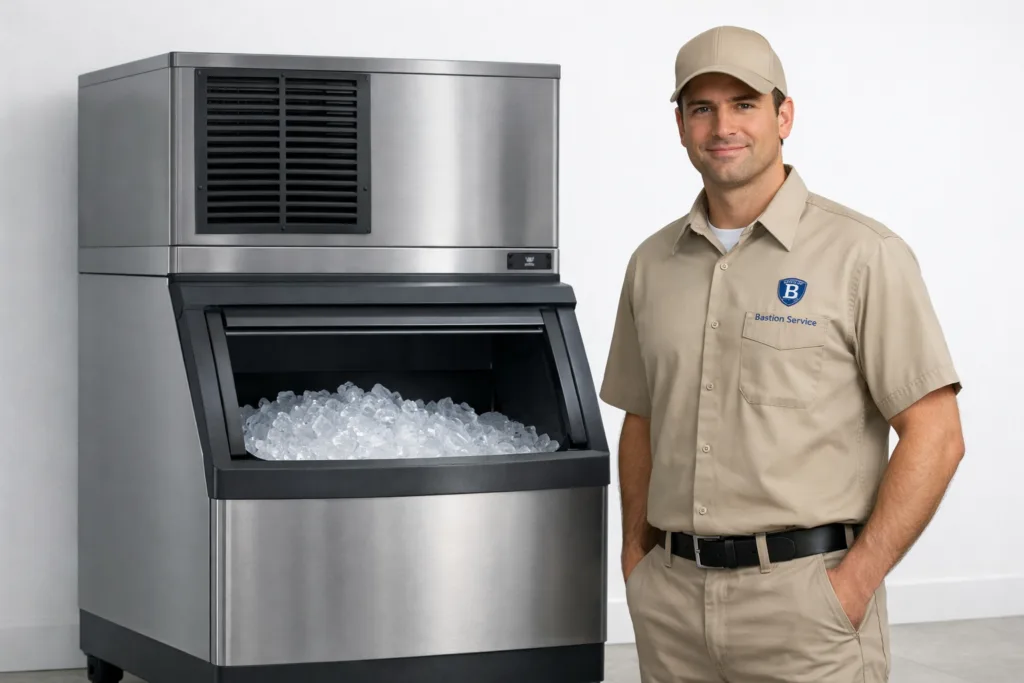




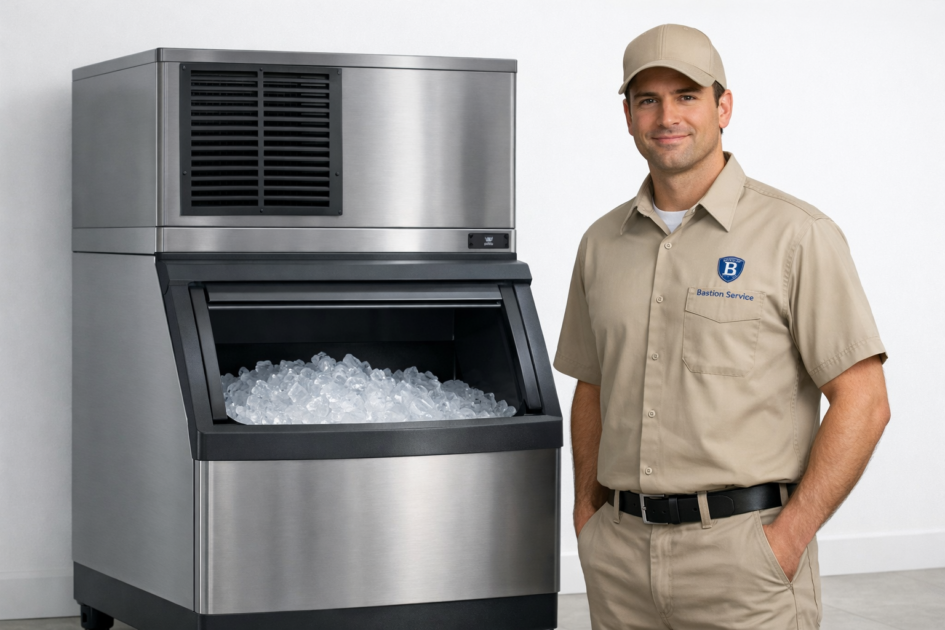
Ice machine trouble can disrupt beverage service, prep routines, and day-to-day workflow faster than many operators expect. When a Scotsman unit starts falling behind, leaking, freezing up, or stopping mid-cycle, service is often most effective when the symptom pattern is evaluated before staff keep resetting the machine or trying to work around the problem. In Pico-Robertson, timely repair scheduling helps businesses limit downtime, protect ice quality, and avoid a smaller issue turning into a broader equipment failure.
For specific equipment paths in Pico-Robertson, review Scotsman Ice Machine Repair in Pico-Robertson and Commercial Appliance Repair in Pico-Robertson.
Bastion Service works with businesses in Pico-Robertson to identify what is actually causing the performance drop, whether that points to water supply restrictions, mineral scale, drainage trouble, sensor or control problems, refrigeration-related faults, or harvest-cycle issues. That matters because the same visible symptom can come from very different causes, and the repair decision should match the machine’s condition rather than guesswork.
Scotsman ice machine problems that commonly lead to service
Most calls start with a few clear signs: the machine is producing less ice, the ice looks wrong, water is showing up where it should not, or the unit is shutting itself down. Those symptoms may seem straightforward, but in practice they often overlap. A machine with low production may also have scale buildup. A leaking machine may also have a drain or freeze-cycle issue. A unit that stops during operation may be protecting itself from another fault.
Low ice production or no ice at all
If the bin is not filling as expected, or production has dropped enough to affect service, the issue may involve reduced water flow, a partially restricted inlet, scale on internal components, sensor trouble, poor heat transfer, or a malfunction during freeze or harvest. Some machines still make ice during early stages of failure, but output becomes too slow or inconsistent to support normal demand.
Low production is one of the most important symptoms to address early because staff often compensate by running the machine longer, emptying the bin more aggressively, or restarting the equipment repeatedly. That does not solve the root cause and can make the operating pattern harder to evaluate later.
Ice quality problems
Cloudy ice, soft ice, small cubes, incomplete cubes, irregular shape, or wet ice often point to conditions that affect the full cycle rather than appearance alone. Water quality, scale accumulation, fill timing issues, freezing imbalance, and worn components can all change how ice forms and releases.
For businesses, poor ice quality is not just a presentation issue. It can signal reduced efficiency, sanitation concerns, and a machine that is already drifting away from normal operating conditions. If the ice has changed noticeably, it is usually worth having the machine checked before output drops further or a shutdown follows.
Leaks, overflow, and drain-related issues
Water around the machine can come from more than one source. Common possibilities include blocked or slow drains, loose fittings, overflow during fill, pump problems, and ice formation where it should not occur. In some cases, the leak appears intermittent, which can make it seem minor even when the underlying cause is not.
Leaks should be treated as an operational issue, not just a housekeeping problem. Water on the floor can create safety concerns, damage surrounding areas, and contribute to internal wear if the machine continues running in a compromised state.
Harvest problems and freeze-ups
A Scotsman machine that freezes water but does not release the batch properly, builds up excess ice internally, or gets stuck between stages may be having trouble during harvest. Mineral deposits, sensor or control faults, component wear, and system imbalance can all interfere with the release cycle.
Freeze-ups are especially important because they often trigger a chain of symptoms: reduced output, strange cycle times, shutdowns, and eventual no-ice conditions. If the machine is visibly icing where it should not, continued operation can expand the repair scope.
Unexpected shutdowns or erratic cycling
When the machine stops during operation, restarts unpredictably, or appears to run through unusual cycle lengths, the problem may involve controls, safety responses, water-related faults, refrigeration issues, or a condition that the machine is detecting and reacting to. Repeated shutdowns usually mean the unit is not operating within normal parameters, even if it temporarily starts again.
This is one of the clearest situations where a repair visit helps protect uptime. A machine that shuts down without warning may still come back online for a while, but businesses generally should not assume the issue has resolved itself.
Why diagnosis matters before parts are replaced
Ice machines often show similar symptoms for different reasons. For example, low production could be tied to scale, water feed trouble, control response, condenser performance, or a harvest issue. Replacing one visible part without confirming the full cause can leave the main fault unresolved.
A proper service diagnosis helps answer practical questions such as:
- Is the issue primarily related to water flow, drainage, scale, controls, or cooling performance?
- Has the problem reached the point where operation should stop until repairs are made?
- Is the machine dealing with one isolated fault or several problems at the same time?
- Would corrective cleaning and targeted repair likely restore performance, or is the machine showing broader wear?
For businesses in Pico-Robertson, those answers matter because the goal is not only to identify what failed, but to decide how to restore reliable ice production with the least disruption to operations.
Symptoms that should not be ignored
Some issues leave a short scheduling window. Others should be addressed quickly because continued use can lead to additional damage or a full outage. Service should move higher on the priority list when the machine is:
- Producing far less ice than normal during active business days
- Making unusable, misshapen, or poor-quality ice
- Leaking water consistently or overflowing
- Freezing up inside the cabinet or around internal components
- Failing to harvest reliably
- Shutting down repeatedly or requiring resets to run
These symptoms often indicate more than routine wear. Waiting too long can turn a manageable repair into a more disruptive equipment problem, especially when the unit supports daily customer service.
Scale buildup and water flow issues
Scale is a frequent contributor to Scotsman ice machine performance problems. Mineral accumulation can interfere with water movement, sensor accuracy, freeze consistency, harvest release, and overall efficiency. A machine may still run while scale is building up, but it often does so with declining output and increasingly inconsistent cycles.
Water flow problems can look similar. Restricted supply, partial blockage, fill issues, and drain limitations can all lead to weak production, irregular cube formation, or unexpected shutdowns. Because scale and water flow conditions often overlap, they are best evaluated together rather than treated as separate assumptions.
Repair or replacement: what businesses usually consider
Not every service call points toward replacement. Many Scotsman issues are repairable when the machine is otherwise in solid condition and the fault is isolated. On the other hand, if the unit has repeated service history, multiple active problems, or signs of wider deterioration, it may make sense to compare the repair scope against the machine’s age and reliability.
Businesses often weigh:
- Current production needs
- Frequency of recent breakdowns
- Condition of major components
- Whether the problem is isolated or system-wide
- How much downtime the operation can realistically absorb
A good diagnosis helps separate a fixable issue from a machine that is becoming harder to rely on.
Scheduling service in Pico-Robertson
If your ice machine is affecting service quality, slowing production, or creating water and sanitation concerns, early scheduling is usually the most practical next step. Businesses in Pico-Robertson are often better served by addressing low output, leaks, harvest failures, shutdowns, and ice quality changes before the machine moves from reduced performance to complete stoppage. When the equipment supports daily operations, repair service is not just about fixing a symptom. It is about restoring steady production, limiting downtime, and making an informed decision about what the machine needs next.


