
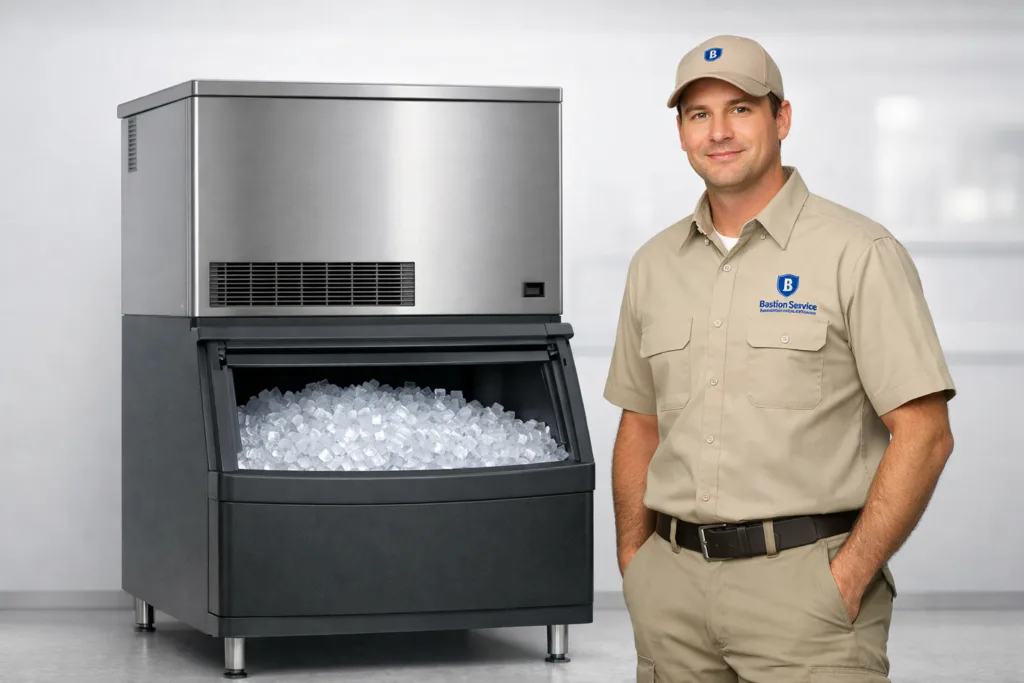




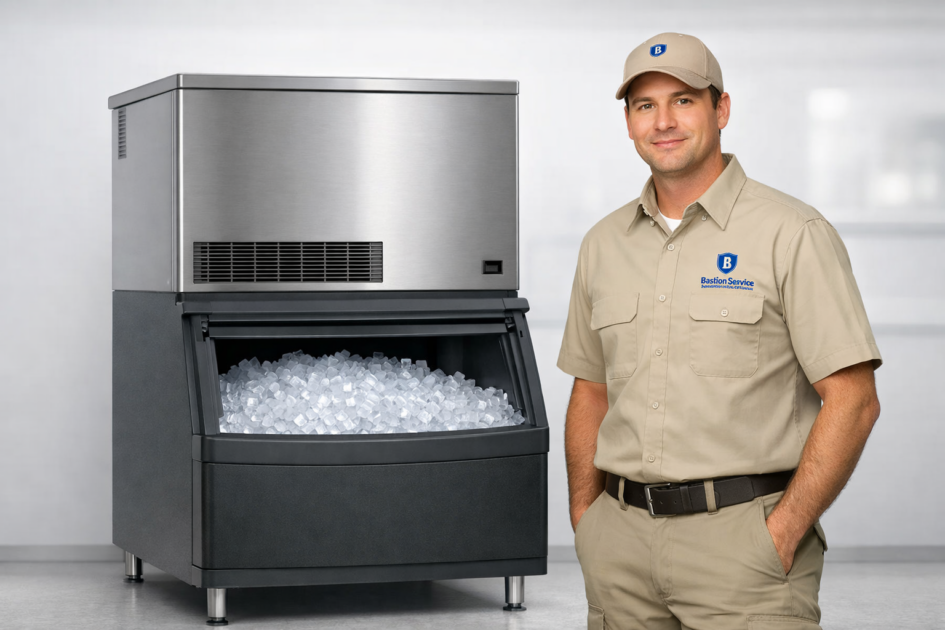
When a Scotsman ice machine starts falling behind on output, leaking, or stopping mid-cycle, the priority is getting the problem evaluated in a way that protects daily operations. For businesses in Palos Verdes Estates, delays can turn a manageable repair into a longer interruption that affects beverage service, food holding, prep flow, and staff routines. Bastion Service provides Scotsman ice machine repair with a service-first approach focused on symptom patterns, likely failure points, repair timing, and the next step that makes the most sense for the equipment.
For specific equipment paths in Palos Verdes Estates, review Scotsman Ice Machine Repair in Palos Verdes Estates and Commercial Appliance Repair in Palos Verdes Estates.
Scotsman ice machine issues that usually call for service
Many ice machine problems begin with one visible symptom, but the actual cause may be somewhere else in the system. Low production can be tied to water supply restrictions, scale buildup, weak cooling performance, sensor problems, or control issues. Leaks may come from drains, valves, internal hoses, or ice formation where it should not be. A machine that shuts down during freeze or harvest may be reacting to safety conditions, timing faults, or a system that can no longer complete a normal cycle.
That is why symptom-based service matters. Two machines can show the same complaint and need very different repairs. For businesses in Palos Verdes Estates, the goal is not just to identify what is wrong, but to decide whether the unit can stay in limited use, whether repair should be scheduled immediately, or whether continued operation is likely to create more downtime.
Low ice production, slow recovery, or no ice at all
What operators usually notice
A Scotsman unit with production problems may still run, but the bin fills too slowly, never reaches normal volume, or runs out well before demand is over. In other cases, the machine powers on but makes no ice at all. Slow cycle times, partial cube formation, and inconsistent batch sizes are also common warning signs.
What can cause it
These problems can point to restricted water flow, scaled components, inlet valve issues, temperature-related stress, control faults, or refrigeration problems that affect freeze performance. If the machine is making some ice but not enough, it is often already operating outside normal conditions. If it has stopped making ice completely, the issue may involve shutoff conditions, failed components, or a system fault that prevents the cycle from starting or finishing.
When repair should move up the schedule
If demand is already outpacing production, waiting usually makes the situation harder to manage. A business may try to work around the issue for a day or two, but inconsistent output often becomes a full service problem at the least convenient time. Early repair is usually the better choice when production is dropping steadily, cycles are getting longer, or the machine is no longer dependable during peak use.
Water flow problems, leaks, and drain-related trouble
Signs the water system is not working normally
Water-related issues often show up as slow fill, irregular cube shape, puddling around the unit, internal dripping, or repeated stops tied to fill or drain behavior. Some machines may appear to start normally but fail as water movement becomes restricted or uneven during operation.
Likely problem areas
Common causes include clogged or partially blocked lines, valve failure, drain restrictions, pump problems, frozen sections, or mineral buildup affecting normal flow. A leak does not always mean the source is easy to spot. Water may travel from one internal point and appear elsewhere, which is one reason these calls usually benefit from a full inspection rather than a quick guess.
Why water issues affect more than the ice machine
Leaks and drainage problems can create sanitation concerns, interfere with nearby equipment, and force a machine out of use before output fully stops. Even when the unit still makes ice, uncontrolled water movement can signal a larger issue that will continue to worsen. Service helps determine whether the repair is limited to a line, valve, or drain path, or whether internal components have been affected by longer-term buildup or operating stress.
Harvest problems, slab release issues, and repeated shutdowns
What harvest failure looks like
A Scotsman ice machine may freeze normally but fail when it is time to release the ice. Operators may notice ice hanging up, incomplete drops, loud cycle changes, or a machine that enters shutdown after making part of a batch. In some cases, the machine restarts and repeats the same failure pattern over and over.
What these symptoms usually suggest
Harvest issues can be connected to scale, sensor faults, timing errors, water imbalance, or components that are no longer supporting proper cycle transition. These problems often start intermittently, which can make them easy to overlook. But once harvest becomes unreliable, overall production usually falls quickly because the machine is spending time and energy without delivering usable ice.
Why this type of issue should not be ignored
A machine that cannot complete harvest reliably is often close to a bigger interruption. It may keep running, but the useful output drops while wear on the system continues. For businesses in Palos Verdes Estates, this is usually the point where repair scheduling becomes urgent rather than optional.
Scale buildup, poor ice quality, and sanitation-related concerns
Symptoms that point to buildup or contamination issues
Cloudy ice, unusual odor, poor taste, thin cubes, soft ice, and visible mineral deposits are all signs that the machine may need more than routine attention. Scale can interfere with water distribution, sensing, freezing consistency, and harvest performance. What looks like a quality issue on the surface may also be contributing to production loss and repeated errors.
How buildup affects reliability
As scale accumulates, the machine has to work harder to do the same job. Water may not move correctly, sensors may not read normal conditions, and ice formation may become uneven. Over time, this can lead to slow output, incomplete cycles, nuisance shutdowns, and avoidable parts failure.
When to stop using the machine
If ice quality is clearly off, internal buildup is heavy, or the unit is producing ice that does not look or smell right, continued use may not be worth the risk. Service can determine whether the machine needs corrective cleaning, parts replacement, system adjustment, or a combination of steps to restore proper performance.
How to decide between continued use, repair, and replacement
Not every problem requires the same response. A machine with reduced production but otherwise stable operation may be able to remain in limited use until a scheduled repair visit. A unit with active leaking, repeated shutdowns, harvest failure, or obvious ice quality concerns is more likely to need immediate attention and may need to be taken offline to avoid added damage or disruption.
Replacement becomes part of the conversation when failures are recurring, multiple systems are involved, or the machine’s condition no longer supports cost-effective repair. The key is making that decision from actual operating symptoms and inspection findings, not from guesswork after several temporary workarounds.
What businesses in Palos Verdes Estates should watch for before the next failure
- Ice output that drops even though demand and usage patterns have not changed
- Longer freeze times or slow recovery after the bin is depleted
- Water pooling near the machine or unexplained internal dripping
- Ice that is cloudy, soft, misshapen, or inconsistent from batch to batch
- Error shutdowns, stop-and-start operation, or incomplete harvest cycles
- Visible scale buildup or signs that water is not moving normally through the unit
If your Scotsman ice machine in Palos Verdes Estates is leaking, producing too little ice, shutting down, struggling through harvest, or showing clear ice quality problems, the smartest next step is to schedule service before the issue spreads further. A timely repair visit helps determine whether the machine should stay in use, what correction is needed, and how to reduce downtime before the next service interruption affects the business.


