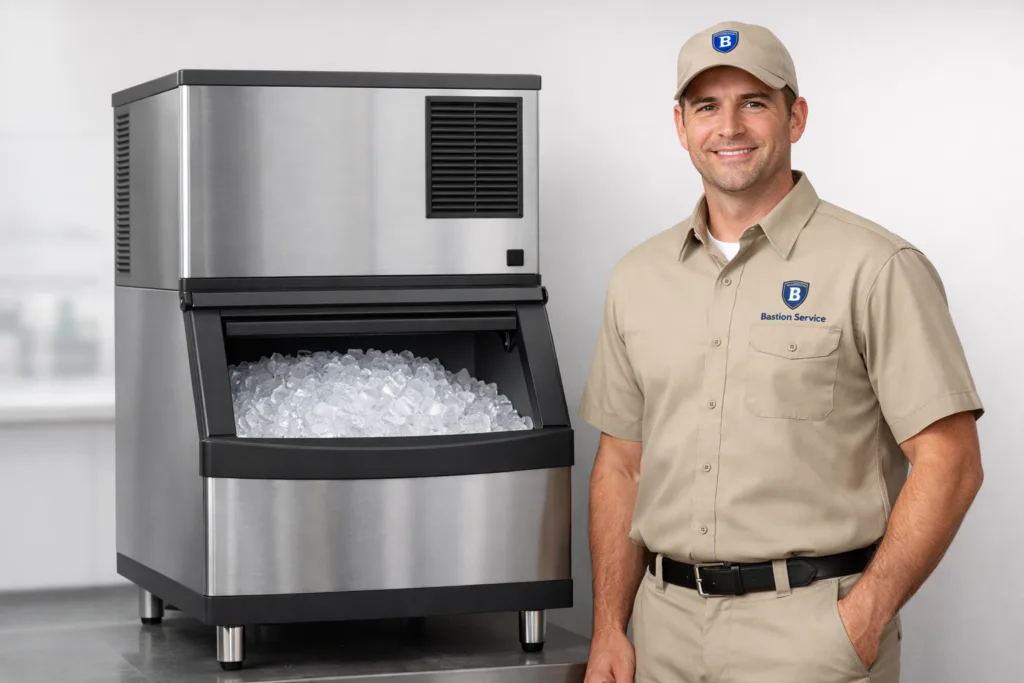




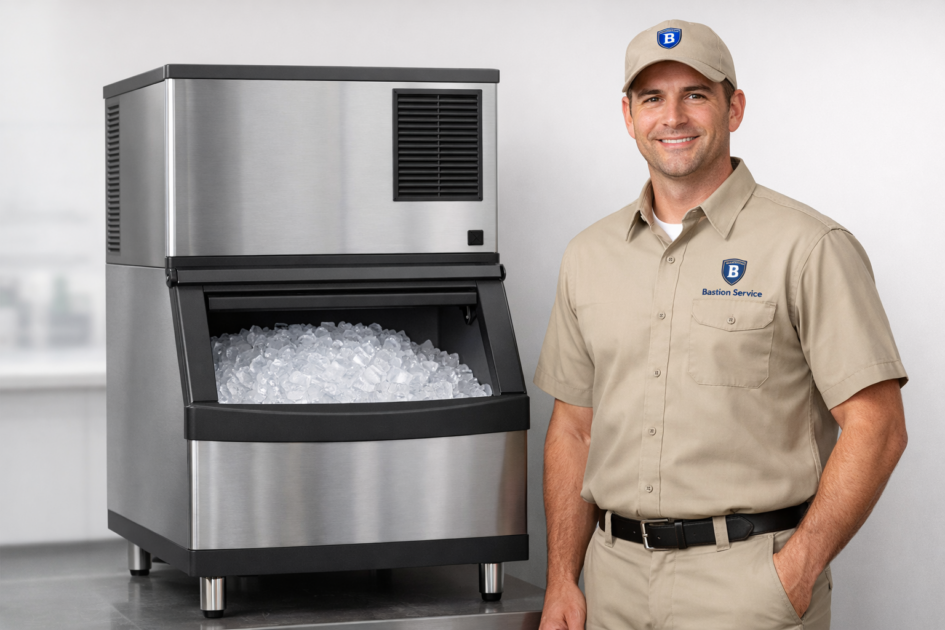
Ice machine trouble rarely stays isolated for long. When a Scotsman unit starts slowing down, leaking, missing harvest cycles, or stopping during production, the issue can quickly affect drink service, food prep support, guest experience, and staff workflow. For businesses in Marina del Rey, the most useful next step is service that identifies the actual fault, explains the repair path, and helps determine how urgently the machine needs attention.
For specific equipment paths in Marina del Rey, review Scotsman Ice Machine Repair in Marina del Rey and Commercial Appliance Repair in Marina del Rey.
Bastion Service provides Scotsman ice machine repair for businesses that need more than a guess about why output has dropped or why the unit has become unreliable. Whether the concern is water flow, scale buildup, recurring shutdowns, or inconsistent ice quality, service should focus on the symptom pattern, the condition of the machine, and the downtime risk tied to continued use.
Common Scotsman Ice Machine Symptoms That Need Repair
Many ice machine problems begin with subtle changes before they turn into a full stop. A machine may still run, but take longer to complete a cycle, make less ice than expected, or produce ice that looks different than normal. Early symptoms matter because they often point to issues that can spread across water, control, drainage, freeze, or harvest functions.
Low Ice Production or No Ice
One of the most common service calls is a machine that is not making enough ice to support daily demand. In some cases, output drops slowly over time. In others, production falls off suddenly or stops altogether. Businesses may notice bins staying half full, longer wait times between batches, or the need to supplement with purchased ice.
This symptom can be tied to restricted water flow, scale accumulation, freeze-cycle issues, sensing problems, poor heat transfer, or failing components that prevent the machine from completing normal production. Because several different faults can create the same result, low production is usually best handled with diagnosis rather than trial-and-error troubleshooting.
Leaks, Overflow, and Drain Problems
Water around the machine is a service issue, not something to monitor indefinitely. A Scotsman unit may leak from water supply components, internal lines, drainage problems, overflow conditions, or cycle faults that cause water to move incorrectly through the system. Even if the machine is still making ice, active leaking can create safety concerns and interrupt nearby work areas.
If water appears during operation, after shutoff, or only at certain points in the cycle, that pattern can help narrow the source. Repeated leaking often signals a problem that will continue until the affected part or system is corrected.
Harvest Issues and Incomplete Cycles
A machine that freezes but does not release ice properly may be dealing with a harvest problem. Staff may hear the machine running but find little ice in the bin, or they may notice long pauses, partial releases, or repeated attempts to complete the same cycle. These issues often reduce output without making the machine look fully inoperative.
Harvest-related faults matter because repeated failed cycles increase wear and make the unit less predictable during peak use. If the machine seems to stall between phases or behaves differently from batch to batch, repair should be scheduled before the problem turns into a complete production failure.
Scale Buildup and Changing Ice Quality
Changes in ice appearance often point to deeper performance issues. Cloudy ice, incomplete cube formation, unusual size variation, residue, or visible mineral buildup can all signal scale-related problems. Over time, buildup can interfere with water movement, freeze timing, sensors, and overall production efficiency.
Not every ice-quality complaint is purely a cleaning issue. When poor-looking ice appears alongside slower output, longer cycles, or shutoffs, the machine may need both corrective service and maintenance attention. That distinction matters for businesses trying to avoid repeat service calls for the same underlying problem.
Shutdowns and Intermittent Operation
If the machine stops unexpectedly, needs frequent restarting, or runs inconsistently throughout the day, the problem should be treated as urgent. Intermittent operation is especially disruptive because the equipment can appear to recover temporarily while remaining unreliable. That can leave a business unprepared when the machine fails at a busier point in service.
Unexpected shutdowns can be related to controls, sensors, overheating conditions, electrical issues, or protective stops triggered by another unresolved fault. When a machine is no longer dependable, service is about restoring stable operation, not just getting it to start again.
Why Symptom Patterns Matter
Ice machines often show combinations of problems rather than a single clean failure. Low production with cloudy ice suggests a different repair path than low production with leaking. A unit that shuts down after longer run times may point in a different direction than one that stops during harvest. Looking at the full symptom pattern helps determine whether the issue is isolated or part of a broader condition problem.
That is why businesses in Marina del Rey benefit from repair service that evaluates what the machine is doing across the full cycle instead of focusing on only the most obvious complaint. The visible symptom is not always the root cause.
Signs the Machine Should Not Stay in Regular Use
Some equipment problems can wait for a scheduled visit. Others should be addressed before the machine continues supporting normal demand. Ongoing use may worsen the condition when any of the following are happening:
- Water is actively leaking or pooling around the unit
- Ice production has dropped far below normal demand
- The machine is repeatedly shutting down or requiring resets
- Harvest cycles are failing or stalling
- Ice quality has changed along with other performance problems
- Staff are manually compensating for unreliable operation every day
When employees have to monitor the machine constantly, restart it between shifts, or work around chronic underproduction, the equipment is already affecting operations in a way that usually justifies prompt repair.
What a Repair Visit Should Help You Decide
A service call is not only about replacing a failed part. For business-use ice equipment, it should also answer practical operating questions. That includes how serious the current fault is, whether the machine can remain in use while awaiting repair, and whether the overall condition of the unit supports continued investment.
A useful repair assessment may help clarify:
- Whether the problem is limited to one serviceable component or tied to multiple systems
- How the current issue affects production capacity and reliability
- Whether delayed service is likely to increase downtime or repair scope
- Whether recurring issues suggest more extensive wear inside the machine
When Repair Versus Replacement Enters the Conversation
Not every poorly performing machine needs to be replaced. Some Scotsman units have a narrow fault that can be corrected without a larger equipment decision. Others may be showing a pattern of age, repeated service history, heavy scale impact, or declining performance that makes replacement worth discussing.
The key is to base that decision on diagnosed condition and operating impact. A machine with one severe symptom may still be repairable, while a machine with several moderate symptoms may be approaching the point where repair becomes less practical. For businesses in Marina del Rey, the most cost-effective path is usually the one supported by what the machine is actually doing now, not by assumption.
Scheduling Service for a Scotsman Ice Machine in Marina del Rey
If your machine is making less ice, leaking, stopping mid-cycle, showing harvest problems, or producing poor-quality ice, scheduling repair is the next practical step. Prompt service helps limit disruption, reduce the chance of a broader failure, and give your business a clearer decision on continued use, repair timing, and equipment condition before the problem affects even more of the workday.