
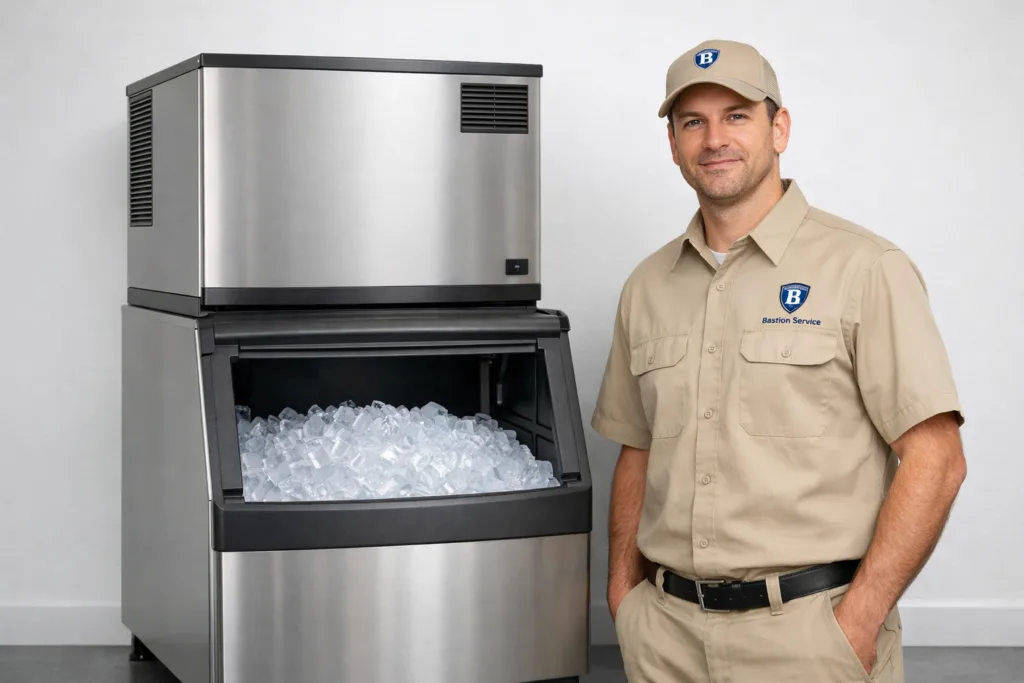






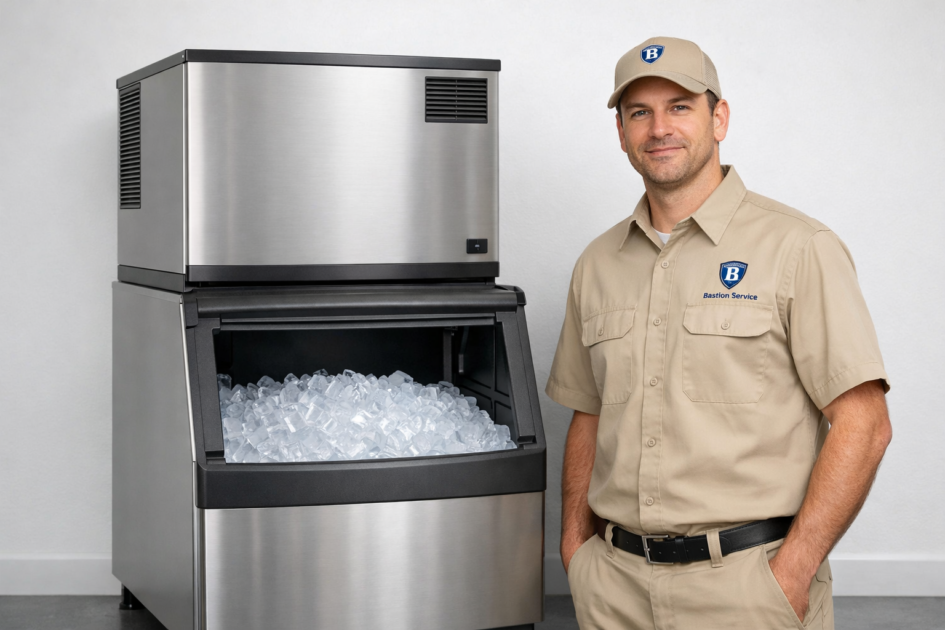
Ice machine problems rarely stay isolated for long. When production drops, water starts leaking, or the unit begins stopping between cycles, staff often end up compensating with extra handling, emergency ice purchases, or workarounds that disrupt normal service. Bastion Service helps Manhattan Beach businesses evaluate Scotsman ice machine issues based on the actual symptom pattern, the effect on daily operations, and the most sensible repair scheduling path.
For specific equipment paths in Manhattan Beach, review Scotsman Ice Machine Repair in Manhattan Beach and Commercial Appliance Repair in Manhattan Beach.
Service is most useful when it answers practical questions quickly: what is failing, whether the machine can remain in use for the short term, and how likely the problem is to spread into a full outage. For businesses that depend on steady ice availability, early repair decisions can help limit downtime, avoid sanitation concerns, and keep the problem from turning into a larger interruption.
Common Scotsman Ice Machine Symptoms That Point to Repair Needs
A Scotsman unit may show one obvious symptom while several systems are involved in the root cause. Water supply, drain flow, scale accumulation, controls, sensors, and refrigeration-related performance can all affect output and cycle consistency. Looking at the full symptom picture helps determine whether the problem is isolated or part of a broader decline in machine performance.
Low ice production or no ice
If the bin is not filling at the normal rate, the issue may be tied to restricted water flow, inlet valve trouble, scaling inside the machine, temperature-related stress, condenser problems, or a control fault. In some cases the machine still runs, but does so inefficiently and never catches up with demand. In other cases it starts a cycle and then stops before normal ice production can continue.
This symptom matters because underproduction is often treated as a temporary inconvenience when it may actually be an early warning sign of a more serious failure. If staff members are frequently resetting the machine or noticing long gaps between cycles, repair service is usually the better next step than continued trial-and-error operation.
Harvest issues and incomplete cycles
When ice forms but does not release properly, businesses may notice longer cycle times, partial sheets, bridging, or repeated attempts to finish the same cycle. Harvest issues can be connected to scale on internal surfaces, sensor problems, timing faults, water system issues, or conditions that interfere with normal release.
These problems often reduce output even when the machine appears to be running. A unit stuck in inefficient or incomplete cycles can fall behind slowly enough that the true problem is missed until service flow is affected. If the machine is producing some ice but not doing so consistently, that is often the point to schedule repair before the unit stops completely.
Leaks, overflow, or water where it should not be
Water on the floor, moisture inside the cabinet, or recurring overflow around the machine should be treated as more than a nuisance. Drain restrictions, loose connections, line damage, internal overflow conditions, and component failures can all lead to visible leakage. In a business setting, that can create cleanup demands, safety concerns, and avoidable disruption around the equipment.
If leakage returns after basic cleaning or appears during normal operation, the machine should be evaluated rather than left in service without a diagnosis. Water problems are also important because they may signal an issue that is affecting cycle performance at the same time.
Scale buildup and declining ice quality
Cloudy ice, thin cubes, unusual taste, odd shape, or visible mineral accumulation inside the machine can point to more than a cosmetic issue. Scale buildup can interfere with water movement, sensing, heat transfer, and normal harvest behavior. That means ice quality concerns often overlap with production problems and shutdown complaints.
Service helps separate maintenance-related buildup from actual part failure or system trouble. If the machine is producing inconsistent ice that no longer meets normal use standards, it is worth addressing before quality problems turn into output loss or repeated lockouts.
Unexpected shutdowns, lockouts, or frequent resets
A Scotsman ice machine that stops mid-cycle, enters an error state, or only runs again after being reset is usually signaling a condition that needs attention. The cause may involve controls, sensors, overheating, water interruption, or another fault that the machine is designed to detect. Repeated resets may bring the unit back temporarily, but they do not resolve the reason it stopped.
For businesses in Manhattan Beach, intermittent shutdowns are often the point where repair becomes urgent because reliability is already slipping. Even if the machine still makes ice at times, inconsistent operation can make planning difficult and leave staff without a stable supply when demand increases.
What these symptoms often mean for business operations
Ice machine problems affect more than the machine itself. Low production can force changes in storage and service routines. Leaks can create hazards and cleanup delays. Poor ice quality can lead to product concerns. Repeated shutdowns make it hard to predict whether the unit will support normal workflow through the day.
That is why repair decisions should be tied to operational impact as well as the mechanical issue. A machine that still runs sometimes may still be costing time, labor, and consistency. When the unit is affecting daily operations, a service visit helps determine whether limited use is realistic or whether taking it offline is the safer choice.
Why diagnosis matters before repair planning
Two machines can appear to have the same problem while needing very different repairs. One underproducing unit may only have a water flow issue, while another with the same symptom may have scale buildup, sensor trouble, and cycle performance problems happening together. Proper diagnosis helps identify the actual cause instead of guessing based on the surface symptom alone.
That matters for scheduling, parts planning, and risk management. It helps businesses understand whether the repair is likely to be straightforward, whether the machine may worsen if left running, and whether the issue should be treated as immediate downtime prevention rather than routine service. It also helps avoid replacing parts that do not address the root problem.
Signs continued use may make the problem worse
Some machines can remain in limited operation until service is arranged, but others should be evaluated quickly because ongoing use increases the chance of added damage or larger disruption. Warning signs include:
- water leaking onto surrounding surfaces
- repeated shutdowns or lockouts during normal use
- harvest failures that keep repeating through multiple cycles
- output that no longer matches routine demand
- ice that is visibly poor in quality or inconsistent in shape
- staff needing to reset the machine to keep it running
When these symptoms are present, delaying service can lead to more stress on pumps, valves, controls, sensors, or other key components. In many cases, scheduling repair earlier is the less disruptive option compared with waiting for a complete loss of ice production.
Repair or replacement: how businesses usually decide
Not every service call leads to the same recommendation. Repair is often the sensible option when the problem is limited to one area, the machine is otherwise in solid condition, and the unit still meets the business’s production needs once normal operation is restored. Replacement becomes a more serious consideration when outages are recurring, multiple systems are showing wear, or downtime is becoming a repeated operating problem.
The useful starting point is not guessing between repair and replacement in advance, but confirming what has actually failed. Once the machine is evaluated, businesses can compare the scope of work, the likely reliability after repair, and whether the current unit still makes sense for day-to-day use.
Scheduling Scotsman ice machine repair in Manhattan Beach
The best time to arrange service is while the symptom is still identifiable. Intermittent issues are easier to trace when the machine is still showing the actual behavior rather than after repeated resets or long idle periods. Notes about when production changed, whether leaks happen during certain cycles, and how often shutdowns occur can help speed the repair process.
If your Scotsman ice machine is affecting normal operations in Manhattan Beach, the next step is to schedule service before a manageable performance problem becomes a full stop. Timely diagnosis and repair can help protect uptime, reduce avoidable disruption, and restore more consistent ice production, water flow, harvest performance, and ice quality.


