
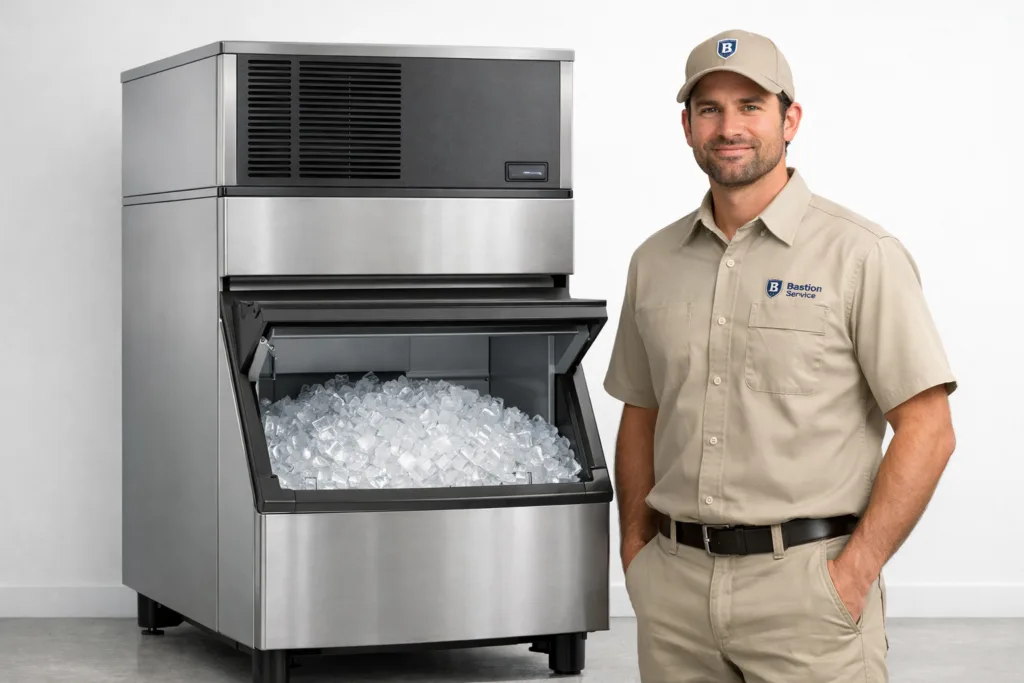




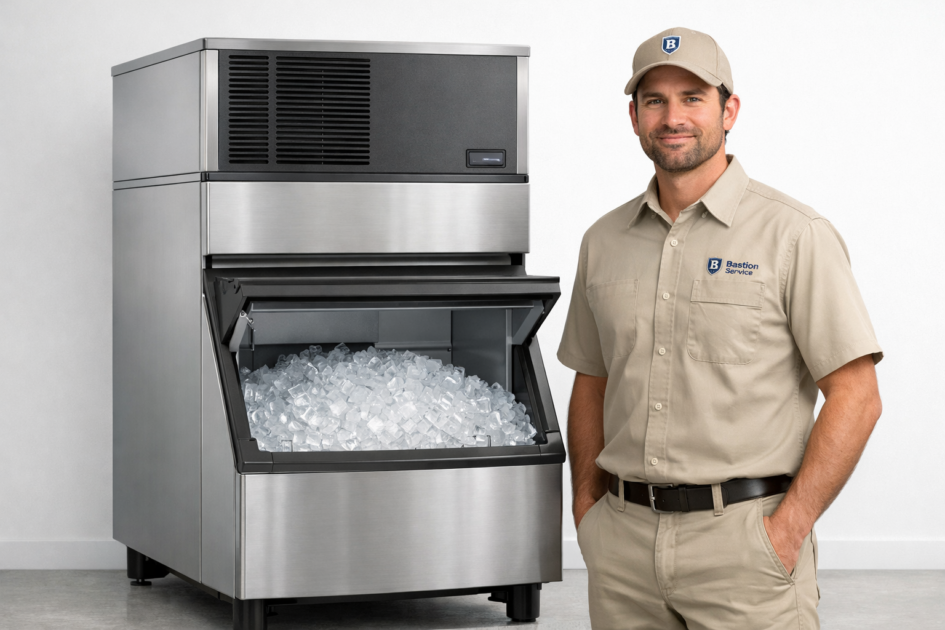
Ice machine problems can escalate quickly when output drops, water starts showing up around the unit, or a freeze cycle no longer finishes the way it should. For businesses in Inglewood, the main question is usually not just what the symptom is, but whether the equipment can stay in use without creating a bigger interruption. A service appointment helps identify the failure, determine the urgency, and map out the repair path based on how the machine is actually behaving.
For specific equipment paths in Inglewood, review Scotsman Ice Machine Repair in Inglewood and Commercial Appliance Repair in Inglewood.
Bastion Service provides Scotsman ice machine repair support in Inglewood with attention to the issues that most directly affect daily operations: low production, water flow problems, leaks, shutdowns, harvest trouble, scale buildup, and declining ice quality. That approach matters because symptoms that look minor at first often point to faults that can spread into longer downtime if the unit keeps running under stress.
Scotsman Ice Machine Symptoms That Usually Mean Service Is Needed
Many units show warning signs before they stop completely. Catching those changes early can help limit lost production, cleanup issues, and unnecessary strain on major components.
Low ice production or slow recovery
If the bin is not filling as expected or the machine cannot keep up during busy periods, several causes may be possible. Restricted water flow, mineral buildup, condenser performance issues, sensor problems, and cycle timing faults can all reduce output. In some cases, the machine is still making ice, but it is doing so too slowly to support normal service.
This is one of the most common situations where diagnosis matters. Low production does not always come from a single obvious part failure, and guessing can waste time while the machine continues falling behind.
Leaks, overflow, or water where it should not be
Water leaks around a Scotsman unit can come from drain restrictions, inlet issues, cracked tubing, internal overflow, or ice formation that redirects water out of its normal path. Even a small recurring leak can become a larger facility problem if it reaches floors, nearby equipment, or storage areas.
When leaking is active, repeated, or getting worse, it is usually best to schedule repair promptly. Water path problems rarely improve on their own, and continued operation can add both equipment risk and cleanup burden.
Harvest problems and stuck cycles
A machine that freezes but does not release ice correctly may produce incomplete batches, remain in cycle too long, or shut down after struggling to harvest. This can happen when scale interferes with normal operation, when sensors are not reading properly, or when water distribution and refrigeration performance are no longer working together as they should.
Harvest issues often start as inconsistent behavior before becoming a no-ice call. If staff are noticing irregular batch release, odd cycle timing, or repeated attempts before the machine completes a run, service is usually warranted before the problem becomes a full stoppage.
Cloudy, thin, small, or misshapen ice
Ice quality changes are often an early indicator that the machine is operating outside normal conditions. Poor-quality ice may point to mineral accumulation, water flow restrictions, distribution issues, or irregular freezing and release patterns. Even when the machine is still running, those signs suggest the equipment may not remain stable for long.
For businesses that rely on consistent ice presentation and output, changes in cube quality should be treated as an equipment performance issue, not just a cosmetic one.
Shutdowns, lockouts, or failure to start
If the machine powers on inconsistently, stops mid-cycle, or repeatedly resets, the cause may involve electrical faults, control problems, overheating conditions, water supply interruptions, or protective shutdown behavior. Intermittent stoppages are especially disruptive because they can create uncertainty about whether the unit will stay running through the day.
Repeated shutdowns usually mean the machine is reacting to an underlying fault rather than experiencing a one-time interruption. That is a strong sign that repair should be scheduled instead of relying on restarts.
Why Is My Scotsman Ice Machine Not Making Enough Ice?
When a Scotsman machine is not making enough ice, the root cause is often tied to one of a few performance areas: water supply, scale buildup, cycle efficiency, condenser condition, or sensor and control accuracy. The challenge is that these problems can produce similar symptoms from the outside. A unit may seem to be running normally, but if each cycle is taking too long or each batch is incomplete, overall production drops fast.
Common reasons for low output include:
- Restricted incoming water flow
- Scale buildup affecting freeze or harvest performance
- Condenser blockage or heat-related operating strain
- Faulty sensors or control issues that interrupt normal timing
- Drain or distribution problems that affect cycle consistency
- Developing refrigeration-related performance loss
If staff are compensating by bagging extra ice elsewhere, reducing use, or waiting longer for recovery between rush periods, the machine is already affecting operations. That is usually the point when repair becomes more cost-effective than waiting for complete failure.
How Water Flow Problems Affect Scotsman Ice Machines
Water flow issues can show up in several ways: slow production, thin ice, incomplete batches, overflow, unusual sounds during filling, or erratic cycle behavior. Because Scotsman equipment depends on consistent water delivery and drainage through each stage of operation, even a modest restriction can lead to visible performance changes.
Water-related trouble may involve:
- Inlet valve problems
- Blocked or partially restricted water lines
- Mineral accumulation in distribution areas
- Drain restrictions that interfere with normal cycling
- Internal components that no longer open, close, or respond properly
These problems can overlap with other symptoms, which is why the repair decision should be based on testing rather than assumption. A machine that appears to have a production issue may actually be starting with improper fill or drainage conditions.
When Scale Buildup Starts Causing Bigger Problems
Scale buildup is one of the most common contributors to Scotsman ice machine performance decline. Mineral accumulation can interfere with water movement, affect sensor readings, disrupt harvest, and reduce overall production efficiency. In early stages, the signs may be subtle. Over time, the machine may produce inconsistent ice, run longer than normal, or start developing repeated faults.
Service becomes more urgent when scale is contributing to:
- Slow or uneven ice formation
- Poor harvest release
- Recurring water flow problems
- Cloudy or irregular ice quality
- Unexpected shutdowns tied to cycle performance
If mineral buildup is allowed to continue, it can make diagnosis more complicated and put added strain on parts that are trying to operate around restricted flow or altered timing conditions.
When Continued Operation Can Increase Downtime
Not every symptom requires an immediate shutdown, but some do justify faster action. Active leaking, repeated lockouts, failed harvest cycles, and heavy production loss are all signs that continued use may increase the repair scope or create preventable disruption. The issue is not only whether the machine runs at all, but whether it is running in a way that risks a more serious outage.
It is usually time to move quickly when:
- The machine needs frequent resets
- Water is collecting around the equipment
- Ice output no longer supports normal demand
- Cycle behavior changes from day to day
- Ice quality has dropped along with production
- Staff are noticing inconsistent freeze and release patterns
Those signs often point to a fault that is progressing rather than stabilizing.
What a Service Visit Helps Clarify
A repair visit is meant to answer the questions operations teams actually need answered: what is failing, whether the machine should remain in use, what conditions are contributing to the symptom pattern, and what repair steps make the most sense. For Scotsman equipment, that often includes evaluating water supply and drainage, reviewing freeze and harvest behavior, checking for scale impact, and testing the controls and components that affect output and reliability.
This process is also useful when the problem is intermittent. Machines that work normally for part of the day and then fall behind, leak, or shut down can be harder to judge based on appearance alone. Symptom-based testing helps separate a maintenance-related issue from a developing component failure.
Repair Decisions for Businesses in Inglewood
For businesses in Inglewood, ice machine repair is usually tied to timing as much as cost. A unit may still be operating, but not well enough to support service flow. In other cases, the machine may be stopping completely, making the next step more urgent. The most useful repair plan is one that accounts for the actual symptom pattern, the condition of the equipment, and the downtime risk of waiting too long.
If your Scotsman ice machine is underproducing, leaking, shutting down, or showing harvest and ice quality problems, the next practical step is to schedule service before the disruption spreads further into daily operations. A focused diagnosis can identify the cause, clarify whether continued use makes sense, and help move the equipment back toward stable performance.


