
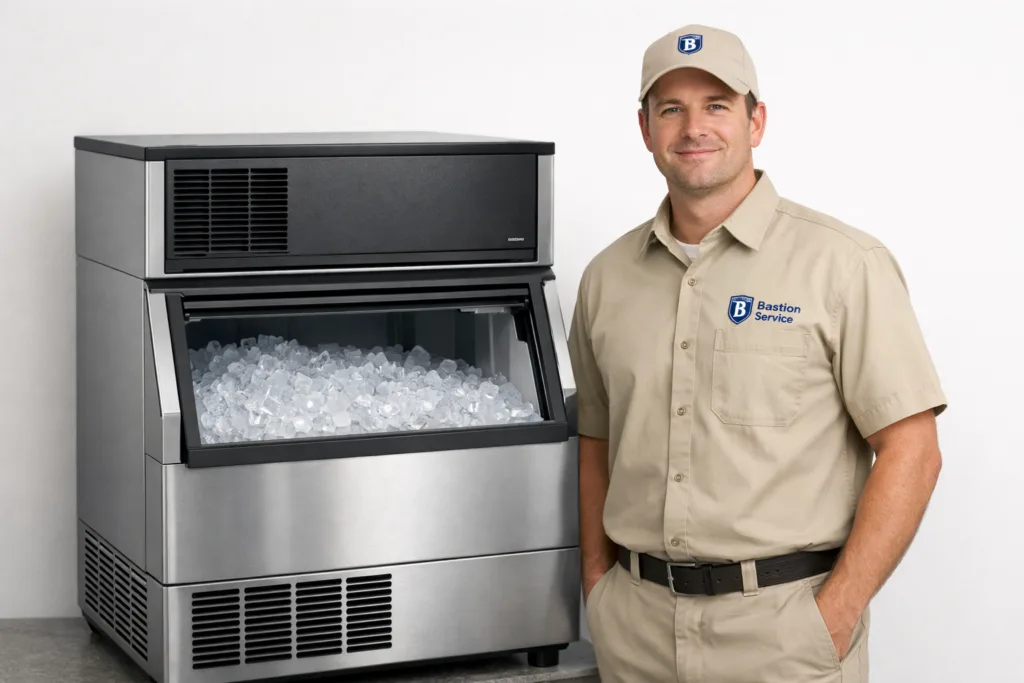




When a Scotsman ice machine starts falling behind on output, leaking onto the floor, stopping mid-cycle, or producing ice that does not look right, service decisions usually need to happen quickly. For businesses in Hermosa Beach, the immediate question is not just what the symptom is, but whether the machine can keep running, how much downtime to expect, and what repair path makes the most sense based on the actual fault. Bastion Service works with local businesses to inspect symptom patterns, identify the source of the problem, and schedule repair with day-to-day operations in mind.
For specific equipment paths in Hermosa Beach, review Scotsman Ice Machine Repair in Hermosa Beach and Commercial Appliance Repair in Hermosa Beach.
Common Scotsman ice machine symptoms that point to repair
Most Scotsman service calls start with a small number of repeat issues: low production, long freeze times, poor harvest, standing water, scale buildup, fault shutdowns, or changes in ice quality. While those symptoms may look straightforward, they can come from different causes inside the machine. A slow unit may have a water feed issue, a dirty condenser, scale interference, or a control problem. A leak may be tied to drainage, overflow, a cracked line, or a cycle problem that causes abnormal ice formation.
That is why symptom-based diagnosis matters. Two machines can show the same surface problem but need very different repairs. Getting the cause right early can help a business avoid unnecessary downtime, prevent added strain on parts, and decide whether the machine should stay in use until service is completed.
Low ice production and slow recovery
Why output drops even when the machine still runs
A Scotsman unit that is still making ice but not keeping up during busy periods often has a performance issue that has been building over time. Reduced water flow, mineral accumulation, restricted heat transfer, sensor misreading, and refrigeration-related faults can all reduce output without causing a full shutdown right away. Staff may first notice the bin filling more slowly, thinner cubes, or longer recovery after the machine has been emptied.
This matters because partial operation can create a false sense that the machine is fine enough to wait. In reality, a unit that is underproducing may be running longer cycles, working harder than normal, and moving closer to a complete interruption.
When low production needs prompt service
If output has dropped enough to affect drink service, food prep, or daily supply planning, repair should usually be scheduled sooner rather than later. A technician can determine whether the issue is tied to scale, water delivery, airflow, controls, or another system condition. That helps the business decide whether temporary use is reasonable or whether continued operation is likely to make the problem worse.
Water flow problems, leaks, and overflow
What water-related symptoms often mean
Leaks around the cabinet, unexpected overflow, poor fill behavior, or water collecting where it should not can point to several different failures. Common causes include drain restrictions, inlet valve trouble, damaged tubing, reservoir issues, or freeze and harvest problems that throw off the machine’s normal cycle. In some cases, the leak is not constant, which can make it harder for staff to judge how serious the problem is.
Even a small leak deserves attention because it can affect more than the ice machine itself. Floors become slippery, nearby equipment can be exposed to moisture, and sanitation routines become harder to maintain.
Why water issues should not be ignored
Water-related symptoms tend to spread operational impact quickly. A machine that overflows or leaks intermittently may still make ice for a while, but that does not mean the condition is stable. Early repair can limit collateral damage and help determine whether the problem is isolated to one replaceable part or tied to a broader operational fault inside the unit.
Harvest problems and incomplete cycles
Signs the machine is not finishing the job
Scotsman ice machines rely on consistent freeze and harvest performance. When the machine freezes but does not release properly, stalls between stages, or shuts down before completing the cycle, the result is uneven production and unreliable operation. Businesses may notice slabs that do not drop correctly, partial release, repeated attempts to harvest, or a machine that seems to pause too long before starting again.
These symptoms can be related to scale buildup, sensor issues, control board faults, temperature-related problems, or other conditions affecting cycle timing and release behavior.
Why intermittent operation is disruptive
Intermittent faults are especially difficult for businesses because the machine may appear to recover on its own, only to fail again during peak demand. That can create unnecessary guesswork for managers and staff. Service helps confirm whether the machine can continue to operate safely for the short term or whether shutdown is the better choice to avoid larger failure.
Shutdowns, fault conditions, and machines that stop unexpectedly
A Scotsman unit that shuts itself down, stops after startup, or needs repeated resetting is usually signaling a condition that should be evaluated directly. Automatic shutdowns are often protective responses. The machine may be detecting a problem with water supply, harvest timing, temperature response, or another monitored condition that prevents normal cycling.
Repeated resets rarely solve the underlying issue. If the machine is stopping more than once, taking longer to restart, or showing a pattern of failure at the same stage of operation, repair is usually the most practical next step. Waiting can turn an intermittent shutdown into a complete outage.
Scale buildup and the effect on performance
Scale is one of the most common contributors to Scotsman ice machine trouble. Mineral deposits can interfere with water movement, reduce efficiency, affect sensing, and disrupt the harvest process. Businesses may first notice lower output, irregular cube shape, cloudy appearance, or inconsistent cycle times before realizing that scale is part of the problem.
Not every scale-related issue is solved by routine cleaning alone. If buildup has already affected valves, sensors, circulation, or harvest behavior, repair may still be needed after cleaning measures are considered. A service inspection can help separate basic maintenance needs from actual part or system failure.
Ice quality concerns that should be evaluated
Changes in appearance, consistency, or usability
Ice quality problems often show up as cloudy cubes, soft or wet ice, irregular sizing, incomplete formation, or ice that seems to melt too quickly. In a business setting, those issues are not just cosmetic. They affect presentation, consistency, and confidence that the machine is operating correctly.
When quality changes are paired with low production, leaks, or shutdowns, the problem is more likely to involve a deeper equipment fault rather than a simple one-time condition. The goal of repair service is to determine whether the issue is tied to water flow, scale, temperature control, harvest performance, or another internal problem affecting the finished product.
How to think about continued use before repair
Businesses often want to know whether the machine can stay on until the appointment. The answer depends on the symptom pattern. A small production drop may allow limited use for a short period, while active leaking, repeated shutdowns, severe harvest trouble, or major output loss often justify reducing use or turning the machine off until it can be inspected.
Continued operation is not always harmless. Running a machine with unstable water flow, scale interference, or abnormal cycling can place extra stress on pumps, valves, controls, and other components. A timely evaluation helps protect the machine from a manageable problem turning into a larger repair.
What a service visit should help you decide
A useful repair visit should answer more than whether one part has failed. It should help clarify what is causing the symptom, whether the issue is isolated or part of a larger machine condition, how urgent the repair is, and whether temporary operation is realistic. For businesses in Hermosa Beach, that information matters because ice supply affects staffing, workflow, and the ability to serve customers without interruption.
It is also important to evaluate the machine in terms of actual operational impact. A repair that makes sense on paper may still need to be weighed against current production needs, repeat breakdown history, and the likelihood of additional issues if service is delayed.
Scotsman ice machine repair service in Hermosa Beach
If your Scotsman ice machine is making less ice, leaking, shutting down, struggling during harvest, or producing inconsistent ice, the most effective next step is to schedule service based on the symptom pattern you are seeing now rather than waiting for a full outage. For businesses in Hermosa Beach, repair is about restoring stable ice production, protecting uptime, and making an informed decision before a smaller issue disrupts the entire workday.


