
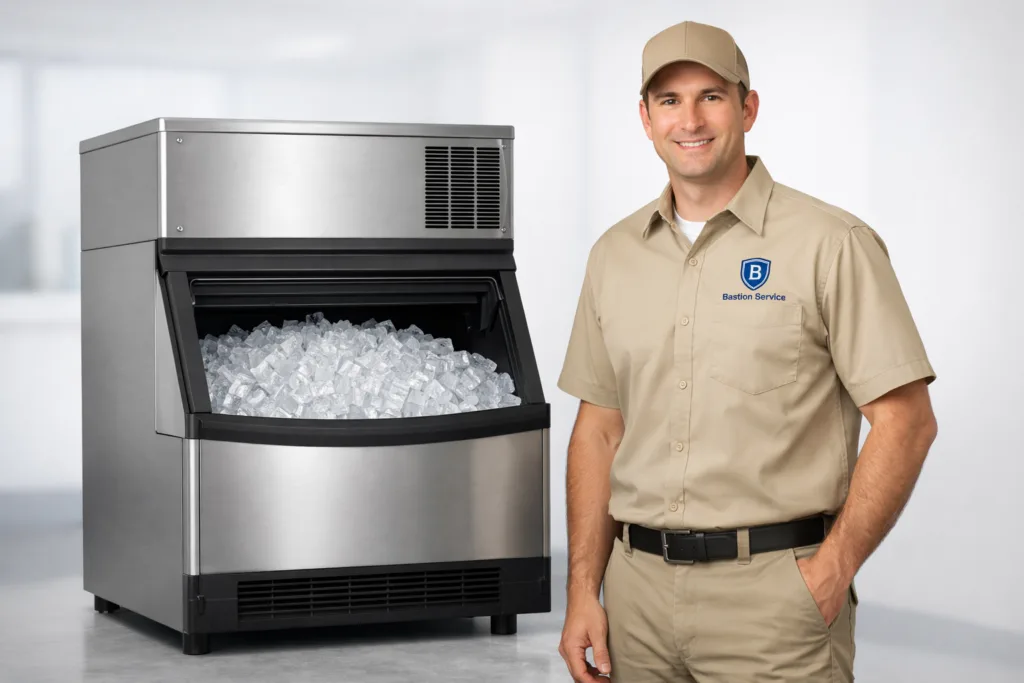






When a Scotsman ice machine starts falling behind, leaking, or shutting down, the problem can disrupt beverage service, food holding, prep routines, and front-of-house speed much faster than many operators expect. For businesses in El Segundo, repair service is most useful when it moves quickly from symptom review to diagnosis, scheduling, and a repair plan based on how the machine is actually failing. Bastion Service works with local businesses to evaluate downtime risk, identify the cause of the issue, and determine whether the unit should remain in use or be taken offline until repairs are completed.
For specific equipment paths in El Segundo, review Scotsman Ice Machine Repair in El Segundo and Commercial Appliance Repair in El Segundo.
Common Scotsman ice machine problems that need repair attention
Scotsman equipment often gives warning signs before a full stoppage. Production may taper off over several days, ice may come out smaller or softer than usual, water may begin collecting around the machine, or a harvest cycle may start taking longer than normal. Even when the unit still produces some ice, these symptoms usually point to a problem that is already affecting reliability.
Service is worth scheduling when the machine shows any of the following:
- Lower ice output than normal during regular demand
- Slow freeze cycles or delayed recovery
- Water not filling, overfilling, or draining correctly
- Leaks around the unit or nearby floor moisture
- Failed harvest cycles or ice hanging on the evaporator
- Cloudy, soft, misshapen, or inconsistent ice
- Intermittent shutdowns, fault conditions, or restart problems
Because these symptoms can overlap, a low-production complaint may turn out to be a water issue, a scale issue, a control issue, or a refrigeration issue. That is why symptom-based repair assessment matters before parts are replaced or the machine is pushed through another busy shift.
Low ice production and slow recovery
Why output drops even when the machine still runs
A Scotsman machine that is still operating but no longer keeping up often has a performance problem rather than a complete failure. Restricted water flow, scale on internal surfaces, dirty heat-exchange components, incorrect freeze timing, or weakening refrigeration performance can all reduce output. In practice, operators usually notice the issue first as bins that never fully recover.
Low production should not be treated as a minor inconvenience if the machine supports daily service. A unit that is technically on but producing far below normal capacity can create the same operational pressure as a shutdown, especially during peak hours.
What a repair visit helps determine
Service can confirm whether the drop in output is related to water delivery, ice formation, harvest timing, sensors, temperature conditions, or component wear. It also helps answer a key operational question: can the machine continue running temporarily, or is continued use likely to cause a larger failure? For many businesses in El Segundo, that answer shapes staffing, product planning, and short-term scheduling.
Water flow, leaks, and drainage problems
Signs the water system is affecting performance
Water issues do not always appear as an obvious leak. Sometimes the first sign is thin ice, partial ice formation, irregular batch size, overflow during fill, or standing water where the machine drains. A Scotsman unit depends on consistent water movement, so restrictions or component problems can affect both production and sanitation.
These symptoms may point to:
- Inlet valve problems
- Clogged or restricted water supply components
- Blocked or slow drains
- Pump issues
- Cracked lines or stressed fittings
- Scale buildup interfering with water distribution
Why leaks should be addressed quickly
Leaks and drainage problems can spread beyond the machine itself. Water around the equipment can affect surrounding surfaces, create cleanup issues, and complicate normal operation. If the machine is overfilling, draining poorly, or leaking consistently, repair service helps determine whether the problem is isolated to a single part or tied to a larger condition inside the unit.
Harvest issues and incomplete ice release
What failed harvest looks like in daily operation
Harvest problems often show up as ice that sticks, partial slab release, repeated attempts to complete a cycle, or shutdown after the machine cannot clear the evaporator properly. Operators may also hear the machine cycling longer than usual or notice that production drops even though the unit appears active.
On Scotsman equipment, harvest failure can be related to scale, sensor inaccuracies, timing problems, temperature issues, or worn components that no longer support normal release. This is one of the more disruptive symptom patterns because it affects both output volume and cycle consistency.
Why waiting can make the problem worse
If the machine repeatedly struggles through harvest, it places added stress on the system while still failing to deliver the ice volume the business needs. Scheduling repair once harvest becomes inconsistent is usually more manageable than waiting for a complete stop. A technician can determine whether the issue is mainly a buildup condition, a control problem, or a broader mechanical failure affecting operation.
Scale buildup and ice quality concerns
When appearance changes point to a larger problem
Cloudy ice, uneven cube shape, flakes where they should not be, or visible mineral accumulation are more than cosmetic complaints. Scale buildup can interfere with water flow, sensor readings, freezing efficiency, and harvest performance. As deposits increase, the machine may begin producing lower-quality ice while also becoming less reliable overall.
Many operators first notice scale-related issues through customer-facing symptoms such as:
- Ice that looks dull or inconsistent
- Cubes that are smaller than normal
- Soft or incomplete ice
- Irregular release during harvest
- Reduced production over time
How repair service helps separate cleaning needs from part failure
Not every ice quality complaint means a major repair, but persistent buildup can damage or interfere with parts that regulate normal operation. Service helps determine whether the machine mainly needs corrective cleaning and descaling, whether a water-related component has been affected, or whether prolonged buildup has already contributed to sensor, valve, or pump issues.
Unexpected shutdowns and intermittent operation
Why stop-and-start performance is risky
A machine that shuts down, restarts, or runs unpredictably can be harder to manage than one that fails completely. Intermittent operation often creates false confidence because the unit may produce a partial batch and then stop again later. That pattern can leave a business short on ice at the worst time.
Shutdowns may be tied to safety cutoffs, water-level problems, overheating, control faults, refrigeration conditions, or failed cycle logic. The important point is that recurring resets rarely solve the underlying issue for long.
When to stop relying on the machine
If a Scotsman unit keeps dropping offline, showing unstable cycle behavior, or losing production after restart, repair scheduling should move up in priority. A service assessment can help determine whether temporary operation is still reasonable or whether continued use risks a larger breakdown and longer outage.
Repair or replacement: how businesses usually decide
Not every problem justifies replacing the machine, and not every machine is a strong candidate for continued repair. The decision usually depends on the age of the unit, current condition, frequency of recent failures, sanitation condition, and whether the machine still fits the business’s actual ice demand.
In many cases, repair makes sense when the fault is isolated and the rest of the machine remains in solid working condition. Replacement becomes more likely when there are repeated shutdowns, multiple failing systems, chronic production issues, or ongoing service history without lasting improvement. The goal is not only to restore operation, but to make sure the next step supports stable day-to-day use.
What to expect when scheduling service in El Segundo
When scheduling service, it helps to describe the symptom pattern as clearly as possible: whether production is low all day or only during heavy demand, whether leaks occur during fill or drain, whether harvest failures are occasional or constant, and whether the machine recently changed its ice appearance or timing. Those details help narrow the likely fault path before work begins.
For businesses in El Segundo, the most useful next step is usually a repair visit focused on current performance, downtime urgency, and the condition of the machine as a whole. If the equipment is producing less ice, leaking, failing to harvest, shutting down, or delivering poor ice quality, service can clarify the cause, outline the repair path, and help you decide how to protect operations while the issue is being resolved.


