
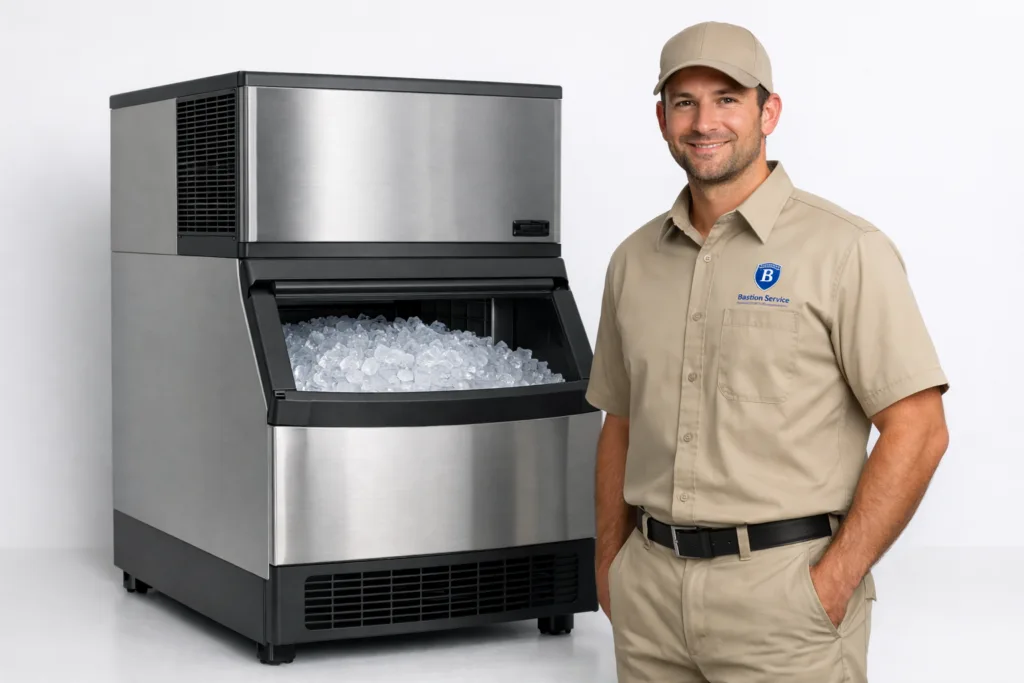




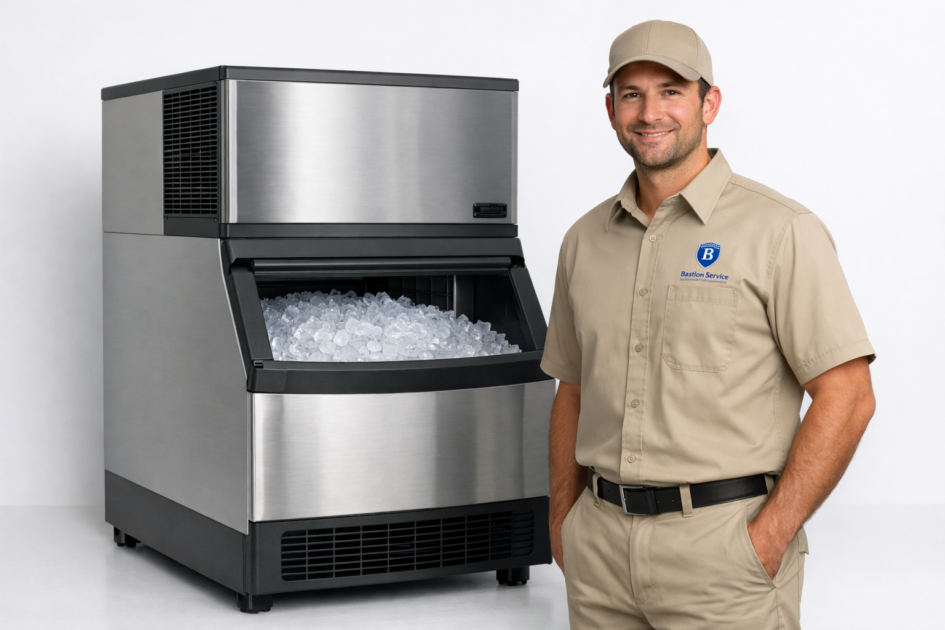
Ice machine problems rarely stay minor for long. When a Scotsman unit starts falling behind, leaking, short-cycling, or producing poor ice, the effect shows up quickly in beverage service, food prep, staff workflow, and day-to-day uptime. Bastion Service helps businesses in Culver City identify the source of the problem, understand the repair path, and schedule service based on how urgently the equipment issue is affecting operations.
For specific equipment paths in Culver City, review Scotsman Ice Machine Repair in Culver City and Commercial Appliance Repair in Culver City.
Common Scotsman Ice Machine Problems That Call for Repair
Many failures begin with a symptom that seems manageable at first: slower production, inconsistent cube size, extra water in the bin area, or a machine that stops and starts without warning. Those symptoms can come from different causes, so the right next step is to diagnose the actual failure rather than assume it is only a cleaning issue or only a parts issue.
Low Ice Production or No Ice
If the machine runs but does not keep up with expected demand, the problem may involve incoming water flow, freeze cycle timing, scale on critical components, condenser performance, sensor readings, or a refrigeration-related loss of cooling. Output problems often build gradually, which is why businesses may notice the bin never seems full even though the machine has been running all day. Service is usually the smart move once production drops enough to affect normal use.
Harvest Problems
A Scotsman machine that freezes but struggles to release the ice may be dealing with scale buildup, a control issue, sensor trouble, or a component that is no longer allowing the harvest cycle to complete correctly. Typical signs include long cycle times, slabs that do not release cleanly, partial drops, or repeated attempts before the machine returns to freezing. Harvest issues often lead to reduced volume long before the machine stops completely.
Leaks and Drainage Trouble
Water around the unit can come from blocked drains, pump issues, loose fittings, overflow conditions, cracked parts, or cycle-related problems that push water where it should not go. Even when the machine still makes ice, recurring leaks should be addressed quickly because they can create slip hazards, damage nearby surfaces, and point to a problem that is getting worse inside the machine.
Shutdowns and Intermittent Operation
If the machine shuts off, flashes a fault condition, restarts unexpectedly, or runs inconsistently through the day, the cause may involve controls, water level sensing, overheating, electrical faults, or safety-related shutdown conditions. Intermittent operation is easy to underestimate because the unit may appear to recover on its own. In practice, these issues often signal an unstable machine that can fail completely with little warning.
Ice Quality Concerns
Cloudy ice, thin cubes, fused batches, irregular shape, or soft ice can indicate water quality problems, mineral accumulation, uneven freezing, or a cycle issue that is affecting consistency. Poor ice quality is not just a presentation problem. It can also be an early sign that the machine is running inefficiently, struggling with water distribution, or no longer maintaining normal operating conditions.
What Specific Symptoms Can Suggest
Different symptom patterns help narrow down the repair path. While only testing can confirm the cause, these common signs are useful when deciding how urgent service may be:
- Bin not filling as expected: often tied to water supply restrictions, scale, airflow problems, or freeze cycle performance issues
- Machine takes longer between batches: may point to reduced heat exchange, mineral buildup, or a cooling problem
- Ice is small, hollow, or inconsistent: can suggest low water volume, uneven distribution, or cycle control problems
- Sheet of ice does not release properly: commonly linked to harvest faults, scaling, or sensing issues
- Standing water or overflow: may indicate drainage restrictions, pump trouble, or a leak that should not be ignored
- Unit stops during operation: can reflect a safety shutdown, electrical problem, or control failure
For businesses in Culver City, these symptoms matter because the cost of delay is not only the repair itself. It is also the disruption caused when the machine can no longer support normal service levels.
Scale Buildup and Water Flow Problems
Two of the most common service drivers in ice machine equipment are mineral scale and restricted water movement. Scale can interfere with freezing surfaces, sensors, water distribution, and harvest performance. Water flow issues can reduce batch size, create uneven ice formation, and trigger operational faults that look unrelated at first. Together, these conditions can make a machine slower, less reliable, and harder on its own components.
Signs that scale or water flow may be involved include:
- production dropping over time instead of all at once
- incomplete or misshapen cubes
- ice bridging or clumping
- longer cycle times
- repeated harvest trouble
- water spilling in places it normally does not
Because these issues can overlap with part failure, service helps determine whether the solution is cleaning, component replacement, adjustment, or a broader repair.
When to Stop Using the Machine Until It Is Checked
Some machines can remain online briefly while a service call is scheduled, but others should be taken out of use sooner. That is especially true when there is active leaking, repeated shutdown, obvious drainage failure, unusual noise, or ice quality that raises reliability concerns. Continuing to run a machine under those conditions can worsen internal damage and turn a manageable repair into a larger outage.
If the unit is still making some ice but performance is declining, it is often better to arrange service before the problem becomes a full stop during a busy shift. Early intervention can protect production capacity and reduce the chance of compounding failures.
What a Service Visit Helps Clarify
Most operators are not just looking for a list of possible causes. They need to know what failed, how urgent it is, whether the unit should stay in use, and what the repair is likely to involve. A diagnostic appointment can help clarify:
- whether the issue is related to water supply, scale, controls, drainage, or cooling performance
- whether the machine is likely to worsen if left running
- whether repair is straightforward or likely to involve additional parts
- whether the current condition supports continued use until the repair window
- whether repeated failures suggest a larger reliability concern
That information helps businesses make informed scheduling and equipment decisions instead of reacting only after the machine is completely down.
Repair Planning for Businesses in Culver City
Not every ice machine problem has the same urgency. A machine with a slight production drop may allow for a planned appointment, while an active leak or repeated shutdown may require much faster attention. Good repair planning takes into account current output, symptom severity, sanitation concerns, downtime impact, and whether the machine is serving a critical part of daily operations.
In some cases, the main goal is restoring normal ice volume quickly. In others, it is confirming whether the unit can continue operating safely until a scheduled repair. If the machine has a history of recurring faults, severe scale-related wear, or a major cooling-system issue, repair decisions may also need to factor in longer-term reliability rather than only the immediate symptom.
Schedule Scotsman Ice Machine Service in Culver City
If your Scotsman ice machine is producing less ice, leaking, struggling through harvest, shutting down, or making inconsistent ice, the next step is to get the problem evaluated before the disruption spreads further. Service can identify the source of the fault, explain whether the equipment should stay in use, and help you move forward with a repair plan that fits your schedule and operating needs in Culver City.


