





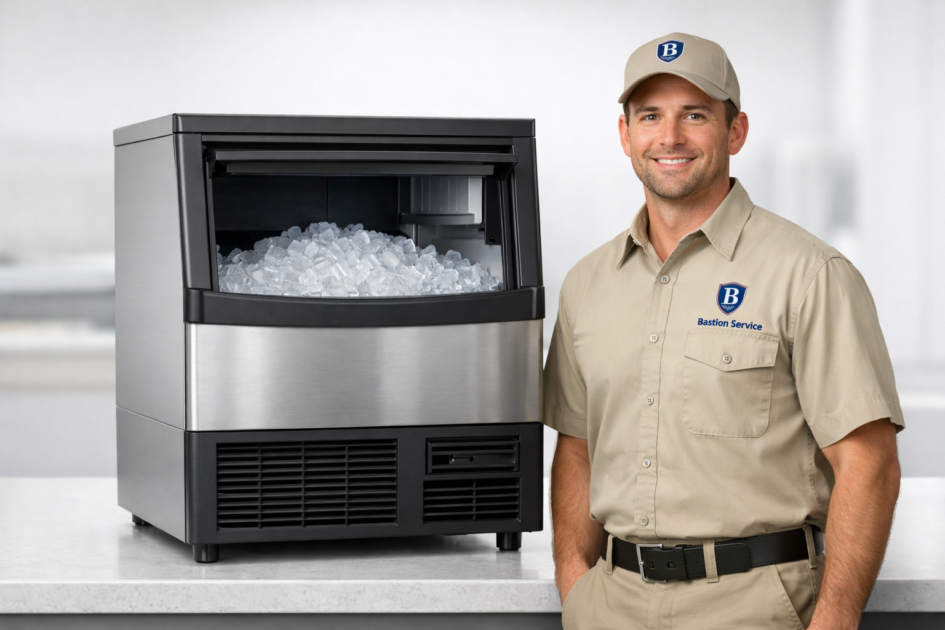
When an ice machine starts falling behind, the impact shows up quickly in service flow, prep, and day-to-day operations. For businesses in Beverly Hills, the right next step is usually a service visit that identifies whether the issue is tied to water supply, drainage, scale, airflow, controls, or a failing component before the machine loses more output or stops entirely. Bastion Service works with businesses that need repair scheduling based on urgency, operating conditions, and the real downtime risk behind the symptom.
For specific equipment paths in Beverly Hills, review Scotsman Ice Machine Repair in Beverly Hills and Commercial Appliance Repair in Beverly Hills.
Common Scotsman ice machine symptoms that need repair attention
Ice machine equipment rarely goes from normal operation to total failure without warning. More often, performance slips first. A unit may still run, but it produces less ice, takes longer to recover, leaks during part of the cycle, or makes ice that no longer looks or holds up the way it should. Those early signs matter because different faults can create similar results, and guessing at the cause can delay the right repair.
Low ice production or no ice at all
If the bin is not filling as expected, the problem may involve reduced water flow, mineral buildup, restricted condenser performance, sensor trouble, or a freeze and harvest cycle issue. Some machines continue operating while output gradually drops, which can make the problem seem less urgent than it is. Others shut down completely once operating conditions move outside normal range. In either case, low production is a strong sign that service should be scheduled before the machine becomes unusable during busy hours.
Leaks, overflow, and drainage issues
Water around the machine, signs of overflow, or moisture where it should not be often point to drain restrictions, pump problems, loose connections, or ice formation that is disrupting the normal cycle. A leak is more than an inconvenience. It can affect flooring, nearby equipment, and sanitation standards, especially when staff are trying to keep the machine running between shifts. A repair visit helps determine whether the unit can stay online temporarily or whether it should be taken out of use until the fault is corrected.
Shutdowns and intermittent operation
Repeated shutdowns are commonly tied to protective controls, temperature-related problems, poor water conditions, or component failure. Intermittent operation can be especially disruptive because the machine appears to recover, then falls out again when demand increases. If staff are resetting the unit just to keep ice available, that usually means the underlying issue is progressing rather than resolving.
Scale buildup and poor ice quality
Scale can affect water distribution, freeze performance, harvest timing, and the appearance of the finished ice. Businesses may notice cloudy cubes, thin or misshapen ice, clumping, breakage, or residue that points to internal buildup and related wear. Not every ice quality problem means the same repair, but it does mean the machine needs attention before production and reliability decline further.
Why production drops even when the machine still runs
A Scotsman machine can remain powered on and still underperform for several cycles before anyone realizes how far output has fallen. That happens when a machine is technically operating but not moving water, releasing ice, or cooling as consistently as it should. In practice, this often looks like:
- Longer time between batches
- Partial harvests
- Smaller batches than normal
- Ice melting faster in the bin
- Output that cannot keep up with regular demand
These symptoms usually point to a machine that needs more than monitoring. Service becomes important while the unit is still functioning, because that is often the point where downtime can still be limited and the repair scope is easier to define.
What harvest problems usually indicate
Harvest issues are a major source of low production complaints. The machine may freeze normally but fail to release the slab or cube pattern on time, causing the next cycle to start late or not at all. In other cases, ice drops unevenly, breaks apart, or hangs up during release. When that happens, likely causes can include scale on internal surfaces, water distribution problems, sensor or control faults, or operating conditions that are pushing the machine out of balance.
Harvest problems should not be treated as minor timing quirks. Every delayed or failed release reduces total daily output, and repeated cycle interruptions can lead to shutdowns that seem sudden even though performance has been slipping for some time.
Water flow problems and their effect on reliability
Stable water flow is central to consistent ice production. When the water supply is reduced, restricted, or inconsistent, the machine may produce incomplete batches, run longer than normal, or develop ice patterns that do not look right. Water-related issues can also create secondary problems, including scale accumulation, poor harvest performance, and overflow conditions.
Common signs that water flow may be part of the problem include:
- Slow or inconsistent ice production
- Uneven cube size or shape
- Frequent refill-related interruptions
- Water visible where it should not be
- Performance changes after recent plumbing or filtration issues
Because water flow faults often overlap with other symptoms, they are a good example of why symptom-based diagnosis matters before repair decisions are made.
When scale buildup becomes more than a cleaning issue
Mineral buildup does not just affect appearance. Over time, it can interfere with water movement, freezing consistency, release timing, and sensor performance. A machine with heavy buildup may seem like it only needs cleaning, but in many cases scale has already contributed to wear, recurring faults, or shutdown conditions that require repair as well.
Warning signs that buildup may be affecting more than routine maintenance include:
- Recurring low output shortly after cleaning
- Incomplete or irregular harvest cycles
- Leaks connected to restricted drains or ice formation
- Noticeable changes in ice clarity or strength
- Repeated service interruptions tied to the same symptom pattern
How to decide whether the machine should keep running until service
Some issues allow short-term operation while waiting for the appointment, but others can lead to larger problems if the machine stays in use. More caution is usually warranted when the unit is actively leaking, shutting down repeatedly, failing to harvest, producing poor-quality ice, or making unusual mechanical noise. Those symptoms suggest the fault may worsen with continued operation.
For businesses in Beverly Hills, the decision often comes down to risk. If running the machine could affect sanitation, create water damage, or turn a manageable repair into a broader equipment problem, taking it offline may be the better choice. If the unit is still producing usable ice with only a moderate drop in output, service can often be scheduled before a full outage occurs. The key is matching the symptom to the likely downside of waiting.
Repair versus replacement: what businesses should weigh
Not every service call ends with the same recommendation. Sometimes the issue is isolated and repair is the clear path forward. In other cases, the machine has a pattern of repeat failures, declining output, or multiple systems showing wear at the same time. That is when it helps to look beyond the immediate symptom and consider how the equipment is performing as an asset in daily operations.
Repair is often the right move when:
- The problem is limited to a specific failed part or operating condition
- The machine has otherwise been reliable
- Production levels should return to normal after service
- Downtime can be contained with timely scheduling
Replacement becomes a stronger consideration when:
- Breakdowns are becoming frequent
- Output has been trending downward over time
- Several issues are showing up together
- The machine no longer supports the business reliably even after service
What to have ready when scheduling service
Describing the symptom pattern clearly can make scheduling more effective and help set the right priority. It helps to note whether the machine is still producing any ice, when the problem started, whether leaks are active, and whether the unit is shutting itself off. Details about recent cleaning, visible scale, changes in ice appearance, and whether the issue is constant or intermittent can also help shape the service plan.
If your Scotsman ice machine is running short on production, leaking, shutting down, struggling through harvest, or showing clear signs of scale and ice quality problems, the best next step is to schedule repair before the issue spreads into longer downtime. For businesses in Beverly Hills, early attention often makes the difference between a contained repair and a larger interruption that affects the entire day.


