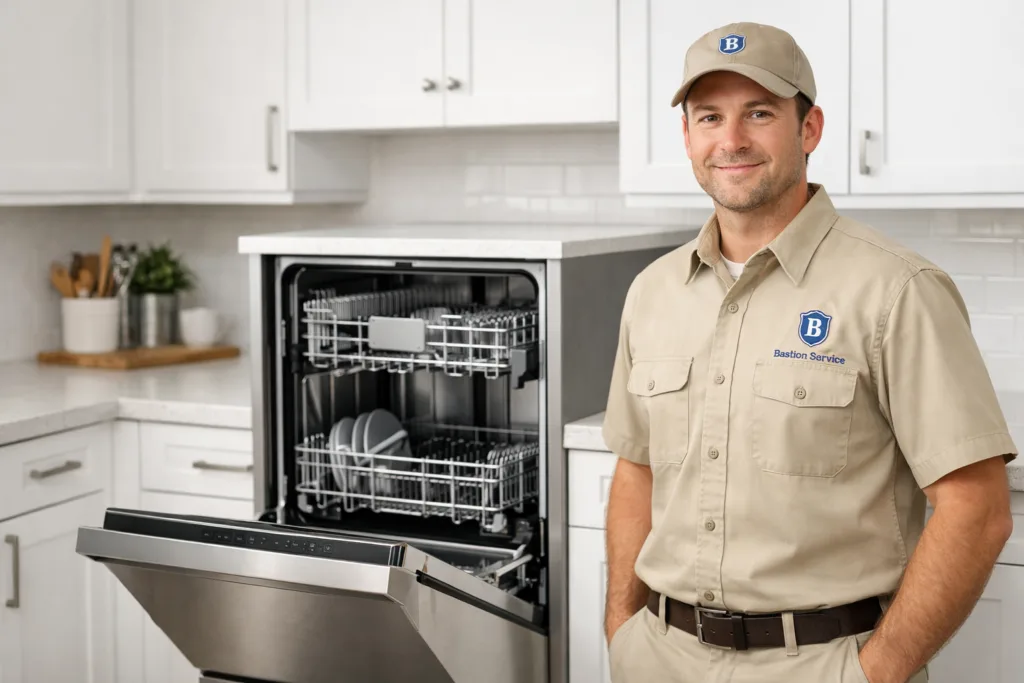
Many Samsung dishwasher problems look simple from the outside but have more than one possible cause. Water left in the tub, cloudy glasses, a cycle that stalls, or a damp floor near the kickplate can each point to different failures in the drain system, wash system, door seal, heating circuit, or controls. Looking at the exact symptom pattern usually tells you far more than the final result at the end of the cycle.
Common Samsung dishwasher problems in Venice homes
In everyday household use, dishwasher trouble usually falls into a few clear categories. Understanding those categories can help you decide whether the issue is urgent, whether it is likely to worsen with continued use, and what kind of repair may be needed.
Not draining at the end of the cycle
If water remains in the bottom after the dishwasher finishes, the problem may involve the filter area, drain pump, drain hose, sink connection, or a blockage somewhere in the drain path. In some cases, the unit drains slowly rather than not draining at all, which can make the symptom seem inconsistent from one load to the next.
Standing water should not be ignored. It can lead to odor, residue on dishes, extra strain on the pump, and repeat cycle failures if the machine cannot reset properly between washes.
Poor wash results or cloudy dishes
When dishes come out with food still attached, cups feel gritty, or glassware looks hazy, the issue may be related to weak spray pressure, clogged spray arms, low water fill, circulation pump trouble, detergent dispenser problems, or wash water that never reaches proper temperature. A machine that sounds normal can still clean badly if the internal wash action is weak.
If the results have gradually worsened over time, buildup or restricted circulation may be part of the problem. If the change happened suddenly, a failed component is more likely.
Leaking from the door or underneath
Leaks often come from worn gaskets, a lower door seal problem, loose water connections, pump housing issues, cracked internal components, or leveling problems that let water move where it should not. Some leaks appear only during certain parts of the cycle, which can help narrow the source.
Even a minor leak deserves attention. Repeated moisture around a dishwasher can affect flooring, toe-kick areas, cabinet edges, and the subfloor beneath the appliance.
Will not start or stops mid-cycle
If the dishwasher does not respond when started, powers on but will not run, or shuts down partway through a cycle, the cause may involve the door latch, control board, user interface, wiring, float system, or sensor-related interruptions. A unit that intermittently starts and then fails often needs electrical and control testing rather than guessing based on one symptom alone.
Unusual sounds during wash or drain
Grinding, buzzing, rattling, or sharp mechanical noise can point to debris in the pump area, spray arm interference, a worn motor, or circulation trouble. Some noises are harmless, but a new sound that appears suddenly is often an early warning that a moving part is under stress.
Low heat or poor drying
If dishes finish wet, the interior stays cooler than expected, or plastics come out much wetter than usual, the issue may involve the heating element, thermostat-related controls, venting, or the cycle not advancing correctly. Poor drying also matters for cleaning performance because lower rinse temperatures can leave more residue behind.
How symptom patterns help narrow the cause
One of the most useful things a homeowner can notice is whether the symptom is constant, occasional, or tied to a specific part of the cycle. That detail helps separate a blockage from a failing pump, or a control issue from a simple wash-performance problem.
- Always leaves water behind: more likely a drain restriction or drain pump problem
- Sometimes drains, sometimes not: possible intermittent pump, control, or partial clog issue
- Cleans top rack poorly: may suggest spray arm or circulation weakness
- Leaks only during wash: often points toward spray, door seal, or internal water movement issues
- Stops at the same time in every cycle: can indicate control, heating, or sensor faults
- Gets louder over time: often suggests wear in a pump or motor assembly
These patterns do not replace service, but they make the repair process more efficient and reduce the chance of treating the wrong problem first.
When to stop using the dishwasher
Some dishwasher issues can wait a short time. Others can cause added damage if the machine keeps running. It is usually best to stop using the unit if you notice any of the following:
- Water leaking onto the floor
- Standing water after every cycle
- A burning smell or repeated breaker trips
- Loud grinding or harsh buzzing from the pump area
- The door not latching securely
- Cycle failures that leave detergent undissolved and dishes heavily soiled
In a Venice household, delaying service in these cases can turn a contained appliance repair into a flooring, cabinet, or electrical concern.
Issues that are often repairable
Samsung dishwasher repairs commonly involve serviceable parts rather than a full appliance replacement. Depending on the symptom, repair may involve the drain pump, circulation pump, door latch, door seals, inlet valve, float system, heating components, wiring, or control-related parts.
Repair is often a good option when the dishwasher cabinet is in good shape, the racks and interior are still usable, and the problem appears isolated to one main system. A single leak source, drain failure, or wash-performance problem is very different from a machine with multiple ongoing issues.
When replacement may make more sense
Replacement becomes a more realistic consideration when the dishwasher has several active faults at once, visible internal deterioration, repeated leak history, or a repair cost that approaches the value of the appliance. Age matters, but overall condition matters more. A newer unit with one failed component may be well worth fixing, while an older machine with control trouble, pump wear, and rack or tub issues may be harder to justify.
The most useful decision point is not the symptom by itself, but whether the machine is otherwise sound once the main fault is addressed.
What to check before scheduling service
A few simple observations can make the service visit more productive. Before scheduling, it helps to note:
- Whether the dishwasher is fully dead or still powers on
- Whether water remains inside after every cycle or only sometimes
- Whether the leak appears at the front, side, or underneath
- If the noise happens during filling, washing, or draining
- Whether the problem started suddenly or gradually worsened
- If any error codes appear on the display
You do not need to diagnose the machine yourself. A few accurate observations are often enough to point service in the right direction.
What Venice homeowners usually want from dishwasher service
Most households are not looking for a long technical explanation. They want to know what is failing, whether the dishwasher is safe to keep using, and whether the repair is sensible for the condition of the machine. For that reason, the best service approach is symptom-based: identify whether the trouble is tied to draining, washing, filling, leaking, heating, or controls, then recommend the repair path that fits the actual condition of the appliance.
If your Samsung dishwasher is leaving residue, failing to drain, leaking, running with unusual noise, or stopping before the cycle is complete, addressing it sooner usually helps preserve better repair options and reduces the chance of extra damage in the kitchen.