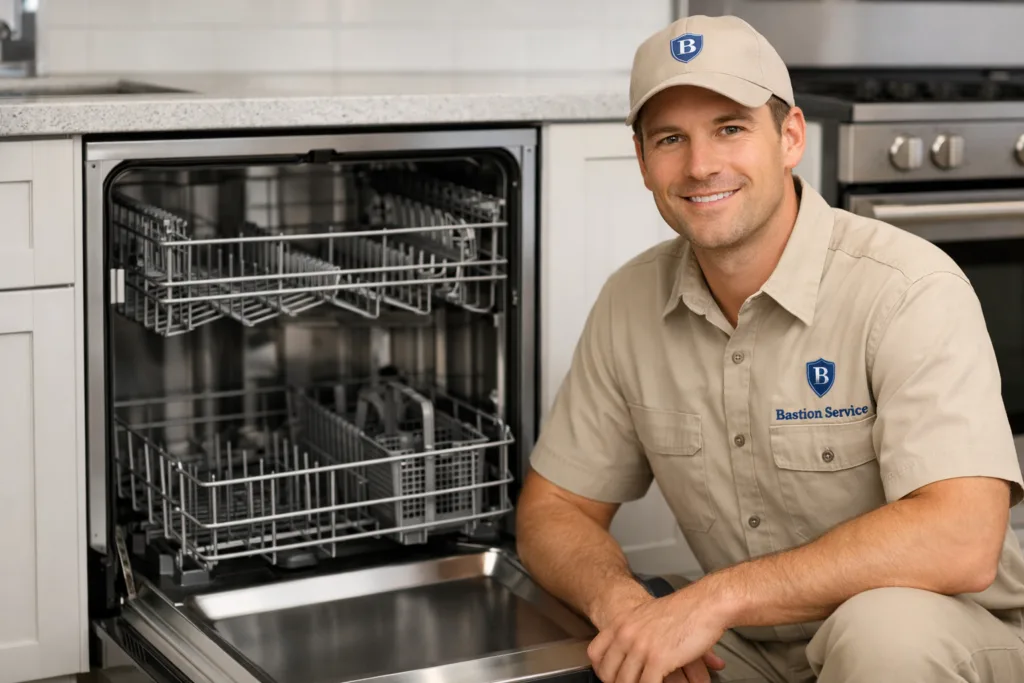
Common Samsung dishwasher problems in Century City homes

Dishwasher faults usually show up in a few repeatable ways: water left in the tub, dishes that stay dirty, leaking near the door or underneath the unit, unusual noises, or cycles that stop before completion. On Samsung models, those symptoms can come from different systems that interact with each other, so the most useful clue is often when the problem happens during the cycle.
Related Samsung and dishwasher service paths in Century City include Samsung Appliance Repair in Century City, Dishwasher Repair in Century City, and Samsung Refrigerator Repair in Century City.
For example, a dishwasher that fills with water but never begins washing points to a different repair path than one that washes normally and then fails to drain. A unit that runs to the end but leaves dishes cool and wet may be dealing with a heating issue rather than a wash or drain problem. Matching the symptom to the cycle stage helps narrow the cause faster.
What specific symptoms often mean
Standing water after the cycle
If your Samsung dishwasher finishes with water pooled at the bottom, the cause may be a blocked filter, a restriction in the drain path, a drain pump problem, or a hose installation issue. Some units will hum as if they are trying to pump out, but the water level does not change. Others may drain slowly and leave a shallow layer behind after every load.
This problem should not be ignored for long. Residual water can create odor, reduce cleaning performance, and put extra strain on pump components if the machine keeps trying to clear a blockage it cannot overcome.
Dishes come out dirty, greasy, or cloudy
Poor wash results are not always caused by loading habits or detergent choice. When the same residue appears across multiple loads, the issue may involve blocked spray arms, reduced circulation pressure, a failing wash motor, a dispenser problem, or a heating fault that prevents proper wash performance.
Cloudy glassware, food left on plates, and greasy film on cookware often suggest the dishwasher is not moving water with enough force or not reaching the temperatures needed for effective cleaning. If rinse performance has dropped at the same time, the problem may affect more than one stage of the cycle.
Leaks around the door or underneath the unit
A leak can come from a worn door gasket, a damaged hose, loose connection points, oversudsing, poor leveling, or an internal part that allows water to escape during wash or drain. The location of the moisture matters. Water at the front edge of the dishwasher can suggest a different cause than water appearing under cabinets or near the toe-kick.
Even a minor leak deserves attention. Repeated moisture exposure can damage flooring, trim, and surrounding cabinetry long before the dishwasher completely fails.
Grinding, buzzing, clicking, or loud humming
Noise changes usually mean something in the dishwasher is no longer moving as it should. Debris in the pump area, spray arm interference, circulation motor wear, or drain pump trouble can all create new sounds. A quick buzz at one stage of the cycle is different from a continuous grinding noise during wash or drain.
If the machine has become louder over time, that gradual change can be as important as a sudden noise. Progressive sound changes often suggest wear rather than a one-time obstruction.
Cycle stops, error codes, or the dishwasher will not start
When a Samsung dishwasher beeps, flashes an error, or refuses to begin a cycle, the issue may involve the door latch, user interface, sensor system, control board, or power supply. Error codes can be helpful, but they usually identify a system that needs testing rather than confirming one exact failed part.
A dishwasher that powers on but does nothing after you press start is not the same problem as one that begins normally and stops midway. The first pattern may point toward latch or control issues, while the second can involve drain, circulation, or sensor faults.
Symptoms tied to heating and drying problems
If dishes are clean but still cold, wet, or poorly dried at the end of the cycle, the problem may be related to the heating circuit. On Samsung dishwashers, low rinse temperature can affect both drying and overall cycle quality. Plastic items staying wet is common in many dishwashers, but when everything in the load feels unusually cool, it is worth looking deeper.
Heating-related faults can also affect sanitation performance and detergent breakdown. That means the dishwasher may appear to run normally while still underperforming in a way that is easy to miss at first.
When a repair is usually worth considering
Repair is often reasonable when the dishwasher is otherwise in good condition and the problem is isolated to a pump component, door seal, latch, hose, drain issue, or a specific electrical fault. A single recurring symptom with a clear cause is usually easier to evaluate than a machine with several unrelated problems appearing at once.
Homeowners in Century City often make the repair decision based on three things: the exact fault, the overall condition of the dishwasher, and whether the issue has already caused secondary damage such as cabinet moisture or repeated cycle failures. That approach keeps the decision grounded in the appliance’s actual condition rather than guesswork.
Signs replacement may make more sense
Replacement becomes more practical when the dishwasher has multiple failing systems, ongoing control problems, major leak-related damage, or a repair cost that is hard to justify for the unit’s age and condition. If one issue has already been repaired recently and another major fault appears soon after, it may be time to compare the next repair against replacement value.
This is especially true when performance has been declining in several ways at once, such as poor washing, inconsistent draining, and cycle interruptions happening together.
Basic checks homeowners can try first
- Clean the filter if food debris has built up.
- Check spray arms for blockage or restricted movement.
- Look for obvious kinks in the drain hose where accessible.
- Confirm the dishwasher is level if leaking appears near the door.
- Note any error code and when it appears in the cycle.
- Pay attention to whether the problem happens every load or only occasionally.
These steps can help rule out simple maintenance issues, but they should not replace service when the machine is leaking, failing to drain, tripping power, or stopping mid-cycle.
Practical service guidance for Century City households
A malfunctioning dishwasher quickly changes the rhythm of the kitchen, especially when every meal creates a sink full of dishes. The most helpful next step is to identify whether the issue is isolated and repairable or part of a broader decline in the appliance. Bastion Service helps Century City homeowners evaluate Samsung dishwasher problems based on the actual symptom pattern, appliance condition, and likely repair scope.
Whether the main complaint is poor wash results, drain trouble, leaks, pump issues, low rinse temperature, or repeated cycle failure, accurate troubleshooting makes it easier to choose the right next move with confidence.