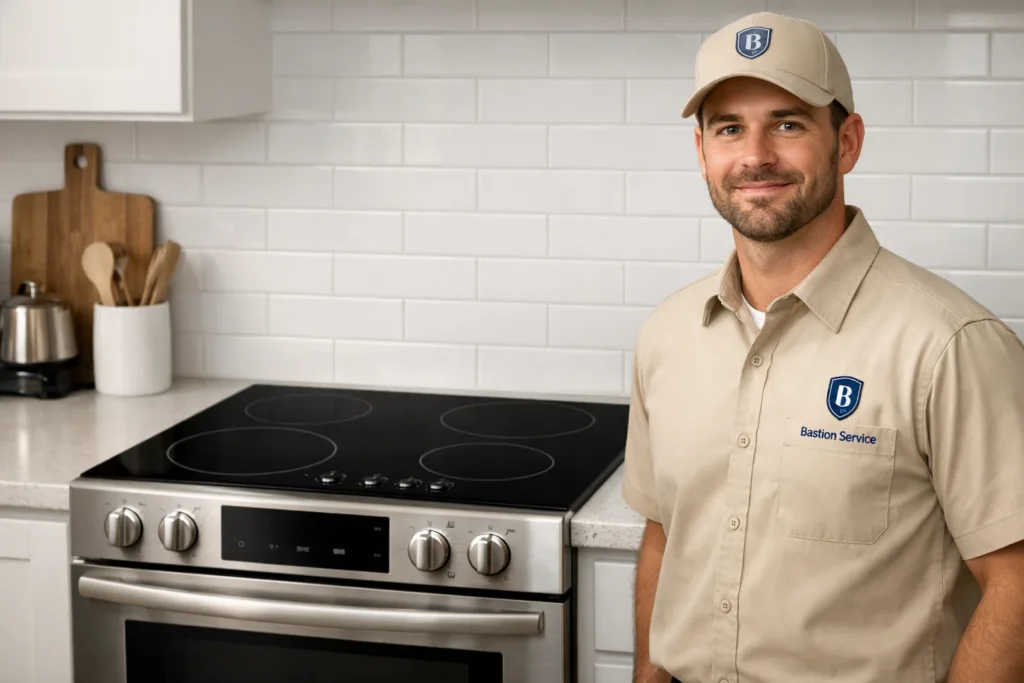
Cooktop problems are easiest to solve when the exact symptom is identified early. A burner that stays cold, a gas burner that clicks without lighting, or a control that no longer responds properly can each point to a different repair path. With Samsung cooktops, that distinction matters because burner assemblies, ignition parts, switches, sensors, and control components can all produce similar day-to-day symptoms.
Related Samsung and cooktop service paths in Century City include Samsung Appliance Repair in Century City, Cooktop Repair in Century City, and Samsung Refrigerator Repair in Century City.
Start with what the cooktop is actually doing
Before any repair decision, it helps to narrow the issue by behavior rather than by guesswork. A single burner failure usually suggests a localized problem. Trouble affecting multiple burners, inconsistent controls, or repeated power-related symptoms can indicate a larger issue within the cooktop.
A burner will not heat or ignite
On electric Samsung cooktops, a burner that does not heat may be tied to a failed element, a bad infinite switch, a wiring problem, or a control fault. On gas models, a burner that clicks without lighting may involve the igniter, burner cap placement, clogged ports, moisture, or a problem affecting gas flow to that burner.
If only one burner is affected, repair is often more straightforward. If several burners are showing the same symptom, the diagnosis usually needs to move beyond the individual burner and look at shared components.
Heat is uneven or too weak
Uneven heating can show up as hot spots, slow boil times, or a burner that seems to cycle incorrectly. Electric models may have a weakening element or a control issue that is no longer regulating output correctly. Gas models may develop weak or uneven flames when burner ports are blocked, the burner is not seated correctly, or the flame pattern is being disrupted.
This kind of issue is more than a cooking inconvenience. Inconsistent heat makes it harder to control pans, recipes, and cookware temperatures, and it can gradually lead to more wear if the unit continues operating outside normal performance.
Clicking, sparking, or delayed ignition
Persistent clicking is one of the most common complaints on gas cooktops. Sometimes the cause is simple, such as moisture after cleaning or residue around the burner area. When the clicking continues after everything is dry and correctly aligned, the issue may involve the ignition switch, spark module, or related wiring.
Delayed ignition should not be ignored. If the burner is not lighting promptly and predictably, it makes sense to stop routine use until the ignition system is inspected.
Controls do not match the setting
If a burner stays hotter than expected, does not respond to a knob change, or the touch controls react inconsistently, the problem may be in the switch, interface, or electronic control. These failures can look minor at first but often need direct testing to confirm whether the fault is in the control itself or in the part being commanded.
Signs you should stop using the cooktop
Some symptoms call for service before normal cooking continues. It is smart to stop using the cooktop if you notice:
- a burner that overheats or will not regulate
- repeated clicking without reliable ignition
- sparking that seems abnormal or persistent
- a burner that shuts off unpredictably
- cracks in the glass surface
- electrical tripping, burning odors, or visible damage
In Century City homes, these symptoms usually mean the problem has moved beyond routine cleaning or adjustment and needs a closer look.
Cracked glass and surface damage
Glass-top damage changes the repair conversation quickly. A crack may begin as a cosmetic concern, but it can also affect safe operation, especially if heat, spills, or electrical components are involved near the damaged area. If the cooktop has both a broken surface and burner performance problems, the combined repair cost may influence whether fixing the unit still makes sense.
Surface damage should be evaluated along with the underlying complaint rather than treated as a separate issue. In some cases, the visible crack is only part of the problem.
What often causes Samsung cooktop problems at home
Residential cooktops deal with heavy daily use, boil-overs, grease, cleaning residue, and repeated heat cycles. Those conditions can affect performance over time even when the appliance has been used normally. Common household contributors include:
- burner caps that are slightly out of position
- food debris or grease blocking burner ports
- moisture around igniters after cleaning
- worn switches from repeated use
- electrical connections stressed by heat
- elements or ignition parts reaching the end of their service life
Because the same symptom can come from different causes, a symptom-based inspection is usually the fastest way to avoid replacing the wrong part.
When repair is usually worth considering
For many Century City homeowners, the real question is whether the issue is isolated or part of broader appliance wear. Repair is often a reasonable option when the problem is limited to one burner, one switch, one ignition component, or another targeted part and the rest of the cooktop is in good condition.
Replacement may deserve more consideration when multiple burners are failing, the controls are becoming unreliable across the unit, or the cooktop has both functional problems and significant physical damage. Age, overall condition, and the number of affected components all matter.
Why intermittent problems should not be dismissed
Intermittent cooktop issues are often the most frustrating because they seem to disappear during casual checks and return during normal meal prep. A burner that works sometimes, a control that only occasionally responds, or a gas burner that lights inconsistently can all point to a part that is weakening rather than fully failed.
These symptoms rarely improve on their own. Waiting can make the failure harder to track and may allow extra stress on related components.
What homeowners usually want to know first
Most households want clear answers to three questions:
- Is it safe to keep using the cooktop?
- Does the problem appear limited to one part or more widespread?
- Is repair likely to be the better value than replacement?
The answer depends on the exact pattern of symptoms. A single burner issue on an otherwise solid unit is very different from a cooktop with ignition problems, heat regulation problems, and damaged glass at the same time.
Focused Samsung cooktop service in Century City
Samsung cooktop repair in Century City is most useful when it stays centered on the actual failure pattern rather than broad assumptions. Whether the issue is no heat, constant clicking, uneven cooking, or a control problem, the next step is to identify the failed component and determine whether the repair path is still practical for the condition of the appliance.
For homeowners dealing with unreliable burners or ignition trouble, that approach gives a clearer path forward and helps turn a disruptive kitchen problem into a manageable repair decision.