
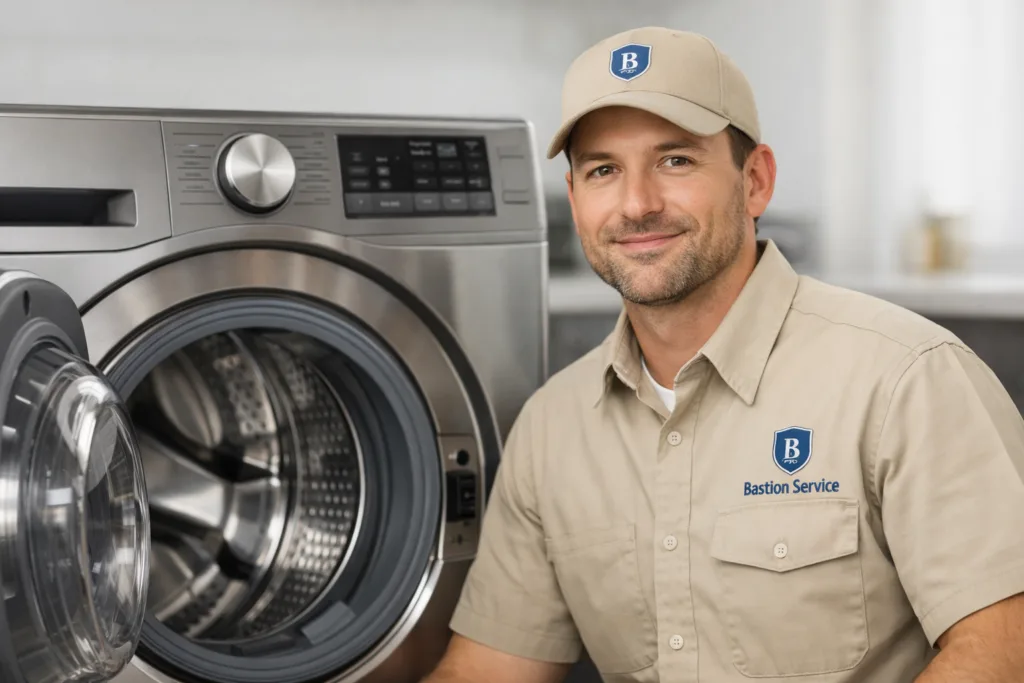




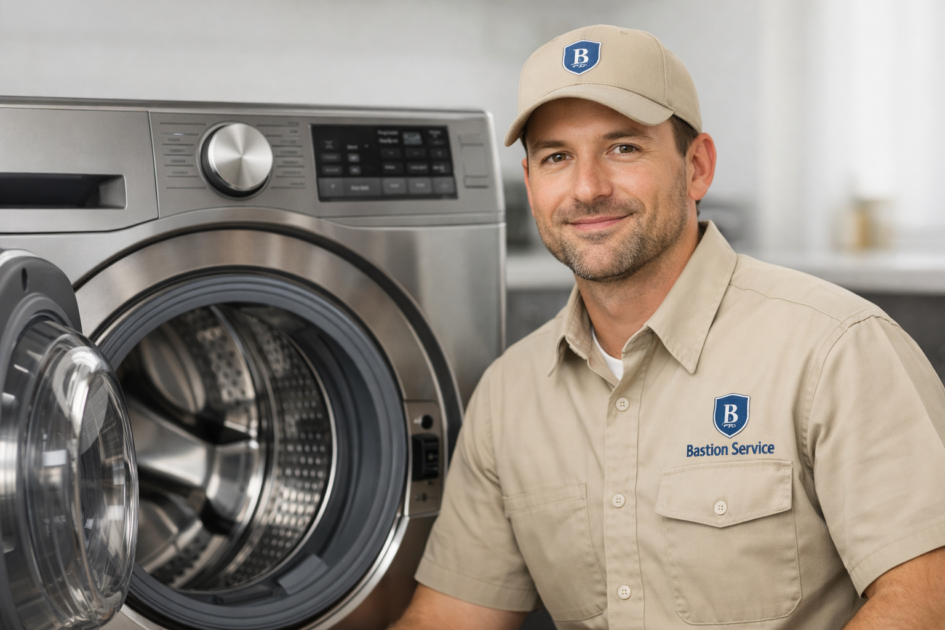
Samsung appliances often give early warning signs before a complete breakdown. A refrigerator may run longer than usual, a washer may start leaving clothes too wet, or a cooktop burner may heat unevenly. Those changes matter because the visible symptom is not always the root cause. A cooling issue can come from airflow, a sensor, a sealed compartment problem, or an electronic control fault. A washer that will not finish a cycle may have a drain issue, a lid or door lock problem, or a motor-related fault. Looking at the full pattern is what separates a targeted repair from guesswork.
For specific Samsung appliance paths in Brentwood, review Samsung Refrigerator Repair in Brentwood, Samsung Freezer Repair in Brentwood, and Samsung Washer Repair in Brentwood.
Start with the symptom pattern
Homeowners usually notice the effect first: food warming, dishes staying dirty, long dry times, or an oven that no longer bakes evenly. The helpful next step is to pay attention to what else changed at the same time. Did the appliance start making a new noise? Is the problem happening every cycle or only sometimes? Did an error code appear? Did performance get worse gradually or all at once?
Those details can point the diagnosis in very different directions. Intermittent stopping may suggest a control, latch, or sensor issue. Constant rattling or grinding often points more toward moving parts or mounting wear. Leaks, overheating, frost buildup, and repeated tripping should be treated as more urgent because continued use can damage the appliance or the surrounding area.
Common Samsung refrigerator and freezer issues
Samsung refrigeration problems often show up as temperature swings, frost where it should not be, water under drawers, unusual fan noise, or an ice maker that stops producing normally. Sometimes the refrigerator section warms while the freezer seems mostly fine. In other cases, both compartments struggle and the unit runs almost nonstop.
Common symptom patterns include:
- Food spoiling too quickly: often tied to unstable cooling, blocked airflow, door sealing problems, or defrost-related issues.
- Frost buildup: may indicate a defrost problem, moisture entering through a poor seal, or circulation issues.
- Water leaking inside or underneath: commonly linked to drain problems or condensation management issues.
- Loud humming, buzzing, or fan noise: can point to fan interference, ice buildup, or strain within the cooling system.
- Ice maker inconsistency: may involve fill problems, temperature issues, freezing in the wrong place, or control faults.
If a refrigerator is not holding safe temperatures or a freezer is repeatedly thawing and refreezing food, it is better to stop treating it as a minor nuisance. Cooling problems can escalate quickly and may place extra stress on other components.
Samsung washer symptoms that usually need attention
Washers rarely fail in just one obvious way. A drainage problem may look like a spin problem because the cycle will not move forward with water still in the tub. Excessive shaking may be caused by load balance, but it can also reflect worn suspension parts, leveling issues, or damage that has developed over time.
Watch for these patterns:
- Standing water after a cycle: usually points toward drainage restrictions, pump issues, or a control problem that is interrupting completion.
- Violent banging during spin: may involve suspension wear, imbalance, or internal movement that should not be ignored.
- Leaks around the machine: can come from hoses, door seal problems, overfilling, drain faults, or internal water path issues.
- Door will not lock or unlock correctly: often related to latch components, controls, or cycle interruption.
- Cycle stops with an error: repeated fault behavior usually means the machine is detecting a condition it cannot resolve on its own.
A washer that continues to leak or slam through the spin cycle can do more than inconvenience the household. It can damage flooring, strain the tub and suspension system, and turn a smaller repair into a broader one.
Dryer problems that should not be delayed
Samsung dryers often show trouble through long drying times, no heat, too much heat, early shutoff, or new thumping and scraping sounds. Many homeowners first notice that a normal load suddenly takes two or three cycles. While venting and airflow are common factors, that is not the only possibility. Sensors, heating components, belts, rollers, idlers, and controls can all create similar complaints.
Signs that deserve prompt attention include:
- Clothes remain damp after a full cycle
- The dryer gets hot but does not dry well
- The drum will not turn normally
- A burning smell appears during operation
- New knocking, squealing, or scraping sounds develop
Dryers are one of the appliances where waiting often makes the repair more expensive. Heat combined with poor airflow or worn moving parts can quickly increase wear on surrounding components.
Dishwasher issues that affect both cleaning and the kitchen around it
Samsung dishwashers commonly develop problems with draining, cleaning performance, leaking, latching, or unusual noise. A dishwasher may appear to run a full cycle yet still leave residue on dishes or standing water in the tub. That can indicate anything from circulation weakness to drainage restrictions to issues with the way the machine is sensing or managing the cycle.
Frequent complaints include:
- Dishes come out dirty or cloudy: may relate to spray performance, circulation, filters, water delivery, or heating behavior.
- Water remains at the bottom: often points to a drainage problem that should be addressed before odors or repeat failures develop.
- Leaking during or after the cycle: can involve seals, door alignment, overfilling, or internal component faults.
- Door will not latch or start reliably: may come from latch wear, alignment problems, or control-related faults.
- Buzzing or grinding sounds: often suggest a pump or moving-part issue rather than normal operation.
Dishwasher leaks are easy to underestimate because they may begin slowly. Even a small repeat leak can affect flooring, nearby cabinetry, and the appliance base over time.
Samsung oven, range, and cooktop performance problems
Cooking appliances usually reveal trouble through uneven results. Food browns too fast on one side, preheat takes much longer than before, a burner clicks repeatedly, or the surface heat level no longer matches the setting. In Samsung ovens, ranges, and cooktops, those symptoms can come from ignition parts, heating elements, temperature sensing, switches, relays, or controls.
Typical signs include:
- Slow preheat or failure to reach set temperature
- Uneven baking or roasting
- Burners that will not ignite or heat consistently
- Touch controls or knobs not responding as expected
- Repeated clicking or erratic flame behavior on gas units
If cooking results have become unreliable, the issue is not always just calibration. A temperature sensor problem, weakened igniter, failing element, or control issue can produce symptoms that seem mild at first but interfere with everyday use. Any persistent gas smell should be treated as a safety issue first, and the appliance should not continue to be used until the cause is addressed.
When repair usually makes sense
Repair is often worth considering when the appliance has one main failure and the rest of the machine still appears to be in good shape. That may mean a refrigerator with a defrost-related issue, a washer with a pump problem, a dryer with worn support parts, or an oven with a clear heating fault. In these situations, a proper diagnosis helps determine whether the problem is isolated or part of a larger reliability decline.
Scheduling service is often a reasonable move when:
- The appliance has been working well until a recent change in behavior
- The symptom is repeatable and easy to describe
- Only one major function appears to be affected
- The appliance still fits the household well and replacement is not otherwise necessary
- The issue involves leaking, overheating, drainage failure, or loss of temperature control
When continued use can make things worse
Some appliances can limp along for a while with a minor fault, but others should be taken more seriously. Refrigerators with unstable cooling can lead to food loss and extra compressor strain. Washers with heavy vibration can damage internal supports and nearby flooring. Dryers with overheating or airflow problems should not be pushed through repeated loads. Dishwashers with active leaks can affect cabinets and subflooring. Ovens and cooktops with ignition or temperature issues can become unreliable in ways that affect safety as well as performance.
If an appliance is leaking regularly, tripping a breaker, producing a burning smell, making loud new mechanical sounds, or failing to regulate temperature, it is usually wise to stop using it until the fault is identified.
Repair versus replacement for Brentwood homeowners
The right decision depends less on the brand name and more on the condition of the specific appliance in your home. A well-kept unit with one failed component is very different from a machine that has had repeated issues across multiple systems. Age matters, but so do maintenance history, overall wear, and whether the current problem has spread to related parts.
For many households in Brentwood, the choice comes down to a few practical questions:
- Is the fault isolated or part of a pattern of repeat breakdowns?
- Has the appliance been reliable up to this point?
- Did the problem begin suddenly, or has performance been declining for a long time?
- Would restoring normal operation solve the household need, or is replacement already being considered for other reasons?
Those questions are especially useful with Samsung appliances because electronic controls and multiple interdependent systems can make one symptom appear larger or smaller than it really is.
What homeowners should expect from a useful diagnosis
A good evaluation should explain more than which part is not working. It should connect the symptom to the likely cause, identify whether related components should be checked, and clarify whether continued use could create additional damage. That matters when the problem is intermittent, because many appliance complaints are not constant failures but recurring disruptions tied to heat, moisture, load conditions, or sensor feedback.
For a household in Brentwood, the most useful outcome is straightforward: understand what is failing, how urgent it is, and whether repair is the sensible next step for the refrigerator, washer, dryer, dishwasher, cooktop, oven, range, or freezer you depend on every week.


