Common refrigerator problems in Westwood homes

Most refrigerator trouble starts with a symptom a household can notice right away: food softening too quickly, milk not staying cold, vegetables freezing in the crisper, water pooling under the unit, or a motor sound that suddenly seems louder than normal. Those clues matter because they help narrow the issue to airflow, temperature sensing, defrost operation, drainage, door sealing, or a larger cooling-system failure.
A refrigerator that feels warm in the fresh-food section while the freezer still seems partly cold often points to restricted airflow, frost around the evaporator, a weak fan motor, or a vent problem between compartments. If cooling problems are centered in the freezer compartment and the refrigerator section is only affected secondarily, Freezer Repair in Westwood may be more relevant. When both sections are warming at the same time, attention usually turns to condenser airflow, start components, control issues, or compressor-related performance.
Water inside the cabinet or on the floor can come from a clogged defrost drain, excess frost melting in the wrong place, a damaged door gasket, or a water-supply issue on models with dispenser features. Clicking, buzzing, or rattling may be something simple like an obstructed fan blade, but it can also signal a failing motor or a compressor struggling to start. Thick frost on the back interior panel is another sign that the refrigerator may not be moving air correctly even if it still sounds like it is running.
What certain symptoms usually mean
Warm refrigerator, colder freezer
This pattern is common when the appliance can still produce some cold air but cannot circulate it properly. Frost buildup behind the rear freezer panel, a failed evaporator fan, or blocked return vents can leave the refrigerator section too warm while the freezer appears only partially normal. Households sometimes turn the controls colder to compensate, but that usually does not fix the underlying restriction.
Both sections losing temperature
When neither compartment is holding temperature, the problem may be broader. Dirty condenser conditions, failed start relays, control board faults, thermostat problems, or compressor trouble can all reduce overall cooling. If the unit runs for long stretches without recovering, that is usually a sign that the refrigerator is working harder while accomplishing less.
Leaks, drips, and moisture buildup
Not every leak comes from the same place. Water under the crisper drawers often points to a drain issue, while puddles near the front of the unit can be tied to door sealing, condensation, or an uneven cabinet position. On refrigerators with ice and water features, a fill tube, valve, or supply-line issue may be involved; if the main symptom is no ice production, overfilling, or leaking around the ice system, Ice Maker Repair in Westwood may be the better service path.
Noise that changes suddenly
Refrigerators make normal operating sounds, but a noticeable change matters. A sharp clicking noise can indicate start trouble. A scraping or ticking sound may come from ice contacting a fan blade. A louder hum combined with weak cooling can suggest the system is under strain. Intermittent noise is still worth attention, especially if it appears alongside rising temperatures or frost.
Why an accurate diagnosis matters
Different failures can produce nearly identical symptoms. A refrigerator with poor cooling may have a bad gasket, a failed fan, a defrost problem, a control issue, or a more serious sealed-system concern. Replacing the wrong part wastes time and does not protect food. The useful next step is identifying which component has failed, what related parts should be checked, and whether the current condition is likely to worsen quickly.
This is also why timing matters. A refrigerator that still cools “a little” can decline fast once airflow is blocked by frost or a weak component stops working entirely. Catching the problem earlier may reduce food loss, limit excess strain on major parts, and prevent secondary issues such as water damage to surrounding flooring.
Repair versus replacement
Many refrigerator repairs are worthwhile when the fault is isolated to an accessible part such as a fan motor, thermostat, sensor, defrost component, drain issue, or door gasket. In those cases, the cabinet and insulation may still be in good shape and the repair can restore normal daily use without much uncertainty.
Replacement becomes a more serious consideration when the appliance has recurring cooling failures, signs of sealed-system trouble, multiple worn components, or age-related deterioration that makes another repair hard to justify. The real question is not just whether a part can be changed, but whether the result is likely to be reliable enough for everyday food storage.
Specialty cooling problems that can look similar
Some Westwood households have more than one cooling appliance, and the symptoms can overlap. A temperature swing in a beverage appliance may sound like a refrigerator issue at first, but if the problem is isolated to a dedicated bottle or beverage unit, Wine Cooler Repair in Westwood may be the more appropriate fit. Matching the symptom to the correct appliance helps avoid delays and leads to a more useful diagnosis.
What to expect from refrigerator service
A productive service visit usually starts with the pattern of failure: whether one section warmed before the other, when the noise began, whether frost appeared, how long temperatures have been unstable, and whether the problem is constant or intermittent. That symptom history often reveals whether the issue is related to airflow, defrost, controls, drainage, sealing, or compressor-side operation.
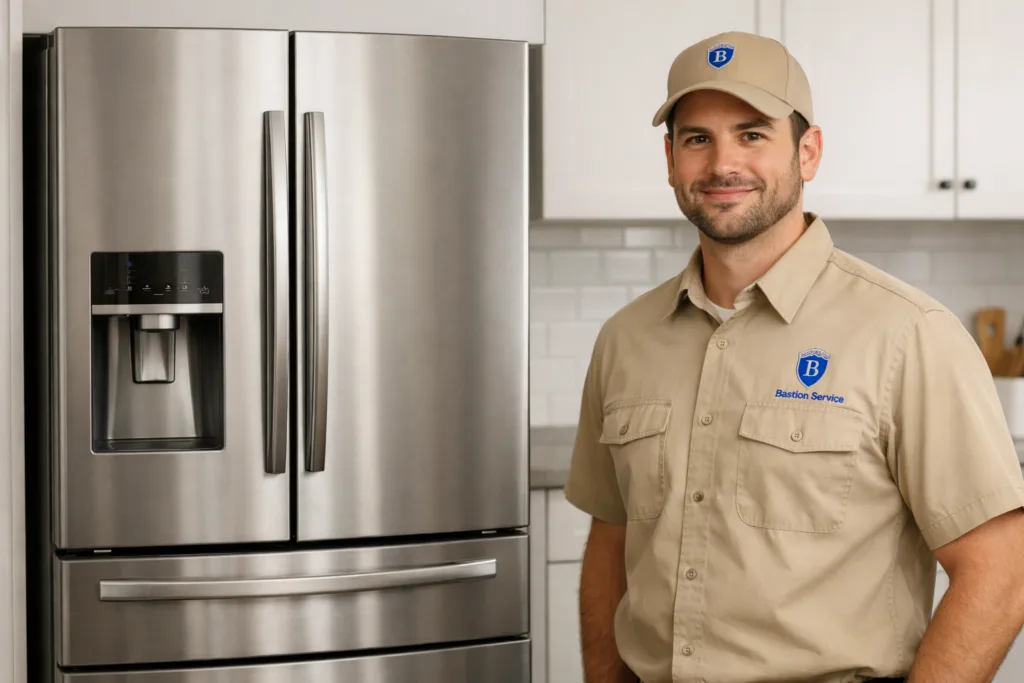
For homeowners in Westwood, the goal is straightforward: understand what is failing, whether the unit is still safe to rely on, and whether repair makes sense now. Bastion Service helps with refrigerator repair focused on clear diagnosis, practical repair guidance, and dependable local service for everyday cooling and food-storage use.