
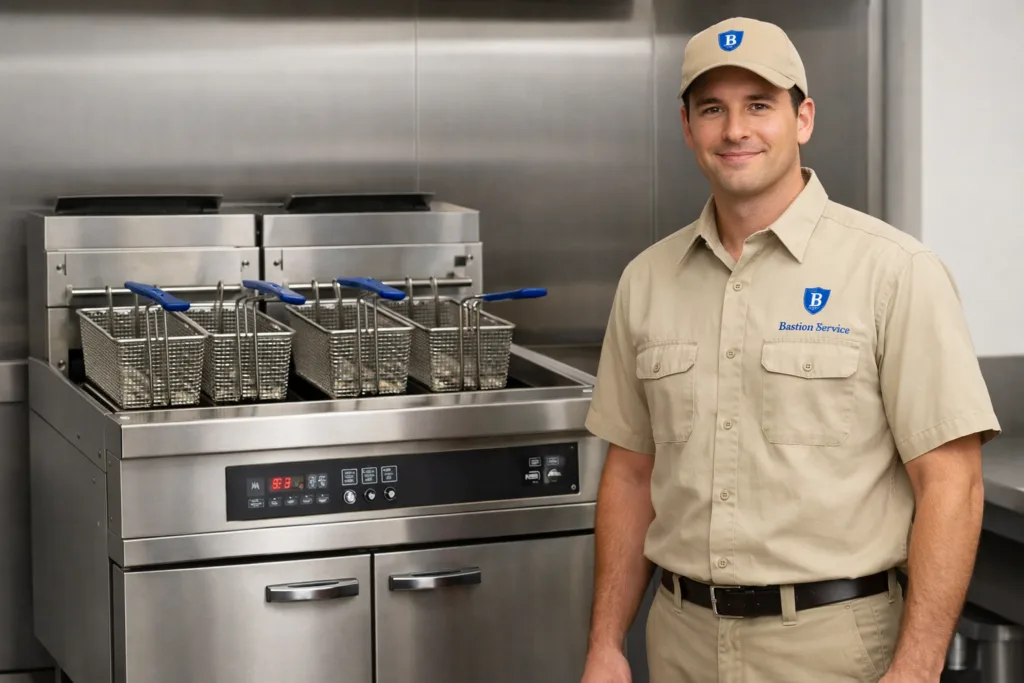





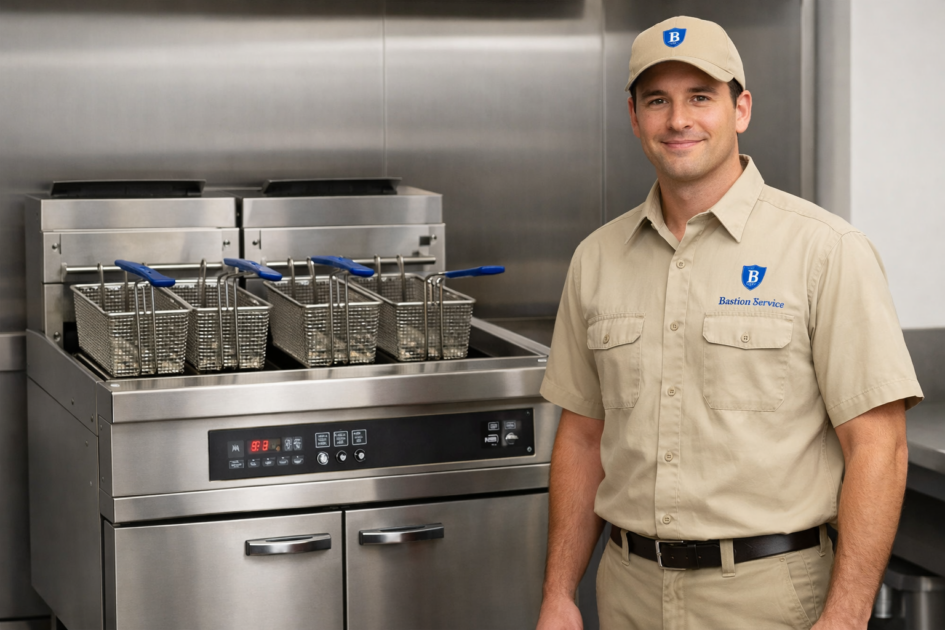
When Pitco cooking equipment starts missing temperatures, recovering too slowly, or shutting down during service in Westwood, the main goal is to identify the failed component quickly and decide how that issue affects daily output. For kitchens that depend on steady fryer performance, even one unstable unit can slow ticket times, affect product consistency, and force staff to adjust production around equipment that no longer performs the same way from batch to batch.
For specific equipment paths in Westwood, review Pitco Fryer Repair in Westwood and Commercial Appliance Repair in Westwood.
Bastion Service works with businesses in Westwood that need repair support based on real operating symptoms, repair urgency, and whether the equipment should stay in use, be limited, or be taken offline until service is completed. That matters most when a problem is no longer occasional and has started affecting food quality, staffing rhythm, or the ability to keep up during peak periods.
What Pitco cooking equipment problems usually lead to repair
Most service calls begin with changes in performance rather than a complete failure. A fryer may still heat, but not fast enough. It may reach temperature, but overshoot or drift. It may work during prep and then struggle once the kitchen is under load. These are signs that a control, ignition, burner, sensing, or safety-related problem may already be developing.
For Pitco cooking equipment, common symptoms that often point to needed service include:
- Slow heat-up times
- Failure to reach the selected temperature
- Oil temperature swinging too high or too low
- Weak recovery between batches
- Ignition failure or repeated attempts to start
- Burners dropping out during use
- Unexpected shutdowns in the middle of service
- Safety trips or repeated reset behavior
- Inconsistent cooking results from the same menu items
In a busy kitchen, these issues rarely stay isolated. A temperature problem can become a production problem, and a startup problem can become a full outage at the worst point in the day.
Heating and temperature control symptoms
Unit does not reach set temperature
If a Pitco fryer cannot reach the selected temperature, the result is usually longer cook times, inconsistent browning, and difficulty maintaining output during rush periods. Several faults can create this same symptom, including burner performance issues, ignition trouble, thermostat or sensor problems, control failures, or gas-related restrictions. Because the cause is not always obvious from the operator side, diagnosis is important before parts are approved or the unit is pushed through another shift.
Temperature swings and overheating
When temperature control becomes erratic, staff may notice food cooking too quickly in one batch and too slowly in the next. Overheating can shorten oil life, affect product quality, and place extra stress on safety devices. In many cases, this points to sensing or control trouble rather than something that can be corrected by operator adjustment alone.
Slow recovery during active production
Recovery problems are especially disruptive because they often appear only when demand increases. A fryer may seem usable when idle, then struggle to bounce back after each basket load. That can indicate weak burner output, heat transfer limitations, control issues, or a broader condition inside the unit that reduces its ability to keep pace with production. For restaurants and food-service businesses in Westwood, slow recovery often becomes noticeable first as longer waits, uneven timing, and pressure on nearby stations.
Ignition and burner-related failures
Failure to ignite or repeated startup attempts
If the fryer does not light reliably, locks out, or requires repeated attempts before operation begins, the issue may involve ignition hardware, flame sensing, gas delivery, wiring, or the control system. Startup problems should be taken seriously because they tend to worsen rather than self-correct. What begins as an intermittent morning issue can turn into a no-start condition later in the day.
Burner inconsistency during operation
Weak flame behavior, uneven heating, or burner dropout can show up as inconsistent product color, irregular cook times, or unexplained temperature loss. During service, the key question is whether the issue is limited to a burner-related component or tied to a larger control or safety fault. That distinction affects both repair planning and how much confidence a kitchen can have in the equipment between now and the completed repair.
Shutdowns, resets, and intermittent faults
Unexpected shutdowns are some of the most disruptive Pitco equipment problems because they interrupt service without much warning. A unit may run for part of the shift and then stop, trip a safety device, or require a reset before it starts again. These symptoms can be tied to overheating, unstable temperature regulation, failing controls, ignition-related problems, or protective components reacting to an underlying fault.
Intermittent behavior is also one of the easiest problems to underestimate. Staff may work around it for a few days by restarting the unit or changing how they load it, but repeated resets are usually a sign that the equipment is no longer operating reliably. From a repair standpoint, the question is not just whether it comes back on, but whether it can continue running predictably enough to support kitchen demand.
How fryer problems affect daily operations
For many businesses in Westwood, fryer trouble affects more than one piece of the service flow. Slower recovery can back up orders. Temperature drift can create inconsistent product. Repeated shutdowns can force menu changes or cause staff to redistribute work across already busy stations. Even when the fryer still technically runs, unstable performance often creates hidden costs through wasted food, extra labor time, and reduced throughput.
That is why symptom timing matters. A fryer that only struggles during peak volume may still have a serious repair need, even if it appears normal at startup. Service decisions should be based on how the equipment performs under real kitchen conditions, not just whether it powers on.
When continued use can make the problem worse
Some issues allow for short-term limited operation, but others should not be pushed through regular service. Continued use may worsen the problem when the fryer overheats, fails to control temperature correctly, shuts off unpredictably, or shows repeated ignition failure. In those cases, operating through the symptom can place additional stress on controls, burners, safety components, and related assemblies.
For managers, the practical decision is whether the unit can still support production without creating added downtime risk. A service visit helps determine if the equipment is suitable for limited use while parts are sourced or if keeping it online is likely to lead to a larger interruption.
Repair planning versus replacement
Many Pitco cooking equipment problems are repairable, especially when the issue is identified early and the rest of the unit remains in solid operating condition. Problems involving ignition parts, controls, sensors, burner-related components, or other serviceable assemblies often make repair the more sensible option.
Replacement becomes a more realistic discussion when there are repeated failures across multiple systems, heavy wear, unreliable day-to-day performance, or repair costs that no longer align with the unit’s role in production. A useful service assessment should help clarify whether the equipment has a contained repair need or whether the pattern of breakdowns points toward a larger long-term decision.
Scheduling Pitco repair in Westwood
Scheduling service early is usually the best way to reduce production loss when Pitco equipment starts showing heating issues, ignition trouble, weak recovery, burner problems, or shutdown behavior. Early attention can help businesses avoid a full outage, plan around parts lead times, and decide whether the unit should remain active in the lineup while repairs are arranged. If your equipment is affecting output, food consistency, or shift planning, the next step is to schedule repair service and get a symptom-based assessment of what failed, how urgent it is, and what operation should look like until the repair is completed.


